

Volume 16, Issue 3 (May & June 2026)
J Research Health 2026, 16(3): 231-242 |
Back to browse issues page


Ethics code: IR-PNU.REC. (1404.068).


Download citation:
BibTeX | RIS | EndNote | Medlars | ProCite | Reference Manager | RefWorks
Send citation to:


BibTeX | RIS | EndNote | Medlars | ProCite | Reference Manager | RefWorks
Send citation to:
Rahimi S, Nushi M, Soheili F. The Role of Health Literacy in Literacy Studies: Mapping the Intellectual Structure Through Author Co-citation Analysis. J Research Health 2026; 16 (3) :231-242
URL: http://jrh.gmu.ac.ir/article-1-2838-en.html
URL: http://jrh.gmu.ac.ir/article-1-2838-en.html


1- Department of Knowledge and Information Science, Faculty of Social Sciences, Razi University, Kermanshah, Iran. , s.rahimi@razi.ac.ir
2- Department of English Language and Literature, Faculty of Letters and Human Sciences, Shahid Beheshti University, Tehran, Iran.
3- Department of Knowledge and Information Science, Payame Noor University, Tehran, Iran.
2- Department of English Language and Literature, Faculty of Letters and Human Sciences, Shahid Beheshti University, Tehran, Iran.
3- Department of Knowledge and Information Science, Payame Noor University, Tehran, Iran.
Keywords: Information literacy, Health literacy, Bibliometrics, Knowledge discovery, Co-citation analysis
Full-Text [PDF 1241 kb]
(281 Downloads)
| Abstract (HTML) (705 Views)
Full-Text: (186 Views)
Introduction
Author co-citation analysis is a method for identifying the intellectual structure of a field by examining the cocitation relationships between authors [1]. Co-citation analysis helps researchers understand the structural relationships within a discipline. This technique is based on tracking how often two authors or documents are cited together. Author co-citation analysis (ACA) assumes that the more frequently two authors are cited together, the closer their relationship is [2]. This method reveals not only the perspectives of individual authors but also the shared viewpoints of scholars working within a field and is widely used to examine the intellectual structure and scholarly ecology of academic fields [3]. Analyzing cocitation frequencies offers an effective approach for understanding the historical development and evolution of a scientific discipline [4].
One of the longstanding topics closely connected to education, research, schools, and universities is the concept of literacy. In recent years, rapid advancements in computer and information technology have significantly transformed various fields, including literacy. Literacy has evolved to incorporate diverse concepts, replacing traditional literacy. Scholars researching literacy employ various methods to examine its evolution. One such method is ACA, which has been used in many fields but rarely to examine the concept of literacy itself.
Literacy is crucial for personal development, family well-being, and national progress, linking individuals, families, and society. According to Robert (1995), the concept of literacy has changed over time [5]. Clifford (1984) claims that our understanding of literacy is evolving [6]. Walsh (2017) further explains that the concept of literacy has developed alongside social changes and technological advancements [7]. Today, literacy no longer refers simply to possessing large amounts of information, as digital resources have reduced the need for extensive memorization [8]. Since the emergence of new literacy studies, numerous concepts have been incorporated into literacy education, including multiliteracies, fundamental literacy, multidimensionality, materiality, and impact [9]. Choi (2023) notes that the concept of literacy has evolved from its initial focus on an individual’s ability to decode information to understanding and critiquing it for various benefits at both individual and societal levels [10]. A literate person is someone who knows how and where to obtain information, thus highlighting the need for an updated definition of literacy [10]. Buschman (2009) argues that advanced technologies have expanded literacy, preventing the establishment of a single definition of literacy [11]. Finally, Lisenbee et al. (2020) emphasize that literacy education in the digital age requires integrating technology into literacy practices [12].
This expansion and diversification of literacy into specialized, context-dependent skills is a crucial aspect of its evolution. As society grows more complex, the general concept of literacy has expanded to address the specific informational demands of critical life domains. No longer confined to the page or the general-purpose screen, literacy now encompasses the competencies required to navigate high-stakes environments. Among the various forms of literacy that have emerged in response to these changes, health literacy has acquired particular importance. It serves as a prime example of this trend, demonstrating how literacy skills are applied in a vital, specialized context. In an era of complex medical data, digital health records, and the proliferation of online health information and misinformation, the ability to manage one’s health has become a vital application of contemporary literacy.
Examining the development of literacy can attract researchers’ attention and enhance understanding of the relevant fields. In this context, this study investigates the intellectual structure of literacy from 1916 to 2023 using ACA, focusing on how concepts like health literacy have evolved and contributed to the broader understanding of literacy.
Health literacy is the evolving skills and competencies needed to find, comprehend, evaluate, and use health information and concepts to make informed decisions, reduce health risks, and improve quality of life [13]. This specialized form of literacy reflects a broader trend in which literacy adapts to meet the demands of contemporary society, where individuals must navigate complex information environments to maintain and improve their well-being.
The findings of this study underscore the pivotal role of health literacy in literacy-related research, as three of the six identified clusters are dedicated to this domain. This emphasizes the necessity of prioritizing health literacy education and awareness, reflecting researchers’ commitment to improving public health outcomes.
Literature review
Co-citation analysis is a widely used method for examining the intellectual structure of a scientific discipline [14]. This analytical method has been applied in various fields, such as reading [15], e-learning [1], learning [16], hospital discharge readiness [17], curriculum and digital literacy [18], information literacy [19, 21, 22], body literacy [23], oral health literacy [24], data literacy [25], drug literacy [26], digital literacy [27], media literacy [3], health literacy [28], digital health literacy [29], scientific literacy [30], financial literacy and behavior [31], financial literacy [32-35], digital financial literacy [36], women’s financial inclusion and literacy [37], innovative literacy [38], and food literacy [39].
This overview categorizes recent studies exploring diverse fields of literacy.
Summers conducted a citationanalysis study to identify highly cited core journals and map the disciplinary structure and the relationships among journals publishing readingrelated research. An analysis of the temporal distribution of recent citations over a decade from 25 highly cited journals highlighted the immediate impact of reading research as a boundary between hard and soft sciences, with strong connections to psychological domains [15]. Li and Guo conducted a bibliometric study of scientific literacy from 1980 to 2019. Recent evolving clusters, with titles such as literacy (as a concept), learning progress, and informal reasoning, were observed as current active knowledge areas in the evolution of the intellectual structure of the literature related to scientific literacy [30].
Liang et al. mapped the knowledge structure of drug literacy and identified its current state, intellectual basis, and major research topics. The researchers created a knowledge map for visualizing drug literacy using CiteSpace, which showed the strengths of studies, authors, key journals, the intellectual basis, and hot topics in this field. Key topics included assessment tools, measurement and evaluation, drug literacy for chronic disease prevention and medication adherence, drug literacy education, and family medicine. This study offers valuable insights for researchers seeking potential collaborators, institutions, and emerging research hotspots in drug literacy [26]. Sun et al. investigated trends in oral health literacy. They used CiteSpace to conduct wordfrequency, co-occurrence analysis, co-citation, clustering analysis, and burst analysis. Most studies focused on the relationship between health literacy (oral) and oral health, and the development of tools for assessing oral drug literacy. The ten most frequently occurring keywords were health literacy, oral health, health attitudes, dental caries, adults, children, dental care, knowledge, questionnaire, and adolescents, and the word with the highest burst was oral health education. Research in oral drug literacy has received attention as a dynamic area, focusing on the development of oral drug literacy tools and promoting health [24]. Yang et al. conducted a systematic bibliometric analysis in digital health literacy, examining 1,955 documents from the Web of Science Core Collection using the knowledge mapping tools VOSviewer and CiteSpace. The research areas of the most cited articles in digital health literacy primarily included the definition and measurement of health literacy, health literacy and health outcomes, health literacy and the digital divide, and factors influencing health literacy. The researchers found that digital health literacy has significant potential to improve health outcomes, bridge the digital divide, and reduce health inequalities [29].
In a scientometric study, Nor et al. identified key topics, trends, and changes in the field to systematically analyze and document the development and transformation of nutrition education research. This study observed a significant increase in citation flourishing related to these topics, indicating a responsive area to emerging health challenges and community needs. It outlines the historical development of this field and serves as a guide for future research directions, emphasizing the ongoing importance of nutrition education in improving global health and well-being [40].
Goyal and Kumar analyzed 502 articles on financial literacy published between 2000 and 2019. Three main topics were identified: Levels of financial literacy in different groups, the impact of financial literacy on financial planning and behavior, and the effects of financial education. Emerging topics included financial capability, financial inclusion, gender differences, tax and insurance financial literacy, and digital financial education [32].
Ingale and Paluri extracted existing trends in financial behavior and literacy. The findings indicated that the topics of financial literacy and financial behavior have evolved as an interdisciplinary field. In the early stages, researchers focused on demographic and socioeconomic variables, but gradually expanded to include behavioral and psychological structures influencing financial behavior. This research reveals not only the conceptual structure but also the intellectual and social structure of the field. This study provides important insights into areas that require further research [31].
Yadao and Banerjee conducted a study to identify research trends in digital financial literacy. The results indicated that research topics in digital financial literacy have evolved as the field has developed into an interdisciplinary area. Researchers initially focused on socioeconomic and demographic variables, but over time, attention shifted to issues such as influence, promotion, and behavioral factors affecting digital financial literacy. This research highlights the intellectual and social structure and presents a conceptual framework for the field. The study provides critical insights into topics that require further research [36].
In a bibliometric study, Molina-García et al. examined financial literacy in small and medium-sized enterprises (SMEs). The results showed that research on financial literacy in SMEs primarily focused on the following topics: 1) Performance, 2) access to finance, 3) innovation, 4) risk attitudes and entrepreneurship, 5) owner-managers and remaining partnerships [34].
Kumar and Kumar conducted the scope and evolution of financial literacy studies. They identified driving topics, core cross-sectional themes, niches, and emerging/ declining topics using strategic topic mapping. The analysis results indicated that over the past 20 years, the literature on financial literacy has advanced significantly. The relational approach shows that financial literacy and humanity are two central components that connect to other frequently used terms in the examined studies [33].
Baber et al. used a bibliometric approach to examine research related to digital literacy. The results indicated a steady publication rate in this field, with most research published in the areas of education and libraries. Emerging topics included fake news, competence, educational technology, health literacy, self-efficacy, and COVID-19. The results also indicated that COVID-19 was related to fake news, higher education, social media, and information literacy [27].
Sharma et al. investigated the role of Education 4.0 in innovative curriculum practices and digital literacy. The results identified five main themes in Education 4.0, including creating an Education 4 model, preparing for future challenges, environmental learning and sustainable development, leadership development, and promoting innovation and creativity. These themes are based on bibliographic pairs of works, providing a deep understanding of the intellectual structure of the field. The findings emphasize the need for further study on innovative curriculum practices, digital literacy, and the role of Education 4 in preparing students for future challenges [18].
Media literacy was identified as an interdisciplinary domain by Özçinar and Öztürk, who studied its intellectual structure. In this study, documents were obtained from the ISI Web of Knowledge database using co-citation analysis. The results indicated that the media literacy field is supported by seven subfields: critical media literacy education, social psychology, eating disorders, tobacco consumption, new literacies, national and international guidelines, digital citizenship, and democratic participation. Researchers and educators can use the findings of this study in this field to create a collective understanding of the domain [3].
Compared to previous studies, this study is more comprehensive in terms of data volume and depth of analysis. The previous studies focused on specific types of literacy, whereas the current research examines the concept of literacy more broadly. Additionally, this research provides broader insights into the development of literacy studies and future research directions, including an assessment of the maturity of literacy research.
Methods
Co-citation analysis reveals patterns and trends in a specific field by measuring the strength of connections between authors or documents from related publications. Its primary feature is visualizing a field’s intellectual structure through conceptual space maps, with time-series maps used to track changes in this structure [41]. This study employed bibliometric analysis. Data were processed using VOSviewer (version 1.6.10; Centre for Science and Technology Studies), UCINet (version 6.274; Analytic Technologies), BibExcel (version 1.000), and SPSS (version 21; IBM Corp). Data were extracted from the Web of Science database on January 15, 2024, using the keyword “literacy” in document titles. ACA typically follows these steps [42]:
1) Identify highly cited authors of research articles; 2) Retrieve co-citation counts for each author pair; 3) Compile a raw co-citation matrix; 4) Perform clustering using methods, such as multidimensional scaling (MDS); 5) Interpret results.
Some studies include additional steps, such as converting the raw matrix to a correlation matrix in step (3) or using cluster analysis and strategic diagrams in step (4).
Data collection and preprocessing
Studies in literacy were identified via the keyword “literacy” in title field of Web of Science. The dataset spans 106 years (1916–2023), comprising 42,404 documents, including articles, proceedings papers, books, book reviews, and book chapters.
Data standardization was performed in the preprocessing phase. First, references that had not been digitized because of age and whose source data were unavailable were removed. Then, author names presented in multiple formats were standardized to a uniform, authoritative form. This was not an issue during data analysis, as BibExcel software automatically unifies citations based on their digital object identifier (DOI). Additionally, the researchers manually resolved any remaining name ambiguities by consulting the original articles. Using BibExcel, data were extracted and standardized. Author names were unified, and documents with unavailable citations or anonymous authors were excluded, resulting in 1,046,364 citations and 620,614 unique authors.
Author selection and matrix construction
Authors with the highest citation counts were identified as input units for matrix creation. Establishing a cut-off threshold is typically done using rules like the 80/20 Pareto principle or Bradford’s Law. For this research, Bradford’s Law was applied, selecting 288 authors with at least 80 citations. A 288×288 symmetric matrix was created, with diagonal values set to zero. This raw matrix was converted into a correlation matrix for multivariate analysis.
Cluster analysis and visualization
Hierarchical clustering and strategic diagrams were used to visualize the intellectual structure. Various methods are used to determine the exact number of clusters; one such method involves using a scree plot in SPSS software. This approach was indeed used in our study to determine the number of clusters. However, the plot was not included in the article in order to reduce its overall length. Accordingly, using the K-means algorithm in VOSviewer, clusters were identified and mapped.
Cluster interpretation and strategic diagramming
Authors within each cluster were analyzed based on common research topics, literacy themes, and scholarly focus areas. To name and analyze the clusters, several subject experts were consulted. Subsequently, the clusters were named based on the node weights in the co-citation network, the expertise of the cited authors, and the subject of the articles under review. The clusters were then interpreted based on these combined factors.
Separate matrices were created for each cluster, and UCINet calculated centrality and network density scores for the six clusters. A strategic diagram was generated using Excel.
Caution is warranted when generalizing these results because of the known language bias of the Web of Science database, which primarily covers English-language publications. An additional limitation was our search strategy, which targeted the term “literacy” only in the title field, potentially affecting the comprehensiveness of our dataset. However, the effect of this limitation is minimal, as the analysis draws on a substantial citation volume, providing a robust basis for our findings.
Results
In Table 1, the names of the 20 authors with the highest citations are shown.
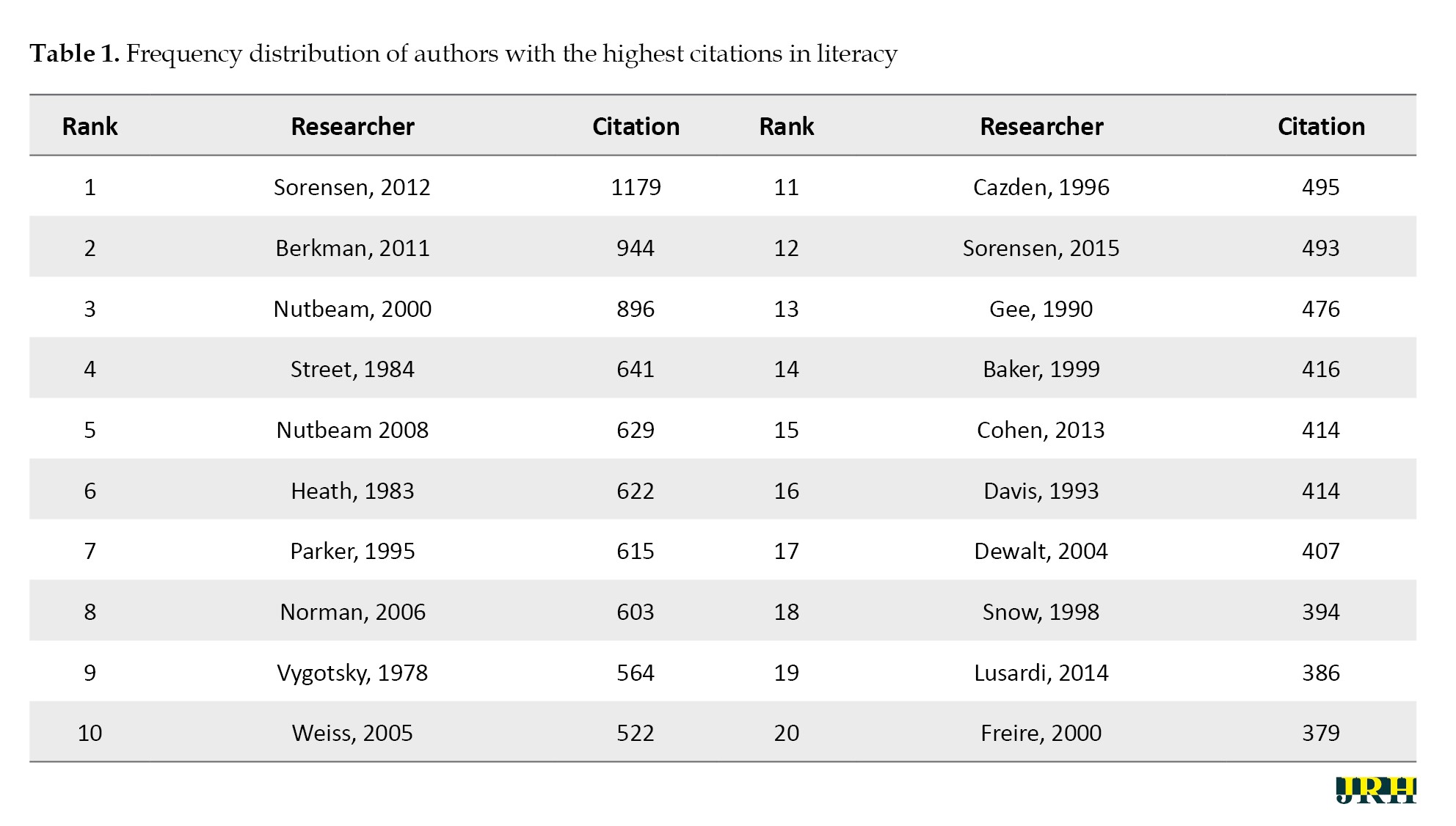
As observed, Sorensen, Berkman, and Nutbeam, with 1179, 944, and 896 citations, respectively, rank first to third. Other authors with more than 379 citations are also listed in the table.
Cluster analysis results
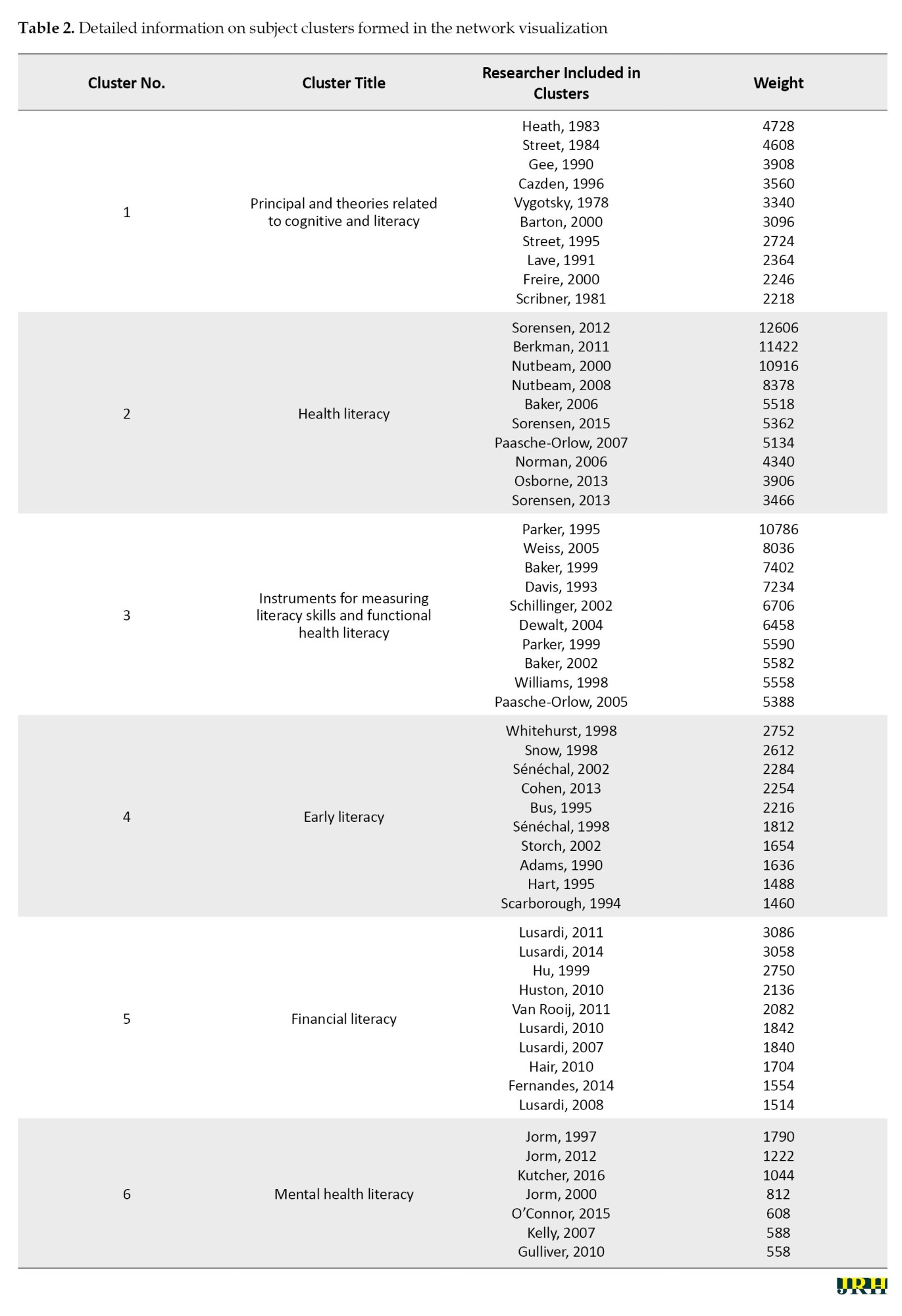
The results of applying the cluster analysis technique to co-citation data in literacy studies showed that the intellectual structure of the literacy field comprises six clusters. These clusters are as follows:
1) Principles and theories related to cognitive and literacy; 2) Health literacy; 3) Instruments for measuring skills and functional health literacy; 4) Early literacy; 5) Financial literacy; 6) Mental health literacy
Cluster 1 is dedicated to principles and theories related to cognition and literacy, comprising 106 authors, making it the most significant cluster formed based on ACA. Some of the most significant works in this area include ‘social linguistics and literacies: Ideology in discourses’ by James Paul Gee, ‘literacy in theory and practice’ by Brian Street, and ‘Mind in Society: Development of higher psychological processes’ by Lev Vygotsky. The documents in this cluster address concepts, such as ‘Literacy: Theory and practice’, ‘mind in society’, ‘multiliteracy and new literacy studies’, ‘language learning’, and ‘social literacy’, indicating that these concepts fall under the category of principles and theories related to ‘cognition and literacy’.
Cluster 2, comprising 61 authors, reveals that the most-cited authors include Sorensen (2012), Berkman (2011), and Nutbeam (2000). The subjects in this cluster focus on topics, such as ‘health literacy and public health’, ‘health literacy as a public health goal’, ‘health literacy in Europe’, ‘Health Literacy: What is it?’, and ‘understanding health literacy’. These topics indicate that this cluster centers on ‘health literacy’.
The analysis of cluster 3 shows that it comprises 53 authors, with the most-cited being Parker (1995), Weiss (2005), and Baker (1999). The topics explored in the documents of this cluster include ‘functional health literacy and the risk of hospital admission among medicare-managed care enrollees’, ‘The test of functional health literacy in adults, inadequate functional health literacy among patients at two public hospitals’, and ‘test of functional health literacy in adults’, which indicate that the cluster covers ‘functional health literacy’.
Cluster 4 comprises 38 authors, with the most prominent authors being Whitehurst (1998), Snow (1998), and Sénéchal (2002). The documents in this cluster focus on topics such as ‘child development and emergent literacy’, ‘parental involvement in the development of children’s reading skills’, ‘differential effects of home literacy experiences on the development of oral and written language’, and ‘beginning to read: Thinking and learning about print (reprint edition)’. The topics indicate this cluster is categorized under ‘early literacy’.
Cluster 5 comprises 33 authors, with key figures such as Lusardi (2011), Hu (1999), and Huston (2010). A notable aspect of this cluster is the prominence of Lusardi (2011), whose name appears in eight documents, reflecting her important role in shaping this cluster. Lusardi’s field of study is financial literacy and financial education. Most works in this cluster directly address the concept of financial literacy.
Cluster 6 comprises seven authors, with the most-cited authors being Jorm (1997), Kutcher (2016), and O’Connor (2015). Jorm’s role is notable in this cluster, as his name appears in three documents. Jorm’s primary area of study is mental health and related studies. The documents in this cluster show that the term ‘mental health literacy’ appears in the titles of all the documents within this cluster.
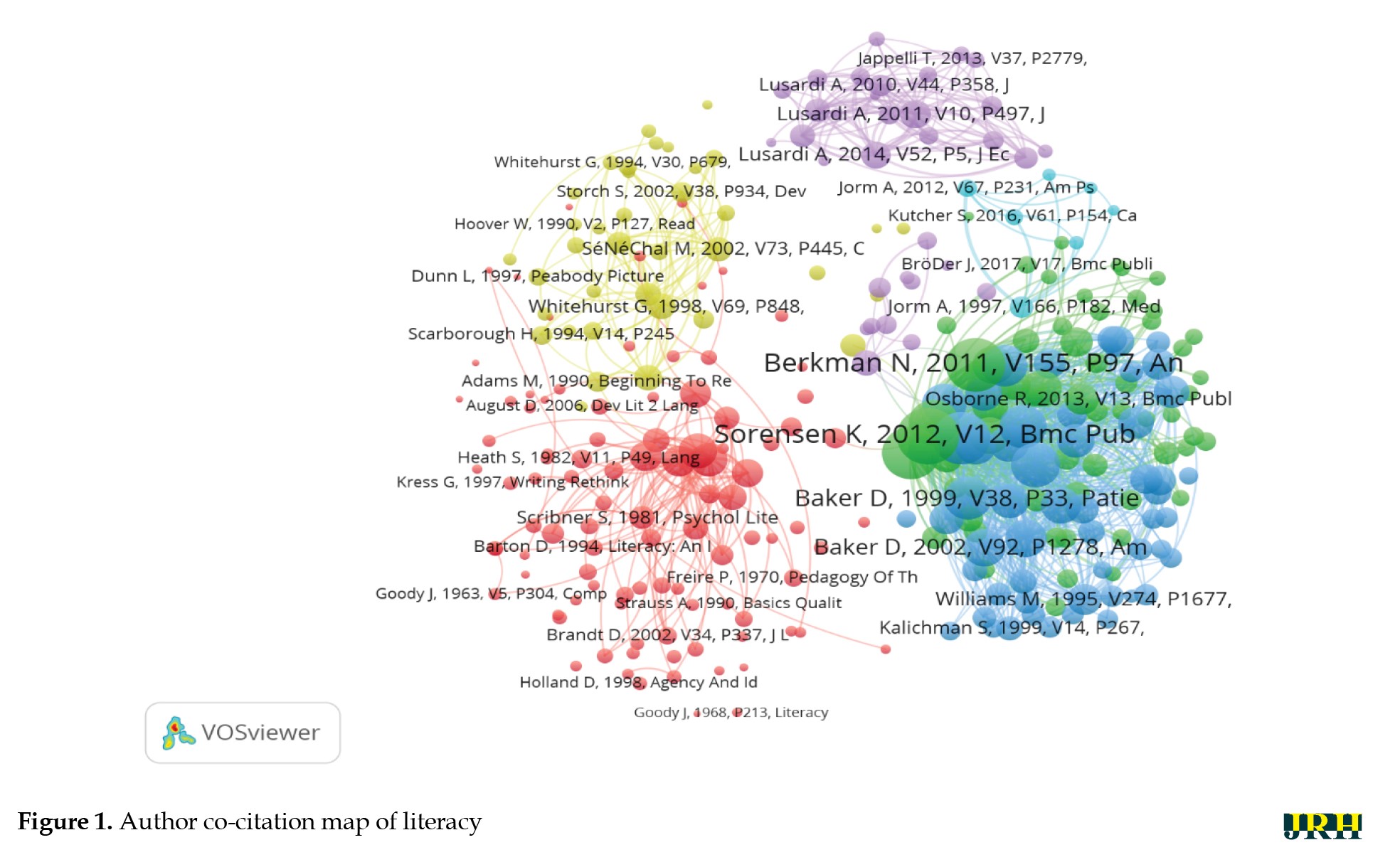
Figure 1 displays the results of the cluster analysis of the literacy field via VOSviewer software.
Author co-citation analysis is a method for identifying the intellectual structure of a field by examining the cocitation relationships between authors [1]. Co-citation analysis helps researchers understand the structural relationships within a discipline. This technique is based on tracking how often two authors or documents are cited together. Author co-citation analysis (ACA) assumes that the more frequently two authors are cited together, the closer their relationship is [2]. This method reveals not only the perspectives of individual authors but also the shared viewpoints of scholars working within a field and is widely used to examine the intellectual structure and scholarly ecology of academic fields [3]. Analyzing cocitation frequencies offers an effective approach for understanding the historical development and evolution of a scientific discipline [4].
One of the longstanding topics closely connected to education, research, schools, and universities is the concept of literacy. In recent years, rapid advancements in computer and information technology have significantly transformed various fields, including literacy. Literacy has evolved to incorporate diverse concepts, replacing traditional literacy. Scholars researching literacy employ various methods to examine its evolution. One such method is ACA, which has been used in many fields but rarely to examine the concept of literacy itself.
Literacy is crucial for personal development, family well-being, and national progress, linking individuals, families, and society. According to Robert (1995), the concept of literacy has changed over time [5]. Clifford (1984) claims that our understanding of literacy is evolving [6]. Walsh (2017) further explains that the concept of literacy has developed alongside social changes and technological advancements [7]. Today, literacy no longer refers simply to possessing large amounts of information, as digital resources have reduced the need for extensive memorization [8]. Since the emergence of new literacy studies, numerous concepts have been incorporated into literacy education, including multiliteracies, fundamental literacy, multidimensionality, materiality, and impact [9]. Choi (2023) notes that the concept of literacy has evolved from its initial focus on an individual’s ability to decode information to understanding and critiquing it for various benefits at both individual and societal levels [10]. A literate person is someone who knows how and where to obtain information, thus highlighting the need for an updated definition of literacy [10]. Buschman (2009) argues that advanced technologies have expanded literacy, preventing the establishment of a single definition of literacy [11]. Finally, Lisenbee et al. (2020) emphasize that literacy education in the digital age requires integrating technology into literacy practices [12].
This expansion and diversification of literacy into specialized, context-dependent skills is a crucial aspect of its evolution. As society grows more complex, the general concept of literacy has expanded to address the specific informational demands of critical life domains. No longer confined to the page or the general-purpose screen, literacy now encompasses the competencies required to navigate high-stakes environments. Among the various forms of literacy that have emerged in response to these changes, health literacy has acquired particular importance. It serves as a prime example of this trend, demonstrating how literacy skills are applied in a vital, specialized context. In an era of complex medical data, digital health records, and the proliferation of online health information and misinformation, the ability to manage one’s health has become a vital application of contemporary literacy.
Examining the development of literacy can attract researchers’ attention and enhance understanding of the relevant fields. In this context, this study investigates the intellectual structure of literacy from 1916 to 2023 using ACA, focusing on how concepts like health literacy have evolved and contributed to the broader understanding of literacy.
Health literacy is the evolving skills and competencies needed to find, comprehend, evaluate, and use health information and concepts to make informed decisions, reduce health risks, and improve quality of life [13]. This specialized form of literacy reflects a broader trend in which literacy adapts to meet the demands of contemporary society, where individuals must navigate complex information environments to maintain and improve their well-being.
The findings of this study underscore the pivotal role of health literacy in literacy-related research, as three of the six identified clusters are dedicated to this domain. This emphasizes the necessity of prioritizing health literacy education and awareness, reflecting researchers’ commitment to improving public health outcomes.
Literature review
Co-citation analysis is a widely used method for examining the intellectual structure of a scientific discipline [14]. This analytical method has been applied in various fields, such as reading [15], e-learning [1], learning [16], hospital discharge readiness [17], curriculum and digital literacy [18], information literacy [19, 21, 22], body literacy [23], oral health literacy [24], data literacy [25], drug literacy [26], digital literacy [27], media literacy [3], health literacy [28], digital health literacy [29], scientific literacy [30], financial literacy and behavior [31], financial literacy [32-35], digital financial literacy [36], women’s financial inclusion and literacy [37], innovative literacy [38], and food literacy [39].
This overview categorizes recent studies exploring diverse fields of literacy.
Summers conducted a citationanalysis study to identify highly cited core journals and map the disciplinary structure and the relationships among journals publishing readingrelated research. An analysis of the temporal distribution of recent citations over a decade from 25 highly cited journals highlighted the immediate impact of reading research as a boundary between hard and soft sciences, with strong connections to psychological domains [15]. Li and Guo conducted a bibliometric study of scientific literacy from 1980 to 2019. Recent evolving clusters, with titles such as literacy (as a concept), learning progress, and informal reasoning, were observed as current active knowledge areas in the evolution of the intellectual structure of the literature related to scientific literacy [30].
Liang et al. mapped the knowledge structure of drug literacy and identified its current state, intellectual basis, and major research topics. The researchers created a knowledge map for visualizing drug literacy using CiteSpace, which showed the strengths of studies, authors, key journals, the intellectual basis, and hot topics in this field. Key topics included assessment tools, measurement and evaluation, drug literacy for chronic disease prevention and medication adherence, drug literacy education, and family medicine. This study offers valuable insights for researchers seeking potential collaborators, institutions, and emerging research hotspots in drug literacy [26]. Sun et al. investigated trends in oral health literacy. They used CiteSpace to conduct wordfrequency, co-occurrence analysis, co-citation, clustering analysis, and burst analysis. Most studies focused on the relationship between health literacy (oral) and oral health, and the development of tools for assessing oral drug literacy. The ten most frequently occurring keywords were health literacy, oral health, health attitudes, dental caries, adults, children, dental care, knowledge, questionnaire, and adolescents, and the word with the highest burst was oral health education. Research in oral drug literacy has received attention as a dynamic area, focusing on the development of oral drug literacy tools and promoting health [24]. Yang et al. conducted a systematic bibliometric analysis in digital health literacy, examining 1,955 documents from the Web of Science Core Collection using the knowledge mapping tools VOSviewer and CiteSpace. The research areas of the most cited articles in digital health literacy primarily included the definition and measurement of health literacy, health literacy and health outcomes, health literacy and the digital divide, and factors influencing health literacy. The researchers found that digital health literacy has significant potential to improve health outcomes, bridge the digital divide, and reduce health inequalities [29].
In a scientometric study, Nor et al. identified key topics, trends, and changes in the field to systematically analyze and document the development and transformation of nutrition education research. This study observed a significant increase in citation flourishing related to these topics, indicating a responsive area to emerging health challenges and community needs. It outlines the historical development of this field and serves as a guide for future research directions, emphasizing the ongoing importance of nutrition education in improving global health and well-being [40].
Goyal and Kumar analyzed 502 articles on financial literacy published between 2000 and 2019. Three main topics were identified: Levels of financial literacy in different groups, the impact of financial literacy on financial planning and behavior, and the effects of financial education. Emerging topics included financial capability, financial inclusion, gender differences, tax and insurance financial literacy, and digital financial education [32].
Ingale and Paluri extracted existing trends in financial behavior and literacy. The findings indicated that the topics of financial literacy and financial behavior have evolved as an interdisciplinary field. In the early stages, researchers focused on demographic and socioeconomic variables, but gradually expanded to include behavioral and psychological structures influencing financial behavior. This research reveals not only the conceptual structure but also the intellectual and social structure of the field. This study provides important insights into areas that require further research [31].
Yadao and Banerjee conducted a study to identify research trends in digital financial literacy. The results indicated that research topics in digital financial literacy have evolved as the field has developed into an interdisciplinary area. Researchers initially focused on socioeconomic and demographic variables, but over time, attention shifted to issues such as influence, promotion, and behavioral factors affecting digital financial literacy. This research highlights the intellectual and social structure and presents a conceptual framework for the field. The study provides critical insights into topics that require further research [36].
In a bibliometric study, Molina-García et al. examined financial literacy in small and medium-sized enterprises (SMEs). The results showed that research on financial literacy in SMEs primarily focused on the following topics: 1) Performance, 2) access to finance, 3) innovation, 4) risk attitudes and entrepreneurship, 5) owner-managers and remaining partnerships [34].
Kumar and Kumar conducted the scope and evolution of financial literacy studies. They identified driving topics, core cross-sectional themes, niches, and emerging/ declining topics using strategic topic mapping. The analysis results indicated that over the past 20 years, the literature on financial literacy has advanced significantly. The relational approach shows that financial literacy and humanity are two central components that connect to other frequently used terms in the examined studies [33].
Baber et al. used a bibliometric approach to examine research related to digital literacy. The results indicated a steady publication rate in this field, with most research published in the areas of education and libraries. Emerging topics included fake news, competence, educational technology, health literacy, self-efficacy, and COVID-19. The results also indicated that COVID-19 was related to fake news, higher education, social media, and information literacy [27].
Sharma et al. investigated the role of Education 4.0 in innovative curriculum practices and digital literacy. The results identified five main themes in Education 4.0, including creating an Education 4 model, preparing for future challenges, environmental learning and sustainable development, leadership development, and promoting innovation and creativity. These themes are based on bibliographic pairs of works, providing a deep understanding of the intellectual structure of the field. The findings emphasize the need for further study on innovative curriculum practices, digital literacy, and the role of Education 4 in preparing students for future challenges [18].
Media literacy was identified as an interdisciplinary domain by Özçinar and Öztürk, who studied its intellectual structure. In this study, documents were obtained from the ISI Web of Knowledge database using co-citation analysis. The results indicated that the media literacy field is supported by seven subfields: critical media literacy education, social psychology, eating disorders, tobacco consumption, new literacies, national and international guidelines, digital citizenship, and democratic participation. Researchers and educators can use the findings of this study in this field to create a collective understanding of the domain [3].
Compared to previous studies, this study is more comprehensive in terms of data volume and depth of analysis. The previous studies focused on specific types of literacy, whereas the current research examines the concept of literacy more broadly. Additionally, this research provides broader insights into the development of literacy studies and future research directions, including an assessment of the maturity of literacy research.
Methods
Co-citation analysis reveals patterns and trends in a specific field by measuring the strength of connections between authors or documents from related publications. Its primary feature is visualizing a field’s intellectual structure through conceptual space maps, with time-series maps used to track changes in this structure [41]. This study employed bibliometric analysis. Data were processed using VOSviewer (version 1.6.10; Centre for Science and Technology Studies), UCINet (version 6.274; Analytic Technologies), BibExcel (version 1.000), and SPSS (version 21; IBM Corp). Data were extracted from the Web of Science database on January 15, 2024, using the keyword “literacy” in document titles. ACA typically follows these steps [42]:
1) Identify highly cited authors of research articles; 2) Retrieve co-citation counts for each author pair; 3) Compile a raw co-citation matrix; 4) Perform clustering using methods, such as multidimensional scaling (MDS); 5) Interpret results.
Some studies include additional steps, such as converting the raw matrix to a correlation matrix in step (3) or using cluster analysis and strategic diagrams in step (4).
Data collection and preprocessing
Studies in literacy were identified via the keyword “literacy” in title field of Web of Science. The dataset spans 106 years (1916–2023), comprising 42,404 documents, including articles, proceedings papers, books, book reviews, and book chapters.
Data standardization was performed in the preprocessing phase. First, references that had not been digitized because of age and whose source data were unavailable were removed. Then, author names presented in multiple formats were standardized to a uniform, authoritative form. This was not an issue during data analysis, as BibExcel software automatically unifies citations based on their digital object identifier (DOI). Additionally, the researchers manually resolved any remaining name ambiguities by consulting the original articles. Using BibExcel, data were extracted and standardized. Author names were unified, and documents with unavailable citations or anonymous authors were excluded, resulting in 1,046,364 citations and 620,614 unique authors.
Author selection and matrix construction
Authors with the highest citation counts were identified as input units for matrix creation. Establishing a cut-off threshold is typically done using rules like the 80/20 Pareto principle or Bradford’s Law. For this research, Bradford’s Law was applied, selecting 288 authors with at least 80 citations. A 288×288 symmetric matrix was created, with diagonal values set to zero. This raw matrix was converted into a correlation matrix for multivariate analysis.
Cluster analysis and visualization
Hierarchical clustering and strategic diagrams were used to visualize the intellectual structure. Various methods are used to determine the exact number of clusters; one such method involves using a scree plot in SPSS software. This approach was indeed used in our study to determine the number of clusters. However, the plot was not included in the article in order to reduce its overall length. Accordingly, using the K-means algorithm in VOSviewer, clusters were identified and mapped.
Cluster interpretation and strategic diagramming
Authors within each cluster were analyzed based on common research topics, literacy themes, and scholarly focus areas. To name and analyze the clusters, several subject experts were consulted. Subsequently, the clusters were named based on the node weights in the co-citation network, the expertise of the cited authors, and the subject of the articles under review. The clusters were then interpreted based on these combined factors.
Separate matrices were created for each cluster, and UCINet calculated centrality and network density scores for the six clusters. A strategic diagram was generated using Excel.
Caution is warranted when generalizing these results because of the known language bias of the Web of Science database, which primarily covers English-language publications. An additional limitation was our search strategy, which targeted the term “literacy” only in the title field, potentially affecting the comprehensiveness of our dataset. However, the effect of this limitation is minimal, as the analysis draws on a substantial citation volume, providing a robust basis for our findings.
Results
In Table 1, the names of the 20 authors with the highest citations are shown.
As observed, Sorensen, Berkman, and Nutbeam, with 1179, 944, and 896 citations, respectively, rank first to third. Other authors with more than 379 citations are also listed in the table.
Cluster analysis results
The results of applying the cluster analysis technique to co-citation data in literacy studies showed that the intellectual structure of the literacy field comprises six clusters. These clusters are as follows:
1) Principles and theories related to cognitive and literacy; 2) Health literacy; 3) Instruments for measuring skills and functional health literacy; 4) Early literacy; 5) Financial literacy; 6) Mental health literacy
Cluster 1 is dedicated to principles and theories related to cognition and literacy, comprising 106 authors, making it the most significant cluster formed based on ACA. Some of the most significant works in this area include ‘social linguistics and literacies: Ideology in discourses’ by James Paul Gee, ‘literacy in theory and practice’ by Brian Street, and ‘Mind in Society: Development of higher psychological processes’ by Lev Vygotsky. The documents in this cluster address concepts, such as ‘Literacy: Theory and practice’, ‘mind in society’, ‘multiliteracy and new literacy studies’, ‘language learning’, and ‘social literacy’, indicating that these concepts fall under the category of principles and theories related to ‘cognition and literacy’.
Cluster 2, comprising 61 authors, reveals that the most-cited authors include Sorensen (2012), Berkman (2011), and Nutbeam (2000). The subjects in this cluster focus on topics, such as ‘health literacy and public health’, ‘health literacy as a public health goal’, ‘health literacy in Europe’, ‘Health Literacy: What is it?’, and ‘understanding health literacy’. These topics indicate that this cluster centers on ‘health literacy’.
The analysis of cluster 3 shows that it comprises 53 authors, with the most-cited being Parker (1995), Weiss (2005), and Baker (1999). The topics explored in the documents of this cluster include ‘functional health literacy and the risk of hospital admission among medicare-managed care enrollees’, ‘The test of functional health literacy in adults, inadequate functional health literacy among patients at two public hospitals’, and ‘test of functional health literacy in adults’, which indicate that the cluster covers ‘functional health literacy’.
Cluster 4 comprises 38 authors, with the most prominent authors being Whitehurst (1998), Snow (1998), and Sénéchal (2002). The documents in this cluster focus on topics such as ‘child development and emergent literacy’, ‘parental involvement in the development of children’s reading skills’, ‘differential effects of home literacy experiences on the development of oral and written language’, and ‘beginning to read: Thinking and learning about print (reprint edition)’. The topics indicate this cluster is categorized under ‘early literacy’.
Cluster 5 comprises 33 authors, with key figures such as Lusardi (2011), Hu (1999), and Huston (2010). A notable aspect of this cluster is the prominence of Lusardi (2011), whose name appears in eight documents, reflecting her important role in shaping this cluster. Lusardi’s field of study is financial literacy and financial education. Most works in this cluster directly address the concept of financial literacy.
Cluster 6 comprises seven authors, with the most-cited authors being Jorm (1997), Kutcher (2016), and O’Connor (2015). Jorm’s role is notable in this cluster, as his name appears in three documents. Jorm’s primary area of study is mental health and related studies. The documents in this cluster show that the term ‘mental health literacy’ appears in the titles of all the documents within this cluster.
Figure 1 displays the results of the cluster analysis of the literacy field via VOSviewer software.
In Figure 1, each cluster is represented by a distinct color.
The structure of literacy using the strategic diagram
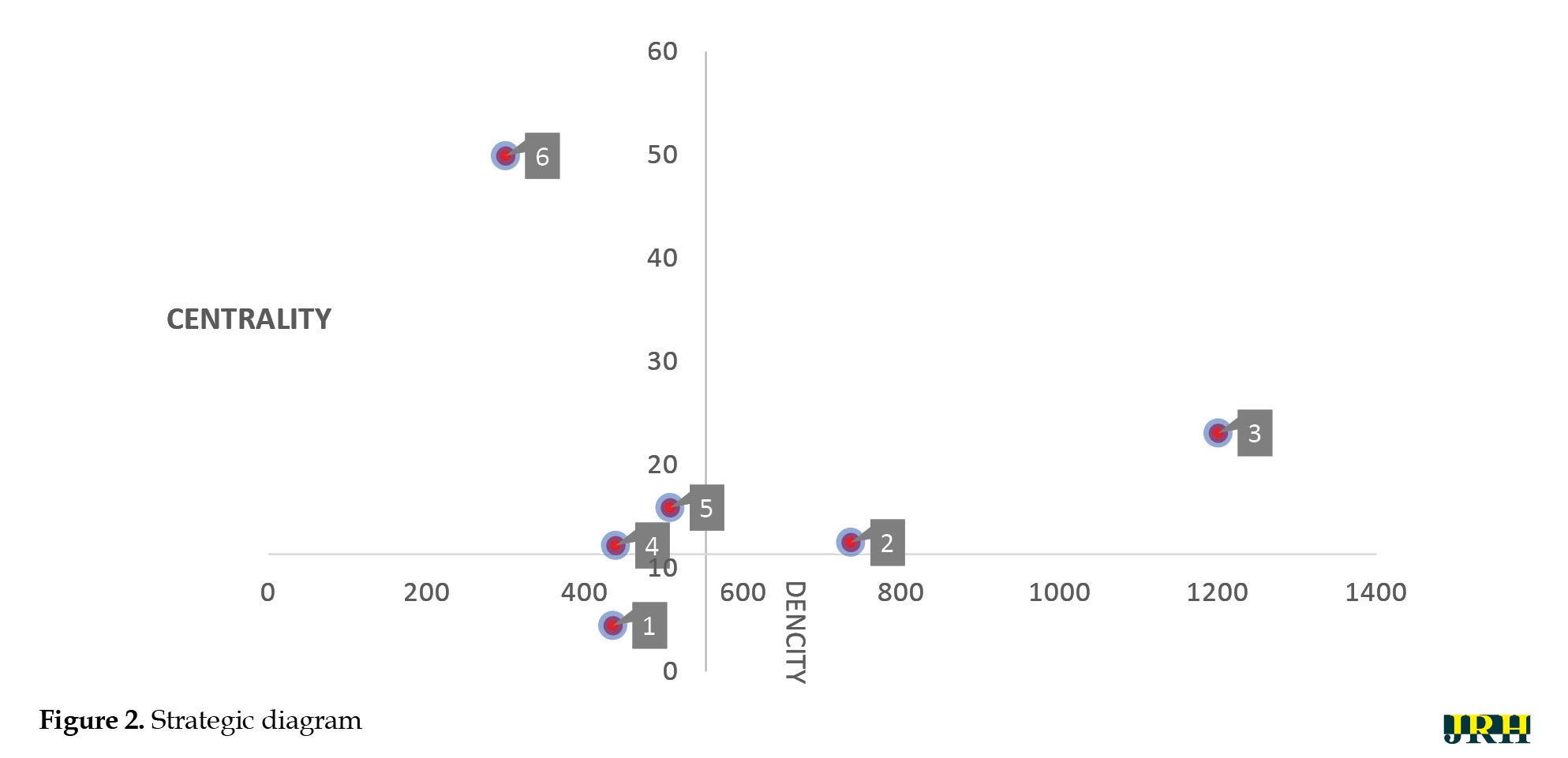
Six distinct clusters are characterized by their density and centrality. The first cluster, “principles and theories related to cognition and literacy,” exhibits a density of 4.448 and a centrality of 434.898, indicating a foundational but less internally cohesive. The “health literacy” cluster, with a density of 12.475 and a centrality of 736, suggests moderate cohesion and significant influence within the field. The cluster focused on “instruments for measuring literacy skills and functional health literacy” is distinguished by a high density of 23.081 and the highest centrality of 1200.189, reflecting strong internal connections and a central role in the literacy domain. “Early literacy” has a density of 12.182 and a centrality of 438.541, indicating moderate cohesion and influence. The “financial literacy” cluster, with a density of 15.856 and a centrality of 507.394, shows a balanced profile of internal strength and external connectivity. Last, the “mental health literacy” cluster, with the highest density of 49.905 but a lower centrality of 299.429, demonstrates strong internal ties but limited centrality within the broader literacy field.
The strategic diagram, divided into four quadrants, indicates that clusters in quadrant I are both coherent and central to the field. These mainstream clusters represent the focus of much of the network. Clusters in quadrant II are also coherent, but more specialized and peripheral to the field’s main focus. Clusters in quadrant III represent areas that are emerging or declining portions of the network. Quadrant IV contains clusters that address broad themes or are in early stages but may develop into core areas [43, 44].
According to Figure 2, cluster 2 (health literacy) and cluster 3 (instruments for measuring literacy skills and functional health literacy) are the main topics of this study and are considered core and mainstream.
The structure of literacy using the strategic diagram
Six distinct clusters are characterized by their density and centrality. The first cluster, “principles and theories related to cognition and literacy,” exhibits a density of 4.448 and a centrality of 434.898, indicating a foundational but less internally cohesive. The “health literacy” cluster, with a density of 12.475 and a centrality of 736, suggests moderate cohesion and significant influence within the field. The cluster focused on “instruments for measuring literacy skills and functional health literacy” is distinguished by a high density of 23.081 and the highest centrality of 1200.189, reflecting strong internal connections and a central role in the literacy domain. “Early literacy” has a density of 12.182 and a centrality of 438.541, indicating moderate cohesion and influence. The “financial literacy” cluster, with a density of 15.856 and a centrality of 507.394, shows a balanced profile of internal strength and external connectivity. Last, the “mental health literacy” cluster, with the highest density of 49.905 but a lower centrality of 299.429, demonstrates strong internal ties but limited centrality within the broader literacy field.
The strategic diagram, divided into four quadrants, indicates that clusters in quadrant I are both coherent and central to the field. These mainstream clusters represent the focus of much of the network. Clusters in quadrant II are also coherent, but more specialized and peripheral to the field’s main focus. Clusters in quadrant III represent areas that are emerging or declining portions of the network. Quadrant IV contains clusters that address broad themes or are in early stages but may develop into core areas [43, 44].
According to Figure 2, cluster 2 (health literacy) and cluster 3 (instruments for measuring literacy skills and functional health literacy) are the main topics of this study and are considered core and mainstream.
cluster 4 (early literacy), cluster 5 (financial literacy), and cluster 6 (mental health literacy) are in the second quadrant and are developed but isolated, while cluster 1 (principles and theories related to cognition and literacy) located in the third quadrant, represents an emerging or declining theme. No clusters are located in the fourth quadrant. None of the clusters identified through the author cocitation analysis has the characteristics of a general or broad theme.
Discussion
To name and analyze the clusters, several domain experts were consulted. Subsequently, the clusters were named based on the weight of nodes in the co-citation network, the expertise of the authors represented as nodes in the network, and the topics of the articles under examination. The clusters were then interpreted based on all the aforementioned criteria, and the following discussion is organized to reflect their strategic positioning and thematic significance. Building on this systematic approach to cluster identification and interpretation, the strategic diagram analysis revealed that cluster 2 (health literacy) and cluster 3 (instruments for measuring literacy skills and functional health literacy) occupy the first quadrant, signifying their centrality and influence in the research landscape. The prominence of these clusters may be attributed to the increasing prevalence of infectious and chronic diseases (e.g. COVID-19, diabetes), lifestyle changes that contribute to health issues, and advances in medical technology. These factors necessitate reliable tools for assessing health literacy, providing researchers with a robust framework to examine behaviors, educational outcomes, and health-related competencies. These results align with Yang et al. who identified key research areas in digital health literacy, including measurement tools, health outcomes, the digital divide, and influencing factors [29].
These findings have practical applications, informing the design of targeted public health campaigns and integrating health-related modules into educational systems. Furthermore, they can guide digital literacy programs aimed at improving individuals’ ability to navigate online health information effectively.
The third quadrant contains emerging or declining topics, with cluster 1 representing evolving themes in the field. The theoretical foundations of any scientific discipline serve as the basis for further research, and with new technologies and evolving concepts in cognition and literacy, researchers can explore novel interdisciplinary perspectives. Emerging theories in cognitive literacy enhance our understanding of learning processes, reading, and writing, facilitating the development of more effective educational methodologies. Cognitive theories focus on mental processes, such as learning, problem-solving, memory, and attention, contributing to a deeper comprehension of literacy acquisition and application.
The evolution of information and communication technology has reshaped the meaning of literacy. The term has broadened from its traditional roots in reading and writing to include digital competencies, culminating in the emergence of multiple literacies such as AI literacy. Analysis of the identified clusters confirms this trend, showing that technology has profoundly shaped not only the definition of literacy but also the instruments for its assessment. This is exemplified by cluster three, titled: Instruments for measuring literacy skills and functional health literacy.
Early literacy, financial literacy, and mental health literacy clusters were well developed yet remained isolated from other literacy domains. Advances in education and technology have significantly reduced illiteracy rates, and early literacy research has achieved substantial theoretical maturity. Financial literacy has emerged as a distinct cluster because of the growing complexity of financial systems, including online markets and cryptocurrencies, necessitating specialized knowledge and skills. This finding is consistent with Ingale and Paluri, who noted the evolution of financial literacy as an interdisciplinary field [31], and Vijay Kumar and Senthil Kumar, who highlighted significant progress in financial literacy research over the past two decades [33].
Mental health literacy, defined as the knowledge and beliefs that aid in recognizing, managing, or preventing mental disorders [45], encompasses awareness of symptoms, treatment options, and mental well-being support strategies. Enhanced mental health literacy improves early intervention and treatment outcomes, underscoring its societal importance.
Notably, information literacy did not form a distinct cluster, possibly because of its overlap with other literacies, where it is perceived as a foundational skill rather than a primary research focus. Additionally, information literacy research has predominantly been confined to library and information science, lacking interdisciplinary integration. Had the study been limited to this field, an information literacy cluster might have emerged, suggesting a potential avenue for future research. Another contributing factor may be incomplete bibliographic data of older sources, which may have obscured their presence in the analysis.
Furthermore, health information literacy, an integration of health literacy and information literacy, may have absorbed some aspects of information literacy studies, further explaining the absence of a standalone cluster.
Conclusion
This study highlights the critical role of health literacy in contemporary research, with multiple clusters emphasizing its significance in public health and education. The strategic diagram analysis identified health literacy and measurement tools as central themes, driven by global health challenges and technological advancements. Emerging cognitive and literacy theories present new research opportunities, while well-developed yet isolated clusters, such as financial literacy and mental health literacy, show specialized growth within the field.
The absence of an information literacy cluster suggests its foundational, cross- disciplinary role across other literacies, though its limited interdisciplinary engagement and bibliographic data constraints may also contribute to this. Future research should explore the integration of information literacy within broader literacy studies and address data limitations to ensure comprehensive bibliometric analyses.
Overall, this study provides valuable insights into the evolving landscape of literacy research, emphasizing the need for continued focus on health-related literacies, interdisciplinary collaboration, and methodological rigor in bibliometric investigations.
Ethical Considerations
Compliance with ethical guidelines
There were no ethical considerations to be considered in this research.
Funding
This research did not receive any grant from funding agencies in the public, commercial, or non-profit sectors.
Authors' contributions
Conceptualization, initial proposal writing, data collection, and analysis: Saleh Rahimi; Proposal review, data interpretation, and review and editing: Faramarz Soheili; Initial draft preparation: Saleh Rahimi and Musa Nushi; Final approval: All authors.
Conflict of interest
The authors declared no conflict of interest.
Acknowledgments
The authors thank everyone who helped them with the paper.
Discussion
To name and analyze the clusters, several domain experts were consulted. Subsequently, the clusters were named based on the weight of nodes in the co-citation network, the expertise of the authors represented as nodes in the network, and the topics of the articles under examination. The clusters were then interpreted based on all the aforementioned criteria, and the following discussion is organized to reflect their strategic positioning and thematic significance. Building on this systematic approach to cluster identification and interpretation, the strategic diagram analysis revealed that cluster 2 (health literacy) and cluster 3 (instruments for measuring literacy skills and functional health literacy) occupy the first quadrant, signifying their centrality and influence in the research landscape. The prominence of these clusters may be attributed to the increasing prevalence of infectious and chronic diseases (e.g. COVID-19, diabetes), lifestyle changes that contribute to health issues, and advances in medical technology. These factors necessitate reliable tools for assessing health literacy, providing researchers with a robust framework to examine behaviors, educational outcomes, and health-related competencies. These results align with Yang et al. who identified key research areas in digital health literacy, including measurement tools, health outcomes, the digital divide, and influencing factors [29].
These findings have practical applications, informing the design of targeted public health campaigns and integrating health-related modules into educational systems. Furthermore, they can guide digital literacy programs aimed at improving individuals’ ability to navigate online health information effectively.
The third quadrant contains emerging or declining topics, with cluster 1 representing evolving themes in the field. The theoretical foundations of any scientific discipline serve as the basis for further research, and with new technologies and evolving concepts in cognition and literacy, researchers can explore novel interdisciplinary perspectives. Emerging theories in cognitive literacy enhance our understanding of learning processes, reading, and writing, facilitating the development of more effective educational methodologies. Cognitive theories focus on mental processes, such as learning, problem-solving, memory, and attention, contributing to a deeper comprehension of literacy acquisition and application.
The evolution of information and communication technology has reshaped the meaning of literacy. The term has broadened from its traditional roots in reading and writing to include digital competencies, culminating in the emergence of multiple literacies such as AI literacy. Analysis of the identified clusters confirms this trend, showing that technology has profoundly shaped not only the definition of literacy but also the instruments for its assessment. This is exemplified by cluster three, titled: Instruments for measuring literacy skills and functional health literacy.
Early literacy, financial literacy, and mental health literacy clusters were well developed yet remained isolated from other literacy domains. Advances in education and technology have significantly reduced illiteracy rates, and early literacy research has achieved substantial theoretical maturity. Financial literacy has emerged as a distinct cluster because of the growing complexity of financial systems, including online markets and cryptocurrencies, necessitating specialized knowledge and skills. This finding is consistent with Ingale and Paluri, who noted the evolution of financial literacy as an interdisciplinary field [31], and Vijay Kumar and Senthil Kumar, who highlighted significant progress in financial literacy research over the past two decades [33].
Mental health literacy, defined as the knowledge and beliefs that aid in recognizing, managing, or preventing mental disorders [45], encompasses awareness of symptoms, treatment options, and mental well-being support strategies. Enhanced mental health literacy improves early intervention and treatment outcomes, underscoring its societal importance.
Notably, information literacy did not form a distinct cluster, possibly because of its overlap with other literacies, where it is perceived as a foundational skill rather than a primary research focus. Additionally, information literacy research has predominantly been confined to library and information science, lacking interdisciplinary integration. Had the study been limited to this field, an information literacy cluster might have emerged, suggesting a potential avenue for future research. Another contributing factor may be incomplete bibliographic data of older sources, which may have obscured their presence in the analysis.
Furthermore, health information literacy, an integration of health literacy and information literacy, may have absorbed some aspects of information literacy studies, further explaining the absence of a standalone cluster.
Conclusion
This study highlights the critical role of health literacy in contemporary research, with multiple clusters emphasizing its significance in public health and education. The strategic diagram analysis identified health literacy and measurement tools as central themes, driven by global health challenges and technological advancements. Emerging cognitive and literacy theories present new research opportunities, while well-developed yet isolated clusters, such as financial literacy and mental health literacy, show specialized growth within the field.
The absence of an information literacy cluster suggests its foundational, cross- disciplinary role across other literacies, though its limited interdisciplinary engagement and bibliographic data constraints may also contribute to this. Future research should explore the integration of information literacy within broader literacy studies and address data limitations to ensure comprehensive bibliometric analyses.
Overall, this study provides valuable insights into the evolving landscape of literacy research, emphasizing the need for continued focus on health-related literacies, interdisciplinary collaboration, and methodological rigor in bibliometric investigations.
Ethical Considerations
Compliance with ethical guidelines
There were no ethical considerations to be considered in this research.
Funding
This research did not receive any grant from funding agencies in the public, commercial, or non-profit sectors.
Authors' contributions
Conceptualization, initial proposal writing, data collection, and analysis: Saleh Rahimi; Proposal review, data interpretation, and review and editing: Faramarz Soheili; Initial draft preparation: Saleh Rahimi and Musa Nushi; Final approval: All authors.
Conflict of interest
The authors declared no conflict of interest.
Acknowledgments
The authors thank everyone who helped them with the paper.
References
- Chen LC, Lien YH. Using author co-citation analysis to examine the intellectual structure of e-learning: A MIS perspective. Scientometrics. 2011; 89(3):867-86. [DOI:10.1007/s11192-011-0458-y]
- White HD, Griffith BC. Author co-citation: A literature measure of intellectual structure. Journal of the American Society for information Science. 1981; 32(3):163-71. [DOI:10.1002/asi.4630320302]
- Özçınar H, Öztürk TH. The intellectual structure of media literacy field. Karabük Üniversitesi Sosyal Bilimler Enstitüsü Dergisi. 2016; 6(1):162-79. [Link]
- White HD, McCain KW. Visualizing a discipline: An author co-citation analysis of information science, 1972–1995. Journal of the American Society for Information Science. 1998; 49(4):327–55. [Link]
- Roberts P. Defining literacy: Paradise, nightmare or red herring? British Journal of Educational Studies. 1995; 43(4):412-32. [DOI:10.1080/00071005.1995.9974048]
- Clifford GJ. Buch und lesen: Historical perspectives on literacy and schooling. Review of Educational Research. 1984; 54(4):472-500. [DOI:10.2307/1170171]
- Walsh M. Multiliteracies, multimodality, new literacies and…. What do these mean for literacy education? International Perspectives on Inclusive Education. 2017; 11:19-33. [DOI:10.1108/S1479-363620170000011002]
- Robison AJ, Clinton K, Weigel M, Purushotma R, Jenkins H. Confronting the challenges of participatory culture: media education for the 21st century. Chicago: MacArthur Foundation; 2009. [Link]
- Papen U. The (new) literacy studies: The evolving concept of literacy as social practice and its relevance for work with deaf students. Journal of Cultural Psychology. 2023; 4:67-84. [Link]
- Choi S. Privacy literacy on social media: Its predictors and outcomes. International Journal of Human–Computer Interaction. 2023; 39(1):217-32. [DOI:10.1080/10447318.2022.2041892]
- Buschman J. Information Literacy, “New” literacies, and literacy. The Library Quarterly. 2009; 79(1):95-118. [Link]
- Lisenbee P, Pilgrim J, Vasinda S. Integrating technology in literacy instruction models and frameworks for all learners. Routledge: New York; 2020. [DOI:10.4324/9780429340154]
- Zarcadoolas C, Pleasant A, Greer DS. Elaborating a definition of health literacy: A commentary. Journal of Health Communication. 2003; 8(S1):119-20. [DOI:10.1080/713851982]
- Ma R, Dai Q, Ni C, Li X. An author co-citation analysis of information science in China with Chinese Google Scholar search engine, 2004–2006. Scientometrics. 2009; 81:33-46. [Link]
- Summers EG. A review and application of citation analysis methodology to reading research journal literature. Journal of the American Society for Information Science. 1984; 35(6):332-43. [DOI:10.1002/asi.4630350605]
- Tang KY, Li MC, Hsin CT, Tsai CC. A co-citation network of young children’s learning with technology. Journal of Educational Technology & Society. 2016; 19(3):294–305. [Link]
- Zhang R, Wang D, Zhu L, He Y, Cheng L, Ma J, et al. Research trends in readiness for hospital discharge between 2002 and 2021: A bibliometric analysis. Nursing Open. 2023; 10(12):7676-93. [DOI:10.1002/nop2.2009] [PMID]
- Sharma Y, Suri A, Sijariya R, Jindal L. Role of education 4.0 in innovative curriculum practices and digital literacy– A bibliometric approach. E-Learning and Digital Media. 2023; 22(1):1-32. [DOI:10.1177/20427530231221073]
- Bhardwaj RK. Information literacy literature in the social sciences and humanities: A bibliometric study. Information and Learning Science. 2017; 118(1-2):67-89. [Link]
- Chen CC, Wang NC, Tu YF, Lin HJ. Research trends from a decade (2011–2020) for information literacy in higher education: Content and bibliometric mapping analysis. Proceedings of the Association for Information Science and Technology. 2021; 58(1):48–59. [DOI:10.1002/pra2.435]
- Onyancha OB. Knowledge visualization and mapping of information literacy, 1975–2018. IFLA Journal. 2020; 46(2):107-23. [DOI:10.1177/0340035220906536]
- Taşkın Z, Doğan G, Şencan İ. Analyzing the intellectual structure of world information literacy literature through citations and co-citations. In: Kurbanoglu S, Grassian E, Mizrachi D, Catts R, Spiranec S, editors. Worldwide Commonalities and Challenges in Information Literacy Research and Practice – Communications in Computer and Information Science. Switzerland: Springer; 2013. [Link]
- Fang X, Zhang Z. Hotspots and trends in health-oriented physical literacy research: A visual analysis based on the WOS database. BMC Public Health. 2024; 24(1):1480. [DOI:10.1186/s12889-024-18951-7]
- Sun Y, Li C, Zhao Y, Sun J. Trends and developments in oral health literacy: A scientometric research study (1991–2020). BDJ Open. 2021; 7(1):13. [DOI:10.1038/s41405-021-00066-5]
- Sheriff N, Sevukan R. Exploration of data literacy research using a network of cluster mapping approach. Journal of Scientometric Research. 2023; 12(1):130-43. [Link]
- Liang C, Luo A, Zhong Z. Knowledge mapping of medication literacy study: A visualized analysis using CiteSpace. SAGE Open Medicine. 2018; 6:2050312118800199. [DOI:10.1177/2050312118800199] [PMID]
- Baber H, Fanea-Ivanovici M, Lee YT, Tinmaz H. A bibliometric analysis of digital literacy research and emerging themes pre-during COVID-19 pandemic. Information and Learning Sciences. 2022; 123(3/4):214-32. [DOI:10.1108/ILS-10-2021-0090]
- Qi S, Hua F, Xu S, Zhou Z, Liu F. Trends of global health literacy research (1995–2020): Analysis of mapping knowledge domains based on citation data mining. PLoS One. 2021; 16(8):e0254988. [DOI:10.1371/journal.pone.0254988]
- Yang K, Hu Y, Qi H. Digital health literacy: Bibliometric analysis. Journal of Medical Internet Research. 2022; 24(7):e35816. [Link]
- Li Y, Guo M. Scientific literacy in communicating science and socio-scientific issues: Prospects and challenges. Frontiers in Psychology. 2021; 12:758000. [DOI:10.3389/fpsyg.2021.758000] [PMID]
- Ingale KK, Paluri RA. Financial literacy and financial behaviour: A bibliometric analysis. Review of Behavioral Finance. 2022; 14(1):130-54. [DOI:10.1108/RBF-06-2020-0141]
- Goyal K, Kumar S. Financial literacy: A systematic review and bibliometric analysis. International Journal of Consumer Studies. 2020; 45(1):80-105. [DOI:10.1111/ijcs.12605]
- Vijay Kumar VM, Senthil Kumar JP. Insights on financial literacy: A bibliometric analysis. Managerial Finance. 2023; 49(7):1169-201. [DOI:10.1108/MF-08-2022-0371]
- Molina-García A, Diéguez-Soto J, Galache-Laza M, Campos-Valenzuela M. Financial literacy in SMEs: A bibliometric analysis and a systematic literature review of an emerging research field. Review of Managerial Science. 2023; 17(3):787-826. [DOI:10.1007/s11846-022-00556-2]
- Suri A, Jindal L. Financial literacy for well-being: Scientific mapping and bibliometric analysis. Citizenship, Social and Economics Education. 2022; 21(3):209-33. [DOI:10.1177/14788047221120917]
- Yadav M, Banerji P. A bibliometric analysis of digital financial literacy. American Journal of Business. 2023; 38(3), 91-111. [DOI:10.1108/AJB-11-2022-0186]
- Fengwen W, Ali M. Women’s financial inclusion and women’s financial literacy: Bibliometric Analysis. In Leong CM, Ali M, Raza SA, Puah CH, Eksi IH, editors. Financial inclusion across Asia: Bringing opportunities for businesses. Leeds: Emerald Publishing Limited; 2023. [DOI:10.1108/978-1-83753-304-620231001]
- Yüksel A, GÖK MŞ, ÖZER G, CİĞERİM E. A new theoretical approach to intellectual capital: Meta-synthesis definitions of innovative literacy. Journal of Intellectual Capital. 2022; 23(6):1435-60. [DOI:10.1108/JIC-12-2020-0379]
- McManus S, Pendergast D, Kanasa H. Mapping the intellectual structure and knowledge base of food literacy research: A bibliometric analysis. British Food Journal. 2024; 126(6):2249-70. [DOI:10.1108/BFJ-06-2023-0499]
- Nor NM, Mohd Iqbal MN, Halim Z, Mohd Haidzir AM, Saiful AB, Ummi Mohlisi MA. Mapping the evolution of nutrition education: A scientometric review from 1970 to 2023, unveiling insights over half a century. Current Research in Nutrition and Food Science. 2024; 12(1):1-19. [DOI:10.12944/CRNFSJ.12.1.01]
- Ding Y, Chowdhury GG, Foo S. Bibliometric cartography of information retrieval research by using co-word analysis. Information Processing and Management. 2001; 37(6):817–42. [DOI:10.1016/S0306-4573(00)00051-0]
- Nerur S, Rasheed AA, Natarajan V. The intellectual structure of the strategic management field: An author co-citation analysis. Strategic Management Journal. 2008; 29(3):319-36. [DOI:10.1002/smj.659]
- Melcer E, Nguyen THD, Chen Z, Canossa A, El-Nasr MS, Isbister K. Games research today: Analyzing the academic landscape 2000-2014. In Proceedings of the 10th International Conference on the Foundations of Digital Games. 2015; Pacific Grove, CA, USA. [Link]
- Khasseh AA, Soheili F, Moghaddam HS, Chelak AM. Intellectual structure of knowledge in iMetrics: A co-word analysis. Information Processing & Management. 2017; 53(3):705-20. [DOI:10.1016/j.ipm.2017.02.001]
- Jorm AF, Korten AE, Jacomb PA, Christensen H, Rodgers B, Pollitt P. Mental health literacy: A survey of the public’s ability to recognise mental disorders and their beliefs about the effectiveness of treatment. Medical Journal of Australia. 1997; 166(4):182-6. [DOI:10.5694/j.1326-5377.1997.tb140071.x]
Type of Study: Orginal Article |
Subject:
● Health Education
Received: 2025/07/7 | Accepted: 2025/08/26 | Published: 2026/03/14
Received: 2025/07/7 | Accepted: 2025/08/26 | Published: 2026/03/14
| Rights and permissions | |
 |
This work is licensed under a Creative Commons Attribution-NonCommercial 4.0 International License. |

This is an open access article distributed under the terms of the Creative Commons Attribution License (CC-By-NC), which permits use, distribution, and reproduction in any medium, provided the original work is properly cited and is not used for commercial purposes.
Contact Information
