

Volume 16, Issue 4 (Jul & Aug 2026)
J Research Health 2026, 16(4): 409-416 |
Back to browse issues page



Ethics code: Health Research Ethics Commite of Faculty of Nursing, University of Jember.


Download citation:
BibTeX | RIS | EndNote | Medlars | ProCite | Reference Manager | RefWorks
Send citation to:


BibTeX | RIS | EndNote | Medlars | ProCite | Reference Manager | RefWorks
Send citation to:
Suryono S I L, Susanto T, Ati N A L. Family Feeding Pattern and Severity of Stunting Among Children Aged 12–36 Months: A Cross-sectional Study in Jember, Indonesia. J Research Health 2026; 16 (4) :409-416
URL: http://jrh.gmu.ac.ir/article-1-2851-en.html
URL: http://jrh.gmu.ac.ir/article-1-2851-en.html


1- Department of Nursing Program, Faculty of Nursing, Universitas Jember, Jember, Indonesia.
2- Department of Community, Family and Gerontic Nursing, Faculty of Nursing, Universitas Jember, Jember, Indonesia. & Center of Agronursing for Community, Family and Elderly Health, Universitas Jember, Jember, Indonesia. ,tantut_s.psik@unej.ac.id
3- Department of Mental Health Nursing, Faculty of Nursing, Universitas Jember, Jember, Indonesia.
2- Department of Community, Family and Gerontic Nursing, Faculty of Nursing, Universitas Jember, Jember, Indonesia. & Center of Agronursing for Community, Family and Elderly Health, Universitas Jember, Jember, Indonesia. ,
3- Department of Mental Health Nursing, Faculty of Nursing, Universitas Jember, Jember, Indonesia.
Full-Text [PDF 651 kb]
(67 Downloads)
| Abstract (HTML) (673 Views)
Full-Text: (5 Views)
Introduction
Stunting is a public health problem caused by chronic malnutrition and remains a global issue. As many as 22.3% or 148.1 million children under the age of five are recorded as stunted worldwide in 2022 [1]. According to the 2023 Indonesian Health Survey, the prevalence of stunting in Indonesia is 21.5%. East Java Province has a prevalence rate of 17.17%, while Jember Regency has a significantly higher prevalence rate, ranking fourth at 29.7% [2]. Stunting is a condition of growth failure caused by prolonged malnutrition, resulting in a height below the age-standard [3]. The toddler period, especially ages 12-36 months, is a golden period in the process of growth and development, as malnutrition during this time can have irreversible effects in the future [4], including impairments in child’s physical development, cognitive abilities, future productivity, and susceptibility to illness and mortality [5, 6].
Several factors contribute to the severity of stunting, including economic conditions, parental education, sanitation, and parenting practices, particularly feeding practices. Family feeding patterns, including the type, amount, and schedule of meals, play an important role in meeting children’s macro- and micronutrient needs [7]. Improper feeding patterns interfere with nutrient absorption and energy balance, thus contributing directly to the increased risk of stunting [8]. From 12-36 months of age, when children begin consuming family foods and are no longer fully dependent on breast milk, the family’s role as a determinant of nutritional intake becomes crucial [9]. The family acts as a provider, caregiver, and model for shaping children’s healthy eating behavior. Good family functioning has been shown to support optimal nutritional status and reduce the risk of stunting [10, 11] especially nutrition for their children. Meanwhile, the implementation of family functions is needed for monitoring the nutritional status of under-five children. Although National and Regional government programs have been implemented in Jember Regency, the stunting rate remains relatively high. However, studies examining family feeding patterns as a key factor in stunting prevention remain limited, particularly among children aged 12-36 months in areas with high stunting prevalence. Therefore, this study aimed to evaluate the relationship between family feeding patterns and the severity of stunting among children aged 12-36 months, to understand how family functioning influences the effective implementation of appropriate feeding practices to prevent stunting.
Methods
Study design and setting
This study employed a quantitative cross-sectional approach. This study was conducted from March to April 2025 in Rambipuji, Sumberjambe, and Ledokombo, three Jember Regency sub-districts prioritized for stunting reduction due to their many high-risk villages, as designated by the Jember Regent [11, 12]. Data were collected from the respective Public Health Centers.
Participants
Participants were families with stunted toddlers aged 12-36 months. Eligible participants consisted of caregiver-child dyads in which the primary caregiver was a family member (e.g. mother, father, or other guardian) and the child met the stunting criteria within the specified age range. The sample size was calculated using the Neyman formula, resulting in a minimum required sample of 212 respondents. Population parameters were obtained from the Jember district health office. Specifically, the total population of stunted toddlers aged 12–36 months across the study area was 1,014, and 463 stunted toddlers were recorded. Participants in this study were selected using stratified random sampling across each village and integrated health center, known as posyandu in Indonesia, within the study area. The inclusion criteria included families with stunted toddlers aged 12-36 months and were registered at the posyandu in the working areas of Rambipuji, Sumberjambe, and Ledokombo Public Health Centers. The exclusion criteria included stunted toddlers aged 12-36 months who had congenital disabilities or disorders, and families who were not willing to become respondents.
Measurements
The instruments used in this study consisted of a characteristics questionnaire and a feeding patterns questionnaire. The characteristics data comprise family data (ethnicity, age, family role, education, occupation, income, and number of children under five in the family), as well as children’s characteristics (age, gender, height, and weight of toddlers). To measure the anthropometrics of the children aged 12-24 months, a digital length board with the onemed digital baby scale model: OD231B was used. For toddlers aged 25-36 months, body weight was measured using onemed digital scales, and height was measured using one health digital microtoise. Children’s height and weight measurements were analyzed to determine their nutritional status using the World Health Organization (WHO) AntroPlus 1.0.4. In this study, researchers used indicators of height or length by age, and the results were classified according to standards set by the Ministry of Health of the Republic of Indonesia.
The study evaluated feeding patterns using the child feeding questionnaire (CFQ) [12, 13], developed by Camci et al. (2014) and adopted in Indonesia by Putri et al. (2024) [7, 13]. This questionnaire has passed reliability testing, demonstrating reliability for the amount of food, food type, and meal schedule indicators, with Cronbach’s alpha values of 0.769, 0.902, and 0.911, respectively. Furthermore, validity testing confirmed that all questionnaire items were valid. Feeding pattern scores were classified into two categories: appropriate (55-100%) and inappropriate (<55%).
Data analysis
Data were analyzed using SPSS software, version 25. Descriptive analysis was used to examine participants’ characteristics, and the chi-square test was used to investigate the relationship between stunting severity and family feeding patterns. Statistical significance was set at P<0.05.
Results
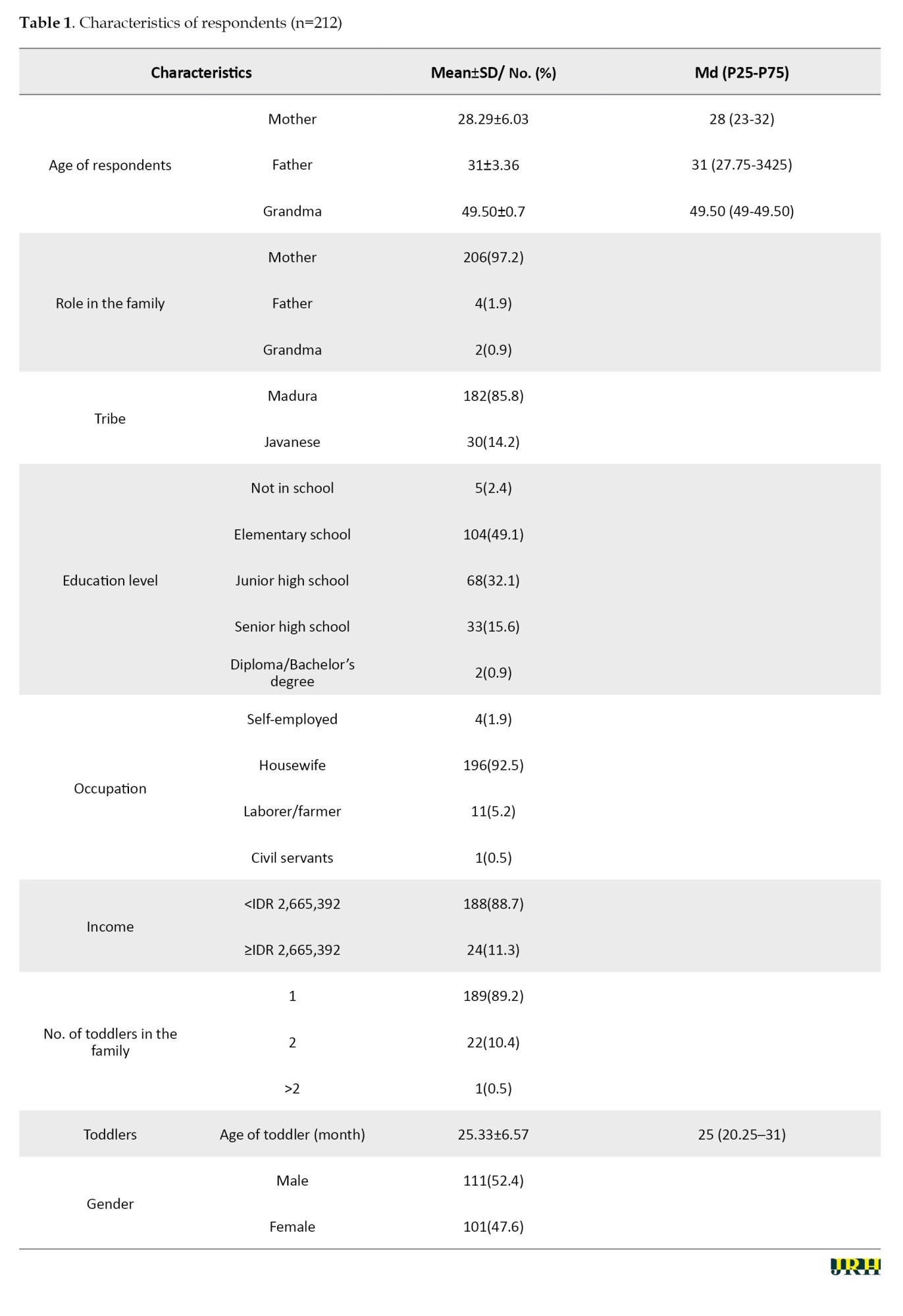
A total of 212 participants were involved in the study, most of whom were mothers (97.2%) with an average age of 28.29±6.03 years. The majority identified as the Madurese tribe (85.8%), and the highest level of education attained was elementary school (49.1%). Most respondents were heads of households (92.5%), with incomes below the minimum regional monthly wage. Additionally, most families in this study had only one child under the age of five (89.2%), with an average age of 25.33 months, and a majority of the children were male (52.4%) (Table 1).
Age, tribe, education, and occupation were reported for the primary caregiver respondent only, as provided by one caregiver per child (mother/father/another guardian).
Figure 1 shows the distribution of family feeding patterns and nutritional statuses among the participants.
Stunting is a public health problem caused by chronic malnutrition and remains a global issue. As many as 22.3% or 148.1 million children under the age of five are recorded as stunted worldwide in 2022 [1]. According to the 2023 Indonesian Health Survey, the prevalence of stunting in Indonesia is 21.5%. East Java Province has a prevalence rate of 17.17%, while Jember Regency has a significantly higher prevalence rate, ranking fourth at 29.7% [2]. Stunting is a condition of growth failure caused by prolonged malnutrition, resulting in a height below the age-standard [3]. The toddler period, especially ages 12-36 months, is a golden period in the process of growth and development, as malnutrition during this time can have irreversible effects in the future [4], including impairments in child’s physical development, cognitive abilities, future productivity, and susceptibility to illness and mortality [5, 6].
Several factors contribute to the severity of stunting, including economic conditions, parental education, sanitation, and parenting practices, particularly feeding practices. Family feeding patterns, including the type, amount, and schedule of meals, play an important role in meeting children’s macro- and micronutrient needs [7]. Improper feeding patterns interfere with nutrient absorption and energy balance, thus contributing directly to the increased risk of stunting [8]. From 12-36 months of age, when children begin consuming family foods and are no longer fully dependent on breast milk, the family’s role as a determinant of nutritional intake becomes crucial [9]. The family acts as a provider, caregiver, and model for shaping children’s healthy eating behavior. Good family functioning has been shown to support optimal nutritional status and reduce the risk of stunting [10, 11] especially nutrition for their children. Meanwhile, the implementation of family functions is needed for monitoring the nutritional status of under-five children. Although National and Regional government programs have been implemented in Jember Regency, the stunting rate remains relatively high. However, studies examining family feeding patterns as a key factor in stunting prevention remain limited, particularly among children aged 12-36 months in areas with high stunting prevalence. Therefore, this study aimed to evaluate the relationship between family feeding patterns and the severity of stunting among children aged 12-36 months, to understand how family functioning influences the effective implementation of appropriate feeding practices to prevent stunting.
Methods
Study design and setting
This study employed a quantitative cross-sectional approach. This study was conducted from March to April 2025 in Rambipuji, Sumberjambe, and Ledokombo, three Jember Regency sub-districts prioritized for stunting reduction due to their many high-risk villages, as designated by the Jember Regent [11, 12]. Data were collected from the respective Public Health Centers.
Participants
Participants were families with stunted toddlers aged 12-36 months. Eligible participants consisted of caregiver-child dyads in which the primary caregiver was a family member (e.g. mother, father, or other guardian) and the child met the stunting criteria within the specified age range. The sample size was calculated using the Neyman formula, resulting in a minimum required sample of 212 respondents. Population parameters were obtained from the Jember district health office. Specifically, the total population of stunted toddlers aged 12–36 months across the study area was 1,014, and 463 stunted toddlers were recorded. Participants in this study were selected using stratified random sampling across each village and integrated health center, known as posyandu in Indonesia, within the study area. The inclusion criteria included families with stunted toddlers aged 12-36 months and were registered at the posyandu in the working areas of Rambipuji, Sumberjambe, and Ledokombo Public Health Centers. The exclusion criteria included stunted toddlers aged 12-36 months who had congenital disabilities or disorders, and families who were not willing to become respondents.
Measurements
The instruments used in this study consisted of a characteristics questionnaire and a feeding patterns questionnaire. The characteristics data comprise family data (ethnicity, age, family role, education, occupation, income, and number of children under five in the family), as well as children’s characteristics (age, gender, height, and weight of toddlers). To measure the anthropometrics of the children aged 12-24 months, a digital length board with the onemed digital baby scale model: OD231B was used. For toddlers aged 25-36 months, body weight was measured using onemed digital scales, and height was measured using one health digital microtoise. Children’s height and weight measurements were analyzed to determine their nutritional status using the World Health Organization (WHO) AntroPlus 1.0.4. In this study, researchers used indicators of height or length by age, and the results were classified according to standards set by the Ministry of Health of the Republic of Indonesia.
The study evaluated feeding patterns using the child feeding questionnaire (CFQ) [12, 13], developed by Camci et al. (2014) and adopted in Indonesia by Putri et al. (2024) [7, 13]. This questionnaire has passed reliability testing, demonstrating reliability for the amount of food, food type, and meal schedule indicators, with Cronbach’s alpha values of 0.769, 0.902, and 0.911, respectively. Furthermore, validity testing confirmed that all questionnaire items were valid. Feeding pattern scores were classified into two categories: appropriate (55-100%) and inappropriate (<55%).
Data analysis
Data were analyzed using SPSS software, version 25. Descriptive analysis was used to examine participants’ characteristics, and the chi-square test was used to investigate the relationship between stunting severity and family feeding patterns. Statistical significance was set at P<0.05.
Results
A total of 212 participants were involved in the study, most of whom were mothers (97.2%) with an average age of 28.29±6.03 years. The majority identified as the Madurese tribe (85.8%), and the highest level of education attained was elementary school (49.1%). Most respondents were heads of households (92.5%), with incomes below the minimum regional monthly wage. Additionally, most families in this study had only one child under the age of five (89.2%), with an average age of 25.33 months, and a majority of the children were male (52.4%) (Table 1).
Age, tribe, education, and occupation were reported for the primary caregiver respondent only, as provided by one caregiver per child (mother/father/another guardian).
Figure 1 shows the distribution of family feeding patterns and nutritional statuses among the participants.
Regarding family feeding patterns, 84.4% of families provided food that fit the appropriate categories. Additionally, 79.7% of the respondents provided sufficient food, and 64.2% maintained a proper meal schedule. Overall, 71.2% of families in this study demonstrated appropriate feeding patterns. In contrast, according to height-for-age measurements, 63.2% of the toddlers were classified as very short (stunted). When assessed by weight-for-age, 40.6% and 18.4% of toddlers were underweight and severely underweight, respectively, for their age. Based on weight-for-height measurements, 76.9% of the toddlers had good nutritional status, and, according to body mass index for age, this proportion was 78.3%. Furthermore, gender analyses indicated that 69.3% of girls and 72.9% of boys received appropriate feeding. Severe stunting was observed in 38.6% of girls and 35.1% of boys, suggesting minimal gender differences in both feeding practices and nutritional status.
Table 2 presents the results of the chi-square test.
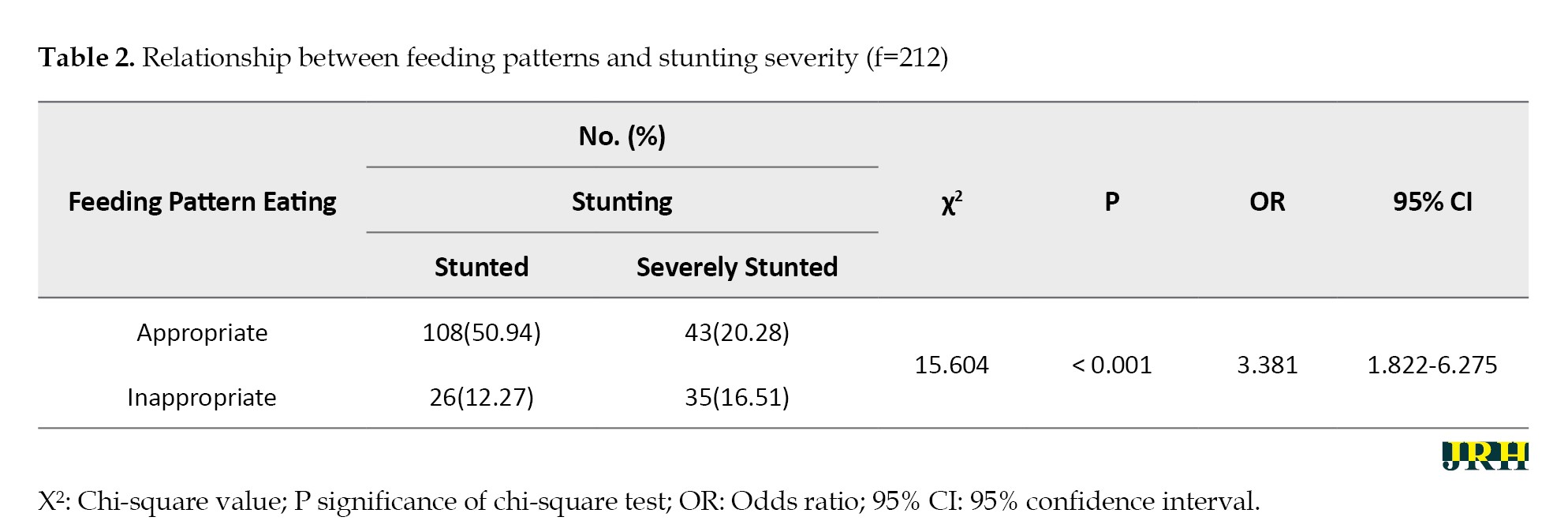
The analysis revealed a statistically significant relationship between feeding patterns and stunting among toddlers aged 12-36 months in Jember Regency (P<0.001). An odds ratio (OR) of 3.381 (95% confidence interval [CI], 1.822%, 6.275%) indicates that children with appropriate feeding patterns are 3.4 times less likely to experience severe stunting.
Discussion
This study found a correlation between feeding patterns and the severity of stunting in children aged 12-36 months. Most families have adopted appropriate feeding practices; however, the children aged 12-36 months were classified as stunted based on height-for-age measurements. Toddlers who do not receive proper feeding have a higher risk of linear growth.
In this study, most families adopted appropriate feeding patterns that aligned with the principles of the Balanced Nutrition Guidelines, emphasizing the importance of food diversity, adequate quantity, and regular meal times for children [14]. This finding may be attributed to the central role of the mother as the primary caregiver of toddlers in this study. In Indonesian society, mothers are often the primary figures who actively and consistently ensure their children's nutritional needs are met [15]. Mothers have complete control over the menu, portions, and timing of meals and are responsible for planning varied meals and selecting nutritious ingredients [16]. In addition, the family's affective function also supports this outcome, as mothers who create a loving environment and foster positive communication facilitate effective and efficient feeding interactions for optimal nutritional fulfillment [17]. Proper feeding patterns in this study, based on the number of toddlers, allowed for undivided attention and resources, ensuring that the toddlers' nutritional needs were optimally met [18]. Additionally, relatively young and productive mothers tend to have a greater capacity to receive information and engage in active parenting practices, particularly in implementing appropriate feeding methods [19]. On the other hand, the low level of education in some families and low family income are the leading causes of the family's inability to provide adequate food in terms of quantity, quality, and variety to meet nutritional needs, thus limiting the family in purchasing sufficient food for all family members [20], especially in terms of the type and amount of food. Thus, although most families have adopted appropriate feeding practices, some require additional support to achieve optimal feeding.
This study showed that most of the children were categorized as short (stunted) based on their height-for-age z-scores, indicating a serious chronic growth problem in the participants' locations. Stunting occurs due to a long-term lack of nutritional intake, especially during the golden period of the first 1000 days of life [21], and negatively impacts cognitive development and intelligence, as well as increasing the risk of chronic diseases later in life [4]. A remarkable result of this study is that 40.1% of stunted toddlers had normal body weight, indicating an imbalance between proportional height and weight growth. Meanwhile, according to weight-for-height and body mass index (BMI)-for-age, stunted toddlers are classified as having good nutritional status. This study found that although toddlers are stunted, their nutritional status is generally still considered good, as stunting is more influenced by chronic malnutrition, which has a greater impact on height than weight [22]. This study suggests that nutritional status, as measured by weight-for-age, weight-for-height, and BMI-for-age, may not always accurately reflect overall stunting, particularly when height-for-age is not considered. In other words, a child can have a proportional weight but still be stunted if their height is not age-appropriate.
This finding highlights a significant relationship between family feeding patterns and stunting among children aged 12-36 months, consistent with the study by Liliandrini et al. (2022), which also reported a statistically significant association between feeding patterns and stunting in children aged 2-5 years [23]. Appropriate feeding patterns, including diverse food types, adequate portions, and regular meal times, play a crucial role in reducing the risk of severe stunting. Appropriate feeding patterns, including a diverse range of food types, adequate portion sizes, and regular meal times, play a crucial role in reducing the risk of severe stunting. Although stunted toddlers are still found, toddlers with inappropriate feeding patterns are at greater risk of experiencing severe stunting compared to those who receive appropriate feeding, with a 3.4 times lower risk. Inadequate feeding patterns, whether in terms of type, quantity, or schedule, contribute to deficiencies in essential nutrients such as protein, iron, and vitamins, which can hinder nutrient intake and tissue repair [24], potentially worsening linear growth.
The study's results showed that most nutritional statuses remained normal (based on weight-for-height and BMI-for-age), indicating that their current intake is sufficient in quantity but cannot alter previously established linear growth deficits. These findings also reinforce the theory that stunting manifests as chronic or long-term malnutrition. At the same time, weight-for-age, weight-for-height, and BMI-for-age reflect acute or short-term nutritional status [25]. Although stunting is multifactorial, appropriate feeding patterns remain a key factor in mitigating its severity and should be the primary focus of nutritional interventions. Therefore, families need to actively ensure that feeding practices are appropriate for the child's age, in terms of variety, quantity, and meal timing, to prevent stunting.
One significant limitation of this study is its reliance on respondents' memories for data on feeding patterns, which may have introduced information bias. Also, the CFQ was completed by one primary caregiver per child (predominantly mothers, 97.2%). Therefore, respondent demographics (e.g. education, occupation) largely reflect mother respondents and are not intended for mother–father comparisons. Therefore, future research should use observational or case-control study designs to obtain more valid and comprehensive data. Additionally, it is essential to examine other factors that may impact stunting, such as food quality.
Conclusion
Family feeding patterns significantly impact stunting in children aged 12-36 months, increasing the risk of severe stunting. These findings highlight the crucial role that families play in adopting effective feeding practices to ensure balanced nutrition. This includes selecting appropriate food types, serving adequate portions, and maintaining regular mealtimes, all of which are essential for optimal growth and development during early childhood. Therefore, healthcare workers must collaborate with families to establish proper infant feeding patterns. This collaboration will help ensure that children receive enough macro- and micronutrients through appropriate meal types, quantities, and schedules, ultimately reducing the risk of severe stunting.
Ethical Considerations
Compliance with ethical guidelines
This study was approved by the Ethics Committee of University of Jember, Jember, Indonesia (Code: 092/UN.25.1.14/KEPK/2025). The researcher obtained written informed consent from all respondents willing to participate.
Funding
This research did not receive any grant from funding agencies in the public, commercial, or non-profit sectors.
Authors' contributions
Conceptualization, methodology, and investigation: Sari Ilmazu Laila Suryono, and Tantut Susanto; Formal analysis and visualization: Sari Ilmazu Laila Suryono, and Niken Asih Laras Ati; Data collection and investigation: Sari Ilmazu Laila Suryono; Supervision and validation: Tantut Susanto and Niken Asih Laras Ati; Writing original draft, review, and editing: All authors.
Conflict of interest
The authors declared no conflicts of interest.
Acknowledgments
The authors thank the Faculty of Nursing, University of Jember, and Rambipuji, Sumberjambe, and Ledokombo Public Health Centers for their permission and support during the implementation of this study.
Table 2 presents the results of the chi-square test.
The analysis revealed a statistically significant relationship between feeding patterns and stunting among toddlers aged 12-36 months in Jember Regency (P<0.001). An odds ratio (OR) of 3.381 (95% confidence interval [CI], 1.822%, 6.275%) indicates that children with appropriate feeding patterns are 3.4 times less likely to experience severe stunting.
Discussion
This study found a correlation between feeding patterns and the severity of stunting in children aged 12-36 months. Most families have adopted appropriate feeding practices; however, the children aged 12-36 months were classified as stunted based on height-for-age measurements. Toddlers who do not receive proper feeding have a higher risk of linear growth.
In this study, most families adopted appropriate feeding patterns that aligned with the principles of the Balanced Nutrition Guidelines, emphasizing the importance of food diversity, adequate quantity, and regular meal times for children [14]. This finding may be attributed to the central role of the mother as the primary caregiver of toddlers in this study. In Indonesian society, mothers are often the primary figures who actively and consistently ensure their children's nutritional needs are met [15]. Mothers have complete control over the menu, portions, and timing of meals and are responsible for planning varied meals and selecting nutritious ingredients [16]. In addition, the family's affective function also supports this outcome, as mothers who create a loving environment and foster positive communication facilitate effective and efficient feeding interactions for optimal nutritional fulfillment [17]. Proper feeding patterns in this study, based on the number of toddlers, allowed for undivided attention and resources, ensuring that the toddlers' nutritional needs were optimally met [18]. Additionally, relatively young and productive mothers tend to have a greater capacity to receive information and engage in active parenting practices, particularly in implementing appropriate feeding methods [19]. On the other hand, the low level of education in some families and low family income are the leading causes of the family's inability to provide adequate food in terms of quantity, quality, and variety to meet nutritional needs, thus limiting the family in purchasing sufficient food for all family members [20], especially in terms of the type and amount of food. Thus, although most families have adopted appropriate feeding practices, some require additional support to achieve optimal feeding.
This study showed that most of the children were categorized as short (stunted) based on their height-for-age z-scores, indicating a serious chronic growth problem in the participants' locations. Stunting occurs due to a long-term lack of nutritional intake, especially during the golden period of the first 1000 days of life [21], and negatively impacts cognitive development and intelligence, as well as increasing the risk of chronic diseases later in life [4]. A remarkable result of this study is that 40.1% of stunted toddlers had normal body weight, indicating an imbalance between proportional height and weight growth. Meanwhile, according to weight-for-height and body mass index (BMI)-for-age, stunted toddlers are classified as having good nutritional status. This study found that although toddlers are stunted, their nutritional status is generally still considered good, as stunting is more influenced by chronic malnutrition, which has a greater impact on height than weight [22]. This study suggests that nutritional status, as measured by weight-for-age, weight-for-height, and BMI-for-age, may not always accurately reflect overall stunting, particularly when height-for-age is not considered. In other words, a child can have a proportional weight but still be stunted if their height is not age-appropriate.
This finding highlights a significant relationship between family feeding patterns and stunting among children aged 12-36 months, consistent with the study by Liliandrini et al. (2022), which also reported a statistically significant association between feeding patterns and stunting in children aged 2-5 years [23]. Appropriate feeding patterns, including diverse food types, adequate portions, and regular meal times, play a crucial role in reducing the risk of severe stunting. Appropriate feeding patterns, including a diverse range of food types, adequate portion sizes, and regular meal times, play a crucial role in reducing the risk of severe stunting. Although stunted toddlers are still found, toddlers with inappropriate feeding patterns are at greater risk of experiencing severe stunting compared to those who receive appropriate feeding, with a 3.4 times lower risk. Inadequate feeding patterns, whether in terms of type, quantity, or schedule, contribute to deficiencies in essential nutrients such as protein, iron, and vitamins, which can hinder nutrient intake and tissue repair [24], potentially worsening linear growth.
The study's results showed that most nutritional statuses remained normal (based on weight-for-height and BMI-for-age), indicating that their current intake is sufficient in quantity but cannot alter previously established linear growth deficits. These findings also reinforce the theory that stunting manifests as chronic or long-term malnutrition. At the same time, weight-for-age, weight-for-height, and BMI-for-age reflect acute or short-term nutritional status [25]. Although stunting is multifactorial, appropriate feeding patterns remain a key factor in mitigating its severity and should be the primary focus of nutritional interventions. Therefore, families need to actively ensure that feeding practices are appropriate for the child's age, in terms of variety, quantity, and meal timing, to prevent stunting.
One significant limitation of this study is its reliance on respondents' memories for data on feeding patterns, which may have introduced information bias. Also, the CFQ was completed by one primary caregiver per child (predominantly mothers, 97.2%). Therefore, respondent demographics (e.g. education, occupation) largely reflect mother respondents and are not intended for mother–father comparisons. Therefore, future research should use observational or case-control study designs to obtain more valid and comprehensive data. Additionally, it is essential to examine other factors that may impact stunting, such as food quality.
Conclusion
Family feeding patterns significantly impact stunting in children aged 12-36 months, increasing the risk of severe stunting. These findings highlight the crucial role that families play in adopting effective feeding practices to ensure balanced nutrition. This includes selecting appropriate food types, serving adequate portions, and maintaining regular mealtimes, all of which are essential for optimal growth and development during early childhood. Therefore, healthcare workers must collaborate with families to establish proper infant feeding patterns. This collaboration will help ensure that children receive enough macro- and micronutrients through appropriate meal types, quantities, and schedules, ultimately reducing the risk of severe stunting.
Ethical Considerations
Compliance with ethical guidelines
This study was approved by the Ethics Committee of University of Jember, Jember, Indonesia (Code: 092/UN.25.1.14/KEPK/2025). The researcher obtained written informed consent from all respondents willing to participate.
Funding
This research did not receive any grant from funding agencies in the public, commercial, or non-profit sectors.
Authors' contributions
Conceptualization, methodology, and investigation: Sari Ilmazu Laila Suryono, and Tantut Susanto; Formal analysis and visualization: Sari Ilmazu Laila Suryono, and Niken Asih Laras Ati; Data collection and investigation: Sari Ilmazu Laila Suryono; Supervision and validation: Tantut Susanto and Niken Asih Laras Ati; Writing original draft, review, and editing: All authors.
Conflict of interest
The authors declared no conflicts of interest.
Acknowledgments
The authors thank the Faculty of Nursing, University of Jember, and Rambipuji, Sumberjambe, and Ledokombo Public Health Centers for their permission and support during the implementation of this study.
References
- WHO. Levels and trends in child malnutrition: UNICEF/WHO/World Bank Group joint child malnutrition estimates: Key findings of the 2023 edition. Geneva: WHO. 2023. [Link]
- Kemenkes RI. [Indonesian Health Survey (SKI) 2023 (Indonesian)]. Central Jakarta: Badan Kebijakan Pembangunan Kesehatan; 2023. [Link]
- Vaivada T, Akseer N, Akseer S, Somaskandan A, Stefopulos M, Bhutta ZA. Stunting in childhood: an overview of global burden, trends, determinants, and drivers of decline. The American Journal of Clinical Nutrition. 2020; 112:777S-91S. [DOI:10.1093/ajcn/nqaa159]
- Ismawati R, Soeyonoa RD, Romadhoni IF, Dwijayanti I. Nutrition intake and causative factor of stunting among children aged under-5 years in Lamongan city. Enfermería Clínica. 2020; 30(S 4):71-4. [DOI:10.1016/j.enfcli.2019.10.043]
- Soliman A, De Sanctis V, Alaaraj N, Ahmed S, Alyafei F, Hamed N, Soliman N. Early and long-term consequences of nutritional stunting: From childhood to adulthood. Acta Bio Medica: Atenei Parmensis. 2021; 92(1):e2021168. [DOI:10.23750/abm.v92i1.11346] [PMID]
- Dewey KG, Begum K. Long-term consequences of stunting in early life. Maternal & Child Nutrition. 2011; 7(3):5-18.[DOI:10.1111/j.1740-8709.2011.00349.x]
- Putri NA, Adiwinoto RP, Arundani P, Nugraheni PA, Adnyana IM. The relationship between feeding patterns and maternal knowledge about nutrition with the incidence of stunting in children age 0-5 years in the working area of the gedongan health center, Mojokerto City. AgriHealth J Agri-food, Nutr Public Heal. 2024; 5(1):21-8. [Link]
- Kulwa KBM, Mamiro PS, Kimanya ME, Mziray R, Kolsteren PW. Feeding practices and nutrient content of complementary meals in rural central Tanzania: Implications for dietary adequacy and nutritional status. BMC pediatrics. 2015; 15(1):171. [DOI:10.1186/s12887-015-0489-2] [PMID] [PMCID]
- Kemenkes RI. Buku KIA: Kesehatan Ibu dan Anak; 2024. [Link]
- Subarkah T, Nursalam N, Rachmawati PD. Feeding pattern toward the increasing of nutritional status in children aged 1–3 years. Indones Nurs J Educ Clin. 2017; 1(2):146. [DOI:10.24990/injec.v1i2.120]
- Febrianti AN, Susanto T, Rasni H. Family function and nutritional status among under-five children: A cross-sectional study among extended family in panti public health center, jember regency of Indonesia. International Journal of Caring Sciences. 2022; 15(1):1–417. [Link]
- Portal Gikia J. Pusat informasi sub koordinator gizi dan kesehatan ibu dan anak bidang kesehatan masyarakat dinas kesehatan kabupaten jember [Internet]. 2024 [Updated 2024 November 3]. Available from: [Link]
- Camci N, Bas M, Buyukkaragoz AH. The psychometric properties of the Child Feeding Questionnaire (CFQ) in Turkey. Appetite. 2014; 78:49-54. [DOI:10.1016/j.appet.2014.03.009] [PMID]
- Kemenkes R. Pedoman Gizi Seimbang. Pedoman Gizi Seimbang. 2014; 1–99.
- Munjidah A, Masita ED, Novianti H, Dewi UM, Majid N, Hashim N. Analysis of family roles in infant and child feeding based on sociocultural factors and family functions. Healthc Low-Resource Settings. 2024; 13(s 1):13124. [DOI:10.4081/hls.2024.13124]
- Singh C, Singh KC, Shrivastava V. Mother ’ s role in feeding the child: Study of knowledge and attitude. 2018; 7(2):295–7. [Link]
- Winahyu KM, Perdani ZP, Kartini K, Astuti A. From picky eaters to nourished explorers: Unveiling the power of responsive feeding in enhancing young children's nutrition. Faletehan Health Journal. 2023; 10(03):308-18. [DOI:10.33746/fhj.v10i03.588]
- Issadikin DT. [The relationship between the number of children in a family and the nutritional status of toddlers in Pandansari village, Senduro district, Lumajang regency (Indonesian)]. Community Health Nursing Journal. 2023; 1(1):1-16. [DOI:10.47134/cmhn.v1i1.2]
- Arifa YZ, Susanto T, Rasni H, Fauziah W. The use of counseling about complementary feeding in families in fulfilling the nutritional needs of children aged 6-24 months: A literature review. Journal of Rural Community Nursing Practice. 2024; 2(2):215-33. [DOI:10.58545/jrcnp.v2i2.314]
- Yuarnistira, Nursalam N, Rachmawati PD, Efendi F, Pradanie R, Hidayati L. Factors influencing the feeding pattern of under-five children in coastal areas. IOP Conf Ser Earth Environ Sci. 2019; 246(1):012008. [DOI:10.1088/1755-1315/246/1/012008]
- Kemenkes RI. Situasi balita pendek (stunting) di Indonesia. Kementerian Kesehatan RI. 2018; 301(5):1163-78.
- Yuningsih Y. [The relationship between nutritional status and stunting in toddlers (Indonesian)]. Oksitosin: Jurnal Ilmiah Kebidanan. 2022; 9(2):102-9. [DOI:10.35316/oksitosin.v9i2.1845]
- Liliandrini A, Sohora S, Diyani F. [The relationship between feeding patterns and the incidence of stunting in children aged 2-5 years in the Anreapi Community Health Center Work Area (Indonesian)]. Journal Peqguruang: Conference Series. 2022; 4(1):262-6. [DOI:10.35329/jp.v4i1.2579]
- Pinto J, Ximenes ZD, Jesus AD, Leite AR, Noronha H. The role of nutrition in children’s growth and development at early age: Systematic review. International Journal of Research in Science and Technology. 2023; 13(4):23-30. [Link]
- Millward DJ. Nutrition, infection and stunting: The roles of deficiencies of individual nutrients and foods, and of inflammation, as determinants of reduced linear growth of children. Nutrition Research Reviews. 2017; 30(1):50-72. [DOI:10.1017/S0954422416000238] [PMID] [PMCID]
Type of Study: Short Communication |
Subject:
● Service Quality
Received: 2025/07/20 | Accepted: 2025/10/18 | Published: 2026/07/1
Received: 2025/07/20 | Accepted: 2025/10/18 | Published: 2026/07/1
| Rights and permissions | |
 |
This work is licensed under a Creative Commons Attribution-NonCommercial 4.0 International License. |


This is an open access article distributed under the terms of the Creative Commons Attribution License (CC-By-NC), which permits use, distribution, and reproduction in any medium, provided the original work is properly cited and is not used for commercial purposes.
Contact Information
