

Volume 16, Issue 4 (Jul & Aug 2026)
J Research Health 2026, 16(4): 355-368 |
Back to browse issues page



Ethics code: IR.IUMS.REC.1401.127


Download citation:
BibTeX | RIS | EndNote | Medlars | ProCite | Reference Manager | RefWorks
Send citation to:


BibTeX | RIS | EndNote | Medlars | ProCite | Reference Manager | RefWorks
Send citation to:
Erfani A, Haj-Sheykholeslam A, Nojomi M. Self-perceived Mental Health Impacts of COVID-19 in Iran: Roles of Psychosocial and Exposure Factors. J Research Health 2026; 16 (4) :355-368
URL: http://jrh.gmu.ac.ir/article-1-2914-en.html
URL: http://jrh.gmu.ac.ir/article-1-2914-en.html
Self-perceived Mental Health Impacts of COVID-19 in Iran: Roles of Psychosocial and Exposure Factors


1- Department of Sociology, Faculty of Arts and Science, Nipissing University, North Bay, Canada. & Department of Community and Family Medicine, Preventive Medicine and Public Health Research Center, School of Medicine, Psychosocial Health Research Institute, Iran University of Medical Sciences. Tehran, Iran. , amire@nipissingu.ca
2- Department of Community and Family Medicine, Preventive Medicine and Public Health Research Center, School of Medicine, Psychosocial Health Research Institute, Iran University of Medical Sciences. Tehran, Iran.
3- Department of Sociology, Faculty of Arts and Science, Nipissing University, North Bay, Canada. & Department of Community and Family Medicine, Preventive Medicine and Public Health Research Center, School of Medicine, Psychosocial Health Research Institute, Iran University of Medical Sciences. Tehran, Iran.
2- Department of Community and Family Medicine, Preventive Medicine and Public Health Research Center, School of Medicine, Psychosocial Health Research Institute, Iran University of Medical Sciences. Tehran, Iran.
3- Department of Sociology, Faculty of Arts and Science, Nipissing University, North Bay, Canada. & Department of Community and Family Medicine, Preventive Medicine and Public Health Research Center, School of Medicine, Psychosocial Health Research Institute, Iran University of Medical Sciences. Tehran, Iran.
Full-Text [PDF 814 kb]
(94 Downloads)
| Abstract (HTML) (622 Views)
Full-Text: (4 Views)
Introduction
Pandemics, such as COVID-19 (2020-2022), pose significant risks to public mental health [1]. The COVID-19 pandemic-induced lockdowns and related restrictions disrupted employment, income, education, transportation, family relationships, and leisure activities, while fears of infection compounded psychological strain [2].
Previous studies have mainly focused on specific mental health symptoms, such as stress, anxiety, depression, insomnia, and loneliness [3, 4]. However, overall self-perceived mental health (SPMH), a holistic indicator influenced by multiple psychosocial and exposure factors, has received less attention. SPMH is typically measured using a single Likert-scale question and has demonstrated reliability, validity, and ease of administration [5, 6]. Although socioeconomic differences in reliability exist, self-rated measures often perform as well as or better than assessments of functional ability, chronic disease, and psychological well-being [7, 8]. They correlate positively with broader health scales, show moderate to substantial test, re-test reliability, and predict mortality [9–11].
Synthesizing this evidence, SPMH offers a rapid, validated metric for monitoring mental health during crises, complementing symptom-specific measures [3–11]. Unlike discrete symptom tracking, SPMH captures cross-cutting changes arising from simultaneous shocks to work, family life, and social participation, making it critical for fast-moving emergencies, such as COVID-19.
Despite these advantages, few studies have examined changes in SPMH before and during the pandemic. Canadian time-series analyses revealed declines in positive mental health [12, 13], Swedish cross-sectional research linked poor SPMH to anxiety and depression among seniors [14], and Latin American/Spanish studies highlighted gender disparities without uniform longitudinal designs [15]. However, methodological heterogeneity and cultural differences (individualist versus collectivist norms) limit generalizability. In collectivist contexts such as Iran, strong family ties may buffer loneliness or intensify caregiving stress, especially within multigenerational households and during economic shocks. This underscores the need for context-sensitive evidence that tracks changes across phases while considering sociocultural factors [12–15].
Research on perceived mental health during the pandemic has largely focused on symptoms (stress, depression, anxiety, PTSD, insomnia, loneliness, sadness, hopefulness) [4, 16–19]. Few studies have assessed overall SPMH and its determinants in non-Western, resource-constrained settings. Addressing this gap is essential to clarify whether declines reflect pandemic-related psychosocial and exposure factors rather than symptom-specific measures.
This study examined changes in SPMH among Iranians from the pre-COVID-19 to the pandemic periods and identified key determinants, including loneliness, stress, social participation, income disruptions, bereavement, infection, and routine changes, selected based on prior evidence of their relevance during COVID-19 [4, 16–19]. Using retrospective survey data, we aimed to provide a holistic perspective that complements symptom-focused findings and situates Iranian evidence within global discourse while foregrounding its unique sociocultural context.
Methods
Study design
This cross-sectional survey drew on a self-developed, web-based questionnaire administered to the Iranian population aged 18 and over during August–September 2022, a period when most COVID-19 restrictions had been lifted. A convenience online sampling approach was used. Core items—including Likert scales measuring SPMH—were adapted from the validated 2020 Canadian Perspectives Survey Series 3: Resuming economic and social activities during COVID-19 [20].
To ensure linguistic and cultural equivalence, the instrument followed a rigorous translation protocol. Two bilingual experts independently completed forward translations from English to Persian, followed by a backward translation from Persian to English by a third expert to assess semantic, idiomatic, experiential, and conceptual equivalences. Discrepancies were resolved by consensus among translators and the research team. Cultural adaptation reviewed items for contextual relevance and refined wording to reflect Iranian norms and reporting tendencies (e.g. stigma in mental health responses).
Following adaptation, pilot testing with 30 participants combined online administration with brief debriefs to assess clarity, comprehension, and cultural appropriateness. The feedback led to minor revisions improving interpretability and reducing potential bias. Although the instrument was not formally psychometrically validated, it underwent structured adaptation and piloting. The final questionnaire contained 50 items covering demographics, COVID-19 infection and vaccination history, employment and income, commute to work, and mental health before and during the pandemic.
Survey dissemination leveraged email, SMS, and social media (especially WhatsApp), supplemented by institutional mailing lists and sharing across diverse community and professional networks in multiple provinces to broaden reach and reduce platform-related bias. The inclusion criteria required participants to be permanent residents of Iran for ≥3 years (to ensure exposure to the sociocultural/policy context pre- and during COVID-19), to possess sufficient literacy to comprehend the questionnaire, to have internet access, and to be ≥18 years of age (legal capacity for consent).
We acknowledge that these criteria may introduce selection biases, such as residency requirements that may exclude recent migrants, and internet/literacy prerequisites that may favor urban, more educated participants. Mitigation strategies included platform diversification, intensified outreach beyond Tehran, ongoing monitoring of sample composition, and emphasis on anonymity to reduce participation deterrents among stigmatized groups. Participants with missing key outcome data (SPMH before and during the pandemic) or failing inclusion criteria were excluded, preserving analytic integrity for change-score comparisons while recognizing that listwise exclusion can bias estimates if missingness is non-random.
In total, 648 participants completed the survey; 628 (96.9%) resided in urban areas, including 394 participants from Tehran Province, Iran. Given the urban predominance, estimates primarily reflect digitally connected urban populations; generalizations to rural or lower-access groups should be made with caution. The breadth of content, spanning sociodemographic characteristics before and during COVID-19, exposures (infection, vaccination, bereavement), employment/income, commuting, lifestyles, and mental health, supports a comprehensive assessment of pandemic-related changes in SPMH within this context.
Measures
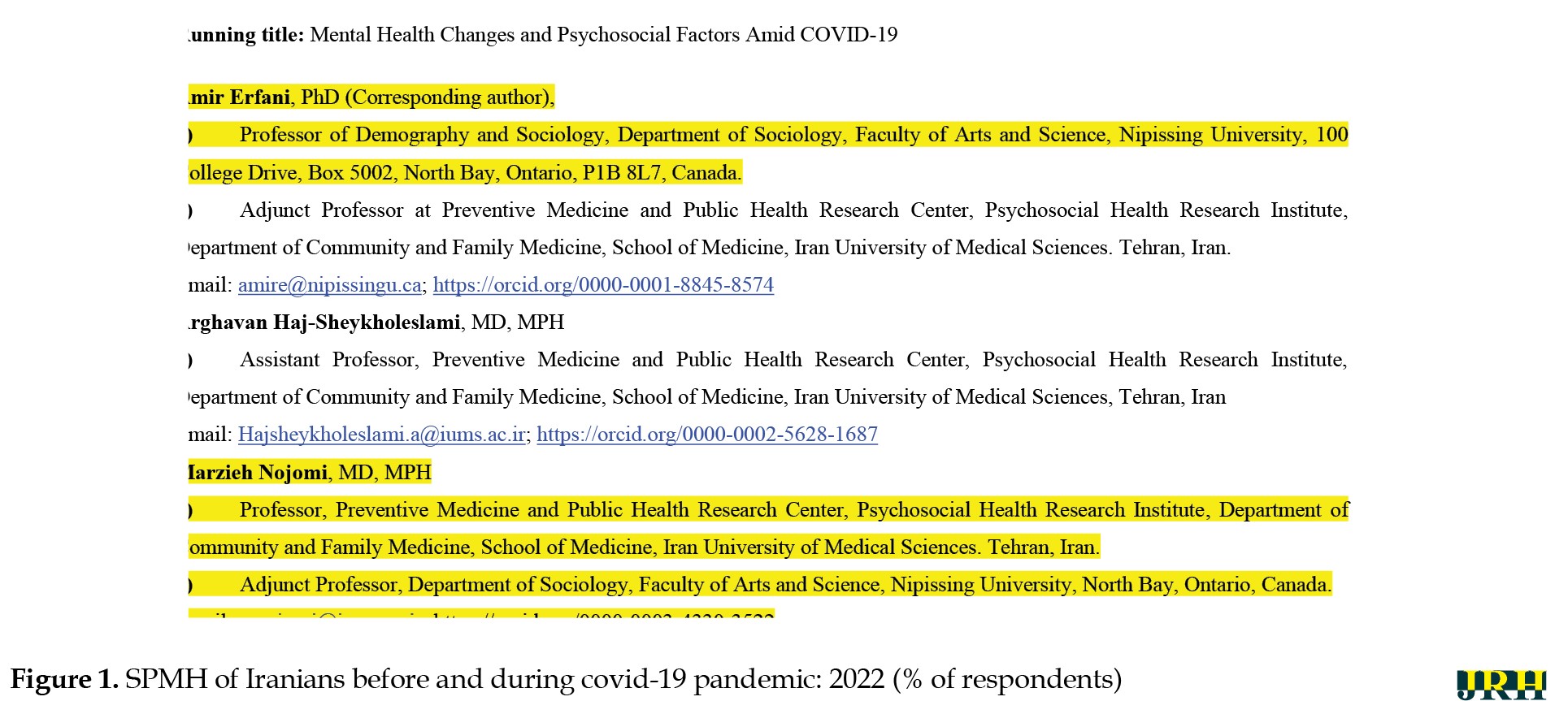
The dependent variable in this study was the change in SPMH before and during the COVID-19 pandemic. SPMH was assessed through two survey questions: “How was your mental health in general before the pandemic?” and “How was your mental health in general during the pandemic?” Both questions used a four-point Likert scale with the following responses: ‘poor’, ‘fair’, ‘good’, and ‘excellent’ (Figure 1).
Pandemics, such as COVID-19 (2020-2022), pose significant risks to public mental health [1]. The COVID-19 pandemic-induced lockdowns and related restrictions disrupted employment, income, education, transportation, family relationships, and leisure activities, while fears of infection compounded psychological strain [2].
Previous studies have mainly focused on specific mental health symptoms, such as stress, anxiety, depression, insomnia, and loneliness [3, 4]. However, overall self-perceived mental health (SPMH), a holistic indicator influenced by multiple psychosocial and exposure factors, has received less attention. SPMH is typically measured using a single Likert-scale question and has demonstrated reliability, validity, and ease of administration [5, 6]. Although socioeconomic differences in reliability exist, self-rated measures often perform as well as or better than assessments of functional ability, chronic disease, and psychological well-being [7, 8]. They correlate positively with broader health scales, show moderate to substantial test, re-test reliability, and predict mortality [9–11].
Synthesizing this evidence, SPMH offers a rapid, validated metric for monitoring mental health during crises, complementing symptom-specific measures [3–11]. Unlike discrete symptom tracking, SPMH captures cross-cutting changes arising from simultaneous shocks to work, family life, and social participation, making it critical for fast-moving emergencies, such as COVID-19.
Despite these advantages, few studies have examined changes in SPMH before and during the pandemic. Canadian time-series analyses revealed declines in positive mental health [12, 13], Swedish cross-sectional research linked poor SPMH to anxiety and depression among seniors [14], and Latin American/Spanish studies highlighted gender disparities without uniform longitudinal designs [15]. However, methodological heterogeneity and cultural differences (individualist versus collectivist norms) limit generalizability. In collectivist contexts such as Iran, strong family ties may buffer loneliness or intensify caregiving stress, especially within multigenerational households and during economic shocks. This underscores the need for context-sensitive evidence that tracks changes across phases while considering sociocultural factors [12–15].
Research on perceived mental health during the pandemic has largely focused on symptoms (stress, depression, anxiety, PTSD, insomnia, loneliness, sadness, hopefulness) [4, 16–19]. Few studies have assessed overall SPMH and its determinants in non-Western, resource-constrained settings. Addressing this gap is essential to clarify whether declines reflect pandemic-related psychosocial and exposure factors rather than symptom-specific measures.
This study examined changes in SPMH among Iranians from the pre-COVID-19 to the pandemic periods and identified key determinants, including loneliness, stress, social participation, income disruptions, bereavement, infection, and routine changes, selected based on prior evidence of their relevance during COVID-19 [4, 16–19]. Using retrospective survey data, we aimed to provide a holistic perspective that complements symptom-focused findings and situates Iranian evidence within global discourse while foregrounding its unique sociocultural context.
Methods
Study design
This cross-sectional survey drew on a self-developed, web-based questionnaire administered to the Iranian population aged 18 and over during August–September 2022, a period when most COVID-19 restrictions had been lifted. A convenience online sampling approach was used. Core items—including Likert scales measuring SPMH—were adapted from the validated 2020 Canadian Perspectives Survey Series 3: Resuming economic and social activities during COVID-19 [20].
To ensure linguistic and cultural equivalence, the instrument followed a rigorous translation protocol. Two bilingual experts independently completed forward translations from English to Persian, followed by a backward translation from Persian to English by a third expert to assess semantic, idiomatic, experiential, and conceptual equivalences. Discrepancies were resolved by consensus among translators and the research team. Cultural adaptation reviewed items for contextual relevance and refined wording to reflect Iranian norms and reporting tendencies (e.g. stigma in mental health responses).
Following adaptation, pilot testing with 30 participants combined online administration with brief debriefs to assess clarity, comprehension, and cultural appropriateness. The feedback led to minor revisions improving interpretability and reducing potential bias. Although the instrument was not formally psychometrically validated, it underwent structured adaptation and piloting. The final questionnaire contained 50 items covering demographics, COVID-19 infection and vaccination history, employment and income, commute to work, and mental health before and during the pandemic.
Survey dissemination leveraged email, SMS, and social media (especially WhatsApp), supplemented by institutional mailing lists and sharing across diverse community and professional networks in multiple provinces to broaden reach and reduce platform-related bias. The inclusion criteria required participants to be permanent residents of Iran for ≥3 years (to ensure exposure to the sociocultural/policy context pre- and during COVID-19), to possess sufficient literacy to comprehend the questionnaire, to have internet access, and to be ≥18 years of age (legal capacity for consent).
We acknowledge that these criteria may introduce selection biases, such as residency requirements that may exclude recent migrants, and internet/literacy prerequisites that may favor urban, more educated participants. Mitigation strategies included platform diversification, intensified outreach beyond Tehran, ongoing monitoring of sample composition, and emphasis on anonymity to reduce participation deterrents among stigmatized groups. Participants with missing key outcome data (SPMH before and during the pandemic) or failing inclusion criteria were excluded, preserving analytic integrity for change-score comparisons while recognizing that listwise exclusion can bias estimates if missingness is non-random.
In total, 648 participants completed the survey; 628 (96.9%) resided in urban areas, including 394 participants from Tehran Province, Iran. Given the urban predominance, estimates primarily reflect digitally connected urban populations; generalizations to rural or lower-access groups should be made with caution. The breadth of content, spanning sociodemographic characteristics before and during COVID-19, exposures (infection, vaccination, bereavement), employment/income, commuting, lifestyles, and mental health, supports a comprehensive assessment of pandemic-related changes in SPMH within this context.
Measures
The dependent variable in this study was the change in SPMH before and during the COVID-19 pandemic. SPMH was assessed through two survey questions: “How was your mental health in general before the pandemic?” and “How was your mental health in general during the pandemic?” Both questions used a four-point Likert scale with the following responses: ‘poor’, ‘fair’, ‘good’, and ‘excellent’ (Figure 1).
Based on a cross-tabulation of responses, participants were categorized into three groups according to changes in their SPMH: (1) “worsened” (292 participants whose mental health declined during the pandemic); (2) “unchanged” (333 participants whose SPMH remained stable); and (3) “improved” (23 participants who reported better mental health during the pandemic). Because the “improved” category was small, it was combined with “unchanged” for both bivariate and multivariate analyses. Thus, the dichotomized dependent variable was coded 0 = “unchanged/improved” and 1=“worsened.” This study examined the factors contributing to the risk of self-perceived worsened mental health during the pandemic. We acknowledge that differences in SPMH ratings across the two time points may be affected by recall bias, potentially influencing estimates of health inequalities among socioeconomic groups [21].
The independent variables were grouped into two broad categories: Psychosocial and COVID-19 exposure factors. Psychosocial factors included loneliness, social participation, stress, changes in sleep schedule, changes in TV-watching schedule, and perceived impact of COVID-19 on income and living expenses. Loneliness was measured by: “In general, how lonely did you feel during the pandemic?” (five-point Likert: ‘never’, ‘rarely’, ‘sometimes’, ‘often’, ‘always’). Due to small counts, ‘never’ was merged with ‘rarely’, and ‘often’ with ‘always’. Social participation was measured by: “During the pandemic, were you a member of or did you participate in activities of any sports or recreational clubs or team, cultural or educational organization, specialized organization or association, charitable organizations, or religious organization?” (responses Yes/No). Stress was measured by: “In general, what was your level of stress since the beginning of the COVID-19 pandemic?” (five-point Likert; ‘no stress’, ‘a little stress’, ‘moderate stress’, ‘severe stress’). Due to the small numbers, ‘none’ was merged with ‘a little’, and ‘moderate’ with ‘severe.’ Perceived income impact was measured by: “Which of the following best describes the impact of the pandemic on your income status and ability to meet living expenses?” (major negative, minor negative, moderate negative, no impact, positive). ‘None’ was merged with ‘positive’. Changes in sleep and TV-watching schedules were assessed using yes/no items asking whether weekly schedules changed due to the pandemic. COVID-19 exposure factors were measured by four questions: ever had COVID-19 infection (No/Yes); ever had any first-degree relatives with COVID‑19 infection (No/Yes); ever lost a loved one due to COVID-19 (No/Yes); and number of COVID-19 vaccine doses received (less than 3 vs 3+).
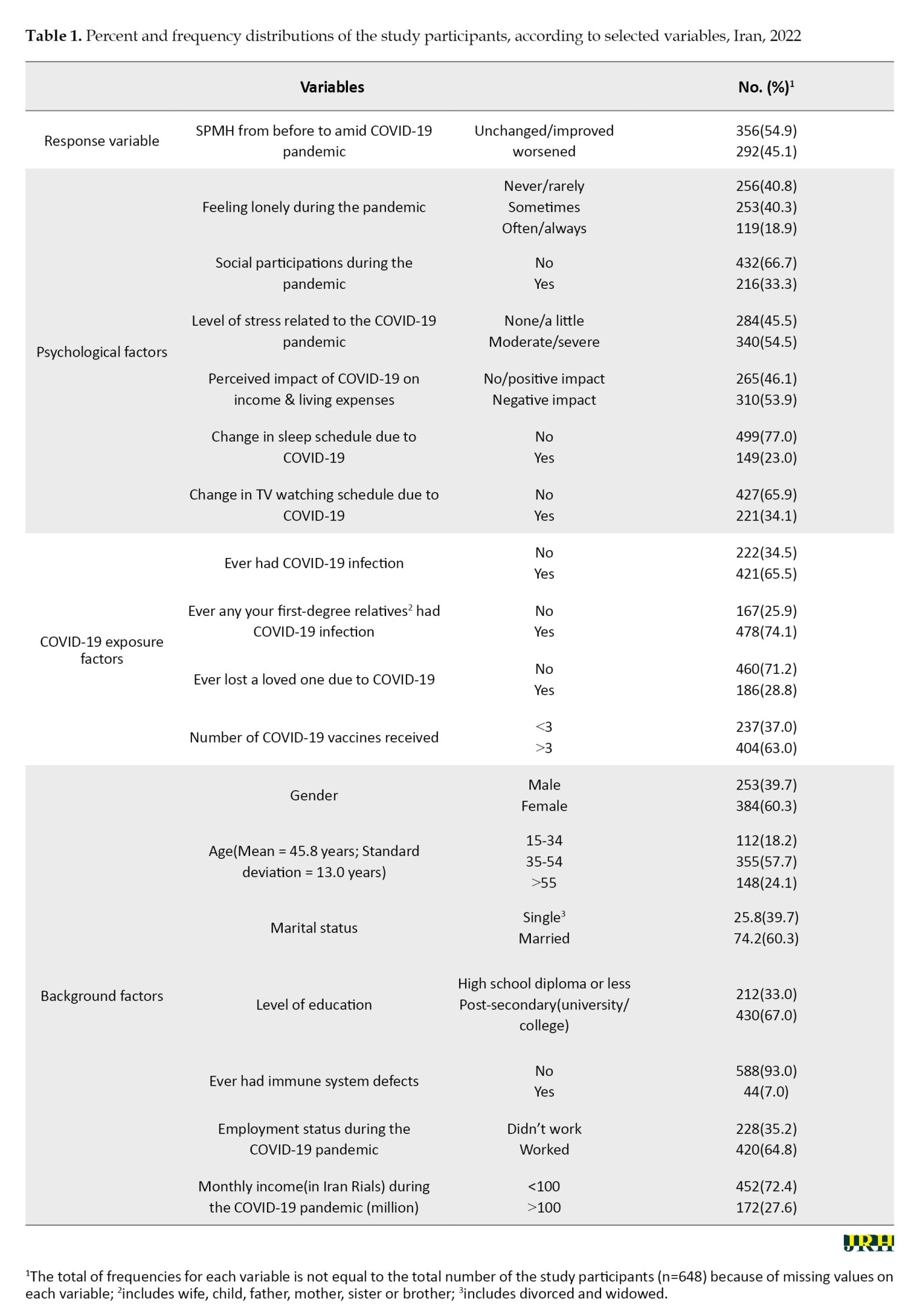
A set of theoretically relevant background factors was included to adjust relationships between psychosocial/COVID-19 exposure factors and SPMH: gender, age, marital status, education level, immune system defects during the pandemic (No/Yes), employment status during the pandemic, and monthly income during the pandemic. Table 1 presents descriptive distributions for these variables.
Analyses
This study used two types of statistical analyses. First, chi-square tests were used to examine the relationship between each covariate and the response variable. Second, the risk of worsened SPMH before and during the COVID-19 pandemic was analyzed using multivariate analyses with IBM SPSS software, version 29.0. Since the dependent variable was a binary outcome, binary logistic regression was employed to examine the contribution of psychosocial and COVID-19 exposure factors to the decline in SPMH, while adjusting for background factors. Bivariate analyses present percentage distributions of each independent variable by the dependent variable and report unadjusted odds ratios (OR). To explore potential mediation, two multivariate models were estimated: Model 1 included exposure and background factors, and model 2 included psychosocial variables. The attenuation of the exposure coefficients in Model 2 was interpreted as indicative of possible mediation by psychosocial factors.
Although ordinal logistic regression is the appropriate method for an ordinal dependent variable with three categories (“worsened,” “unchanged,” and “improved”), the small sample size in the “improved” category (only 23 cases) made a reliable analysis infeasible. Specifically, 67% of cells had zero frequencies, compromising the validity of the results. We acknowledge that dichotomizing the dependent variable and collapsing covariate categories may cause some information loss and reduce statistical precision; this approach was necessary given the small sample size to maintain model stability. Differences in percentages and OR were significant at a P≤0.05.
Results
Background characteristics
Table 1 summarizes participants’ demographic and psychosocial profiles, highlighting sample features relevant to interpretation and adjustment strategies. Most participants were female (60.3%), which may introduce gender-related bias given documented disparities in pandemic stress burdens; this is addressed in subsequent analyses. The majority were aged 35-54 (57.7%; Mean±SD age, 45.8±13.0), situating the sample within midlife, a stage often associated with heightened work-family stress during crises. Most were married (60.3%), a factor potentially influencing social support and coping mechanisms. Educational attainment was relatively high, with 67.0% reporting postsecondary education, suggesting socioeconomic advantages that may moderate stress responses. Employment during the pandemic was common (64.8%), which could amplify exposure to pandemic-related stressors compared to non-working individuals. Income distribution showed 72.4% earning less than 100 million Rials monthly, indicating financial vulnerability that may intersect with perceived stress and mental health outcomes. Nearly all participants lived in urban areas (96.9%), particularly Tehran Province, raising concerns about urban stressors and resource access. The health status was generally robust, with 93.0% of the participants reporting no immune system disorders, minimizing confounding by chronic illness.
SPMH changed markedly during the pandemic. Figure 1 shows that the proportion of participants rating their mental health as “poor” rose from 1.7% before COVID-19 to 15.1% during the pandemic, and “fair” increased from 17.9% to 38.6%. Conversely, “good” declined from 60.3% to 36.7%, and “excellent” dropped from 20.1% to 9.6%. Overall, 45.1% reported worsening mental health, underscoring the pandemic’s psychological toll and the need to examine demographic and exposure correlates of these shifts.
Other characteristics included changes in daily routines (e.g. 23.0% altered sleep schedules; 34.1% changed TV viewing), which may signal behavioral stress markers. COVID-19 exposure was substantial: 65.5% had been infected, 74.1% had infected first-degree relatives, and 28.8% experienced bereavement, all of which may have compounded psychological strain. Vaccination coverage was high (63.0% received three or more doses), reducing health risks but not necessarily mitigating psychosocial impacts. Regarding social and emotional factors, 67.7% reported no group participation, and loneliness was frequent (often/always in 18.9%), both of which are relevant to stress vulnerability. Stress levels were notable, with 54.5% reporting moderate/severe stress and 53.9% perceiving negative financial impacts, reinforcing the multidimensional nature of pandemic burden.
Bivariate analysis
The bivariate results in Table 2 indicate that changes in SPMH from before to during the COVID-19 pandemic were significantly associated with various psychosocial, COVID-19 exposure, and background factors, excluding social participation, age, marital status, employment, and income.
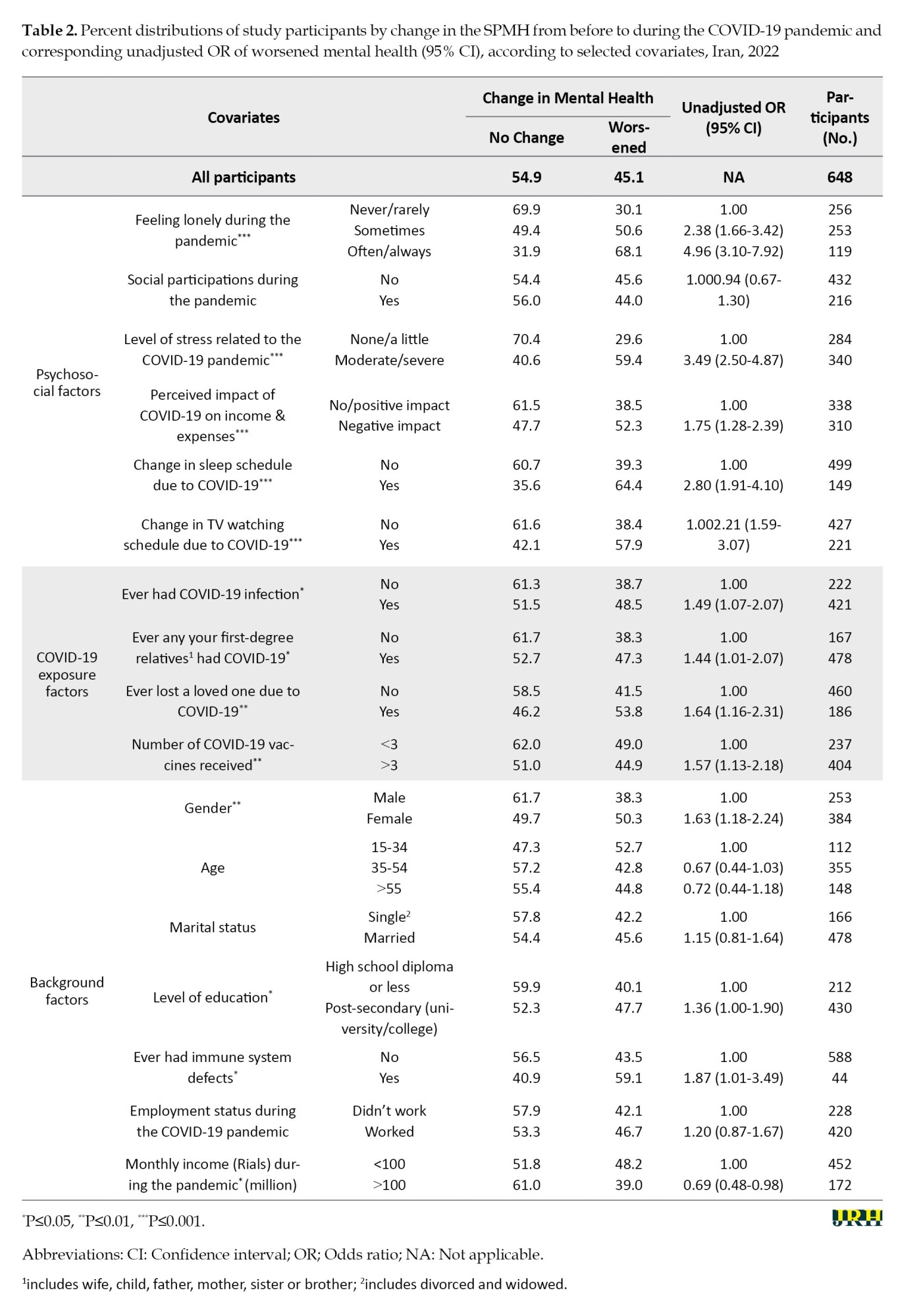
Participants who often or always experienced loneliness during the pandemic were substantially more likely to report worsened mental health than those who never or rarely felt lonely (68.1% vs 30.1%; OR=4.96, 95% CI, 3.10%, 7.92%). A dose-response pattern was evident, with intermediate odds for those who sometimes felt lonely (50.6%; OR=2.38, 95% CI, 1.66%, 3.42%). Similarly, moderate-to-severe stress was strongly associated with worsened mental health (59.4% vs 29.6%; OR=3.49, 95% CI, 2.50%, 4.87%), reinforcing a gradient of risk across stress levels. Economic strain also had a notable effect: Participants reporting negative impacts on income and living expenses had higher odds of worsened mental health (52.3% vs 38.5%; OR=1.75, 95% CI, 1.28%, 2.39%). Disruptions in daily routines were influential. Those with changes in sleep schedules (64.4% vs 39.3%; OR=2.80, 95% CI, 1.91%, 4.10%) or TV-watching schedules (57.9% vs 38.4%; OR=2.21, 95% CI, 1.59%, 3.07%) were at elevated risk.
COVID-19 exposure factors also mattered: having had a COVID-19 infection (OR=1.49, 95% CI, 1.07%, 2.07%) or having a first-degree relative infected (OR=1.44, 95% CI, 1.01%, 2.07%) increased the odds of worsened mental health. Experiencing the loss of a loved one due to COVID-19 was associated with higher odds (OR=1.64, 95% CI, 1.16%, 2.31%). Receiving three or more vaccine doses was modestly associated with worsened mental health (OR=1.57, 95% CI, 1.13%, 2.18%). Among background factors, women compared to men (50.3% vs 38.3%; OR=1.63, 95% CI, 1.18%, 2.24%), participants with post-secondary education compared to those with high school or less (47.7% vs 40.1%; OR=1.36, 95% CI, 1.00%, 1.90%), and those with immune system defects compared to those without (59.1% vs 43.5%; OR=1.87, 95% CI, 1.01%, 3.49%) were at higher risk of worsened mental health.
Multivariate analysis
Table 3 presents adjusted ORs and 95% confidence intervals from two multivariate logistic regression models examining perceived worsened mental health (SPMH decline).
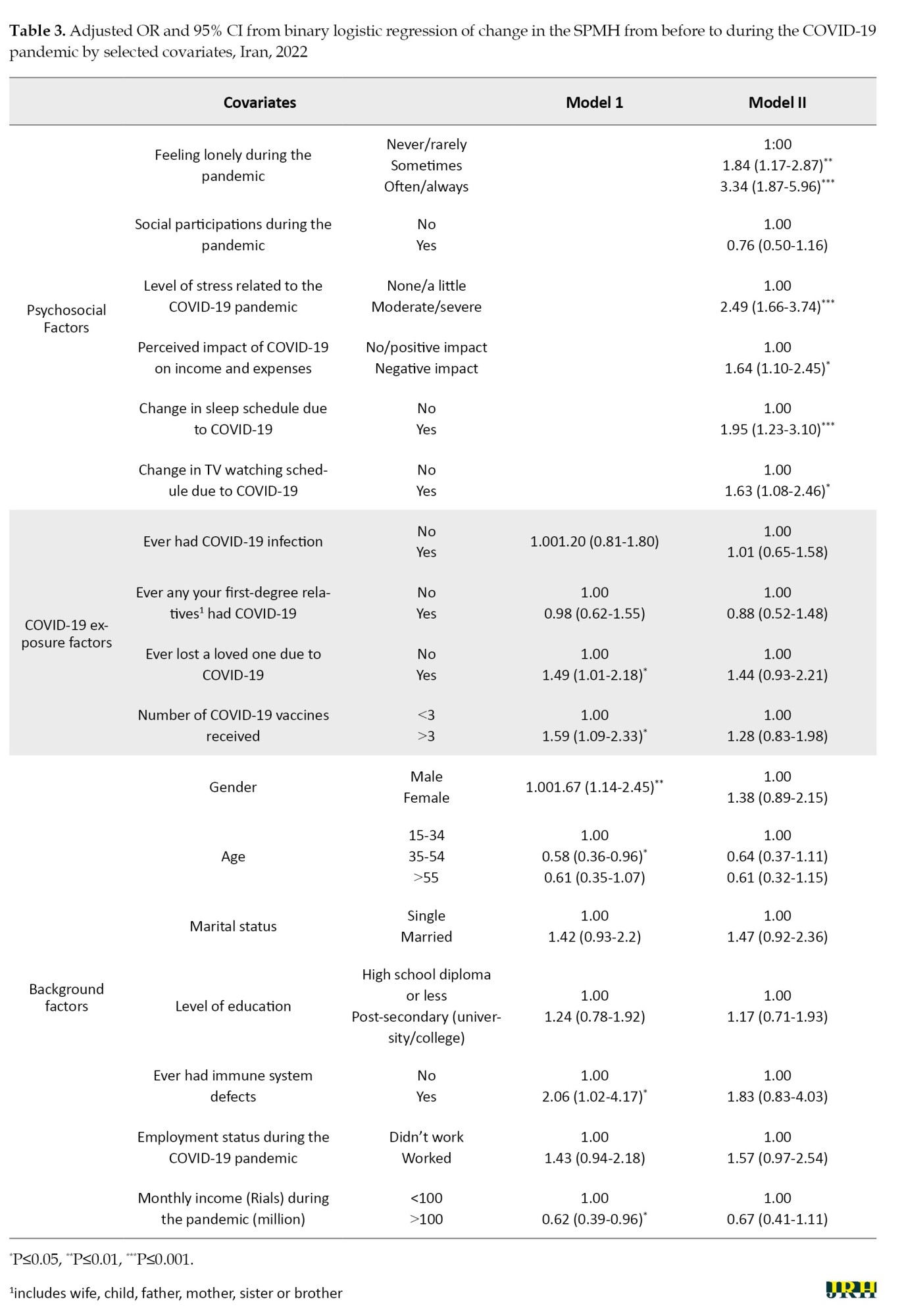
Model 1, which included COVID-19 exposure factors and background variables, showed that some exposure variables were initially associated with SPMH decline. For example, having lost a loved one to COVID-19 (OR=1.49, 95% CI, 1.01%, 2.18%) and receiving three or more vaccine doses (OR=1.59, 95% CI, 1.09%, 2.33%) were significant predictors.
Model 2, which added psychosocial factors (loneliness, stress, income strain, lifestyle disruptions), revealed that these psychosocial variables were strongly associated with perceived mental health decline. Participants who often or always felt lonely during the pandemic were over three times more likely to report worsened mental health (OR=3.34, 95% CI, 1.87%, 5.96%), and those with moderate/severe stress had more than double the odds (OR=2.49, 95% CI, 1.66%, 3.74%). Negative income impact (OR=1.64, 95% CI, 1.10%, 2.45%), sleep disruption (OR=1.95, 95% CI, 1.23%, 3.10%), and changes in TV viewing (OR=1.63, 95% CI, 1.08%, 2.46%) remained significant.
Notably, none of the COVID-19 exposure factors retained statistical significance in Model 2 after psychosocial variables were included, suggesting that the initial associations observed in Model 1 may be explained by psychosocial mediators such as loneliness and stress. This attenuation indicates that the mental health impact of direct COVID-19 exposure could operate indirectly through heightened psychosocial strain rather than exerting independent effects.
These findings underscore the importance of psychosocial pathways in shaping perceived mental health during the pandemic and highlight the need for future longitudinal and mediation analyses to confirm these relationships.
Discussion
This study aimed to describe the decline in SPMH among Iranians from before to during the COVID-19 pandemic and examine the related factors based on online survey data. Nearly half of respondents reported deterioration, and adjusted analyses identified loneliness, stress, income strain, sleep disruption, and altered media routines as the principal correlates of poor SPMH. The multivariate results presented in two models showed that bereavement was significant in Model 1 but lost significance after psychosocial variables were added in Model 2; similarly, the association for ≥3 vaccine doses attenuated and became non-significant once loneliness, stress, income strain, and routine disruptions were included. This attenuation suggests indirect pathways in which exposure affects SPMH largely through psychosocial strain rather than independent effects. These patterns are consistent with population evidence reporting increased mental health problems during COVID-19 in meta-analyses and national studies (including Iran), and with longitudinal deterioration in SPMH in other settings [3, 4, 12, 13, 16, 22]. Cross-national differences may reflect contextual factors, such as strong family/community ties in Iran that buffer distress [23, 24], and measurement heterogeneity. A plausible mechanism involves cumulative stress from health threats, social restrictions, and economic uncertainty, which burdens coping resources and lowers SPMH, while poor SPMH amplifies stress perception, suggesting bidirectional feedback. Our multivariate analysis provides preliminary evidence that infection, bereavement, and vaccination affect SPMH largely through psychosocial strain (loneliness, stress, disrupted routines, and income impacts). Formal longitudinal mediation studies are needed to confirm these pathways.
Congruent with our findings, it is well established that sleep is related to mental health [25, 26]. Pandemic restrictions degraded sleep schedules and quality across subgroups, and poor sleep was linked to worse mental health [27–30]. During the COVID-19 pandemic in Iran, sleep problems were reported in approximately 44% of young people, highlighting a significant link between the pandemic and mental health challenges [31]. Another study similarly found frequent sleep disturbances among adolescents in one province of Iran during the pandemic [32]. Because most evidence (including ours) is observational, sleep may be both cause and consequence of poor SPMH. Stress and anxiety can fragment sleep, while irregular or insufficient sleep impairs mood regulation and heightens distress. The observed link between disrupted sleep schedules and worsened SPMH fits this feedback loop, though directionality cannot be confirmed from cross-sectional data. Excessive device use and exposure to pandemic news (including “doomscrolling”) were associated with distress and irregular routines, particularly among urban participants [33–37]. Screen time may indirectly worsen SPMH by disturbing sleep and daily rhythms; conversely, distress may drive increased viewing. This study also found loneliness, defined as a negative feeling produced by inconsistency between real and desired social relationships [38], to be a psychosocial risk factor. Loneliness is strongly linked to physical and psychological health problems, risk behaviors, and low well-being [39, 40]. Reverse causality is plausible: Worsened SPMH may not only result from loneliness but also contribute to it. Poor mental health often leads to social withdrawal, reduced relationships, and increased isolation [41]. It can also alter perceptions of support, making individuals feel lonely even when surrounded by others [42]. Socioeconomic and lifestyle factors may exacerbate this cycle [43]. Together, these findings suggest a self-reinforcing loop: Pandemic conditions heighten loneliness, loneliness lowers SPMH, and declining SPMH intensifies loneliness. Consistent with this, loneliness showed one of the strongest associations in model 2 (OR=3.34), accounting for much of the attenuation of direct exposure effects and underscoring psychosocial pathways.
Stress exhibited similar dynamics. Pandemic-related stress and depression were widely reported in Iran and globally [3, 4, 22, 44] and have negatively affected SPMH [2, 16]. Reverse causality is also possible: lower SPMH may amplify stress appraisal. We interpret stress and SPMH as mutually influencing states in which acute stress elevates distress and poor SPMH magnifies perceived stress. In multivariate models, adding stress and other psychosocial factors substantially reduced coefficients for infection, bereavement, and vaccination, indicating these exposures impact SPMH primarily through psychosocial strain rather than direct effects. Financial hardship and bereavement were associated with worsened mental health, aligning with evidence linking increased mortality/infection of loved ones, job loss, financial instability, and poverty to poorer outcomes [3, 22, 35, 44]. These stressors pose particular risks in Iran’s context of strong family bonds [3, 22, 35]. Bidirectionality is plausible: poor mental health can erode work performance and retention, deepen financial strain, and complicate bereavement recovery; socioeconomic and lifestyle factors may intensify this cycle [43]. Thus, income shocks and losses act as stressors lowering SPMH and as conditions whose impacts are magnified by existing or emerging mental health problems. In adjusted models, the bereavement association was absorbed by psychosocial covariates, especially loneliness and stress, supporting an indirect pathway.
Formal social participation was not significantly related to SPMH, suggesting that the depth and quality of support, often family-based, may be more crucial than membership counts [23]. Even when participation increased, interactions may have lacked sufficient emotional support [24]. Non-significance may also reflect selection (who participates), modality (online vs face-to-face), and measurement limits; poor SPMH can reduce capacity or motivation to engage, further complicating directionality. In short, participation alone may be insufficient; emotionally rich, family-anchored support appears to be a key moderator of SPMH. Future studies should formally test mediation to quantify the proportion of exposure–SPMH associations explained by psychosocial pathways and use longitudinal designs to establish temporal precedence.
Given the strong relationships between pandemic-induced stressors (loneliness, economic insecurity, loss) and mental health decline, integrating mental health services into emergency health systems is imperative to mitigate acute impacts and support long-term well-being post-pandemic.
This study has limitations affecting generalizability. First, reliance on convenience online sampling introduced selection bias. Participants were predominantly urban (mostly Tehran Province), female, and highly educated, recruited via WhatsApp, email, and social media, limiting applicability to similar digitally connected, higher-SES groups. Second, the urban focus may skew the results, as the pandemic’s impact on mental health can differ between urban and rural areas due to variations in density and economic structures. Third, the Iranian sample may not generalize to other regions with different sociocultural contexts and health systems; therefore, findings should be interpreted with caution. Another limitation is reliance on retrospective self-report for SPMH changes, which may introduce recall bias and affect reliability [21]. Reported percentages (e.g. 45.1% worsened) reflect perceived changes rather than the definitive impact of the pandemic. Given these constraints and the cross-sectional design, conclusions about directionality remain tentative. We adopted a conservative, bidirectional interpretation of associations and positioned the findings as correlational patterns consistent with, but not determinative of, causal pathways.
Future research should use prospective longitudinal designs and more representative/mixed-mode sampling to strengthen causal inference and generalizability, formally test mediation to quantify psychosocial pathways, and conduct comparative studies across diverse contexts to illuminate global and cultural gradients in pandemic-related mental health.
Conclusion
This study documents a marked decline in SPMH among Iranians during COVID-19, driven by psychosocial, economic, and behavioral stressors. Loneliness was the strongest correlate, followed by stress, income strain, sleep disruption, and altered media routines, suggesting bidirectional feedback loops amplifying distress. The lack of association with formal social participation highlights that the depth of support, often family-based, may matter more than participation counts. Urban predominance suggests possible rural–urban differences, warranting comparative research. SPMH has emerged as a practical indicator of pandemic impact, informing culturally tailored interventions such as reducing loneliness and stress, promoting sleep and media hygiene, and addressing economic and bereavement challenges. Integrating SPMH monitoring into emergency systems can enable early detection and targeted support.
Interpretations should remain cautious given the study’s cross-sectional design and sampling limitations. Future research should validate these findings through longitudinal studies and more representative sampling to strengthen causal inference and generalizability. The attenuation of COVID-19 exposure effects after adjusting for psychosocial variables (model 2 vs model 1) suggests that loneliness, stress, income strain, and routine disruptions are key pathways linking exposure to SPMH; confirming this will require formal mediation analyses. In summary, this study enhances our understanding of pandemic-related mental health deterioration in Iran and sets a research agenda to improve preparedness and equity in global health.
Ethical Considerations
Compliance with ethical guidelines
This study was approved by the Ethics Committee of Iran University of Medical Sciences, Tehran, Iran (Code: IR.IUMS.REC.1401.127) and Nipissing University, North Bay, Canada (Code: No. 103110). Written informed consent was obtained from all participants, who remained anonymous and participated voluntarily without compensation. Participants could withdraw at any time, and confidentiality was assured. All procedures complied with relevant guidelines and regulations.
Funding
This research was supported by the Psychosocial Health Research Institute at Iran University of Medical Sciences.
Authors' contributions
Methodology: Amir Erfani and Arghavan Haj-Sheykholeslami; Conceptualization, Writing the original draft, Data analysis: Amir Erfani; Survey design, data collection, review, editing, final approval: All authors.
Conflict of interest
The authors declared no conflicts of interest.
Acknowledgments
The authors gratefully acknowledge support from Iran University of Medical Sciences and Nipissing University (Canada) and thank all participants for their valuable contributions.
The independent variables were grouped into two broad categories: Psychosocial and COVID-19 exposure factors. Psychosocial factors included loneliness, social participation, stress, changes in sleep schedule, changes in TV-watching schedule, and perceived impact of COVID-19 on income and living expenses. Loneliness was measured by: “In general, how lonely did you feel during the pandemic?” (five-point Likert: ‘never’, ‘rarely’, ‘sometimes’, ‘often’, ‘always’). Due to small counts, ‘never’ was merged with ‘rarely’, and ‘often’ with ‘always’. Social participation was measured by: “During the pandemic, were you a member of or did you participate in activities of any sports or recreational clubs or team, cultural or educational organization, specialized organization or association, charitable organizations, or religious organization?” (responses Yes/No). Stress was measured by: “In general, what was your level of stress since the beginning of the COVID-19 pandemic?” (five-point Likert; ‘no stress’, ‘a little stress’, ‘moderate stress’, ‘severe stress’). Due to the small numbers, ‘none’ was merged with ‘a little’, and ‘moderate’ with ‘severe.’ Perceived income impact was measured by: “Which of the following best describes the impact of the pandemic on your income status and ability to meet living expenses?” (major negative, minor negative, moderate negative, no impact, positive). ‘None’ was merged with ‘positive’. Changes in sleep and TV-watching schedules were assessed using yes/no items asking whether weekly schedules changed due to the pandemic. COVID-19 exposure factors were measured by four questions: ever had COVID-19 infection (No/Yes); ever had any first-degree relatives with COVID‑19 infection (No/Yes); ever lost a loved one due to COVID-19 (No/Yes); and number of COVID-19 vaccine doses received (less than 3 vs 3+).
A set of theoretically relevant background factors was included to adjust relationships between psychosocial/COVID-19 exposure factors and SPMH: gender, age, marital status, education level, immune system defects during the pandemic (No/Yes), employment status during the pandemic, and monthly income during the pandemic. Table 1 presents descriptive distributions for these variables.
Analyses
This study used two types of statistical analyses. First, chi-square tests were used to examine the relationship between each covariate and the response variable. Second, the risk of worsened SPMH before and during the COVID-19 pandemic was analyzed using multivariate analyses with IBM SPSS software, version 29.0. Since the dependent variable was a binary outcome, binary logistic regression was employed to examine the contribution of psychosocial and COVID-19 exposure factors to the decline in SPMH, while adjusting for background factors. Bivariate analyses present percentage distributions of each independent variable by the dependent variable and report unadjusted odds ratios (OR). To explore potential mediation, two multivariate models were estimated: Model 1 included exposure and background factors, and model 2 included psychosocial variables. The attenuation of the exposure coefficients in Model 2 was interpreted as indicative of possible mediation by psychosocial factors.
Although ordinal logistic regression is the appropriate method for an ordinal dependent variable with three categories (“worsened,” “unchanged,” and “improved”), the small sample size in the “improved” category (only 23 cases) made a reliable analysis infeasible. Specifically, 67% of cells had zero frequencies, compromising the validity of the results. We acknowledge that dichotomizing the dependent variable and collapsing covariate categories may cause some information loss and reduce statistical precision; this approach was necessary given the small sample size to maintain model stability. Differences in percentages and OR were significant at a P≤0.05.
Results
Background characteristics
Table 1 summarizes participants’ demographic and psychosocial profiles, highlighting sample features relevant to interpretation and adjustment strategies. Most participants were female (60.3%), which may introduce gender-related bias given documented disparities in pandemic stress burdens; this is addressed in subsequent analyses. The majority were aged 35-54 (57.7%; Mean±SD age, 45.8±13.0), situating the sample within midlife, a stage often associated with heightened work-family stress during crises. Most were married (60.3%), a factor potentially influencing social support and coping mechanisms. Educational attainment was relatively high, with 67.0% reporting postsecondary education, suggesting socioeconomic advantages that may moderate stress responses. Employment during the pandemic was common (64.8%), which could amplify exposure to pandemic-related stressors compared to non-working individuals. Income distribution showed 72.4% earning less than 100 million Rials monthly, indicating financial vulnerability that may intersect with perceived stress and mental health outcomes. Nearly all participants lived in urban areas (96.9%), particularly Tehran Province, raising concerns about urban stressors and resource access. The health status was generally robust, with 93.0% of the participants reporting no immune system disorders, minimizing confounding by chronic illness.
SPMH changed markedly during the pandemic. Figure 1 shows that the proportion of participants rating their mental health as “poor” rose from 1.7% before COVID-19 to 15.1% during the pandemic, and “fair” increased from 17.9% to 38.6%. Conversely, “good” declined from 60.3% to 36.7%, and “excellent” dropped from 20.1% to 9.6%. Overall, 45.1% reported worsening mental health, underscoring the pandemic’s psychological toll and the need to examine demographic and exposure correlates of these shifts.
Other characteristics included changes in daily routines (e.g. 23.0% altered sleep schedules; 34.1% changed TV viewing), which may signal behavioral stress markers. COVID-19 exposure was substantial: 65.5% had been infected, 74.1% had infected first-degree relatives, and 28.8% experienced bereavement, all of which may have compounded psychological strain. Vaccination coverage was high (63.0% received three or more doses), reducing health risks but not necessarily mitigating psychosocial impacts. Regarding social and emotional factors, 67.7% reported no group participation, and loneliness was frequent (often/always in 18.9%), both of which are relevant to stress vulnerability. Stress levels were notable, with 54.5% reporting moderate/severe stress and 53.9% perceiving negative financial impacts, reinforcing the multidimensional nature of pandemic burden.
Bivariate analysis
The bivariate results in Table 2 indicate that changes in SPMH from before to during the COVID-19 pandemic were significantly associated with various psychosocial, COVID-19 exposure, and background factors, excluding social participation, age, marital status, employment, and income.
Participants who often or always experienced loneliness during the pandemic were substantially more likely to report worsened mental health than those who never or rarely felt lonely (68.1% vs 30.1%; OR=4.96, 95% CI, 3.10%, 7.92%). A dose-response pattern was evident, with intermediate odds for those who sometimes felt lonely (50.6%; OR=2.38, 95% CI, 1.66%, 3.42%). Similarly, moderate-to-severe stress was strongly associated with worsened mental health (59.4% vs 29.6%; OR=3.49, 95% CI, 2.50%, 4.87%), reinforcing a gradient of risk across stress levels. Economic strain also had a notable effect: Participants reporting negative impacts on income and living expenses had higher odds of worsened mental health (52.3% vs 38.5%; OR=1.75, 95% CI, 1.28%, 2.39%). Disruptions in daily routines were influential. Those with changes in sleep schedules (64.4% vs 39.3%; OR=2.80, 95% CI, 1.91%, 4.10%) or TV-watching schedules (57.9% vs 38.4%; OR=2.21, 95% CI, 1.59%, 3.07%) were at elevated risk.
COVID-19 exposure factors also mattered: having had a COVID-19 infection (OR=1.49, 95% CI, 1.07%, 2.07%) or having a first-degree relative infected (OR=1.44, 95% CI, 1.01%, 2.07%) increased the odds of worsened mental health. Experiencing the loss of a loved one due to COVID-19 was associated with higher odds (OR=1.64, 95% CI, 1.16%, 2.31%). Receiving three or more vaccine doses was modestly associated with worsened mental health (OR=1.57, 95% CI, 1.13%, 2.18%). Among background factors, women compared to men (50.3% vs 38.3%; OR=1.63, 95% CI, 1.18%, 2.24%), participants with post-secondary education compared to those with high school or less (47.7% vs 40.1%; OR=1.36, 95% CI, 1.00%, 1.90%), and those with immune system defects compared to those without (59.1% vs 43.5%; OR=1.87, 95% CI, 1.01%, 3.49%) were at higher risk of worsened mental health.
Multivariate analysis
Table 3 presents adjusted ORs and 95% confidence intervals from two multivariate logistic regression models examining perceived worsened mental health (SPMH decline).
Model 1, which included COVID-19 exposure factors and background variables, showed that some exposure variables were initially associated with SPMH decline. For example, having lost a loved one to COVID-19 (OR=1.49, 95% CI, 1.01%, 2.18%) and receiving three or more vaccine doses (OR=1.59, 95% CI, 1.09%, 2.33%) were significant predictors.
Model 2, which added psychosocial factors (loneliness, stress, income strain, lifestyle disruptions), revealed that these psychosocial variables were strongly associated with perceived mental health decline. Participants who often or always felt lonely during the pandemic were over three times more likely to report worsened mental health (OR=3.34, 95% CI, 1.87%, 5.96%), and those with moderate/severe stress had more than double the odds (OR=2.49, 95% CI, 1.66%, 3.74%). Negative income impact (OR=1.64, 95% CI, 1.10%, 2.45%), sleep disruption (OR=1.95, 95% CI, 1.23%, 3.10%), and changes in TV viewing (OR=1.63, 95% CI, 1.08%, 2.46%) remained significant.
Notably, none of the COVID-19 exposure factors retained statistical significance in Model 2 after psychosocial variables were included, suggesting that the initial associations observed in Model 1 may be explained by psychosocial mediators such as loneliness and stress. This attenuation indicates that the mental health impact of direct COVID-19 exposure could operate indirectly through heightened psychosocial strain rather than exerting independent effects.
These findings underscore the importance of psychosocial pathways in shaping perceived mental health during the pandemic and highlight the need for future longitudinal and mediation analyses to confirm these relationships.
Discussion
This study aimed to describe the decline in SPMH among Iranians from before to during the COVID-19 pandemic and examine the related factors based on online survey data. Nearly half of respondents reported deterioration, and adjusted analyses identified loneliness, stress, income strain, sleep disruption, and altered media routines as the principal correlates of poor SPMH. The multivariate results presented in two models showed that bereavement was significant in Model 1 but lost significance after psychosocial variables were added in Model 2; similarly, the association for ≥3 vaccine doses attenuated and became non-significant once loneliness, stress, income strain, and routine disruptions were included. This attenuation suggests indirect pathways in which exposure affects SPMH largely through psychosocial strain rather than independent effects. These patterns are consistent with population evidence reporting increased mental health problems during COVID-19 in meta-analyses and national studies (including Iran), and with longitudinal deterioration in SPMH in other settings [3, 4, 12, 13, 16, 22]. Cross-national differences may reflect contextual factors, such as strong family/community ties in Iran that buffer distress [23, 24], and measurement heterogeneity. A plausible mechanism involves cumulative stress from health threats, social restrictions, and economic uncertainty, which burdens coping resources and lowers SPMH, while poor SPMH amplifies stress perception, suggesting bidirectional feedback. Our multivariate analysis provides preliminary evidence that infection, bereavement, and vaccination affect SPMH largely through psychosocial strain (loneliness, stress, disrupted routines, and income impacts). Formal longitudinal mediation studies are needed to confirm these pathways.
Congruent with our findings, it is well established that sleep is related to mental health [25, 26]. Pandemic restrictions degraded sleep schedules and quality across subgroups, and poor sleep was linked to worse mental health [27–30]. During the COVID-19 pandemic in Iran, sleep problems were reported in approximately 44% of young people, highlighting a significant link between the pandemic and mental health challenges [31]. Another study similarly found frequent sleep disturbances among adolescents in one province of Iran during the pandemic [32]. Because most evidence (including ours) is observational, sleep may be both cause and consequence of poor SPMH. Stress and anxiety can fragment sleep, while irregular or insufficient sleep impairs mood regulation and heightens distress. The observed link between disrupted sleep schedules and worsened SPMH fits this feedback loop, though directionality cannot be confirmed from cross-sectional data. Excessive device use and exposure to pandemic news (including “doomscrolling”) were associated with distress and irregular routines, particularly among urban participants [33–37]. Screen time may indirectly worsen SPMH by disturbing sleep and daily rhythms; conversely, distress may drive increased viewing. This study also found loneliness, defined as a negative feeling produced by inconsistency between real and desired social relationships [38], to be a psychosocial risk factor. Loneliness is strongly linked to physical and psychological health problems, risk behaviors, and low well-being [39, 40]. Reverse causality is plausible: Worsened SPMH may not only result from loneliness but also contribute to it. Poor mental health often leads to social withdrawal, reduced relationships, and increased isolation [41]. It can also alter perceptions of support, making individuals feel lonely even when surrounded by others [42]. Socioeconomic and lifestyle factors may exacerbate this cycle [43]. Together, these findings suggest a self-reinforcing loop: Pandemic conditions heighten loneliness, loneliness lowers SPMH, and declining SPMH intensifies loneliness. Consistent with this, loneliness showed one of the strongest associations in model 2 (OR=3.34), accounting for much of the attenuation of direct exposure effects and underscoring psychosocial pathways.
Stress exhibited similar dynamics. Pandemic-related stress and depression were widely reported in Iran and globally [3, 4, 22, 44] and have negatively affected SPMH [2, 16]. Reverse causality is also possible: lower SPMH may amplify stress appraisal. We interpret stress and SPMH as mutually influencing states in which acute stress elevates distress and poor SPMH magnifies perceived stress. In multivariate models, adding stress and other psychosocial factors substantially reduced coefficients for infection, bereavement, and vaccination, indicating these exposures impact SPMH primarily through psychosocial strain rather than direct effects. Financial hardship and bereavement were associated with worsened mental health, aligning with evidence linking increased mortality/infection of loved ones, job loss, financial instability, and poverty to poorer outcomes [3, 22, 35, 44]. These stressors pose particular risks in Iran’s context of strong family bonds [3, 22, 35]. Bidirectionality is plausible: poor mental health can erode work performance and retention, deepen financial strain, and complicate bereavement recovery; socioeconomic and lifestyle factors may intensify this cycle [43]. Thus, income shocks and losses act as stressors lowering SPMH and as conditions whose impacts are magnified by existing or emerging mental health problems. In adjusted models, the bereavement association was absorbed by psychosocial covariates, especially loneliness and stress, supporting an indirect pathway.
Formal social participation was not significantly related to SPMH, suggesting that the depth and quality of support, often family-based, may be more crucial than membership counts [23]. Even when participation increased, interactions may have lacked sufficient emotional support [24]. Non-significance may also reflect selection (who participates), modality (online vs face-to-face), and measurement limits; poor SPMH can reduce capacity or motivation to engage, further complicating directionality. In short, participation alone may be insufficient; emotionally rich, family-anchored support appears to be a key moderator of SPMH. Future studies should formally test mediation to quantify the proportion of exposure–SPMH associations explained by psychosocial pathways and use longitudinal designs to establish temporal precedence.
Given the strong relationships between pandemic-induced stressors (loneliness, economic insecurity, loss) and mental health decline, integrating mental health services into emergency health systems is imperative to mitigate acute impacts and support long-term well-being post-pandemic.
This study has limitations affecting generalizability. First, reliance on convenience online sampling introduced selection bias. Participants were predominantly urban (mostly Tehran Province), female, and highly educated, recruited via WhatsApp, email, and social media, limiting applicability to similar digitally connected, higher-SES groups. Second, the urban focus may skew the results, as the pandemic’s impact on mental health can differ between urban and rural areas due to variations in density and economic structures. Third, the Iranian sample may not generalize to other regions with different sociocultural contexts and health systems; therefore, findings should be interpreted with caution. Another limitation is reliance on retrospective self-report for SPMH changes, which may introduce recall bias and affect reliability [21]. Reported percentages (e.g. 45.1% worsened) reflect perceived changes rather than the definitive impact of the pandemic. Given these constraints and the cross-sectional design, conclusions about directionality remain tentative. We adopted a conservative, bidirectional interpretation of associations and positioned the findings as correlational patterns consistent with, but not determinative of, causal pathways.
Future research should use prospective longitudinal designs and more representative/mixed-mode sampling to strengthen causal inference and generalizability, formally test mediation to quantify psychosocial pathways, and conduct comparative studies across diverse contexts to illuminate global and cultural gradients in pandemic-related mental health.
Conclusion
This study documents a marked decline in SPMH among Iranians during COVID-19, driven by psychosocial, economic, and behavioral stressors. Loneliness was the strongest correlate, followed by stress, income strain, sleep disruption, and altered media routines, suggesting bidirectional feedback loops amplifying distress. The lack of association with formal social participation highlights that the depth of support, often family-based, may matter more than participation counts. Urban predominance suggests possible rural–urban differences, warranting comparative research. SPMH has emerged as a practical indicator of pandemic impact, informing culturally tailored interventions such as reducing loneliness and stress, promoting sleep and media hygiene, and addressing economic and bereavement challenges. Integrating SPMH monitoring into emergency systems can enable early detection and targeted support.
Interpretations should remain cautious given the study’s cross-sectional design and sampling limitations. Future research should validate these findings through longitudinal studies and more representative sampling to strengthen causal inference and generalizability. The attenuation of COVID-19 exposure effects after adjusting for psychosocial variables (model 2 vs model 1) suggests that loneliness, stress, income strain, and routine disruptions are key pathways linking exposure to SPMH; confirming this will require formal mediation analyses. In summary, this study enhances our understanding of pandemic-related mental health deterioration in Iran and sets a research agenda to improve preparedness and equity in global health.
Ethical Considerations
Compliance with ethical guidelines
This study was approved by the Ethics Committee of Iran University of Medical Sciences, Tehran, Iran (Code: IR.IUMS.REC.1401.127) and Nipissing University, North Bay, Canada (Code: No. 103110). Written informed consent was obtained from all participants, who remained anonymous and participated voluntarily without compensation. Participants could withdraw at any time, and confidentiality was assured. All procedures complied with relevant guidelines and regulations.
Funding
This research was supported by the Psychosocial Health Research Institute at Iran University of Medical Sciences.
Authors' contributions
Methodology: Amir Erfani and Arghavan Haj-Sheykholeslami; Conceptualization, Writing the original draft, Data analysis: Amir Erfani; Survey design, data collection, review, editing, final approval: All authors.
Conflict of interest
The authors declared no conflicts of interest.
Acknowledgments
The authors gratefully acknowledge support from Iran University of Medical Sciences and Nipissing University (Canada) and thank all participants for their valuable contributions.
References
- Esterwood E, Saeed SA. Past epidemics, natural disasters, COVID19, and mental health: learning from history as we deal with the present and prepare for the future. Psychiatric Quarterly. 2020; 91(4):1121-33. [DOI:10.1007/s11126-020-09808-4] [PMID] [PMCID]
- Statistics Canada. Self-perceived mental health and mental health care needs during the COVID-19 pandemic. Ottawa: Statistics Canada; 2021. [Link]
- Cénat JM, Blais-Rochette C, Kokou-Kpolou CK, Noorishad PG, Mukunzi JN, McIntee SE, et al. Prevalence of symptoms of depression, anxiety, insomnia, posttraumatic stress disorder, and psychological distress among populations affected by the COVID-19 pandemic: A systematic review and meta-analysis. Psychiatry Research. 2021; 295:113599. [DOI:10.1016/j.psychres.2020.113599] [PMID] [PMCID]
- Sabouhi S, Vaezi A, Sharbafchi MR, Aerni A, Bentz D, Coynel D, et al. The Iranian corona stress study: psychological impacts of COVID-19 pandemic in an Iranian population. International Journal of Preventive Medicine. 2022; 13:129. [DOI:10.4103/ijpvm.ijpvm_281_21] [PMID] [PMCID]
- Shields M, Shooshtari S. Determinants of self-perceived health. Health reports. 2001; 13(1):35-52. [PMID]
- Cousins SO. Validity and reliability of self-reported health of persons aged 70 and older. Health Care for Women International. 1997; 18(2):165-74. [DOI:10.1080/07399339709516271] [PMID]
- Zajacova A, Dowd JB. Reliability of self-rated health in US adults. American Journal of Epidemiology. 2011; 174(8):977-83. [DOI:10.1093/aje/kwr204] [PMID] [PMCID]
- Lundberg O, Manderbacka K. Assessing reliability of a measure of self-rated health. Scandinavian Journal of Social Medicine. 1996; 24(3):218-24. [DOI:10.1177/140349489602400314] [PMID]
- Lin YH, Chen HC, Hsu NW, Chou P. Validation of global self-rated health and happiness measures among older people in the Yilan study, Taiwan. Frontiers in Public Health. 2020; 8:346. [DOI:10.3389/fpubh.2020.00346] [PMID] [PMCID]
- Pan Y, Pikhartova J, Bobak M, Pikhart H. Reliability and predictive validity of two scales of self-rated health in China: results from China Health and Retirement Longitudinal Study (CHARLS). BMC Public Health. 2022; 22(1):1863. [DOI:10.1186/s12889-022-14218-1] [PMID] [PMCID]
- Schnittker J, Bacak V. The increasing predictive validity of self-rated health. PLoS One. 2014; 9(1):e84933. [DOI:10.1371/journal.pone.0084933] [PMID] [PMCID]
- Findlay L, Aim R. Canadians report lower self-perceived mental health during the COVID-19 pandemic. Ottawa: Statistics Canada; 2020. [Link]
- Capaldi CA, Liu L, Ooi LL, Roberts KC. Self-rated mental health, community belonging, life satisfaction and perceived change in mental health among adults during the second and third waves of the COVID-19 pandemic in Canada. Health Promotion and Chronic Disease Prevention in Canada. 2022; 42(5):218-25. [DOI:10.24095/hpcdp.42.5.05] [PMID] [PMCID]
- Koppner J, Lindelöf A, Iredahl F, Tevell M, Nilsson S, Thorsell A, et al. Factors affecting self-perceived mental health in the general older population during the COVID-19 pandemic: A cross-sectional study. BMC Public Health. 2024; 24(1):660. [DOI:10.1186/s12889-024-18199-1] [PMID] [PMCID]
- Salas Quijada C, López-Contreras N, López-Jiménez T, Medina-Perucha L, León-Gómez BB, Peralta A, et al. Social inequalities in mental health and self-perceived health in the first wave of COVID-19 lockdown in Latin America and Spain: Results of an online observational study. International Journal of Environmental Research and Public Health. 2023; 20(9):5722. [DOI:10.3390/ijerph20095722] [PMID] [PMCID]
- Moulin F, Jean F, Melchior M, Patanè M, Pinucci I, Sijbrandij M, et al. Longitudinal impact of the COVID19 pandemic on mental health in a general population sample in France: Evidence from the COMET Study. Journal of Affective Disorders. 2023; 320:275-83. [DOI:10.1016/j.jad.2022.09.142] [PMID] [PMCID]
- Cabona C, Ferraro PM, Meo G, Roccatagliata L, Schenone A, Inglese M, et al. Predictors of self-perceived health worsening over COVID-19 emergency in ALS. Neurological Sciences. 2021; 42(4):1231-6. [DOI:10.1007/s10072-020-04997-z] [PMID] [PMCID]
- Su YJ, Zhou D. The impact of COVID-19 on physical and mental health: A longitudinal study. SSM-Population Health. 2023; 24:101538. [DOI:10.1016/j.ssmph.2023.101538] [PMID] [PMCID]
- Faghankhani M, Sodagari F, Shokrani M, Baradaran HR, Adabi A, Zabihi M, et al. Perceived stress among iranians during COVID-19 pandemic; stressors and coping mechanisms: A mixed-methods approach. The Canadian Journal of Psychiatry. 2022; 67(12):918-27. [DOI:10.1177/07067437211004881] [PMID] [PMCID]
- Statistics Canada. Canadian perspective survey series 3: Resuming economic and social activities during COVID-19. Ottawa: Statistics Canada; 2020. [Link]
- Blome C, Augustin M. Measuring change in quality of life: bias in prospective and retrospective evaluation. Value in health. 2015; 18(1):110-5. [DOI:10.1016/j.jval.2014.10.007] [PMID]
- Moghanibashi-Mansourieh A. Assessing the anxiety level of Iranian general population during COVID-19 outbreak. Asian journal of psychiatry. 2020; 51:102076. [DOI:10.1016/j.ajp.2020.102076] [PMID] [PMCID]
- Shahraki-Sanavi F, Rakhshani F, Ansari-Moghaddam A, Mohammadi M. The association of mental health with family relationships and high-risk behaviors in female students of south-eastern Iran. Health Scope. 2020; 9(1):e55998. [DOI:10.5812/jhealthscope.55998]
- Ghafari R, Mirghafourvand M, Rouhi M, Osouli Tabrizi S. Mental health and its relationship with social support in Iranian students during the COVID-19 pandemic. BMC Psychology. 2021; 9:81. [DOI:10.1186/s40359-021-00589-4] [PMID] [PMCID]
- Harris LM, Huang X, Linthicum KP, Bryen CP, Ribeiro JD. Sleep disturbances as risk factors for suicidal thoughts and behaviours: A meta-analysis of longitudinal studies. Scientific Reports. 2020; 10(1):13888. [DOI:10.1038/s41598-020-70866-6] [PMID] [PMCID]
- Freeman D, Sheaves B, Waite F, Harvey AG, Harrison PJ. Sleep disturbance and psychiatric disorders. The Lancet Psychiatry. 2020; 7(7):628-37. [DOI:10.1016/S2215-0366(20)30136-X] [PMID]
- Banthiya S, Sharma S, Jahagirdar D, Jahagirdar V, Garg M, Sahadev HK. Sleep quality in the Indian adult population during the COVID-19 pandemic. Cureus. 2021; 13(8):e17535. [DOI:10.7759/cureus.17535] [PMID] [PMCID]
- Morin CM, Bjorvatn B, Chung F, Holzinger B, Partinen M, Penzel T, et al. Insomnia, anxiety, and depression during the COVID-19 pandemic: An international collaborative study. Sleep Medicine. 2021; 87:38-45. [DOI:10.1016/j.sleep.2021.07.035] [PMID] [PMCID]
- Shiba K, Cowden RG, Counted V, VanderWeele TJ, Fancourt D. Associations of home confinement during COVID-19 lockdown with subsequent health and well-being among UK adults. Current Psychology. 2024; 43:8532–41. [DOI:10.1007/s12144-022-03001-5] [PMID] [PMCID]
- de Castro Moreno CR, Conway SG, Assis M, Genta PR, Pachito DV, Tavares Jr A, et al. COVID-19 pandemic is associated with increased sleep disturbances and mental health symptoms but not help-seeking: a cross-sectional nation-wide study. Sleep Science. 2022; 15(01):1-7. [DOI:10.5935/1984-0063.20220027]
- Khazaie H, Rostampour M, Rezaie L, Komasi S, Zakiei A. Factors affecting sleep problems among young people during COVID-19 pandemic: A report from Western Iran. Journal of Kermanshah University of Medical Sciences. 2024; 28(1):e141148. [Link]
- Chehri A, Shetabi M, Khazaie H, Zakiei A. Sleep hygiene and sleep quality in Iranian adolescents during the COVID-19 pandemic. BMC psychology. 2023; 11(1):125. [DOI:10.1186/s40359-023-01165-8] [PMID] [PMCID]
- Chen Q, Dai W, Li G, Ma N. The impact of screen time changes on anxiety during the COVID-19 pandemic: Sleep and physical activity as mediators. Sleep and Biological Rhythms. 2022; 20(4):521-31. [DOI:10.1007/s41105-022-00398-1] [PMID] [PMCID]
- Shifeng LI, Yiling WU, Fumin ZH, Qiongying XU, Aibao ZH. Self-affirmation buffering by the general public reduces anxiety levels during the COVID-19 epidemic. Acta Psychologica Sinica. 2020; 52(7):886-94. [DOI:10.3724/SP.J.1041.2020.00886]
- Gao J, Zheng P, Jia Y, Chen H, Mao Y, Chen S, et al. Mental health problems and social media exposure during COVID-19 outbreak. PLoS One. 2020; 15(4):e0231924. [DOI:10.1371/journal.pone.0231924] [PMID] [PMCID]
- Twenge JM. More time on technology, less happiness? Associations between digital-media use and psychological well-being. Current Directions in Psychological Science. 2019; 28(4):372-9. [DOI:10.1177/0963721419838244]
- Jonnatan L, Seaton CL, Rush KL, Li EPH, Hasan K. Mobile device usage before and during the COVID-19 pandemic among rural and urban adults. International Journal of Environmental Research and Public Health. 2022; 19(14):8231. [DOI:10.3390/ijerph19148231] [PMID] [PMCID]
- Peplau LA, Perlman D. Perspectives on loneliness. In: Peplau LA, Perlman D, editors. Loneliness: A sourcebook of current theory research and therapy. New York, NY: John Wiley; 1982. [Link]
- Hawkley LC, Cacioppo JT. Loneliness matters: a theoretical and empirical review of consequences and mechanisms. Annals of Behavioral Medicine. 2010; 40(2):218-27. [DOI:10.1007/s12160-010-9210-8] [PMID] [PMCID]
- Lyyra N, Thorsteinsson EB, Eriksson C, Madsen KR, Tolvanen A, Löfstedt P, et al. The association between loneliness, mental well-being, and self-esteem among adolescents in four Nordic countries. International Journal of Environmental Research and Public Health. 2021; 18(14):7405. [DOI:10.3390/ijerph18147405] [PMID] [PMCID]
- Ma R, Wang J, Lloyd-Evans B, Marston L, Johnson S. Trajectories of loneliness and objective social isolation and associations between persistent loneliness and self-reported personal recovery in a cohort of secondary mental health service users in the UK. BMC Psychiatry. 2021; 21(1):421. [DOI:10.1186/s12888-021-03430-9] [PMID] [PMCID]
- Popa E. Loneliness as cause. Topoi. 2023; 1-10. [DOI:10.1007/s11245-023-09933-2] [PMID] [PMCID]
- Nagasu M, Yamamoto I. Impact of socioeconomic- and lifestyle-related risk factors on poor mental health conditions: A nationwide longitudinal 5-wave panel study in Japan. PLoS One. 2020; 15(10):e0240240. [DOI:10.1371/journal.pone.0240240] [PMID] [PMCID]
- Al-Rabiaah A, Temsah MH, Al-Eyadhy AA, Hasan GM, Al-Zamil F, Al-Subaie S, et al. Middle East Respiratory Syndrome-Corona Virus (MERS-CoV) associated stress among medical students at a university teaching hospital in Saudi Arabia. Journal of Infection and Public Health. 2020; 13(5):687-91. [DOI:10.1016/j.jiph.2020.01.005] [PMID] [PMCID]
Type of Study: Orginal Article |
Subject:
● Psychosocial Health
Received: 2025/09/18 | Accepted: 2026/01/18 | Published: 2026/07/1
Received: 2025/09/18 | Accepted: 2026/01/18 | Published: 2026/07/1
| Rights and permissions | |
 |
This work is licensed under a Creative Commons Attribution-NonCommercial 4.0 International License. |


This is an open access article distributed under the terms of the Creative Commons Attribution License (CC-By-NC), which permits use, distribution, and reproduction in any medium, provided the original work is properly cited and is not used for commercial purposes.
Contact Information
