

Volume 16, Issue 4 (Jul & Aug 2026)
J Research Health 2026, 16(4): 391-400 |
Back to browse issues page



Ethics code: 1120230593


Download citation:
BibTeX | RIS | EndNote | Medlars | ProCite | Reference Manager | RefWorks
Send citation to:


BibTeX | RIS | EndNote | Medlars | ProCite | Reference Manager | RefWorks
Send citation to:
Ahmed E T A, Aly Mohamed M, Mahmoud Ahmed H. Enhancing Outcomes for Acute Care Patients by Applying Early Warning Score System. J Research Health 2026; 16 (4) :391-400
URL: http://jrh.gmu.ac.ir/article-1-2950-en.html
URL: http://jrh.gmu.ac.ir/article-1-2950-en.html


1- Department of Critical Care and Emergency Nursing, Assiut Universty Hospital, Assiut, Egypt. , EkhlasElkhteeb@gmail.com
2- Department of Critical Care and Emergency Nursing, Faculty of Nursing, Assiut University, Asyut, Egypt.
3- Department of Endocrinology, Faculty of Medicine, Assiut University, Asyut, Egypt.
2- Department of Critical Care and Emergency Nursing, Faculty of Nursing, Assiut University, Asyut, Egypt.
3- Department of Endocrinology, Faculty of Medicine, Assiut University, Asyut, Egypt.
Full-Text [PDF 837 kb]
(79 Downloads)
| Abstract (HTML) (554 Views)
References
Full-Text: (4 Views)
Introduction
Acute diseases can be classified into various categories, including infectious diseases, injuries, respiratory conditions, abdominal conditions, cardiovascular events, and allergic reactions. These conditions often require prompt medical attention to prevent complications and manage acute illnesses to mitigate long-term health impacts. These diverse acute conditions underscore the need for proactive detection tools such as the early warning score (EWS) [1]. Early detection of signs of patient deterioration is important to decrease the rate of mortality and preventable morbidity, as well as the length of hospital stay, thereby reducing healthcare costs [2].
Clinical deterioration is an emergency situation in which acute or insidious physiological or cognitive changes result in a transition from one clinical state to a worse one, placing the patient at increased risk of harm, disability, or death [3]. The deterioration of a patient’s medical condition is often preceded by abnormal vital signs or physiological parameters. If these changes are detected early, unexpected deaths, serious adverse events or cardiac arrest can be prevented. Delays in intensive care unit (ICU) consultations for critically ill patients in medical wards have been associated with increased mortality [4].
Acute ischemic stroke is a significant health issue characterized by the sudden onset of symptoms due to cerebral artery occlusion. Prompt diagnosis and intervention, including pharmacological and endovascular treatments, are crucial for effective management and improved patient outcomes [5]. Studies have evaluated the association between EWS and the prognosis of hospitalized patients with stroke. Since both scoring systems include assessments of level of consciousness and various vital signs, we hypothesized that these systems could predict stroke occurrence in hospitalized patients with medical conditions [6].
Emergency care involves the management of conditions requiring rapid intervention to prevent death or permanent disability. Due to the time-critical nature of such conditions, unrestricted and timely access is essential for an effective emergency care system; even well-equipped and adequately staffed emergency units cannot function effectively if acutely ill or injured patients are unable to access care promptly [7]. In emergency departments, patients at risk of deterioration can often be identified early through changes in physiological observations recorded by healthcare staff [8]. Accurate interpretation of these changes and timely clinical intervention are crucial to minimizing serious adverse events, including cardiac arrest and death [9].
Significance of the study
The EWS is a standardized clinical tool designed to identify hospitalized patients at risk of in-hospital cardiac arrest, unplanned ICU admission, and unexpected death within 24 hours. By systematizing physiological assessments, EWS addresses delays in the recognition of clinical deterioration. At Assiut University Main Hospital, approximately 800 acute care patients were admitted to the emergency department between January and December 2024.
Unplanned ICU transfers occur in 14–28% of hospitalized patients and are frequently associated with preventable deterioration due to delayed detection. Despite this burden, the EWS has not been widely implemented in Assiut, reflecting broader resource and infrastructural challenges within the Egyptian healthcare system.
This study addresses this gap by evaluating the application of EWS as a low-cost, scalable intervention to improve outcomes and reduce preventable ICU transfers in a resource-limited acute care context. Therefore, adequate training of nurses holds promise for predicting deterioration with high precision by integrating EWS into routine care, as nurses play a key role as first-line responders in both identifying critical illness and determining when to intensify care by consulting doctors.
Methods
Research design
A quasi-experimental research design was used in this study.
Tools
Three tools were used to collect data. Tool I, the patient assessment tool, was developed by the researcher to gather sociodemographic data: The patient’s age, sex, smoking status, level of education, and residence. Tool II: implementation of the national EWS (NEWS) tool: This tool was adopted from [10] and aimed to assess the effect of EWS in identifying patients at risk of clinical deterioration. It included measures of respiratory rate, oxygen saturation, body temperature, systolic blood pressure, heart rate, and level of consciousness rated from 0 to 3, correlating with their divergence from the expected normal values. The level of consciousness was assessed using the AVPU concept as follows: (A=alert, V=verbal response to stimuli, P=pain response, U=unresponsive). Any alteration in the level of consciousness was given three points. A score was assigned to each of these parameters, with one score per parameter; the scores were summed, and supplemental oxygen increased the score by two points. The sum of points is then related to the level of clinical risk for the patient as follows: score (0-1), the nurse reassesses the EWS parameters after 6 hours; score (2), the nurse reassesses every 2 hours and rechecks with another nurse; score (3), the nurse reassesses every 1 hour and score (4 or more); then, the EWS escalation protocol was activated when the nurse called the rapid response team (RRT).
Tool III: Patient outcomes and complications assessment, which includes (unplanned ICU admission, cardiac arrest, acute kidney injury, emergency surgery, unexpected death, duration of emergency department stay, occurrence of skin ulcers, urinary tract infection, deep venous thrombosis, and neurological).
The study was conducted in three phases: preparatory, implementation, and evaluation.
The study followed three phases: Preparatory, implementation, and evaluation. During the preparatory phase, necessary approvals were obtained from the hospital authorities and the Faculty of Nursing. A pilot study with 12 patients (10%) tested tool feasibility, requiring no major modifications. Content validity was confirmed by five experts in critical care and emergency nursing, resulting in a content validity index.
An official permission to conduct the study was obtained from the hospital’s responsible authorities after an explanation of the nature and aim of the study. Approval was obtained from the local Ethics Committee, and the study followed the common ethical principles of clinical research. Informed consent was obtained from patients who participated in the study. The tools used in this study were developed by the researcher based on a review of the relevant literature [4, 11].
Reliability of the study tool
The reliability of the tools was assessed using Cronbach’s α test to measure the internal consistency of the components of the tools. Tool I: ‘’ patient assessment tool ‘’ 0.854. Tool III: Patient outcomes assessment tool was 0.890, which was acceptable.
Implementation phase for patients
1) Data were collected over approximately six months. 2) The researcher assigned studied patients (120 patients) to two equal groups: A control group and a study group (60 in each group). 3) Upon the patients’ arrival in the ER unit, they were assessed using the demographic tool (tool I). 4) All patients were assessed to obtain their score of EWS by using (tool II).
All patients were assessed for outcomes of acute severity illness patients and complications assessment: by using (tool III), including the following: which include (unplanned ICU admission, cardiac arrest, acute kidney injury, emergency surgery, and unexpected death, duration of emergency department stay, occurrence of skin ulcer, urinary tract infection, deep venous thrombosis, and neurological and respiratory complications).
Regarding the control group
The control group received routine care in the emergency room (ER) unit as prescribed by the resident physician after obtaining their EWS degree.
Regarding the study group
Data collected concurrently at the time of patients’ admission. The research team was composed of the researcher and five staff members. The researcher applied the EWS and obtained the patient’s EWS score during the morning shift and monitored the occurrence of complications using tool III.
The five staff nurses’ role is to monitor vital signs according to the patient’s degree during the patient’s hospital stay, as follows: Two in the afternoon shift and three in the night shift, mutually and record in the patient’s sheet. The study group received care according to their EWS degree as follows: score (0-1), the nurse reassesses the EWS parameters after 6 hours; score (2), the nurse reassesses every 2 hour and rechecks with another nurse; score (3), the nurse reassesses every 1 hour and score (4 or more); then, the EWS escalation protocol was activated when the nurse calls the RRT and this fellowed up for three days.
Evaluation phase
All patients were assessed for outcomes of acute-severity illness and complications using (tool III), including the following: unplanned ICU admission, cardiac arrest, acute kidney injury, emergency surgery, and unexpected death; duration of emergency department stay; occurrence of skin ulcer, urinary tract infection, deep venous thrombosis, and neurological and respiratory complications.
Study participants
The study was conducted in the medical emergency department of the Main Hospital, Assiut University. The sample was collected over approximately six months (from January 2025 to June 2025) in accordance with the inclusion criteria. The statistical program Epidemiology information 2000 was used to determine the sample size. The 95% confidence interval, 80% study power, 95% prevalence of critically ill patients, and worst-acceptable result of 5% were used to compute the expected frequencies of critical care units from earlier studies. Based on the aforementioned criteria, a sample size of 112 was used to overcome the drop factors; the sample size became 120 patients. Patients were assigned according to the occurrence of complications after the implementation of the EWS into two groups (study group, n=60; control group, n=60). The participating patients were randomized in a 1:1 ratio to either group using a basic method of simple randomization: flipping a coin, the side of the coin (i.e. heads—control, tails—study) determined the assignment of each patient.
Inclusion criteria
Adult patients aged 18-60 years old.
1) Patients with a Glasgow coma scale (GCS)>8. 2) Admission for acute medical conditions necessitating close physiological monitoring.
Exclusion criteria
1) Patients with GCS<8. 2) Pregnant women.
Results
Table 1 presents the sociodemographic data of the study and control groups.
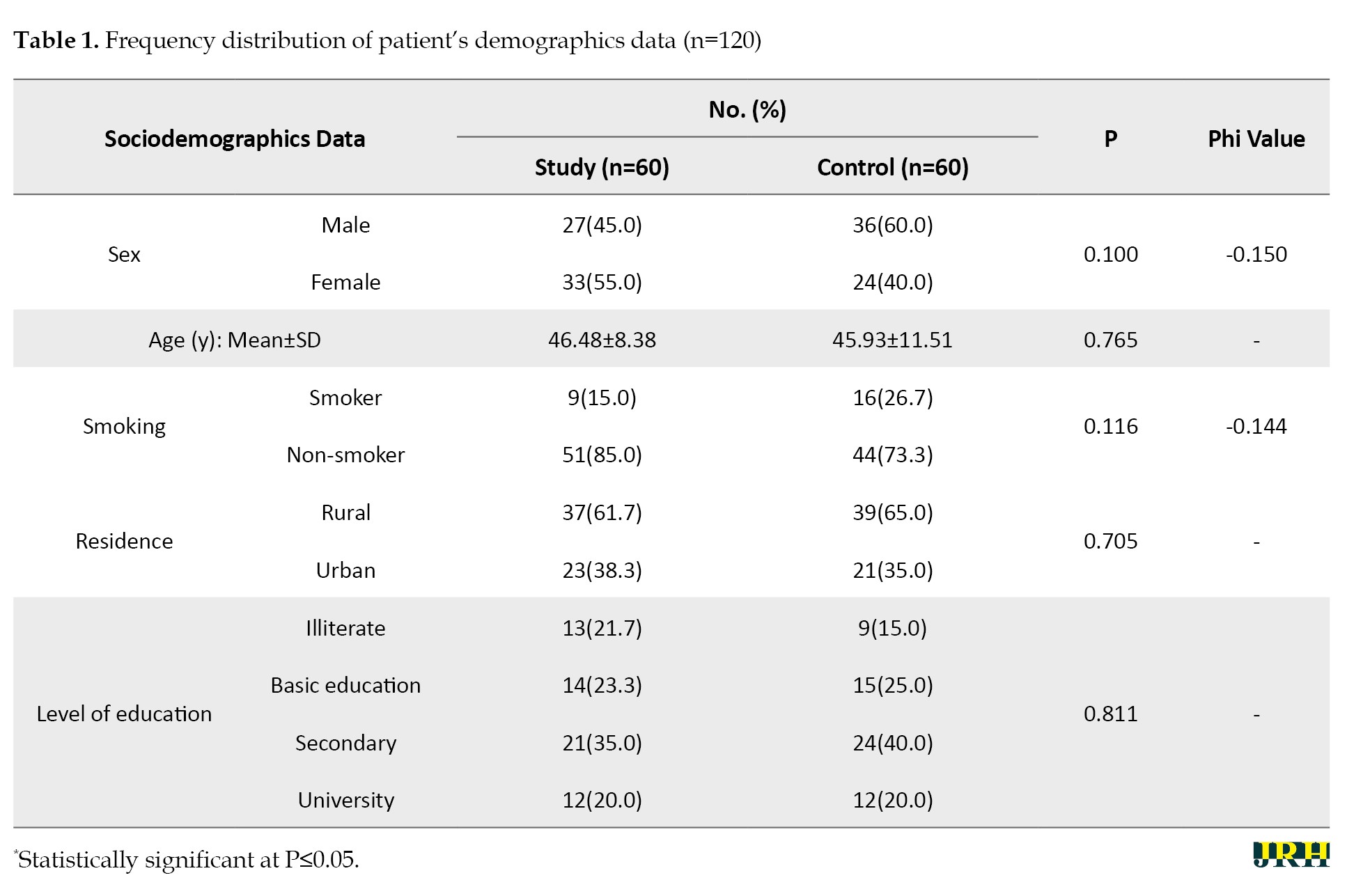
No statistically significant differences were observed between the two groups with respect to sex (P=0.100, φ=−0.150), age (P=0.765), smoking status (P=0.116, φ=−0.144), residence (P=0.705), or level of education (P=0.811). Small phi values indicated weak associations, suggesting adequate baseline comparability between groups for these variables.
Table 2 presents the median and range of NEWS implementation in the study and control groups.
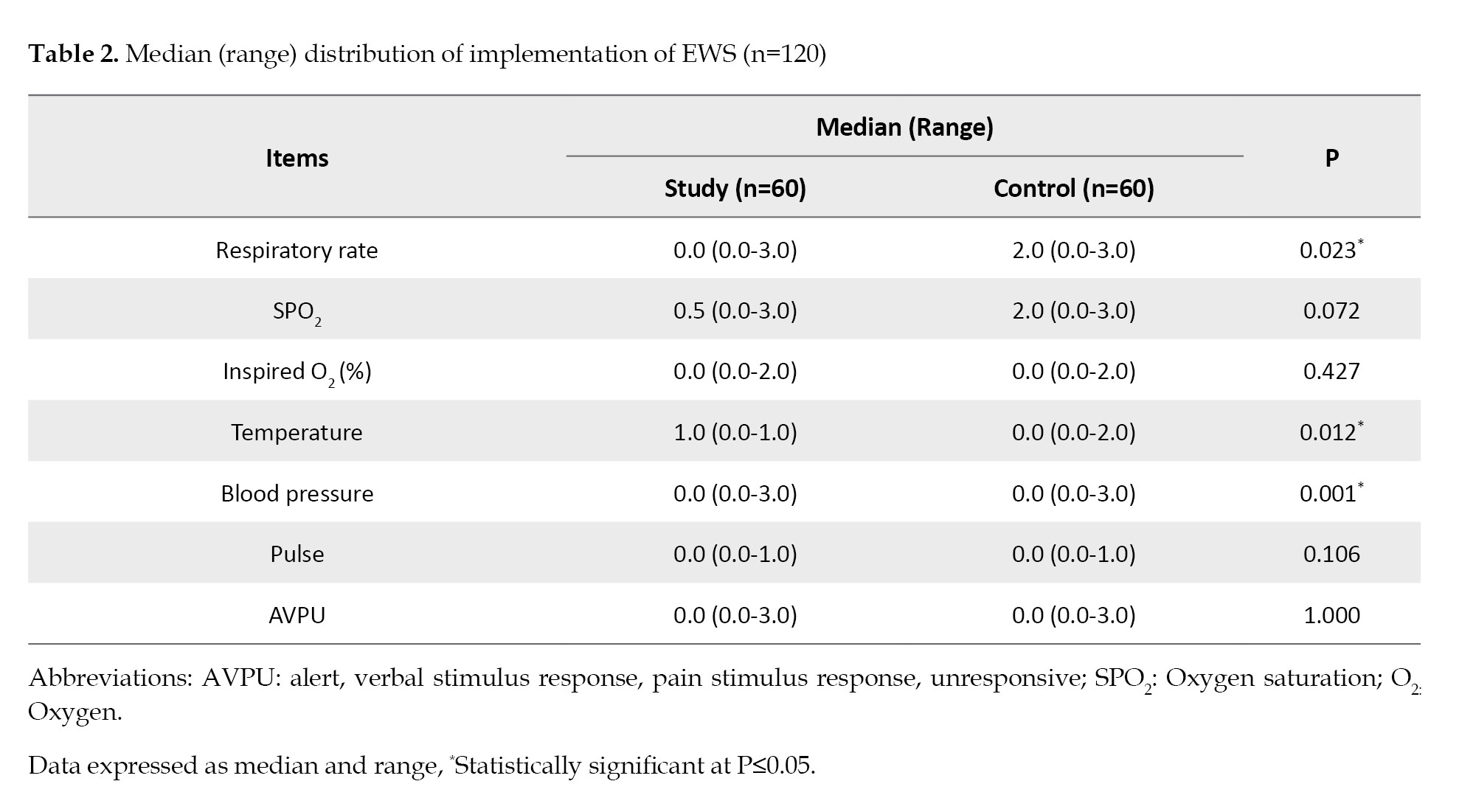
Regarding respiratory rate, blood pressure, and body temperature, a statistically significant difference was observed between the study and control groups P=0.0230.012, and 0.001, respectively.
Table 3 presents the clinical outcomes of the study and control groups.
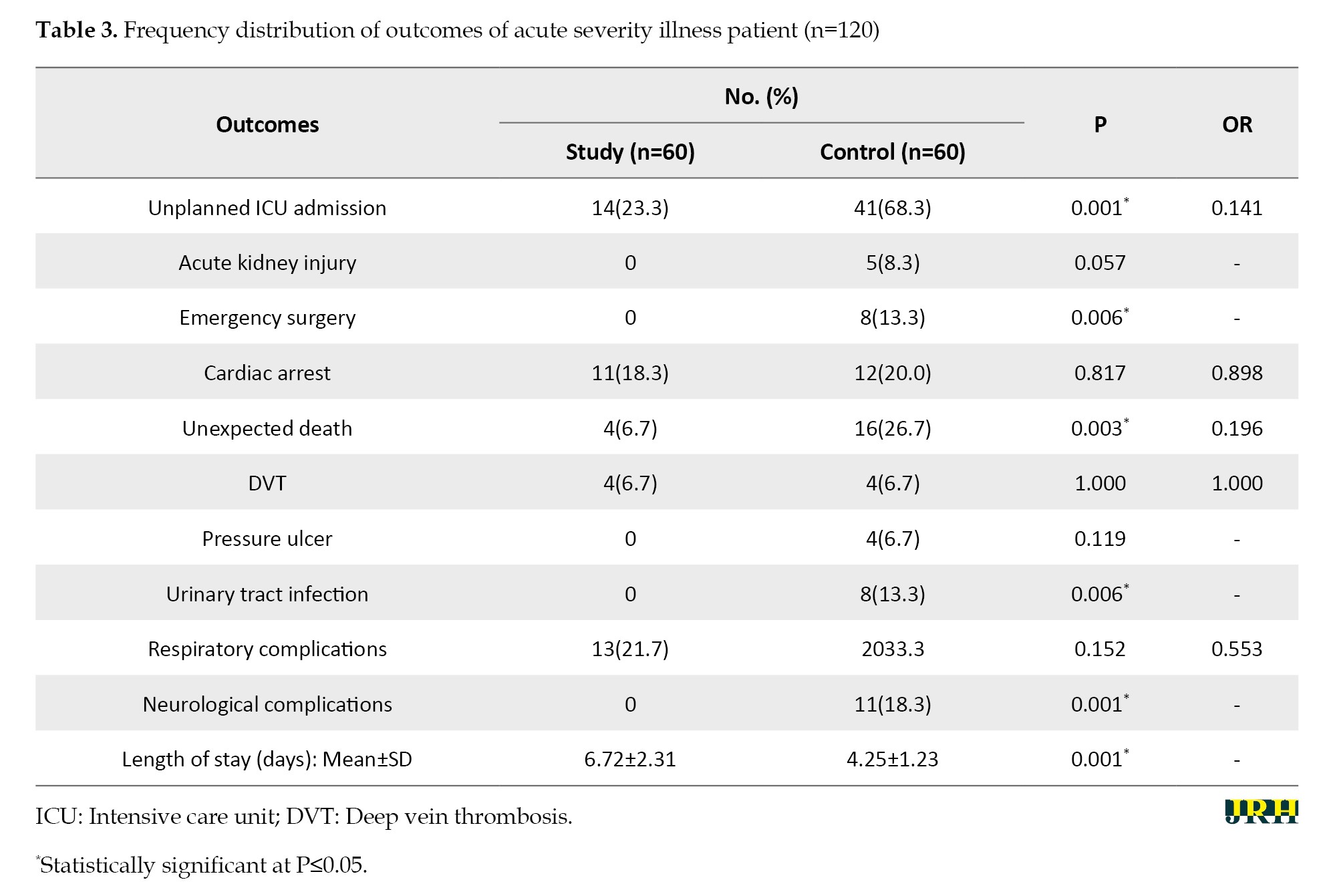
Statistically significant reductions in several adverse outcomes were observed in the study group. Unplanned ICU admissions occurred in 23.3% of the study group compared with 68.3% of the control group (P<0.001), corresponding to a markedly reduced odds ratio (OR=0.141), indicating substantially lower odds of ICU admission. Similarly, emergency surgery was absent in the study group compared with 13.3% in the control group (P=0.006), and unexpected death occurred significantly less frequently in the study group (6.7% vs 26.7%; P=0.003; OR=0.196). Neurological complications were also significantly lower in the study group (0% vs 18.3%; P=0.001). These findings suggest a consistent pattern of reduced severe clinical deterioration. No statistically significant differences were observed for cardiac arrest (P=0.817; OR=0.898), deep vein thrombosis (P=1.000; OR=1.000), respiratory complications (P=0.152; OR=0.553), acute kidney injury (P=0.057), pressure ulcers (P=0.119), or urinary tract infection (P=0.006). The mean hospital stay was longer in the study group than in the control group (6.72±2.31 vs 4.25±1.23 days; P<0.001).
Table 4 presents a moderate positive correlation with unplanned ICU admission (r=0.454, P<0.001) and a weak positive correlation with unexpected death (r=0.291, P=0.024), indicating longer hospitalization among patients with severe clinical deterioration.
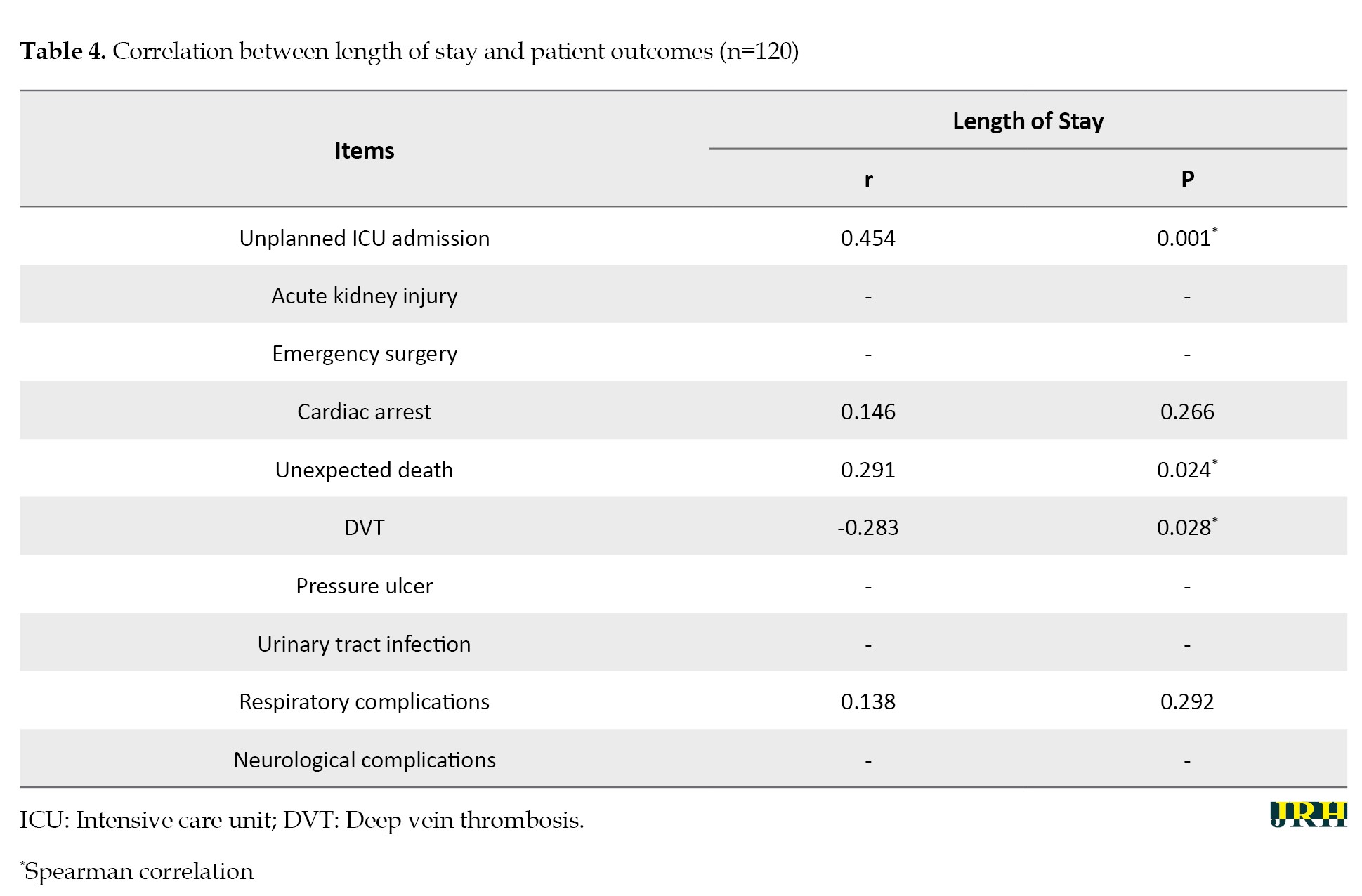
In contrast, a weak negative correlation was observed with deep vein thrombosis (r=−0.283, P=0.028). No statistically significant correlations were observed between length of stay and cardiac arrest or respiratory complications (P>0.05). Correlation coefficients were not estimable for outcomes with zero event counts.
Discussion
In the light of rogers diffusion of innovations perspective, nurses act as early adopters of EWS. Their bedside presence, clinical intuition, and experience enable them to detect the earliest signs of deterioration a critical window for intervention. Thus, successful EWS implementation depends not only on the tool, but on training and competency that support nurses’ complex decision-making [12]. This theo-retical framework situates EWS within implementation science rather than a purely descriptive context [13, 14].
In this study, no significant differences were observed in the study and control groups’ demographic characteristics, such as sex, age, and smoking status. Despite observing that both groups had higher proportions of men and non-smokers, these differences did not reach statistical significance (P>0.05), indicating sufficient baseline comparability. The groups’ mean ages were comparable (46.48±8.38 vs 45.93±11.51 years), which is consistent with an earlier study on critically ill patients in ERs [15], who reported that a higher percentage of males were observed in acute illness cases; in their study, conducted to examine sex and age-specific differences in risk profiles and early outcomes in adults with acute coronary syndromes. Also, [4] found a higher percentage of male and non-smoker patients with acute illness in both groups, and the mean ages were 46.53±9.05 for the study group and 46.40±11.56 for the control group.
From the researcher’s point of view, this result is consistent with findings that indicate male gender as a risk factor for conditions like acute coronary syndromes, and the male predominance may be due to lifestyle factors and biological predispositions, which may contribute to higher incidences of acute health events in males.
Regarding the NEWS parameters, statistically significant differences were observed between the study and control groups across most components. However, no significant differences were observed in pulse, inspired oxygen percentage, oxygen saturation (SpO₂), or AVPU scores. Rather than representing contradictory findings, these non-significant results may reflect comparable baseline physiological stability between groups, particularly in terms of consciousness level and oxygenation status at the time of assessment. The uniformity of the AVPU scores across both groups suggests a similar neurological baseline status, which may have limited the sensitivity of these parameters to detect between-group differences. Also, consistent with [15], who reported a statistically significant difference in early warning system parameters between the study and control groups, their study assessed the value of EWS in predicting the condition and prognosis of elderly patients in the emergency department.
It is essential to keep in mind that while statistical significance is crucial, it does not always paint the full picture. The clinical significance—that is, how these findings translate into real-world practice—is equally important. For instance, even if we see a significant difference in all parameters except pulse, inspired O2%, SPO2, and AVPU parameters, that does not mean the EWS isn’t useful. It could still be a valuable tool for monitoring patients, especially given the nuances of each clinical scenario.
Regarding clinical outcomes among patients with acute severe illness, the observed reduction in unplanned ICU admissions (23.3% vs 68.3%, P<0.001), in the study group suggests more than a significant difference between groups and emergency surgery was absent in the study group compared with 13.3% in the control group (P=0.006), This finding can be conceptually understood as part of an integrated care pathway whereby implementation of the EWS facilitates earlier recognition of physiological deterioration, prompting timely activation of rapid response interventions before progression to critical illness. This finding is similar to that of a previous study [8], which found that incorporating NEWS2 patterns improved the prediction of patient deterioration and death within 24 hours in respiratory admissions, suggesting enhanced outcomes through better risk assessment in acute illness.
Also, [4] reported that the NEWS demonstrated modest accuracy in predicting adverse outcomes, such as unexpected ICU admissions, and enhanced early detection of patient deterioration in high-dependency units. Moreover, [14] indicates that EWS, like NEWS2, positively impacts patient outcomes by enabling early detection of deteriorations in health, potentially preventing severe events such as heart attacks or ICU admissions, despite challenges in calculation and resource limitations [10]. A significant reduction was observed in the number of unplanned ICU admissions (10.190[5.3%] vs 3.174[1.7%], P=0.049), and a significant reduction was observed in the number of emergency surgeries (12/190[6.3%] vs 0.174[0%], P=0.001).
The current study found that the mean hospital stay was longer in the study group than in the control group (6.72±2.31 vs 4.25±1.23 days; P<0.001). This result was consistent with [16], who found that EWS may have a small effect on length of stay. Also, in contrast with [10], who reports that the length of stay showed that the control group’s overall mean days was (5±3), while the study group was (4±4), respectively
This result can be explained by the fact that the EWS enables the early detection of clinical deterioration in patients by continuously monitoring vital signs and physiological parameters; the EWS can identify subtle changes that might indicate a patient’s condition is worsening. This allows healthcare providers to intervene promptly, addressing issues before they escalate into emergencies requiring ICU care. Early intervention can stabilize patients in general wards, prevent complications, and improve overall outcomes. Additionally, EWS optimizes resource utilization by prioritizing care for those at higher risk, thereby reducing strain on ICU capacity and improving the efficiency of hospital operations.
Clinical implications
It is important to use the EWS to identify patients at high risk for deterioration in the ER. This may help reduce hospitalization, length of stay, and costs.
Conclusion
In Assiut medical ER, EWS positively influenced outcomes by reducing complications, such as unplanned ICU admission in 23.3% of the study group compared with 68.3% of the control group (P<0.001),, emergency surgeries was absent in the study group compared with 13.3% in the control group (P=0.006), and neurological complications were also significantly lower in the study group (0% vs 18.3%; P=0.001). Also, it had a greater ability to decrease the number of patients at risk of unexpected death, which occurred significantly less frequently in the study group (6.7% vs 26.7%; P=0.003; OR=0.196). Therefore, nurses must be equipped with adequate resources, training, and education to assess patients effectively and identify whether they are deteriorating.
Study limitations
This study has several limitations. The quasi-experimental design may have introduced selection bias and residual confounding due to a lack of randomization. Generalizability is also limited to a single institutional setting and a specific emergency department context, as institutional practices and patient characteristics may differ. Future multicentre randomized studies with larger samples are needed to confirm these findings, enhance external validity, and provide more robust evidence regarding the effectiveness of the intervention.
Ethical Considerations
Compliance with ethical guidelines
This study was approved by the Research Ethics Committee of Assiut University, Asyut, Egypt (Code:1120230593/2023).
Funding
This research did not receive any grants from funding agencies in the public, commercial, or non-profit sectors.
Authors' contributions
All authors contributed to the study conception, design, data collection, data analysis, interpretation of findings, manuscript drafting, and final approval of the manuscript. References
Conflict of interest
The authors declared no conflicts of interest.
Acknowledgments
The authors thank all participants in the study.
Acute diseases can be classified into various categories, including infectious diseases, injuries, respiratory conditions, abdominal conditions, cardiovascular events, and allergic reactions. These conditions often require prompt medical attention to prevent complications and manage acute illnesses to mitigate long-term health impacts. These diverse acute conditions underscore the need for proactive detection tools such as the early warning score (EWS) [1]. Early detection of signs of patient deterioration is important to decrease the rate of mortality and preventable morbidity, as well as the length of hospital stay, thereby reducing healthcare costs [2].
Clinical deterioration is an emergency situation in which acute or insidious physiological or cognitive changes result in a transition from one clinical state to a worse one, placing the patient at increased risk of harm, disability, or death [3]. The deterioration of a patient’s medical condition is often preceded by abnormal vital signs or physiological parameters. If these changes are detected early, unexpected deaths, serious adverse events or cardiac arrest can be prevented. Delays in intensive care unit (ICU) consultations for critically ill patients in medical wards have been associated with increased mortality [4].
Acute ischemic stroke is a significant health issue characterized by the sudden onset of symptoms due to cerebral artery occlusion. Prompt diagnosis and intervention, including pharmacological and endovascular treatments, are crucial for effective management and improved patient outcomes [5]. Studies have evaluated the association between EWS and the prognosis of hospitalized patients with stroke. Since both scoring systems include assessments of level of consciousness and various vital signs, we hypothesized that these systems could predict stroke occurrence in hospitalized patients with medical conditions [6].
Emergency care involves the management of conditions requiring rapid intervention to prevent death or permanent disability. Due to the time-critical nature of such conditions, unrestricted and timely access is essential for an effective emergency care system; even well-equipped and adequately staffed emergency units cannot function effectively if acutely ill or injured patients are unable to access care promptly [7]. In emergency departments, patients at risk of deterioration can often be identified early through changes in physiological observations recorded by healthcare staff [8]. Accurate interpretation of these changes and timely clinical intervention are crucial to minimizing serious adverse events, including cardiac arrest and death [9].
Significance of the study
The EWS is a standardized clinical tool designed to identify hospitalized patients at risk of in-hospital cardiac arrest, unplanned ICU admission, and unexpected death within 24 hours. By systematizing physiological assessments, EWS addresses delays in the recognition of clinical deterioration. At Assiut University Main Hospital, approximately 800 acute care patients were admitted to the emergency department between January and December 2024.
Unplanned ICU transfers occur in 14–28% of hospitalized patients and are frequently associated with preventable deterioration due to delayed detection. Despite this burden, the EWS has not been widely implemented in Assiut, reflecting broader resource and infrastructural challenges within the Egyptian healthcare system.
This study addresses this gap by evaluating the application of EWS as a low-cost, scalable intervention to improve outcomes and reduce preventable ICU transfers in a resource-limited acute care context. Therefore, adequate training of nurses holds promise for predicting deterioration with high precision by integrating EWS into routine care, as nurses play a key role as first-line responders in both identifying critical illness and determining when to intensify care by consulting doctors.
Methods
Research design
A quasi-experimental research design was used in this study.
Tools
Three tools were used to collect data. Tool I, the patient assessment tool, was developed by the researcher to gather sociodemographic data: The patient’s age, sex, smoking status, level of education, and residence. Tool II: implementation of the national EWS (NEWS) tool: This tool was adopted from [10] and aimed to assess the effect of EWS in identifying patients at risk of clinical deterioration. It included measures of respiratory rate, oxygen saturation, body temperature, systolic blood pressure, heart rate, and level of consciousness rated from 0 to 3, correlating with their divergence from the expected normal values. The level of consciousness was assessed using the AVPU concept as follows: (A=alert, V=verbal response to stimuli, P=pain response, U=unresponsive). Any alteration in the level of consciousness was given three points. A score was assigned to each of these parameters, with one score per parameter; the scores were summed, and supplemental oxygen increased the score by two points. The sum of points is then related to the level of clinical risk for the patient as follows: score (0-1), the nurse reassesses the EWS parameters after 6 hours; score (2), the nurse reassesses every 2 hours and rechecks with another nurse; score (3), the nurse reassesses every 1 hour and score (4 or more); then, the EWS escalation protocol was activated when the nurse called the rapid response team (RRT).
Tool III: Patient outcomes and complications assessment, which includes (unplanned ICU admission, cardiac arrest, acute kidney injury, emergency surgery, unexpected death, duration of emergency department stay, occurrence of skin ulcers, urinary tract infection, deep venous thrombosis, and neurological).
The study was conducted in three phases: preparatory, implementation, and evaluation.
The study followed three phases: Preparatory, implementation, and evaluation. During the preparatory phase, necessary approvals were obtained from the hospital authorities and the Faculty of Nursing. A pilot study with 12 patients (10%) tested tool feasibility, requiring no major modifications. Content validity was confirmed by five experts in critical care and emergency nursing, resulting in a content validity index.
An official permission to conduct the study was obtained from the hospital’s responsible authorities after an explanation of the nature and aim of the study. Approval was obtained from the local Ethics Committee, and the study followed the common ethical principles of clinical research. Informed consent was obtained from patients who participated in the study. The tools used in this study were developed by the researcher based on a review of the relevant literature [4, 11].
Reliability of the study tool
The reliability of the tools was assessed using Cronbach’s α test to measure the internal consistency of the components of the tools. Tool I: ‘’ patient assessment tool ‘’ 0.854. Tool III: Patient outcomes assessment tool was 0.890, which was acceptable.
Implementation phase for patients
1) Data were collected over approximately six months. 2) The researcher assigned studied patients (120 patients) to two equal groups: A control group and a study group (60 in each group). 3) Upon the patients’ arrival in the ER unit, they were assessed using the demographic tool (tool I). 4) All patients were assessed to obtain their score of EWS by using (tool II).
All patients were assessed for outcomes of acute severity illness patients and complications assessment: by using (tool III), including the following: which include (unplanned ICU admission, cardiac arrest, acute kidney injury, emergency surgery, and unexpected death, duration of emergency department stay, occurrence of skin ulcer, urinary tract infection, deep venous thrombosis, and neurological and respiratory complications).
Regarding the control group
The control group received routine care in the emergency room (ER) unit as prescribed by the resident physician after obtaining their EWS degree.
Regarding the study group
Data collected concurrently at the time of patients’ admission. The research team was composed of the researcher and five staff members. The researcher applied the EWS and obtained the patient’s EWS score during the morning shift and monitored the occurrence of complications using tool III.
The five staff nurses’ role is to monitor vital signs according to the patient’s degree during the patient’s hospital stay, as follows: Two in the afternoon shift and three in the night shift, mutually and record in the patient’s sheet. The study group received care according to their EWS degree as follows: score (0-1), the nurse reassesses the EWS parameters after 6 hours; score (2), the nurse reassesses every 2 hour and rechecks with another nurse; score (3), the nurse reassesses every 1 hour and score (4 or more); then, the EWS escalation protocol was activated when the nurse calls the RRT and this fellowed up for three days.
Evaluation phase
All patients were assessed for outcomes of acute-severity illness and complications using (tool III), including the following: unplanned ICU admission, cardiac arrest, acute kidney injury, emergency surgery, and unexpected death; duration of emergency department stay; occurrence of skin ulcer, urinary tract infection, deep venous thrombosis, and neurological and respiratory complications.
Study participants
The study was conducted in the medical emergency department of the Main Hospital, Assiut University. The sample was collected over approximately six months (from January 2025 to June 2025) in accordance with the inclusion criteria. The statistical program Epidemiology information 2000 was used to determine the sample size. The 95% confidence interval, 80% study power, 95% prevalence of critically ill patients, and worst-acceptable result of 5% were used to compute the expected frequencies of critical care units from earlier studies. Based on the aforementioned criteria, a sample size of 112 was used to overcome the drop factors; the sample size became 120 patients. Patients were assigned according to the occurrence of complications after the implementation of the EWS into two groups (study group, n=60; control group, n=60). The participating patients were randomized in a 1:1 ratio to either group using a basic method of simple randomization: flipping a coin, the side of the coin (i.e. heads—control, tails—study) determined the assignment of each patient.
Inclusion criteria
Adult patients aged 18-60 years old.
1) Patients with a Glasgow coma scale (GCS)>8. 2) Admission for acute medical conditions necessitating close physiological monitoring.
Exclusion criteria
1) Patients with GCS<8. 2) Pregnant women.
Results
Table 1 presents the sociodemographic data of the study and control groups.
No statistically significant differences were observed between the two groups with respect to sex (P=0.100, φ=−0.150), age (P=0.765), smoking status (P=0.116, φ=−0.144), residence (P=0.705), or level of education (P=0.811). Small phi values indicated weak associations, suggesting adequate baseline comparability between groups for these variables.
Table 2 presents the median and range of NEWS implementation in the study and control groups.
Regarding respiratory rate, blood pressure, and body temperature, a statistically significant difference was observed between the study and control groups P=0.0230.012, and 0.001, respectively.
Table 3 presents the clinical outcomes of the study and control groups.
Statistically significant reductions in several adverse outcomes were observed in the study group. Unplanned ICU admissions occurred in 23.3% of the study group compared with 68.3% of the control group (P<0.001), corresponding to a markedly reduced odds ratio (OR=0.141), indicating substantially lower odds of ICU admission. Similarly, emergency surgery was absent in the study group compared with 13.3% in the control group (P=0.006), and unexpected death occurred significantly less frequently in the study group (6.7% vs 26.7%; P=0.003; OR=0.196). Neurological complications were also significantly lower in the study group (0% vs 18.3%; P=0.001). These findings suggest a consistent pattern of reduced severe clinical deterioration. No statistically significant differences were observed for cardiac arrest (P=0.817; OR=0.898), deep vein thrombosis (P=1.000; OR=1.000), respiratory complications (P=0.152; OR=0.553), acute kidney injury (P=0.057), pressure ulcers (P=0.119), or urinary tract infection (P=0.006). The mean hospital stay was longer in the study group than in the control group (6.72±2.31 vs 4.25±1.23 days; P<0.001).
Table 4 presents a moderate positive correlation with unplanned ICU admission (r=0.454, P<0.001) and a weak positive correlation with unexpected death (r=0.291, P=0.024), indicating longer hospitalization among patients with severe clinical deterioration.
In contrast, a weak negative correlation was observed with deep vein thrombosis (r=−0.283, P=0.028). No statistically significant correlations were observed between length of stay and cardiac arrest or respiratory complications (P>0.05). Correlation coefficients were not estimable for outcomes with zero event counts.
Discussion
In the light of rogers diffusion of innovations perspective, nurses act as early adopters of EWS. Their bedside presence, clinical intuition, and experience enable them to detect the earliest signs of deterioration a critical window for intervention. Thus, successful EWS implementation depends not only on the tool, but on training and competency that support nurses’ complex decision-making [12]. This theo-retical framework situates EWS within implementation science rather than a purely descriptive context [13, 14].
In this study, no significant differences were observed in the study and control groups’ demographic characteristics, such as sex, age, and smoking status. Despite observing that both groups had higher proportions of men and non-smokers, these differences did not reach statistical significance (P>0.05), indicating sufficient baseline comparability. The groups’ mean ages were comparable (46.48±8.38 vs 45.93±11.51 years), which is consistent with an earlier study on critically ill patients in ERs [15], who reported that a higher percentage of males were observed in acute illness cases; in their study, conducted to examine sex and age-specific differences in risk profiles and early outcomes in adults with acute coronary syndromes. Also, [4] found a higher percentage of male and non-smoker patients with acute illness in both groups, and the mean ages were 46.53±9.05 for the study group and 46.40±11.56 for the control group.
From the researcher’s point of view, this result is consistent with findings that indicate male gender as a risk factor for conditions like acute coronary syndromes, and the male predominance may be due to lifestyle factors and biological predispositions, which may contribute to higher incidences of acute health events in males.
Regarding the NEWS parameters, statistically significant differences were observed between the study and control groups across most components. However, no significant differences were observed in pulse, inspired oxygen percentage, oxygen saturation (SpO₂), or AVPU scores. Rather than representing contradictory findings, these non-significant results may reflect comparable baseline physiological stability between groups, particularly in terms of consciousness level and oxygenation status at the time of assessment. The uniformity of the AVPU scores across both groups suggests a similar neurological baseline status, which may have limited the sensitivity of these parameters to detect between-group differences. Also, consistent with [15], who reported a statistically significant difference in early warning system parameters between the study and control groups, their study assessed the value of EWS in predicting the condition and prognosis of elderly patients in the emergency department.
It is essential to keep in mind that while statistical significance is crucial, it does not always paint the full picture. The clinical significance—that is, how these findings translate into real-world practice—is equally important. For instance, even if we see a significant difference in all parameters except pulse, inspired O2%, SPO2, and AVPU parameters, that does not mean the EWS isn’t useful. It could still be a valuable tool for monitoring patients, especially given the nuances of each clinical scenario.
Regarding clinical outcomes among patients with acute severe illness, the observed reduction in unplanned ICU admissions (23.3% vs 68.3%, P<0.001), in the study group suggests more than a significant difference between groups and emergency surgery was absent in the study group compared with 13.3% in the control group (P=0.006), This finding can be conceptually understood as part of an integrated care pathway whereby implementation of the EWS facilitates earlier recognition of physiological deterioration, prompting timely activation of rapid response interventions before progression to critical illness. This finding is similar to that of a previous study [8], which found that incorporating NEWS2 patterns improved the prediction of patient deterioration and death within 24 hours in respiratory admissions, suggesting enhanced outcomes through better risk assessment in acute illness.
Also, [4] reported that the NEWS demonstrated modest accuracy in predicting adverse outcomes, such as unexpected ICU admissions, and enhanced early detection of patient deterioration in high-dependency units. Moreover, [14] indicates that EWS, like NEWS2, positively impacts patient outcomes by enabling early detection of deteriorations in health, potentially preventing severe events such as heart attacks or ICU admissions, despite challenges in calculation and resource limitations [10]. A significant reduction was observed in the number of unplanned ICU admissions (10.190[5.3%] vs 3.174[1.7%], P=0.049), and a significant reduction was observed in the number of emergency surgeries (12/190[6.3%] vs 0.174[0%], P=0.001).
The current study found that the mean hospital stay was longer in the study group than in the control group (6.72±2.31 vs 4.25±1.23 days; P<0.001). This result was consistent with [16], who found that EWS may have a small effect on length of stay. Also, in contrast with [10], who reports that the length of stay showed that the control group’s overall mean days was (5±3), while the study group was (4±4), respectively
This result can be explained by the fact that the EWS enables the early detection of clinical deterioration in patients by continuously monitoring vital signs and physiological parameters; the EWS can identify subtle changes that might indicate a patient’s condition is worsening. This allows healthcare providers to intervene promptly, addressing issues before they escalate into emergencies requiring ICU care. Early intervention can stabilize patients in general wards, prevent complications, and improve overall outcomes. Additionally, EWS optimizes resource utilization by prioritizing care for those at higher risk, thereby reducing strain on ICU capacity and improving the efficiency of hospital operations.
Clinical implications
It is important to use the EWS to identify patients at high risk for deterioration in the ER. This may help reduce hospitalization, length of stay, and costs.
Conclusion
In Assiut medical ER, EWS positively influenced outcomes by reducing complications, such as unplanned ICU admission in 23.3% of the study group compared with 68.3% of the control group (P<0.001),, emergency surgeries was absent in the study group compared with 13.3% in the control group (P=0.006), and neurological complications were also significantly lower in the study group (0% vs 18.3%; P=0.001). Also, it had a greater ability to decrease the number of patients at risk of unexpected death, which occurred significantly less frequently in the study group (6.7% vs 26.7%; P=0.003; OR=0.196). Therefore, nurses must be equipped with adequate resources, training, and education to assess patients effectively and identify whether they are deteriorating.
Study limitations
This study has several limitations. The quasi-experimental design may have introduced selection bias and residual confounding due to a lack of randomization. Generalizability is also limited to a single institutional setting and a specific emergency department context, as institutional practices and patient characteristics may differ. Future multicentre randomized studies with larger samples are needed to confirm these findings, enhance external validity, and provide more robust evidence regarding the effectiveness of the intervention.
Ethical Considerations
Compliance with ethical guidelines
This study was approved by the Research Ethics Committee of Assiut University, Asyut, Egypt (Code:1120230593/2023).
Funding
This research did not receive any grants from funding agencies in the public, commercial, or non-profit sectors.
Authors' contributions
All authors contributed to the study conception, design, data collection, data analysis, interpretation of findings, manuscript drafting, and final approval of the manuscript. References
Conflict of interest
The authors declared no conflicts of interest.
Acknowledgments
The authors thank all participants in the study.
References
- El-Gilany AH, Abou-ElWafa H. Acute diseases: An epidemiologic perspective. Journal of Acute Disease. 2023; 12(1):1-9. [DOI:10.4103/2221-6189.369072]
- Arsat N, Lah NASN, Thomas DC, Soong SF, Chong LT, Sawatan W, et al. The effect of work setting and demographic factors on caring behaviour among nurses in the public hospitals and public health services, Sabah, Malaysia. BMC Nursing. 2023; 22(1):194. [DOI:10.1186/s12912-023-01359-w] [PMID] [PMCID]
- Batterbury A, Douglas C, Coyer F. The illness severity of patients reviewed by the medical emergency team: a scoping review. Australian Critical Care. 2021; 34(5):496-509. [DOI:10.1016/j.aucc.2020.11.006] [PMID]
- Williams B. The national early warning score: from concept to NHS implementation. Clinical Medicine. 2022; 22(6):499-505. [DOI:10.7861/clinmed.2022-news-concept] [PMID] [PMCID]
- Prytherch DR, Smith GB, Schmidt PE, Featherstone PI. ViEWS-towards a national early warning score for detecting adult inpatient deterioration. Resuscitation. 2010; 81(8):932-7. [DOI:10.1016/j.resuscitation.2010.04.014] [PMID]
- Kim C, Lee JJ, Sohn JH, Kim JH, Won DO, Lee SH. Comparison of early warning scoring systems for predicting stroke occurrence among hospitalized patients: A study using smart clinical data warehouse. Plos One. 2025; 20(1):e0316068. [DOI:10.1371/journal.pone.0316068] [PMID] [PMCID]
- Burkholder TW, Bergquist HB, Wallis LA. Governing access to emergency care in Africa. African Journal of Emergency Medicine. 2020; 10(S 1):S2-6. [DOI:10.1016/j.afjem.2020.07.003] [PMID] [PMCID]
- Forster S, McKeever TM, Churpek M, Gonem S, Shaw D. Predicting outcome in acute respiratory admissions using patterns of National Early Warning Scores. Clinical Medicine. 2022; 22(5):409-15. [DOI:10.7861/clinmed.2022-0074] [PMID] [PMCID]
- NICE. Acutely ill adults in hospital: recognising and responding to deterioration. Manchester: National Institute for Health and Care Excellence; 2007. [Link]
- Badr MN, Khalil NS, Mukhtar AM. Effect of national early warning scoring system implementation on cardiopulmonary arrest, unplanned ICU admission, emergency surgery, and acute kidney injury in an emergency hospital, Egypt. Journal of Multidisciplinary Healthcare. 2021; 14:1431-42. [DOI:10.2147/JMDH.S312395] [PMID] [PMCID]
- Samani S, Rattani SA. Recognizing Early Warning Signs (EWS) in patients is critically important. Open Journal of Nursing. 2023; 13:53-64. [DOI:10.4236/ojn.2023.131004]
- Almarshadi I, Kariri Y, Aletyani R, Alsaedi M, Alotibi A, Alofi A, et al. Enhancing patient safety through early recognition of clinical deterioration: A nursing perspective. JMANS. 2025; 5(2):1. [Link]
- Lundblad JP. A review and critique of Rogers' diffusion of innovation theory as it applies to organizations. Organization Development Journal. 2003; 21(4):50-64. [Link]
- Damschroder LJ, Aron DC, Keith RE, Kirsh SR, Alexander JA, Lowery JC. Fostering implementation of health services research findings into practice: A consolidated framework for advancing implementation science. Implementation Science. 2009; 4:50. [DOI:10.1186/1748-5908-4-50] [PMID] [PMCID]
- Swami T, Shams A, Mittelstadt M, Guenther C, Tse T, Noor H, et al. Implementation of early warning system in the clinical teaching unit to reduce unexpected deaths. BMJ Open Quality. 2023; 12(2):e002194. [DOI:10.1136/bmjoq-2022-002194] [PMID] [PMCID]
- McGaughey J, Fergusson DA, Van Bogaert P, Rose L. Early warning systems and rapid response systems for the prevention of patient deterioration on acute adult hospital wards. The Cochrane Database of Systematic Reviews. 2021; 11(11):CD005529 [DOI:10.1002/14651858.CD005529.pub3] [PMID] [PMCID]
Type of Study: Orginal Article |
Subject:
● International Health
Received: 2025/10/22 | Accepted: 2026/02/7 | Published: 2026/07/1
Received: 2025/10/22 | Accepted: 2026/02/7 | Published: 2026/07/1
| Rights and permissions | |
 |
This work is licensed under a Creative Commons Attribution-NonCommercial 4.0 International License. |


This is an open access article distributed under the terms of the Creative Commons Attribution License (CC-By-NC), which permits use, distribution, and reproduction in any medium, provided the original work is properly cited and is not used for commercial purposes.
Contact Information
