

Volume 16, Issue 5 (Sep & Oct 2026)
J Research Health 2026, 16(5): 433-442 |
Back to browse issues page



Ethics code: IR.DUMS.REC.1402.56


Download citation:
BibTeX | RIS | EndNote | Medlars | ProCite | Reference Manager | RefWorks
Send citation to:


BibTeX | RIS | EndNote | Medlars | ProCite | Reference Manager | RefWorks
Send citation to:
Sarabi N, Khezri R, Mohaghegh H, Pourmotahari F. Development and Psychometric Evaluation of the Cardiovascular Health Behavior Scale for Iranian Students. J Research Health 2026; 16 (5) :433-442
URL: http://jrh.gmu.ac.ir/article-1-2830-en.html
URL: http://jrh.gmu.ac.ir/article-1-2830-en.html


1- Department of Nursing, School of Nursing and Midwifery, Dezful University of Medical Sciences, Dezful, Iran.
2- Student Research Committee, Dezful University of Medical Sciences, Dezful, Iran.
3- Department of Cardiology, School of Medicine, Ganjavian Hospital, Dezful University of Medical Sciences, Dezful, Iran.
4- Department of Community Medicine, School of Medicine, Dezful University of Medical Sciences, Dezful, Iran. ,pourmotahari@yahoo.com
2- Student Research Committee, Dezful University of Medical Sciences, Dezful, Iran.
3- Department of Cardiology, School of Medicine, Ganjavian Hospital, Dezful University of Medical Sciences, Dezful, Iran.
4- Department of Community Medicine, School of Medicine, Dezful University of Medical Sciences, Dezful, Iran. ,
Full-Text [PDF 999 kb]
(33 Downloads)
| Abstract (HTML) (683 Views)
Full-Text: (30 Views)
Introduction
Cardiovascular disease (CVD) is the leading cause of death worldwide, with over 75% of CVD-related deaths occurring in low- and middle-income countries [1]. While extensive research aims to reduce CVD rates in the general adult population, the elevated CVD risk among students aged 18–24 is often underestimated [2].
University life necessitates significant adaptation. Students encounter new environments, diverse lifestyles, academic stress, potential substance use, and changes in dietary habits, all of which can impact cardiovascular health [3]. One study found that 90% of university students consume fewer than five daily servings of fruits and vegetables, and less than 30% meet recommended physical activity guidelines. These behaviors, established early, can predispose individuals to future CVD [4].
A valid scale to measure cardiovascular health-related behaviors in students is an essential first step for disease prevention and subsequent intervention planning. A review of existing instruments reveals that many focus on patients with established CVD, assessing domains, such as cardiac rehabilitation knowledge [5] and specific heart-health behaviors [6, 7]. Other studies have focused on healthy populations and different age groups, aiming to psychometrically evaluate instruments related to knowledge, attitudes, and practices regarding CVD in people over 20 years of age [8], risk perception in adults over 18 [9, 10], heart health information in adults over 19 [11], or cardiovascular health behaviors (CHB) in children aged 10–15 [12]. This highlights a gap: no tool specifically measures CHBs among students.
Evidence from Iran underscores this need. Iranian students, a large subset of young adults, are at high risk for CVD [13]. Modifiable risk factors are prevalent: physical activity levels are low [13], smoking rates are high at 16% [14], dietary habits vary significantly even within structured environments, such as dormitories [15], and students experience considerable stress without consistently employing effective coping strategies [16]. These factors collectively emphasize the necessity for a valid scale to identify CHBs in Iranian students. Therefore, this study aimed to develop and psychometrically validate a CHB scale for this population.
Methods
This sequential exploratory mixed-methods study was conducted in two phases in 2024. The research framework was based on the Celik and Bektas (2020) heart health-related behavior scale, which comprises 28 items across six subscales: Nutrition, exercise, sedentary behavior, smoking, stress, and self-love [12]. Subsequently, scale development involved a literature review and expert interviews.
Translation
Following permission from the original scale designer, translation and cultural adaptation were performed according to Beaton et al. (2000) guidelines [17, 18]. The process included forward translation into Farsi, synthesis of translations, back-translation into English, expert panel review to ensure conceptual equivalence, pretesting of the questionnaire, and final documentation review.
Scale development
During the development phase, a systematic review was conducted to identify studies related to heart health behaviors in students. The search strategy, without time limits, was: ([heart disease risk factor* OR cardiovascular risk factor*] AND [student*]) OR ([cardiovascular disease AND risk factor*] AND [student*]). International and national databases (ProQuest, PubMed, Scopus, Google Scholar, ISI, SID, Irandoc, Magiran) were searched for Persian and English publications. Conference abstracts, editorials, and non-English/Persian articles were excluded. The initial search yielded 1,953,559 records. After duplicate removal, 3,234 articles remained. Title and abstract screening excluded 3,124 studies, leaving 110 articles for full-text review.
Subsequently, semi-structured face-to-face interviews were conducted until data saturation was reached—the point at which no new insights, codes, or themes emerge [19]. Using purposive sampling, ten specialists from Dezful University of Medical Sciences were interviewed: four nursing faculty members, two cardiologists, two nutritionists, one clinical psychologist, and one physical education expert.
Interviews lasted 30–60 minutes, were audio-recorded, and transcribed verbatim. Guided by the dimensions of the Çelik and Bektas (2020) scale [12], core questions explored the role of nutrition, exercise, smoking, sedentary behavior, stress, and self-love in CVD prevention. Data were analyzed using the Graneheim and Lundman (2004) content analysis approach [20]. Transcripts were repeatedly reviewed to ensure immersion. Meaningful units were identified and coded, primary codes were compared and categorized into subthemes, and main themes were subsequently derived by integrating related subthemes. Following the systematic review and interviews, 52 items were generated after removing duplicates and merging similar concepts.
Face and content validity
Face validity was assessed both qualitatively and quantitatively with a sample of 10 medical science students [21]. For qualitative assessment, students evaluated each of the 52 items for relevance, clarity, and ease of comprehension, and the author revised wording based on their feedback. For quantitative assessment, students rated each item’s importance on a 5-point Likert scale (“unimportant” to “completely important”). Items with an impact score below 1.5 were considered for removal [22].
Content validity was evaluated using the content validity ratio (CVR) and content validity index (CVI). Ten experts were purposively selected and provided with the 52-item scale and a study description. For the CVR, experts rated each item as “essential,” “useful but not essential,” or “not essential” [23]. Based on Lawshe’s table for 10 experts, items with a CVR<0.62 were removed [24]. For the I-CVI, experts rated item relevance on a 4-point scale (1=not relevant, 4=highly relevant). The I-CVI was calculated as the number of experts rating an item 3 or 4, divided by the total number of experts [23, 25].
Construct validity
Sample size recommendations for exploratory factor analysis (EFA) vary, with a common guideline being 5–10 participants per item [26]. In total, 684 students completed the online survey. The inclusion criteria were age ≥18 years, no history of CVD or mental illness. The exclusion criteria were academic leave for two consecutive semesters or pregnancy.
Data were randomly split into two sets for EFA (n=342) and confirmatory factor analysis (CFA) (n=342). Univariate normality was assessed using skewness (±2) and kurtosis (±7) thresholds [27]. The data met these criteria (skewness: -0.277 to 0.617; kurtosis: -0.983 to 0.057). Univariate and multivariate outliers were examined using box plots and Mahalanobis distance. The variance inflation factor (VIF) was employed to investigate the items’ collinearity. VIFs>10 indicate significant multicollinearity [28].
Reliability
Reliability was assessed using a separate sample of 30 participants, a sufficient size given the scale’s inter-correlated components [29].
Exploratory factor analysis
EFA with Varimax rotation was performed to identify the factor structure. Sampling adequacy and item intercorrelations were assessed using the Kaiser-Meyer-Olkin (KMO) measure and Bartlett’s test of sphericity. Furthermore, Bartlett’s sphericity test was conducted to confirm if the correlation matrix was an identity matrix [30]. KMO values are interpreted as: ≥0.90 (excellent), 0.80–0.89 (good), 0.70–0.79 (acceptable), 0.60–0.69 (mediocre), 0.50–0.59 (poor), ≤0.50 (unacceptable) [31]. Factor retention was guided by eigenvalues >1 and scree plot inspection [32].
Confirmatory factor analysis
Model fit in CFA was evaluated using multiple indices: chi-square (χ²), normed chi-square (χ²/df), root mean square error of approximation (RMSEA), incremental fit index (IFI), comparative fit index (CFI), Adjusted Goodness-of-fit index (AGFI), and parsimonious comparative fit index (PCFI). Acceptable fit was indicated by: RMSEA <0.06, χ²/df between 1–3, IFI/CFI/AGFI >0.9, and PCFI>0.5 [33].
Reliability
Internal consistency was measured using Cronbach’s α and McDonald’s omega coefficients, with values >0.7 considered acceptable [34]. Assumption checking and statistical analyses were performed using R software, version 4.3.3, EFA using SPSS software, version 26, and CFA using AMOS software, version 24.
Results
The mean age of the 684 participants was 23.03±2.83 years; 378(55.3%) were male. Nursing students were the largest subgroup (n=168, 24.6%). Most participants held a bachelor’s degree (n=493, 72.1%) and reported no family history of CVD (n=561, 82.0%). The electronic questionnaire required responses to all items for submission, resulting in a 100% completion rate.
Face and content validity assessment
During face validity, minor wording adjustments were made (e.g. “I exercise to maintain a healthy weight” was changed to “I exercise to maintain a suitable weight”). All 52 items had an impact score >1.5. Following expert review for content validity, the pool was reduced to 36 items. The CVR for all retained items was ≥0.62, and the CVI ranged from 0.80 to 1. These 36 items proceeded to construct validity testing.
Exploratory and confirmatory factor analysis
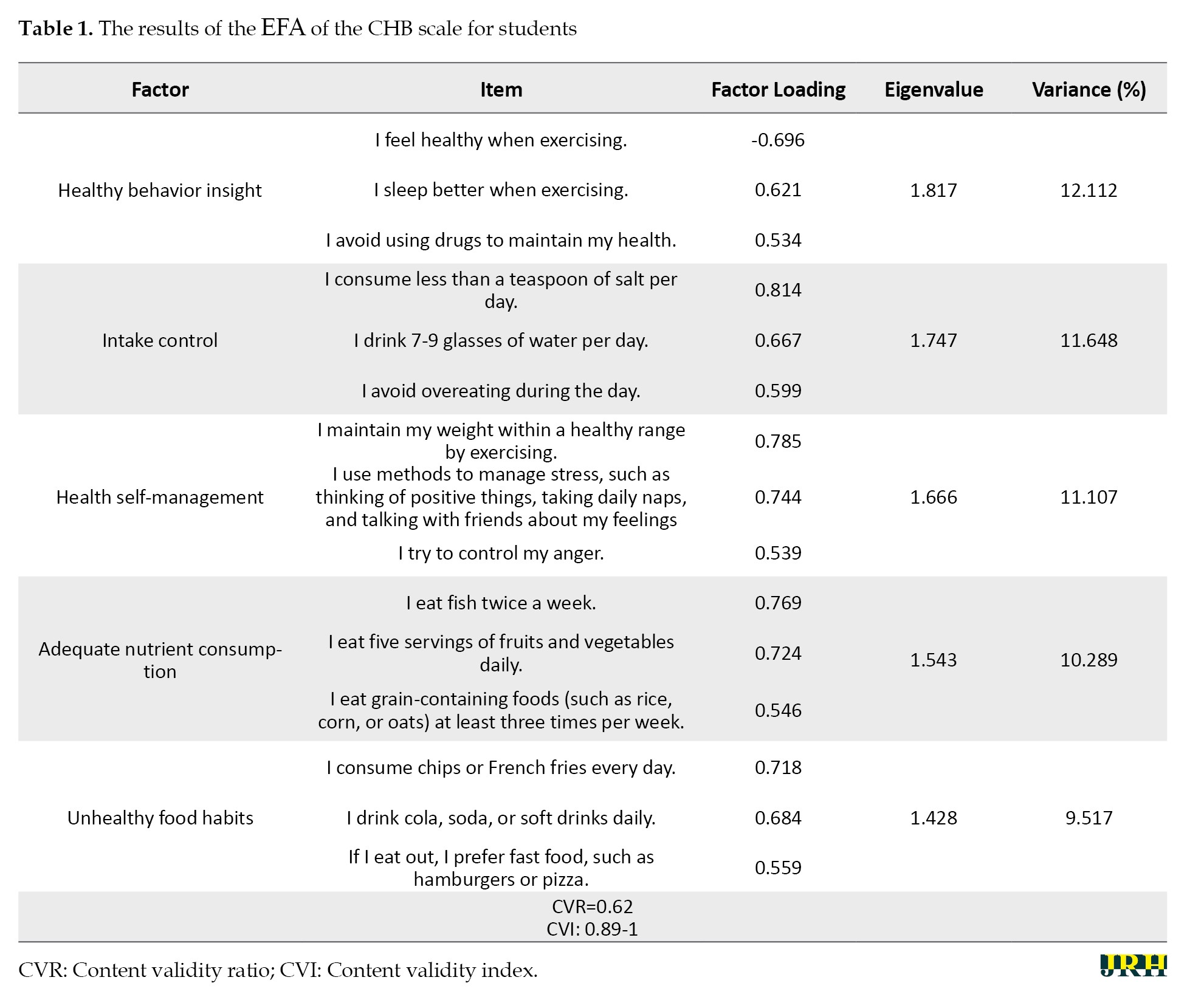
The KMO measure for the final 15-item set was 0.680, and Bartlett’s test of sphericity was significant (χ²=575.58, P<0.001), confirming suitability for EFA. Based on eigenvalues >1 and scree plot analysis, a five-factor structure with 15 items was retained, explaining 54.67% of the total variance. Items were removed sequentially based on two criteria: 1) factor loadings <0.50 on their primary factor, and 2) significant cross-loadings (>0.50 on multiple factors). Table 1 presents the eigenvalues and variance percentages for each factor.
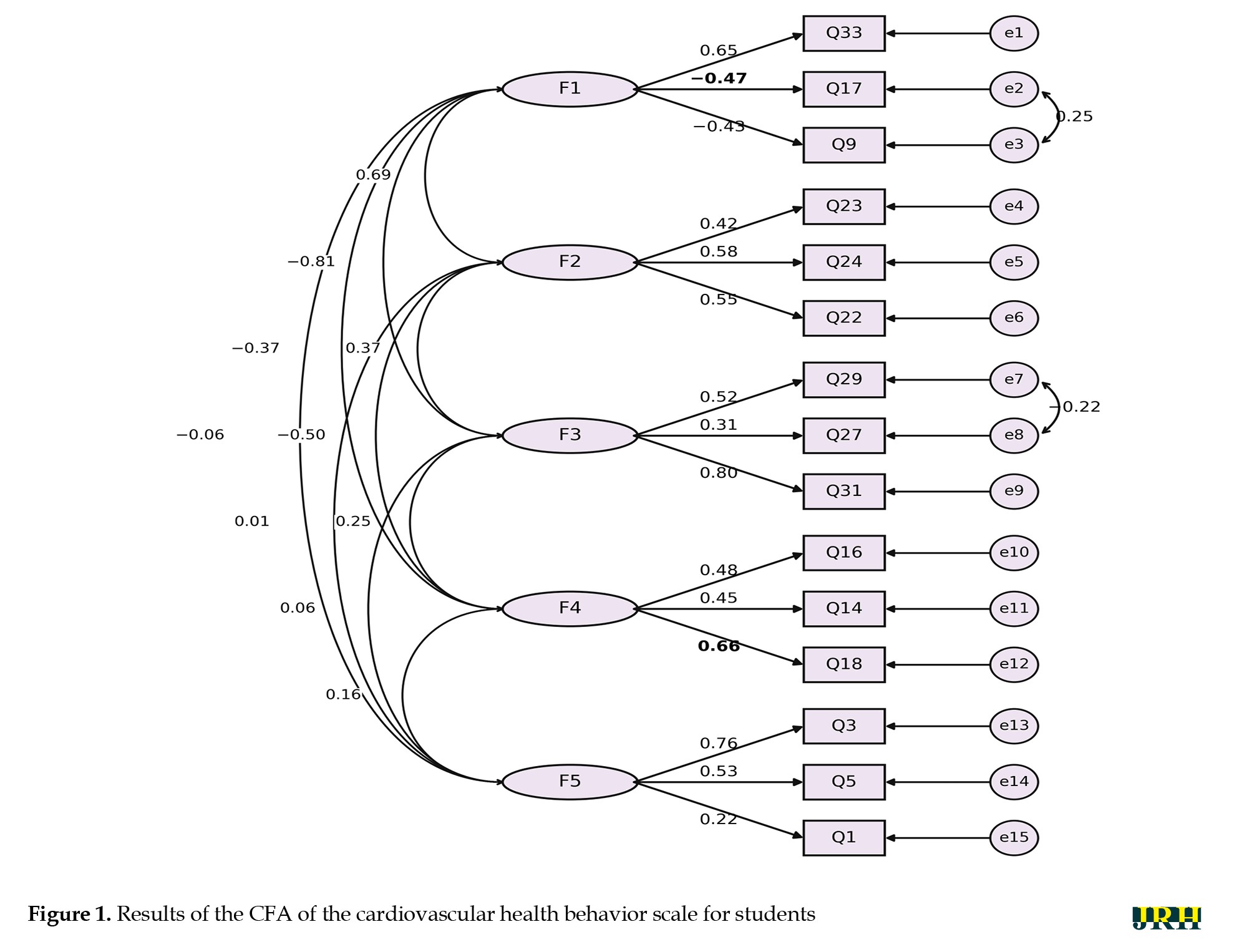
CFA was used to evaluate the five-factor structure. To improve model fit, error correlations between items e7 and e8 and e3 and e2 were specified. The chi-square statistic was significant (χ²=129.709, df=78, P<0.001). Based on the fit indices, the CFA demonstrated an acceptable model fit (Table 2).
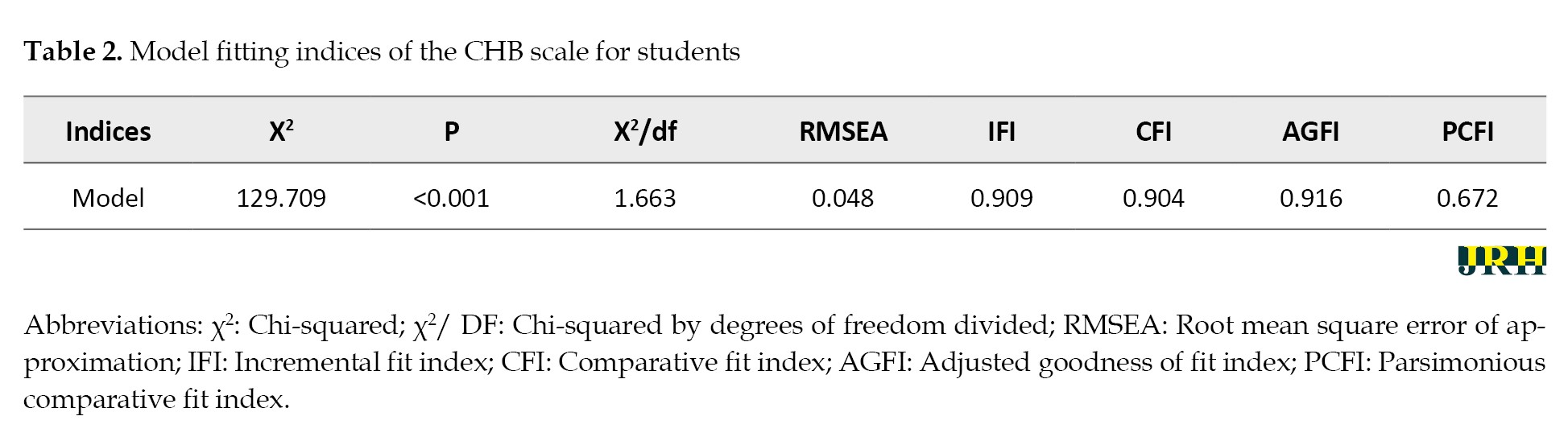
Figure 1 shows the standardized factor loadings for each item on the identified factors.
Cardiovascular disease (CVD) is the leading cause of death worldwide, with over 75% of CVD-related deaths occurring in low- and middle-income countries [1]. While extensive research aims to reduce CVD rates in the general adult population, the elevated CVD risk among students aged 18–24 is often underestimated [2].
University life necessitates significant adaptation. Students encounter new environments, diverse lifestyles, academic stress, potential substance use, and changes in dietary habits, all of which can impact cardiovascular health [3]. One study found that 90% of university students consume fewer than five daily servings of fruits and vegetables, and less than 30% meet recommended physical activity guidelines. These behaviors, established early, can predispose individuals to future CVD [4].
A valid scale to measure cardiovascular health-related behaviors in students is an essential first step for disease prevention and subsequent intervention planning. A review of existing instruments reveals that many focus on patients with established CVD, assessing domains, such as cardiac rehabilitation knowledge [5] and specific heart-health behaviors [6, 7]. Other studies have focused on healthy populations and different age groups, aiming to psychometrically evaluate instruments related to knowledge, attitudes, and practices regarding CVD in people over 20 years of age [8], risk perception in adults over 18 [9, 10], heart health information in adults over 19 [11], or cardiovascular health behaviors (CHB) in children aged 10–15 [12]. This highlights a gap: no tool specifically measures CHBs among students.
Evidence from Iran underscores this need. Iranian students, a large subset of young adults, are at high risk for CVD [13]. Modifiable risk factors are prevalent: physical activity levels are low [13], smoking rates are high at 16% [14], dietary habits vary significantly even within structured environments, such as dormitories [15], and students experience considerable stress without consistently employing effective coping strategies [16]. These factors collectively emphasize the necessity for a valid scale to identify CHBs in Iranian students. Therefore, this study aimed to develop and psychometrically validate a CHB scale for this population.
Methods
This sequential exploratory mixed-methods study was conducted in two phases in 2024. The research framework was based on the Celik and Bektas (2020) heart health-related behavior scale, which comprises 28 items across six subscales: Nutrition, exercise, sedentary behavior, smoking, stress, and self-love [12]. Subsequently, scale development involved a literature review and expert interviews.
Translation
Following permission from the original scale designer, translation and cultural adaptation were performed according to Beaton et al. (2000) guidelines [17, 18]. The process included forward translation into Farsi, synthesis of translations, back-translation into English, expert panel review to ensure conceptual equivalence, pretesting of the questionnaire, and final documentation review.
Scale development
During the development phase, a systematic review was conducted to identify studies related to heart health behaviors in students. The search strategy, without time limits, was: ([heart disease risk factor* OR cardiovascular risk factor*] AND [student*]) OR ([cardiovascular disease AND risk factor*] AND [student*]). International and national databases (ProQuest, PubMed, Scopus, Google Scholar, ISI, SID, Irandoc, Magiran) were searched for Persian and English publications. Conference abstracts, editorials, and non-English/Persian articles were excluded. The initial search yielded 1,953,559 records. After duplicate removal, 3,234 articles remained. Title and abstract screening excluded 3,124 studies, leaving 110 articles for full-text review.
Subsequently, semi-structured face-to-face interviews were conducted until data saturation was reached—the point at which no new insights, codes, or themes emerge [19]. Using purposive sampling, ten specialists from Dezful University of Medical Sciences were interviewed: four nursing faculty members, two cardiologists, two nutritionists, one clinical psychologist, and one physical education expert.
Interviews lasted 30–60 minutes, were audio-recorded, and transcribed verbatim. Guided by the dimensions of the Çelik and Bektas (2020) scale [12], core questions explored the role of nutrition, exercise, smoking, sedentary behavior, stress, and self-love in CVD prevention. Data were analyzed using the Graneheim and Lundman (2004) content analysis approach [20]. Transcripts were repeatedly reviewed to ensure immersion. Meaningful units were identified and coded, primary codes were compared and categorized into subthemes, and main themes were subsequently derived by integrating related subthemes. Following the systematic review and interviews, 52 items were generated after removing duplicates and merging similar concepts.
Face and content validity
Face validity was assessed both qualitatively and quantitatively with a sample of 10 medical science students [21]. For qualitative assessment, students evaluated each of the 52 items for relevance, clarity, and ease of comprehension, and the author revised wording based on their feedback. For quantitative assessment, students rated each item’s importance on a 5-point Likert scale (“unimportant” to “completely important”). Items with an impact score below 1.5 were considered for removal [22].
Content validity was evaluated using the content validity ratio (CVR) and content validity index (CVI). Ten experts were purposively selected and provided with the 52-item scale and a study description. For the CVR, experts rated each item as “essential,” “useful but not essential,” or “not essential” [23]. Based on Lawshe’s table for 10 experts, items with a CVR<0.62 were removed [24]. For the I-CVI, experts rated item relevance on a 4-point scale (1=not relevant, 4=highly relevant). The I-CVI was calculated as the number of experts rating an item 3 or 4, divided by the total number of experts [23, 25].
Construct validity
Sample size recommendations for exploratory factor analysis (EFA) vary, with a common guideline being 5–10 participants per item [26]. In total, 684 students completed the online survey. The inclusion criteria were age ≥18 years, no history of CVD or mental illness. The exclusion criteria were academic leave for two consecutive semesters or pregnancy.
Data were randomly split into two sets for EFA (n=342) and confirmatory factor analysis (CFA) (n=342). Univariate normality was assessed using skewness (±2) and kurtosis (±7) thresholds [27]. The data met these criteria (skewness: -0.277 to 0.617; kurtosis: -0.983 to 0.057). Univariate and multivariate outliers were examined using box plots and Mahalanobis distance. The variance inflation factor (VIF) was employed to investigate the items’ collinearity. VIFs>10 indicate significant multicollinearity [28].
Reliability
Reliability was assessed using a separate sample of 30 participants, a sufficient size given the scale’s inter-correlated components [29].
Exploratory factor analysis
EFA with Varimax rotation was performed to identify the factor structure. Sampling adequacy and item intercorrelations were assessed using the Kaiser-Meyer-Olkin (KMO) measure and Bartlett’s test of sphericity. Furthermore, Bartlett’s sphericity test was conducted to confirm if the correlation matrix was an identity matrix [30]. KMO values are interpreted as: ≥0.90 (excellent), 0.80–0.89 (good), 0.70–0.79 (acceptable), 0.60–0.69 (mediocre), 0.50–0.59 (poor), ≤0.50 (unacceptable) [31]. Factor retention was guided by eigenvalues >1 and scree plot inspection [32].
Confirmatory factor analysis
Model fit in CFA was evaluated using multiple indices: chi-square (χ²), normed chi-square (χ²/df), root mean square error of approximation (RMSEA), incremental fit index (IFI), comparative fit index (CFI), Adjusted Goodness-of-fit index (AGFI), and parsimonious comparative fit index (PCFI). Acceptable fit was indicated by: RMSEA <0.06, χ²/df between 1–3, IFI/CFI/AGFI >0.9, and PCFI>0.5 [33].
Reliability
Internal consistency was measured using Cronbach’s α and McDonald’s omega coefficients, with values >0.7 considered acceptable [34]. Assumption checking and statistical analyses were performed using R software, version 4.3.3, EFA using SPSS software, version 26, and CFA using AMOS software, version 24.
Results
The mean age of the 684 participants was 23.03±2.83 years; 378(55.3%) were male. Nursing students were the largest subgroup (n=168, 24.6%). Most participants held a bachelor’s degree (n=493, 72.1%) and reported no family history of CVD (n=561, 82.0%). The electronic questionnaire required responses to all items for submission, resulting in a 100% completion rate.
Face and content validity assessment
During face validity, minor wording adjustments were made (e.g. “I exercise to maintain a healthy weight” was changed to “I exercise to maintain a suitable weight”). All 52 items had an impact score >1.5. Following expert review for content validity, the pool was reduced to 36 items. The CVR for all retained items was ≥0.62, and the CVI ranged from 0.80 to 1. These 36 items proceeded to construct validity testing.
Exploratory and confirmatory factor analysis
The KMO measure for the final 15-item set was 0.680, and Bartlett’s test of sphericity was significant (χ²=575.58, P<0.001), confirming suitability for EFA. Based on eigenvalues >1 and scree plot analysis, a five-factor structure with 15 items was retained, explaining 54.67% of the total variance. Items were removed sequentially based on two criteria: 1) factor loadings <0.50 on their primary factor, and 2) significant cross-loadings (>0.50 on multiple factors). Table 1 presents the eigenvalues and variance percentages for each factor.
CFA was used to evaluate the five-factor structure. To improve model fit, error correlations between items e7 and e8 and e3 and e2 were specified. The chi-square statistic was significant (χ²=129.709, df=78, P<0.001). Based on the fit indices, the CFA demonstrated an acceptable model fit (Table 2).
Figure 1 shows the standardized factor loadings for each item on the identified factors.
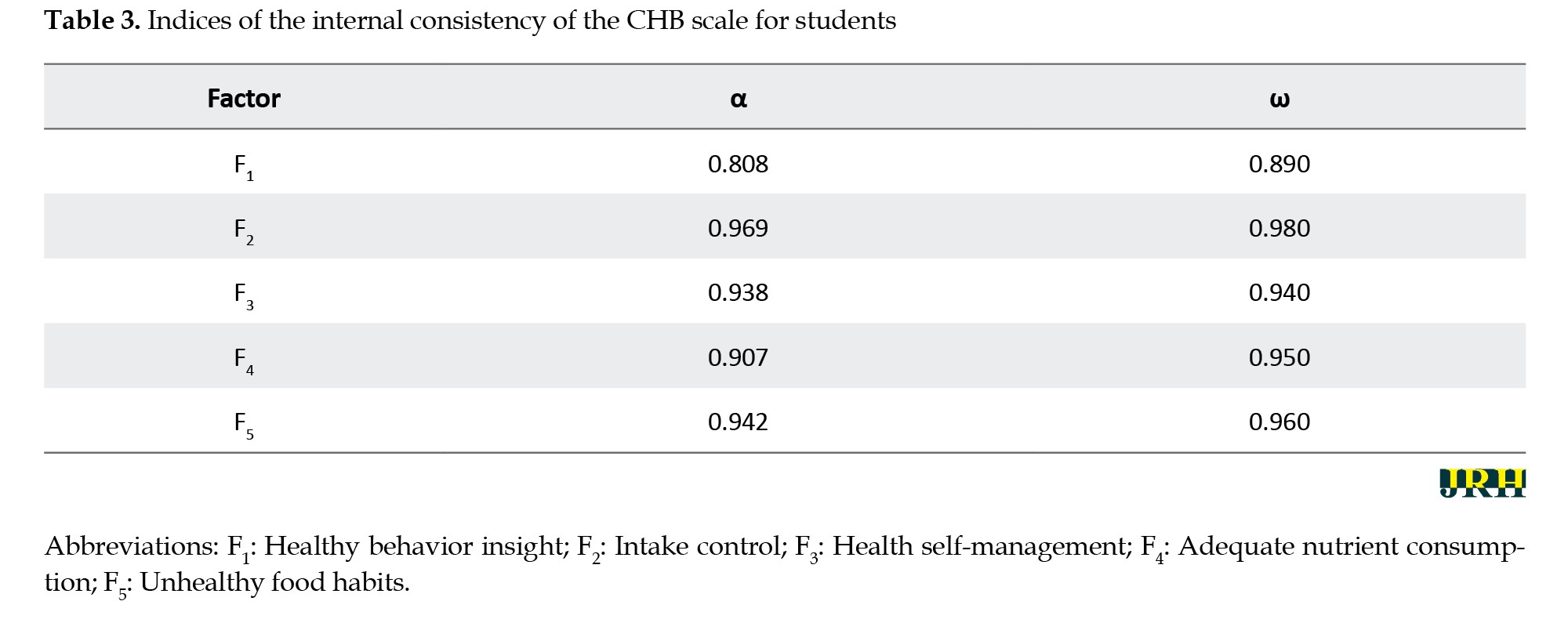
Cronbach’s and McDonald’s omega coefficients for all five factors exceeded 0.8, indicating satisfactory internal consistency (Table 3).
Scoring
The questionnaire employs a 5-point Likert scale ranging from always (5) to never (1). To ensure a consistent interpretation—where a higher total score reflects poorer cardiovascular health—all positively worded items were reverse-scored prior to analysis. The total score is calculated as the sum of all items, with higher scores indicating a greater prevalence of unfavorable CHBs.
Based on percentile cut-offs of the total score distribution, participants were categorized into three groups: scores at or below the 25th percentile (≤38 points) were classified as optimal CHB, scores between the 25th and 50th percentiles (39–42 points) as intermediate CHB, and scores above the 50th percentile (≥43 points) as poor CHB.
Discussion
This study developed and psychometrically validated a cardiovascular health-related behavior scale for Iranian students, based on a systematic review and expert interviews. The final instrument comprises 15 items across five subscales: Healthy behavior insight, intake control, health self-management, adequate nutrient consumption, and unhealthy food habits. Various psychometric properties, including face, content, and construct validity, were examined in this population.
The CVI for our items ranged from 0.80 to 1.00. In Çelik and Bektas (2020), the CVI ranged from 0.99 to 1.00, with items scoring ≥0.79 retained [12]. Our CVR was 0.62 (Çelik and Bektas (2020) [12] did not report this value). These results meet the standard requirements for establishing content validity, which is essential for ensuring an instrument’s reliability and producing valid study results [35].
The scale demonstrated high reliability, with an overall Cronbach’s α exceeding 0.80. This aligns with the 0.83 value reported by Celık and Bektas (2020) [12]. As a coefficient >0.7 is considered acceptable, this confirms the internal consistency of the scale items.
The KMO coefficient in our study was 0.680, compared to 0.81 in Celık and Bektas (2020) [12]. This difference may reflect sample size (745 vs 684 participants). Nevertheless, Bartlett’s test was significant (P<0.001) in both studies, confirming the data homogeneity and suitability for factor analysis.
Our EFA yielded a five-factor solution explaining 54.67% of the total variance, comparable to the 54.65% explained by six factors in Celık and Bektas (2020) [12]. This suggests the items adequately represent the behavioral domains related to student heart health. The high factor loadings and clear single-factor structure further support the tool’s desired construct [36].
Our CFA indicated a good model fit (CFI=0.90, IFI=0.90, AGFI=0.90, RMSEA=0.048). Celık and Bektas (2020) reported similar fit indices (GFI, NFI, NNFI, CFI>0.90, RMSEA=0.080) [12]. These results confirmed the construct validity of our scale.
Intake Control emerged as a significant subscale, encompassing items on limiting salt intake, consuming 7–9 glasses of water daily, and avoiding overeating. Excessive salt consumption harms cardiovascular health and raises blood pressure, making reduction a key strategy for hypertension management [37]. The World Health Organization (WHO) advises individuals to consume 7-9 glasses of fluids per day, irrespective of gender [38]. Water serves numerous essential functions in the human body. It constitutes approximately 50% of an adult’s body weight and 75% of an infant’s, and is vital for life and maintaining cellular equilibrium. Furthermore, low-calorie, antioxidant-rich dietary patterns can lower the risk of coronary artery disease [39].
The healthy behavior insight subscale, reflected in items about feeling healthier through physical activity and avoiding drugs, aligns with evidence. Poor sleep coupled with insufficient physical activity markedly increases all-cause and cause-specific mortality risk [40]. Prescribed opioid use is also associated with adverse cardiovascular outcomes, including arrhythmia, cardiac arrest, and ischemic events [41].
The health self-management subscale includes maintaining a healthy weight through exercise and managing stress. Obesity is a major CVD risk factor, and weight management through physical activity can mitigate risks for heart disease and stroke [42]. Stress-related disorders are strongly linked to early-onset CVD [43].
The factor was labeled adequate nutrient consumption, as it captured items related to fruit and vegetable intake, fish consumption, and whole grain consumption. A diet rich in these nutrients can help lower blood pressure and cholesterol [44].
Finally, the unhealthy food habits subscale addresses fast food, sugary drinks, and fried snacks. These dietary patterns in adolescents and young adults significantly contribute to the early onset of non-communicable diseases, adversely affecting life expectancy and quality of life [45].
Study strengths and limitations
A key strength of this study is the use of both a literature review and expert interviews to inform scale development, ensuring comprehensive content coverage. However, several limitations warrant attention. First, the sample was drawn solely from Dezful University of Medical Sciences, with an imbalance in academic majors, which may limit the generalizability of findings. Future studies should employ stratified sampling across multiple universities. Second, some items had low factor loadings, suggesting a need for refinement to better represent the construct. Third, due to the cross-sectional design, the test-retest reliability was not assessed, and future longitudinal research should examine the scale’s temporal stability. Fourth, the behavioral categorization cut-offs were adopted from prior research and require clinical validation in our specific population. Fifth, the use of an electronic questionnaire may influence response reliability. Sixth, the inclusion of correlated error terms was necessary to achieve an acceptable model fit, as removing them resulted in inadequate indices (e.g. CFI=0.864). While statistically justified, this suggests potential item overlap and remains a study limitation.
Conclusion
This study developed and psychometrically evaluated a CHB scale for Iranian students. The final 15-item instrument encompasses five factors: Healthy behavior insight, intake control, health self-management, adequate nutrient consumption, and unhealthy food habits. The demonstrated validity and reliability indicate that this scale is suitable for use in future research.
Ethical Considerations
Compliance with ethical guidelines
This study was approved by the Research Ethics Committee of Dezful University of Medical Sciences, Dezful, Iran (Code: IR.DUMS.REC.1402.056). Participant anonymity was preserved, and the study objectives were explained to all participants.
Funding
This project resulted from the general medical doctorate thesis of Rashed Khezri, approved by Dezful University of Medical Sciences, Dezful, Iran. This study financially supported by Dezful University of Medical Sciences, Dezful, Iran.
Authors' contributions
All authors contributed equally to the conception and design of the study, data collection and analysis, interpretation of the results, and drafting of the manuscript. Each author approved the final version of the manuscript for submission.
Conflict of interest
The authors declared no conflict of interest.
Acknowledgments
The authors thank all participants and acknowledge the financial support of Dezful University of Medical Sciences, Dezful, Iran.
References
- Mukhopadhay S, Mukherjee A, Khanra D, Samanta B, Karak A, Guha S. Cardiovascular disease risk factors among undergraduate medical students in a tertiary care centre of eastern India: A pilot study. The Egyptian Heart Journal. 2021; 73(1):94. [DOI:10.1186/s43044-021-00219-9] [PMID] [PMCID]
- Tran DT, Silverstri-Elmore A, Sojobi A. Lifestyle choices and risk of developing cardiovascular disease in college students. International Journal of Exercise Science. 2022; 15(2):808-19. [DOI:10.70252/YWOV6377] [PMID] [PMCID]
- Hashemipour M, Farahaninia M, Kashaninia Z, Haghani H. Relationship between social capital and health-promoting lifestyle in nursing students. Journal of Client-Centered Nursing Care. 2020; 6(4):223-30. [Link]
- Holt EW, Cass AL, Park H, Criss S, Burges M, Isley E, et al. Perceived versus actual risk of cardiovascular disease in college students. American Journal of Health Education. 2020; 51(1):59-68. [DOI:10.1080/19325037.2019.1694608]
- Yang L, Lou SH, Yang S, Lima De Melo Ghisi G, Yan X, Tian M, et al. Validation of the Chinese version of the coronary artery disease education questionnaire–short version: A tool to evaluate knowledge of cardiac rehabilitation components. Global Heart. 2021; 16(1):17. [DOI:10.5334/gh.912] [PMID] [PMCID]
- Izadi-Avanji FS, Sadat Mousavi T, Sabery M. Translation and psychometric evaluation of the scale of knowledge of cardiovascular risk factors and lifestyle after a coronary event. BMC Cardiovascular Disorders. 2025; 25(1):391. [DOI:10.1186/s12872-025-04819-0] [PMID] [PMCID]
- Kaplan Serin E, Citlik Sritas S. Psychometric properties of the Turkish version of the cardiac health behavior scale. Pakistan Heart Journal. 2021; 54(2):191-7. [DOI:10.47144/phj.v54i2.2098]
- Koohi F, Amiri P, Mehrabi Y, Karimi M, Khalili D. Development and validation of a knowledge, attitude, and practice questionnaire regarding cardiovascular diseases in an Iranian general population. BMC Public Health. 2021; 21(1):2050. [DOI:10.1186/s12889-021-12135-3] [PMID] [PMCID]
- Hassen HY, Aerts N, Demarest S, Manzar MD, Abrams S, Bastiaens H. Validation of the DutchFlemish translated ABCD questionnaire to measure cardiovascular disease knowledge and risk perception among adults. Scientific Reports. 2021; 11(1):8952. [DOI:10.1038/s41598-021-88456-5] [PMID] [PMCID]
- Rosa D, Francesco Pengo M, Adorni R, Bilo G, Parati G, Steca P. Psychometric properties of a brief version of the perception of risk of heart disease scale in an Italian sample. High Blood Pressure & Cardiovascular Prevention. 2023; 30(5):475-84. [DOI:10.1007/s40292-023-00603-3] [PMID] [PMCID]
- Choo J, Noh S, Moon j, Shin Y. Development and psychometric testing of the Heart-Healthy Information Questionnaire. European Journal of Cardiovascular Nursing. 2023; 22(3):299-310. [DOI:10.1093/eurjcn/zvac055] [PMID]
- Celık I, Bektas M. Development and psychometric evaluation of the cardiovascular health behavior scale for children. Journal of Pediatric Nursing. 2020; 53:e93-100. [DOI:10.1016/j.pedn.2020.02.038] [PMID]
- Estebsari F, Barati M, Stiri S, Latifi M, Shahsavari A, Sheikh Milani A, et al. Risk factors of cardiovascular disease (CVD) in young adults: A community-based study of Iranian context. BMC Public Health. 2024; 24(1):2543. [DOI:10.1186/s12889-024-20030-w] [PMID] [PMCID]
- Sadeghi F, Alizadeh A, Hosseinzadeh F, Negarandeh R. Prevalence of smoking among Iranian university students: a systematic review and meta-analysis. BMC Public Health. 2025; 25(1):760. [DOI:10.1186/s12889-025-21842-0] [PMID] [PMCID]
- Tayefi Nasrabadi B, Doustmohammadian A, Chekini R, Mansori K, Ghods E. Investigating the dietary pattern of Iranian medical sciences students: A cross-sectional study. Iranian Journal of Health Sciences. 2024; 12(2):109-18. [DOI:10.32598/ijhs.12.2.1016.1]
- Khademian F, Aslani A, Ravangard R, Nami M, Abbasi S, Bastani P. Iranian University students’ stressors and coping strategies: A qualitative study. Journal of Education and Health Promotion. 2021; 10:244. [DOI:10.4103/jehp.jehp_1278_20] [PMID] [PMCID]
- Beaton DE, Bombardier C, Guillemin F, Ferraz MB. Guidelines for the process of cross-cultural adaptation of self-report measures. Spine. 2000; 25(24):3186–91. [DOI: 10.1097/00007632-200012150-00014] [PMID]
- Khorasanizadeh MH, Tagharrobi Z, Zare M. Workplace dignity scale in Iranian nurses’ translation and psychometric evaluation. BMC Health Services Research. 2024; 24(1):1192. [DOI:10.1186/s12913-024-11703-8] [PMID] [PMCID]
- Khalid Ahmed S. Sample size for saturation in qualitative research: Debates, definitions, and strategies. Journal of Medicine, Surgery, and Public Health. 2025; 5:100171 [DOI:10.1016/j.glmedi.2024.100171] [PMCID]
- Graneheim UH, Lundman B. Qualitative content analysis in nursing research: concepts, procedures and measures to achieve trustworthiness. Nurse Education Today. 2004;24(2):105-112. [DOI:10.1016/j.nedt.2003.10.001] [PMID]
- Allen MS, Robson DA, Iliescu D. A critical but ignored component of scale construction in psychological assessment. European Journal of Psychological Assessment. 2023; 39(3):153-6. [DOI:10.1027/1015-5759/a000777]
- Basirimoghadam M, Rafii F, Ebadi A. Development and psychometric evaluation of nurses’ health-related procrastination scale. Heliyon. 2023; 9(7):e18145. [DOI:10.1016/j.heliyon.2023.e18145] [PMID] [PMCID]
- Andishe S, Jafari MJ, Fasih Ramandi F, Khodakarim S, Salehi A. Psychometrics of questionnaires designed for the evaluation of safety levels and safety culture case study: power plant generator manufacturing company. International Journal of Occupational Hygiene. 2021; 13(4):337-46. [DOI:10.18502/ijoh.v13i4.8428]
- Habibpour E, Shahmari M, Ramazanzadeh N, Gardashkhani S. Psychometric evaluation of self- advocacy scale in patients with cancer: A psychometric evaluation protocol in Iran. BMC Open. 2025; 15(7):e101888. [DOI:10.1136/bmjopen-2025-101888] [PMID] [PMCID]
- Torkian S, Shahesmaeili A, Malekmohammadi N, Khosravi V. Content validity and test-retest reliability of a questionnaire to measure virtual social network addiction among students. International Journal of High-Risk Behavior and Addiction. 2020; 9(1):e92353. [DOI:10.5812/ijhrba.92353]
- Izadi-Avanji FS, Esmaeli T. Investigating the development and psychometric testing of the information and communication technology use scale in Iranian patients with chronic conditions. Journal of Client-Centered Nursing Care. 2024; 10(1):15-24. [DOI:10.32598/JCCNC.10.1.280.6]
- Kline RB. Principles and practice of structural equation modeling. 5th ed. New York: Guilford Publications; 2023. [Link]
- Liu ZH, Tian N, Guo Q, Dai Y, Tang H, Liu CH. Psychometric properties of the Three-Dimensional Meaning in Life Scale in Chinese undergraduate students. Scientific Reports. 2025; 15(1):30995. [DOI:10.1038/s41598-025-16656-4] [PMID] [PMCID]
- Kennedy I. Sample size determination in test-retest and Cronbach Alpha reliability estimates. Middle East Research Journal of Humanities and Social Sciences. 2021; 1(1):16-24. [Link]
- Alberto Geraldo-Campos L, Arturo Rosales-Gomero R, Jesus Soria Quijaite J, Saintila J. Psychometric properties of the digital competences scale in regular basic education teachers. International Journal of Educational Research Open. 2024; 6:100327. [DOI:10.1016/j.ijedro.2024.100327]
- Tareke Zewude G, Mesfin Y, Goraw S, Hussen K, Nigussie Eshetie E, Fenatw Mekonnon D, et al. Psychometric evaluation of the teacher professional well-being scale: Assessing factor structure, reliability, and validity in university instruments. Psychology International. 2024; 6(3):746-68. [DOI:10.3390/psycholint6030047]
- Sacre H, Haddad CH, Zakhour M, Karam J, Akel M, EI Khatib S, et al. Psychometric properties of the perception of telework practices scale: Measuring advantages and drawbacks in the Lebanese context. Scientific Reports. 2025; 15(1):36437. [DOI:10.1038/s41598-025-20334-w] [PMID] [PMCID]
- Dash G, Paul J. CB-SEM vs PLS-SEM methods for research in social sciences and technology forecasting. Technological Forecasting and Social Change. 2021; 173:121092. [DOI:10.1016/j.techfore.2021.121092]
- Hoseinzadeh E, Sharif-Nia H, Ashktorab T, Ebadi A. Development and psychometric evaluation of nurses’ intention to care for patients with infectious disease scale: an exploratory sequential mixed method study. BMC Nursing. 2024; 23(1):65. [DOI:10.1186/s12912-023-01669-z] [PMID] [PMCID]
- Kipli M, Zamri Khairani A. Content validity index: An application of validating CIPP instrument for programme evaluation. International Multidisciplinary Research Journal. 2020; 2(4):31-40. [DOI:10.54476/iimrj313]
- Mirabootalebi N, Meidani Z, Akbari H, Rangraz Jeddi F, Tagharrobi Z, Swoboda W, et al. Design and psychometric evaluation of nurses' mobile health device acceptance scale (NMHDA-Scale): Application of the expectation-confirmation theory. JMIR Human Factors. 2024; 11:e55324. [DOI:10.2196/55324] [PMID] [PMCID]
- Egan BM, Lackland DT, Sutherland SE, Rakotz MK, Williams J, Commodore-Mensah Y, et al. Perspective: The growing global benefits of limiting salt intake: An urgent call from the World Hypertension League for more effective policy and public health initiatives. Journal of Human Hypertension. 2025; 39(4):241-5. [DOI:10.1038/s41371-025-00990-1] [PMID] [PMCID]
- Nakamura Y, Watanabe H, Tanaka A, Yasui M, Nishihira J, Murayama N. Effect of increased daily water intake and hydration on health in Japanese adults. Nutrients. 2020; 12(4):1191. [DOI:10.3390/nu12041191] [PMID] [PMCID]
- Rohit S, Rahul M, Amin G. Effect of low-calorie, high-antioxidant diet on progression of coronary artery disease: A single-case experimental study. Interventional Cardiology Journal. 2021; 7(7):139. [Link]
- Huang BH, Duncan MJ, Cistulli PA, Nassar N, Hamer M, Stamatakis E. Sleep and physical activity in relation to all-cause, cardiovascular disease, and cancer mortality risk. British Journal of Sports Medicine. 2022; 56(13):718-24. [DOI:10.1136/bjsports-2021-104046] [PMID]
- Zuhair Arab A, Alberto Conti A, Davey F, Khan F, Mario Baldacchino A. Relationship between cardiovascular disease pathology and fatal opioid and other sedative overdose: A post-mortem investigation and pilot study. Frontiers in Pharmacology. 2021; 12:725034. [DOI:10.3389/fphar.2021.725034] [PMID] [PMCID]
- Ghodeshwar GK, Dube A, Khobragade D. Impact of lifestyle modifications on cardiovascular health: A narrative review. Cureus. 2023; 15(7):e42616. [DOI:10.7759/cureus.42616]
- Popovic D, Bjelobrk M, Tesic M, Seman S, Jayasinghe S, Hills AP, et al. Defining the importance of stress reduction in managing cardiovascular disease - the role of exercise. Progress in Cardiovascular Diseases. 2022; 70:84-93. [DOI:10.1016/j.pcad.2022.01.008] [PMID]
- Pachpande T, Taneja A, Shukla S, Vagha S. Association of dietary factors with risks of cardiovascular diseases. Journal of Research in Medical and Dental Science. 2022; 10(7):257-61. [Link]
- Nancy S, Mujibur Rahman K, Sathish Kumar S, Sofia S, Amala Robins M. Reasons and solutions for unhealthy food consumption and physical inactivity among school-going adolescents: A sequential mixed-methods study in Puducherry, South India. Journal of Family Medicine and Primary Care. 2022; 11(11):6970-977. [DOI:10.4103/jfmpc.jfmpc_469_22] [PMID] [PMCID]
Type of Study: Orginal Article |
Subject:
● Disease Control
Received: 2025/06/29 | Accepted: 2026/01/5 | Published: 2026/08/23
Received: 2025/06/29 | Accepted: 2026/01/5 | Published: 2026/08/23
| Rights and permissions | |
 |
This work is licensed under a Creative Commons Attribution-NonCommercial 4.0 International License. |


This is an open access article distributed under the terms of the Creative Commons Attribution License (CC-By-NC), which permits use, distribution, and reproduction in any medium, provided the original work is properly cited and is not used for commercial purposes.
Contact Information
