

Volume 16, Issue 3 (May & June 2026)
J Research Health 2026, 16(3): 275-284 |
Back to browse issues page


Ethics code: IR.GMU.REC.1399.109


Download citation:
BibTeX | RIS | EndNote | Medlars | ProCite | Reference Manager | RefWorks
Send citation to:


BibTeX | RIS | EndNote | Medlars | ProCite | Reference Manager | RefWorks
Send citation to:
Abdi-Moghadam Z, Salarbashi D, Khajavian N, Tayebi N. Heavy Metal Contamination in the Unrefined Salt From the Kal Shur River of Gonabad City, Iran: Potential Health Risks for Local Populations. J Research Health 2026; 16 (3) :275-284
URL: http://jrh.gmu.ac.ir/article-1-2795-en.html
URL: http://jrh.gmu.ac.ir/article-1-2795-en.html


1- Department of Food Science and Nutrition, Social Determinants of Health Research Center, School of Medicine, Gonabad University of Medical Sciences, Gonabad, Iran. , z.abdimoghadam1@gmail.com
2- Department of Food Science and Nutrition, Social Determinants of Health Research Center, School of Medicine, Gonabad University of Medical Sciences, Gonabad, Iran.
3- Department of Epidemiology and Biostatistics, Social Determinants of Health Research Center, School of Public Health, Gonabad University of Medical Sciences, Gonabad, Iran.
4- Department of Food Safety and Hygiene, School of Medicine, Gonabad University of Medical Sciences, Gonabad, Iran.
2- Department of Food Science and Nutrition, Social Determinants of Health Research Center, School of Medicine, Gonabad University of Medical Sciences, Gonabad, Iran.
3- Department of Epidemiology and Biostatistics, Social Determinants of Health Research Center, School of Public Health, Gonabad University of Medical Sciences, Gonabad, Iran.
4- Department of Food Safety and Hygiene, School of Medicine, Gonabad University of Medical Sciences, Gonabad, Iran.
Keywords: Heavy metals, Unrefined salt, Public health, Gonabad, Inductively coupled plasma optical emission spectroscopy
Full-Text [PDF 2054 kb]
(280 Downloads)
| Abstract (HTML) (779 Views)
Sampling
Twenty unrefined salt samples were obtained from the Kal Shur River in the summer, when the river was dry. Surface samples were collected from each sampling point using wooden scoops to an approximate depth of 8 centimeters. Sample size was determined using the population mean calculation formula (Equation 1) with a 95% confidence level (CI), based on the study by Sabet et al. [11]. The calculation was performed for various heavy metals, including As, Cd, and Pb:
1. n=(z₁₋α/₂)²×s²/d²=(1.96)²×(0.088)²/(0.05)²=12
Where:
z₁₋α/₂=1.96 (95% CI)
s=0.088 (standard deviation from reference study)
d =0.05 (desired precision)
The calculation indicated that As required the largest sample size among the studied metals. To ensure adequate statistical power and better representation of the study area, 20 unrefined salt samples were ultimately collected.
Sample preparation and analysis
After labeling, samples were individually dried in a furnace at 105 °C for approximately 2 hours. After drying, each sample was separately ground and homogenized to ensure uniformity while maintaining individual sample integrity.
The Pb, Cd, Hg, As, Cu, Zn, and Fe contents of all samples were analyzed using an inductively coupled plasma optical emission spectroscopy system (Spectro Arcos-76004555 plasma/AMETEK ARCOS FHE12, Germany) at the Central Laboratory of Ferdowsi University of Mashhad, Iran. Analysis was performed by a certified analytical laboratory using standard protocols.
Estimation of dietary exposure to heavy metals
The dietary intake of the studied heavy metals was estimated, and associated health risks were assessed by comparing results with the provisional tolerable weekly intakes (PTWIs). Exposure was calculated per kilogram of body weight by dividing the total dietary exposure by the average body weight of the population [13, 24].
The daily intake of heavy metals was determined using the Equation 2:
2. Daily intake of heavy metals=∑(Concentration of heavy metals in salt samples×Mean salt intake (g/person/day) [25].
The weekly intake of heavy metals was then calculated using the following Equation 3:
3. Weekly intake of heavy metals=Daily intake×7
To determine the weekly intake per kilogram of body weight (for comparison with PTWIs), the Equation 4 was used:
4. Weekly intake per kilogram of body weight (kg)=Weekly intake/Reference body weight (60 kg) [26].
Statistical analysis
All data were analyzed using SPSS software, version 21. One-sample t-test was used to determine the difference between the levels of heavy metals in the salt samples and the maximum permitted levels in the standard. P<0.05 was considered statistically significance. The correlation between metals was examined using Pearson’s correlation coefficient.
Results
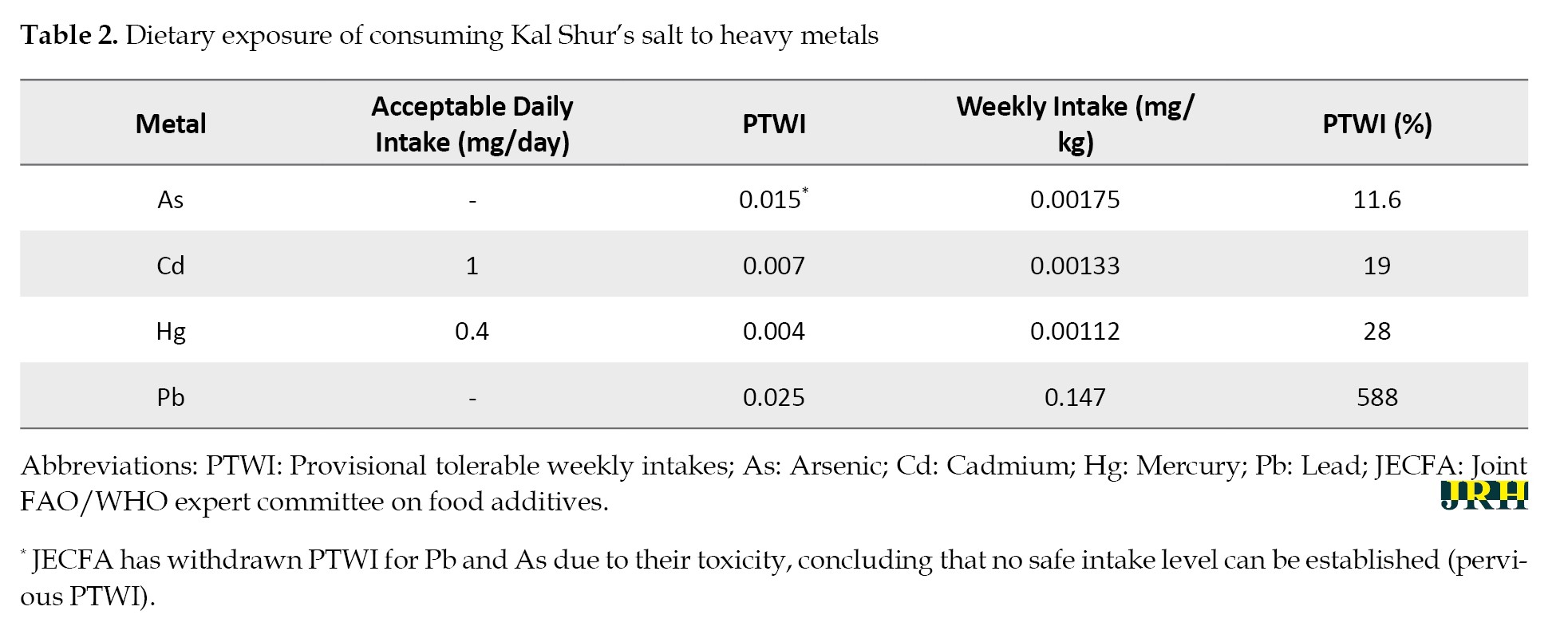
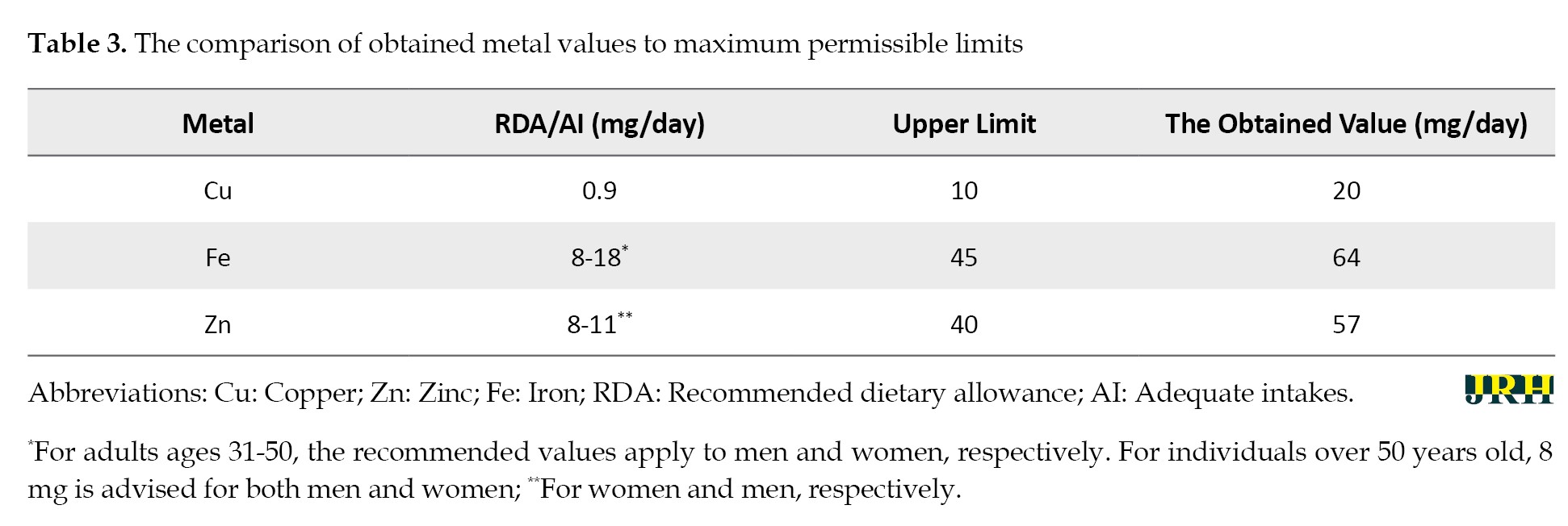
Table 1 presents the concentrations of the target metals in the salt samples alongside their comparison with established standards, while Tables 2 and 3 summarize the population’s dietary exposure to heavy metals through salt consumption.
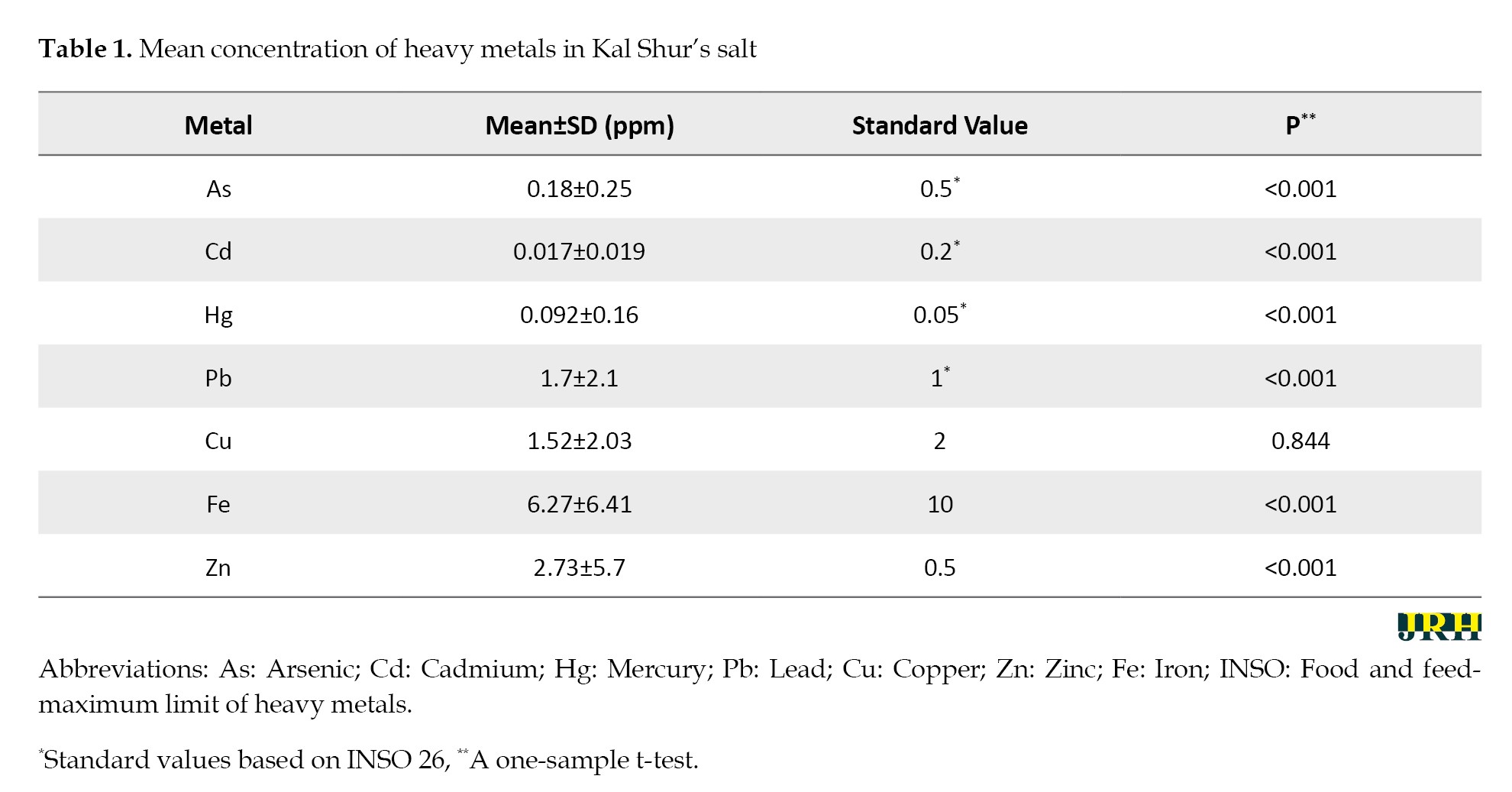
The average concentration of heavy metals was Fe>Zn>Cu>Pb>As>Hg>Cd. The Mean±SE was 6. 41±6.27 for Fe, 5.70±2.73 for Zn, 2.03±1.52 for Cu, 2.10±1.74 for Pb, 0.25±0.18 for As, 0.92±0.16 for Hg, 0.019±0.017 mg/kg for Cd. Among the studied salt samples, Fe had the highest and Cd had the lowest average concentration. The average concentration of As and Cd (0.25 and 0.019 mg/kg) was lower than the permissible values recommended by Iran Standard 26 (0.5 and 0.2 mg/kg, respectively). The results show that the concentrations of heavy metals Pb and Hg are higher than the standard. The levels of heavy metals Zn, Fe, and Cu exceeded the standard value, although the increase was not statistically significant for Cu. The correlation analysis showed several significant associations among the studied metals. The strongest was between As and Cu (r=0.837, P<0.01), followed by Cu and Fe (r=0.602, P<0.01), and Zn with both Cu (r=0.544, P<0.01) and As (r=0.663, P<0.01). These relationships likely reflect shared geochemical processes, such as dissolution and sedimentation, which may have simultaneously introduced these elements into the river. Pb also exhibited significant positive correlations with Zn (r=0.405, P<0.01) and As (r=0.282, P<0.05), suggesting possible common anthropogenic or environmental sources. In contrast, Cd showed no significant associations and, in some cases, negative correlations, indicating a distinct geochemical behavior. The correlations between the metals were assessed using Pearson’s correlation coefficient, although the table is not shown here.
The results of this study indicate that the concentrations of several heavy metals in unrefined salt from the Kal Shur River exceed established health-based limits, posing potential risks to consumers. According to Table 2, the weekly intake of Pb and Hg notably surpassed their respective PTWI values, with Pb intake reaching 588% of the previously established tolerable level, indicating a significant health hazard. While As and Cd were below standard thresholds, their presence—even at low levels—should not be overlooked due to their cumulative toxicity.
While essential elements such as Fe, Cu, and Zn are vital for various biological functions and contribute positively to health, they can cause toxicity at high concentrations. These elements serve critical roles, such as enzyme co-factor processing, immune enhancement, and oxygen transport. In contrast, toxic metals, such as Pb and Hg have no beneficial role in the body, and even small exposures can be hazardous. The key difference lies in the potential for accumulation and the lack of a physiological role for these toxic metals, as opposed to the threshold-dependent toxicity of essential elements.
Furthermore, as shown in Table 3, the daily intake of essential trace elements—particularly Fe, Cu, and Zn—were found to greatly exceed the upper intake levels (ULs) established for adults. Fe intake was calculated at 64 mg/day, which is over 1.4 times the recommended UL (45 mg/day), followed by Cu at 20 mg/day (UL=10 mg/day) and Zn at 57 mg/day (UL=40 mg/day). These excessive intakes can potentially lead to systemic toxicity, affecting the liver, kidneys, gastrointestinal tract, and metabolic functions.
Discussion
The findings of this study show that the concentration of heavy metals in unrefined salts followed the order Fe>Zn>Cu>Pb>Hg>As>Cd. Among these, Fe showed the highest average level (6.41±6.27 mg/kg), while Cd had the lowest (0.019±0.017 mg/kg). Compared to the national standard limits set by ISIRI, the concentrations of Pb and Hg exceeded permissible values, while As and Cd remained within acceptable thresholds. However, even low levels of Cd and As pose cumulative health risks such as nephrotoxicity, carcinogenicity, and developmental effects [27, 28].
In contrast to our findings, Pourgheysari et al. (2015) reported lower mean concentrations of Pb (1.38 mg/kg), Hg (0.66 mg/kg), and Fe (18.12 mg/kg) in salt samples from Isfahan, indicating a significant regional or source-based variation [13]. Similarly, Heshmati et al. (2014) observed Cd levels below 0.01 mg/kg, which is considerably lower than our measured concentration, although both remain within safe limits [29]. Such discrepancies might be attributed to differences in refining methods, geological sources, and environmental pollution.
Zn and Cu, although essential trace elements, were found in our study at 5.70±2.73 mg/kg and 2.03±1.52 mg/kg, respectively. These values are consistent with those reported by Khaniki et al. (2007), who recorded Zn and Cu concentrations of 6.1 and 3.5 mg/kg, respectively, in Tehran market salts [30]. While these levels may contribute positively to daily nutrient intake, chronic exposure above tolerable ULs—particularly Cu (>10 mg/day) and Zn (>40 mg/day)—can lead to gastrointestinal distress, hepatic damage, and impaired immune function [31, 32].
The significantly elevated Fe concentration found in our study (64 mg/day estimated intake) far surpasses the established UL of 45 mg/day, suggesting a potential risk of Fe overload disorders, such as hemochromatosis or oxidative stress-related tissue damage [33, 34]. In comparison, Foroughi and Ebrahimpour (2021) reported lower levels of Fe, Zn, and Pb in salts from Maharloo Lake and Korsia mines, reinforcing the idea that the mineral composition varies significantly by geographical origin and source [20].
Our findings are further supported by Shariatifar et al. (2021), who found higher levels of Pb and Zn in unrefined salts from Urmia compared to refined samples, emphasizing the role of purification processes [35]. Similarly, Kokabi and Pakhirehzan (2024) concluded that traditional and seaweed salts contain higher mineral and metal loads than industrially refined salts, which may account for the elevated levels seen in our unrefined samples [36]. Geological factors play a pivotal role in the observed variations in heavy metal concentrations. Salts mined from areas with natural heavy metal ores, such as those in the Māhneshān Mountains of northwestern Iran, including the Chehrābād salt mine, are likely to contain elevated levels of Fe, Zn, Pb, and Cu due to the region’s mineral-rich geological profile [37]. Similarly, Di Salvo et al. (2023) investigated gourmet salts from various global regions and found that Persian Blue salt from Iran exhibited notably high Fe (21.72 mg/kg) and Zn (1334.44 mg/kg) concentrations, attributed to the Fe- and calcium-rich geological formations of the mining areas [38]. These studies confirm that the geological context is a primary driver of heavy metal content in unrefined salts, explaining the elevated levels observed in our samples compared to those from other regions.
Environmental and industrial contributions to heavy metal accumulation must also be considered. Industrial activities associated with salt extraction and processing further contribute to heavy metal contamination, though their impact is secondary to geological factors for unrefined salts. Mining operations, particularly in regions like Chehrābād, often involve heavy machinery and explosives, which can disturb geological layers and introduce metals such as chromium, Pb, or nickel into the extracted salt [37]. According to Liu et al. (2020), industrial activities and atmospheric deposition are major contributors to heavy metal presence in soils and surface waters, which in turn affect salt sources [39]. In contrast, Cheraghali et al. (2010) found that heavy metal levels in Iranian rock salts did not significantly differ between unrefined and refined samples, suggesting that the inherent geological composition overshadows industrial contributions in unrefined salts [34]. However, proximity to industrial or agricultural operations can exacerbate pollution, especially in sea salts, where pollutants from industrial effluents or agricultural runoff may accumulate in seawater.
This is consistent with Kalteh et al. (2020), who identified unsafe levels of metal fumes in workers of salt production facilities, suggesting occupational and environmental exposure risks [40].
Furthermore, excessive intake of salts contaminated with heavy metals poses substantial public health risks. Azadnajafabad et al. (2021) demonstrated that Iran has one of the highest per capita salt consumption rates, amplifying the health implications of even moderate contamination [41]. Chronic exposure to Pb and Hg, both found above standard limits in our samples, is associated with neurotoxicity, renal impairment, and reproductive dysfunction [27, 31]. As emphasized by Baseri et al. (2021), dietary exposure through staple foods, including cheese and salt, significantly contributes to the total heavy metal burden in the Iranian population [19].
Our results confirm that both essential and toxic metals are present in edible salts at varying concentrations, some of which exceed national or international health-based thresholds. These findings are consistent with prior national and international studies and point toward the need for more stringent monitoring and refinement practices. Public education and regulatory interventions are also vital to mitigate the health risks posed by long-term consumption of contaminated salt.
Conclusion
This study examined the current levels of heavy metal concentrations in salt samples collected from the Kal Shur region. The findings revealed that certain metals, particularly Pb and Hg, were present at concentrations exceeding permissible limits, raising significant concerns about their potential impact on public health, especially regarding adverse effects on the nervous and renal systems. Continuous exposure, even at low levels, may lead to serious health issues and poses greater risks to vulnerable populations, such as children and pregnant women. Therefore, enhancing salt purification processes, implementing rigorous quality control measures, and developing hygiene education programs, particularly targeting these sensitive groups, are essential. Additionally, heavy metals can enter the human body through other dietary sources, including meat and its products, poultry, fish, and drinking water. Given their cumulative nature, it is critical to assess the concentrations of these metals in other sources, which requires updated data on dietary consumption patterns in Iran. As an initial step in identifying the current situation, this study underscores the need for further research to better understand the biological effects of these contaminants and to develop management strategies aimed at reducing potential health risks and promoting public health through preventive measures.
Ethical Considerations
Compliance with ethical guidelines
This study was approved by Gonabad University of Medical Sciences, Gonabad, Iran (Code: IR.GMU.REC.1399.109).
Funding
This study was financially supported by Gonabad University of Medical Sciences, Gonabad, Iran (Project No.: 469).
Authors' contributions
Conceptualization, editing, and literature review: Zohreh Abdi-Moghadam and Davoud Salarbashi; Methodology: Zohreh Abdi-Moghadam and Nasim Khajavian; Investigation, supervision and data collection: Zohreh Abdi-Moghadam; Writing the original draft: Zohreh Abdi-Moghadam and Nazanin Tayebi.
Conflict of interest
The authors declared no conflicts of interest.
Acknowledgments
The authors thank the Social Determinants of Health Research Center, Gonabad University of Medical Sciences, Gonabad, Iran.
Full-Text: (88 Views)
Introduction
People’s health and food quality have always been closely linked. While government agencies are responsible for providing high-quality food, individuals must select and prepare their food to maintain health and prevent disease through proper hygiene practices. “Salt” is a general term for any compound formed from an acid-base reaction, also known as a neutralization reaction. It refers to sodium chloride, the crystalline substance commonly found in seawater and mineral deposits [1]. Sea and lakes are the sources of salt. Both refined and unrefined salt are edible. In the past, salt was used to add taste and keep food fresh. Salt can enter the diet in three ways: Added during food preparation, sprinkled at the table, or present in processed foods [2, 3]. According to the World Health Organization (WHO), adults should consume no more than 5 g of salt per day [4]. In Asia, people eat more than 12 g of salt every day, while in most other countries, people eat 9 to 12 g. People in Iran eat 10 to 15 g of salt every day, which is more than the amount suggested by the WHO [5, 6]. Hypertension is one of the most significant risk factors for cardiovascular diseases worldwide, and excessive intake of salt and sodium through the diet has a direct relationship with high blood pressure. Excessive salt consumption not only leads to raised blood pressure but also increases the risk of developing osteoporosis, colorectal cancer, and kidney stones. Reducing salt intake is considered a major public health priority in many countries [6, 7].
The presence of contaminants, such as heavy metals and contaminants, such as calcium, magnesium, and sulfate, can pose health hazards to the general public [8, 9]. Heavy metals are widely recognized as one of the most significant and well-known pollutants due to their potential to enter the human food cycle on a large scale, their extended shelf life, and their non-degradation by soil microorganisms [10]. Both natural and human-made sources contribute to the introduction of these metals into the natural cycle through soil, water, and air [11]. They also inhibit the absorption of micronutrients [12]. Arsenic (As), lead (Pb), mercury (Hg), and cadmium (Cd) are among the heavy metals of health significance [13] and their effects are discussed below:
The metal As exists in many organic and inorganic forms with varying degrees of toxicity and carcinogenic potential depending on their oxidation states. Kidney damage results from the binding of the 95–99% of absorbed As to the hemoglobin component of erythrocytes [14].
The metal Pb is soft, bluish-white, and highly toxic. Its adverse consequences are exacerbated by its environmental persistence. Among the hazardous heavy metals, Pb possesses the lowest permissible limit, indicating that even minimal concentrations in water and soil can be detrimental. Anemia, increased blood pressure, reproductive disorders, impaired vitamin D metabolism, and neurological disorders are all induced by Pb exposure in the human body [15].
Hg is an environmental pollutant of global significance and is extensively dispersed. Inorganic Hg is converted to methylmercury in lakes and wetlands by living organisms or other processes. Hg poisoning can cause headache, lightheadedness, agitation, tremors, weight loss, restlessness, depression, heart failure, bloody stools, vision problems, severe skin infections, respiratory irritation, and ultimately death [16].
Cd is another highly toxic metal for humans and is produced as a byproduct of zinc (Zn) refining. Cd also accumulates in the human body, resulting in erythrocyte destruction, nausea, excessive salivation, muscle contractions, renal destruction, chronic lung issues, and skeletal deformities [17].
Trace heavy metals (Zn, iron [Fe], copper [Cu]) play a crucial role in body due to both essential functions and their potential toxicity. Excessive intake of Zn, Cu, and Fe can lead to toxicity [18]. Most trace elements present in the human body are primarily absorbed from dietary sources [19, 20].
The Kal Shur River is the only seasonal river in Gonabad City, Iran, and in recent years, it has often remained dry due to the construction of a dam along its course and reduced rainfall. Additionally, the region’s desert climate and saline soil cause significant salt accumulation in the river’s water pools during the summer. This salt is collected and used by local residents. Despite the widespread use of this salt by local communities and the well-documented health risks associated with heavy metal contamination in edible salts, no prior study has systematically investigated the presence and concentration of heavy metals in salt extracted from the Kal Shur River. This represents a significant gap in environmental and public health research, particularly given the potential exposure risks to the local population who regularly consume this salt.
Therefore, this study aimed to assess the heavy metal contamination levels in salt from the Kal Shur River and calculate the estimated weekly intake of these metals among Gonabad City residents. The findings provide essential data for public health risk assessment and inform appropriate safety guidelines for local salt consumption.
Methods
Study area
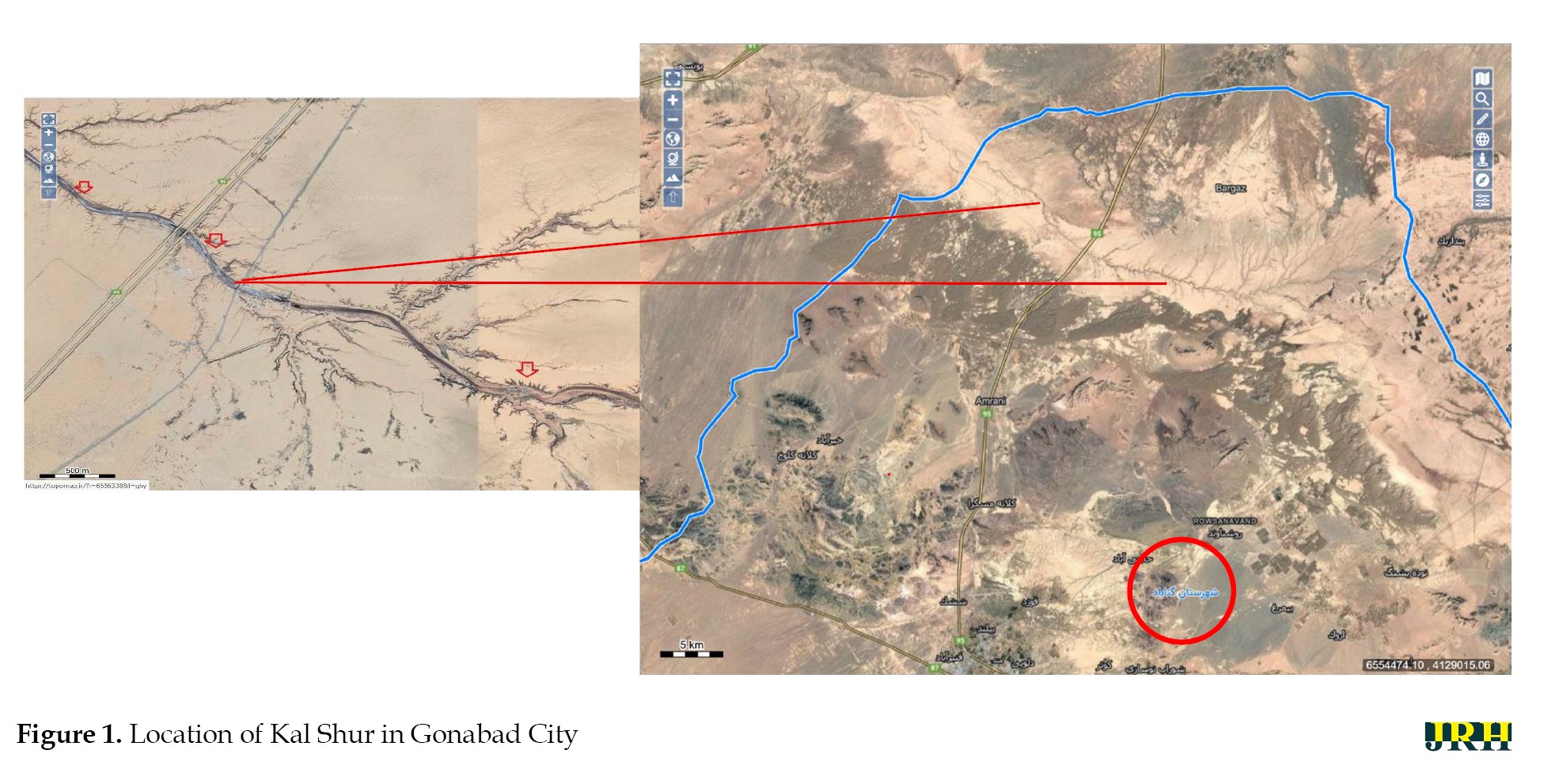
The Kal Shur River, which originates from the northern region of Torbat Heydarieh City, is situated 35 kilometers from Gonabad City [21]. Its drainage basin area is 12713 square kilometers, and its length is 258 kilometers [22]. Kal Shur eventually flows into the saline plain of Bejastan [23]. Salt samples were collected from accessible sections of the Kal Shur River, specifically from areas commonly used by local people for salt gathering (near the road). Figure 1 shows an aerial map of Kal Shur River in Gonabad City and its geographical location within the county.
People’s health and food quality have always been closely linked. While government agencies are responsible for providing high-quality food, individuals must select and prepare their food to maintain health and prevent disease through proper hygiene practices. “Salt” is a general term for any compound formed from an acid-base reaction, also known as a neutralization reaction. It refers to sodium chloride, the crystalline substance commonly found in seawater and mineral deposits [1]. Sea and lakes are the sources of salt. Both refined and unrefined salt are edible. In the past, salt was used to add taste and keep food fresh. Salt can enter the diet in three ways: Added during food preparation, sprinkled at the table, or present in processed foods [2, 3]. According to the World Health Organization (WHO), adults should consume no more than 5 g of salt per day [4]. In Asia, people eat more than 12 g of salt every day, while in most other countries, people eat 9 to 12 g. People in Iran eat 10 to 15 g of salt every day, which is more than the amount suggested by the WHO [5, 6]. Hypertension is one of the most significant risk factors for cardiovascular diseases worldwide, and excessive intake of salt and sodium through the diet has a direct relationship with high blood pressure. Excessive salt consumption not only leads to raised blood pressure but also increases the risk of developing osteoporosis, colorectal cancer, and kidney stones. Reducing salt intake is considered a major public health priority in many countries [6, 7].
The presence of contaminants, such as heavy metals and contaminants, such as calcium, magnesium, and sulfate, can pose health hazards to the general public [8, 9]. Heavy metals are widely recognized as one of the most significant and well-known pollutants due to their potential to enter the human food cycle on a large scale, their extended shelf life, and their non-degradation by soil microorganisms [10]. Both natural and human-made sources contribute to the introduction of these metals into the natural cycle through soil, water, and air [11]. They also inhibit the absorption of micronutrients [12]. Arsenic (As), lead (Pb), mercury (Hg), and cadmium (Cd) are among the heavy metals of health significance [13] and their effects are discussed below:
The metal As exists in many organic and inorganic forms with varying degrees of toxicity and carcinogenic potential depending on their oxidation states. Kidney damage results from the binding of the 95–99% of absorbed As to the hemoglobin component of erythrocytes [14].
The metal Pb is soft, bluish-white, and highly toxic. Its adverse consequences are exacerbated by its environmental persistence. Among the hazardous heavy metals, Pb possesses the lowest permissible limit, indicating that even minimal concentrations in water and soil can be detrimental. Anemia, increased blood pressure, reproductive disorders, impaired vitamin D metabolism, and neurological disorders are all induced by Pb exposure in the human body [15].
Hg is an environmental pollutant of global significance and is extensively dispersed. Inorganic Hg is converted to methylmercury in lakes and wetlands by living organisms or other processes. Hg poisoning can cause headache, lightheadedness, agitation, tremors, weight loss, restlessness, depression, heart failure, bloody stools, vision problems, severe skin infections, respiratory irritation, and ultimately death [16].
Cd is another highly toxic metal for humans and is produced as a byproduct of zinc (Zn) refining. Cd also accumulates in the human body, resulting in erythrocyte destruction, nausea, excessive salivation, muscle contractions, renal destruction, chronic lung issues, and skeletal deformities [17].
Trace heavy metals (Zn, iron [Fe], copper [Cu]) play a crucial role in body due to both essential functions and their potential toxicity. Excessive intake of Zn, Cu, and Fe can lead to toxicity [18]. Most trace elements present in the human body are primarily absorbed from dietary sources [19, 20].
The Kal Shur River is the only seasonal river in Gonabad City, Iran, and in recent years, it has often remained dry due to the construction of a dam along its course and reduced rainfall. Additionally, the region’s desert climate and saline soil cause significant salt accumulation in the river’s water pools during the summer. This salt is collected and used by local residents. Despite the widespread use of this salt by local communities and the well-documented health risks associated with heavy metal contamination in edible salts, no prior study has systematically investigated the presence and concentration of heavy metals in salt extracted from the Kal Shur River. This represents a significant gap in environmental and public health research, particularly given the potential exposure risks to the local population who regularly consume this salt.
Therefore, this study aimed to assess the heavy metal contamination levels in salt from the Kal Shur River and calculate the estimated weekly intake of these metals among Gonabad City residents. The findings provide essential data for public health risk assessment and inform appropriate safety guidelines for local salt consumption.
Methods
Study area
The Kal Shur River, which originates from the northern region of Torbat Heydarieh City, is situated 35 kilometers from Gonabad City [21]. Its drainage basin area is 12713 square kilometers, and its length is 258 kilometers [22]. Kal Shur eventually flows into the saline plain of Bejastan [23]. Salt samples were collected from accessible sections of the Kal Shur River, specifically from areas commonly used by local people for salt gathering (near the road). Figure 1 shows an aerial map of Kal Shur River in Gonabad City and its geographical location within the county.
Sampling
Twenty unrefined salt samples were obtained from the Kal Shur River in the summer, when the river was dry. Surface samples were collected from each sampling point using wooden scoops to an approximate depth of 8 centimeters. Sample size was determined using the population mean calculation formula (Equation 1) with a 95% confidence level (CI), based on the study by Sabet et al. [11]. The calculation was performed for various heavy metals, including As, Cd, and Pb:
1. n=(z₁₋α/₂)²×s²/d²=(1.96)²×(0.088)²/(0.05)²=12
Where:
z₁₋α/₂=1.96 (95% CI)
s=0.088 (standard deviation from reference study)
d =0.05 (desired precision)
The calculation indicated that As required the largest sample size among the studied metals. To ensure adequate statistical power and better representation of the study area, 20 unrefined salt samples were ultimately collected.
Sample preparation and analysis
After labeling, samples were individually dried in a furnace at 105 °C for approximately 2 hours. After drying, each sample was separately ground and homogenized to ensure uniformity while maintaining individual sample integrity.
The Pb, Cd, Hg, As, Cu, Zn, and Fe contents of all samples were analyzed using an inductively coupled plasma optical emission spectroscopy system (Spectro Arcos-76004555 plasma/AMETEK ARCOS FHE12, Germany) at the Central Laboratory of Ferdowsi University of Mashhad, Iran. Analysis was performed by a certified analytical laboratory using standard protocols.
Estimation of dietary exposure to heavy metals
The dietary intake of the studied heavy metals was estimated, and associated health risks were assessed by comparing results with the provisional tolerable weekly intakes (PTWIs). Exposure was calculated per kilogram of body weight by dividing the total dietary exposure by the average body weight of the population [13, 24].
The daily intake of heavy metals was determined using the Equation 2:
2. Daily intake of heavy metals=∑(Concentration of heavy metals in salt samples×Mean salt intake (g/person/day) [25].
The weekly intake of heavy metals was then calculated using the following Equation 3:
3. Weekly intake of heavy metals=Daily intake×7
To determine the weekly intake per kilogram of body weight (for comparison with PTWIs), the Equation 4 was used:
4. Weekly intake per kilogram of body weight (kg)=Weekly intake/Reference body weight (60 kg) [26].
Statistical analysis
All data were analyzed using SPSS software, version 21. One-sample t-test was used to determine the difference between the levels of heavy metals in the salt samples and the maximum permitted levels in the standard. P<0.05 was considered statistically significance. The correlation between metals was examined using Pearson’s correlation coefficient.
Results
Table 1 presents the concentrations of the target metals in the salt samples alongside their comparison with established standards, while Tables 2 and 3 summarize the population’s dietary exposure to heavy metals through salt consumption.
The average concentration of heavy metals was Fe>Zn>Cu>Pb>As>Hg>Cd. The Mean±SE was 6. 41±6.27 for Fe, 5.70±2.73 for Zn, 2.03±1.52 for Cu, 2.10±1.74 for Pb, 0.25±0.18 for As, 0.92±0.16 for Hg, 0.019±0.017 mg/kg for Cd. Among the studied salt samples, Fe had the highest and Cd had the lowest average concentration. The average concentration of As and Cd (0.25 and 0.019 mg/kg) was lower than the permissible values recommended by Iran Standard 26 (0.5 and 0.2 mg/kg, respectively). The results show that the concentrations of heavy metals Pb and Hg are higher than the standard. The levels of heavy metals Zn, Fe, and Cu exceeded the standard value, although the increase was not statistically significant for Cu. The correlation analysis showed several significant associations among the studied metals. The strongest was between As and Cu (r=0.837, P<0.01), followed by Cu and Fe (r=0.602, P<0.01), and Zn with both Cu (r=0.544, P<0.01) and As (r=0.663, P<0.01). These relationships likely reflect shared geochemical processes, such as dissolution and sedimentation, which may have simultaneously introduced these elements into the river. Pb also exhibited significant positive correlations with Zn (r=0.405, P<0.01) and As (r=0.282, P<0.05), suggesting possible common anthropogenic or environmental sources. In contrast, Cd showed no significant associations and, in some cases, negative correlations, indicating a distinct geochemical behavior. The correlations between the metals were assessed using Pearson’s correlation coefficient, although the table is not shown here.
The results of this study indicate that the concentrations of several heavy metals in unrefined salt from the Kal Shur River exceed established health-based limits, posing potential risks to consumers. According to Table 2, the weekly intake of Pb and Hg notably surpassed their respective PTWI values, with Pb intake reaching 588% of the previously established tolerable level, indicating a significant health hazard. While As and Cd were below standard thresholds, their presence—even at low levels—should not be overlooked due to their cumulative toxicity.
While essential elements such as Fe, Cu, and Zn are vital for various biological functions and contribute positively to health, they can cause toxicity at high concentrations. These elements serve critical roles, such as enzyme co-factor processing, immune enhancement, and oxygen transport. In contrast, toxic metals, such as Pb and Hg have no beneficial role in the body, and even small exposures can be hazardous. The key difference lies in the potential for accumulation and the lack of a physiological role for these toxic metals, as opposed to the threshold-dependent toxicity of essential elements.
Furthermore, as shown in Table 3, the daily intake of essential trace elements—particularly Fe, Cu, and Zn—were found to greatly exceed the upper intake levels (ULs) established for adults. Fe intake was calculated at 64 mg/day, which is over 1.4 times the recommended UL (45 mg/day), followed by Cu at 20 mg/day (UL=10 mg/day) and Zn at 57 mg/day (UL=40 mg/day). These excessive intakes can potentially lead to systemic toxicity, affecting the liver, kidneys, gastrointestinal tract, and metabolic functions.
Discussion
The findings of this study show that the concentration of heavy metals in unrefined salts followed the order Fe>Zn>Cu>Pb>Hg>As>Cd. Among these, Fe showed the highest average level (6.41±6.27 mg/kg), while Cd had the lowest (0.019±0.017 mg/kg). Compared to the national standard limits set by ISIRI, the concentrations of Pb and Hg exceeded permissible values, while As and Cd remained within acceptable thresholds. However, even low levels of Cd and As pose cumulative health risks such as nephrotoxicity, carcinogenicity, and developmental effects [27, 28].
In contrast to our findings, Pourgheysari et al. (2015) reported lower mean concentrations of Pb (1.38 mg/kg), Hg (0.66 mg/kg), and Fe (18.12 mg/kg) in salt samples from Isfahan, indicating a significant regional or source-based variation [13]. Similarly, Heshmati et al. (2014) observed Cd levels below 0.01 mg/kg, which is considerably lower than our measured concentration, although both remain within safe limits [29]. Such discrepancies might be attributed to differences in refining methods, geological sources, and environmental pollution.
Zn and Cu, although essential trace elements, were found in our study at 5.70±2.73 mg/kg and 2.03±1.52 mg/kg, respectively. These values are consistent with those reported by Khaniki et al. (2007), who recorded Zn and Cu concentrations of 6.1 and 3.5 mg/kg, respectively, in Tehran market salts [30]. While these levels may contribute positively to daily nutrient intake, chronic exposure above tolerable ULs—particularly Cu (>10 mg/day) and Zn (>40 mg/day)—can lead to gastrointestinal distress, hepatic damage, and impaired immune function [31, 32].
The significantly elevated Fe concentration found in our study (64 mg/day estimated intake) far surpasses the established UL of 45 mg/day, suggesting a potential risk of Fe overload disorders, such as hemochromatosis or oxidative stress-related tissue damage [33, 34]. In comparison, Foroughi and Ebrahimpour (2021) reported lower levels of Fe, Zn, and Pb in salts from Maharloo Lake and Korsia mines, reinforcing the idea that the mineral composition varies significantly by geographical origin and source [20].
Our findings are further supported by Shariatifar et al. (2021), who found higher levels of Pb and Zn in unrefined salts from Urmia compared to refined samples, emphasizing the role of purification processes [35]. Similarly, Kokabi and Pakhirehzan (2024) concluded that traditional and seaweed salts contain higher mineral and metal loads than industrially refined salts, which may account for the elevated levels seen in our unrefined samples [36]. Geological factors play a pivotal role in the observed variations in heavy metal concentrations. Salts mined from areas with natural heavy metal ores, such as those in the Māhneshān Mountains of northwestern Iran, including the Chehrābād salt mine, are likely to contain elevated levels of Fe, Zn, Pb, and Cu due to the region’s mineral-rich geological profile [37]. Similarly, Di Salvo et al. (2023) investigated gourmet salts from various global regions and found that Persian Blue salt from Iran exhibited notably high Fe (21.72 mg/kg) and Zn (1334.44 mg/kg) concentrations, attributed to the Fe- and calcium-rich geological formations of the mining areas [38]. These studies confirm that the geological context is a primary driver of heavy metal content in unrefined salts, explaining the elevated levels observed in our samples compared to those from other regions.
Environmental and industrial contributions to heavy metal accumulation must also be considered. Industrial activities associated with salt extraction and processing further contribute to heavy metal contamination, though their impact is secondary to geological factors for unrefined salts. Mining operations, particularly in regions like Chehrābād, often involve heavy machinery and explosives, which can disturb geological layers and introduce metals such as chromium, Pb, or nickel into the extracted salt [37]. According to Liu et al. (2020), industrial activities and atmospheric deposition are major contributors to heavy metal presence in soils and surface waters, which in turn affect salt sources [39]. In contrast, Cheraghali et al. (2010) found that heavy metal levels in Iranian rock salts did not significantly differ between unrefined and refined samples, suggesting that the inherent geological composition overshadows industrial contributions in unrefined salts [34]. However, proximity to industrial or agricultural operations can exacerbate pollution, especially in sea salts, where pollutants from industrial effluents or agricultural runoff may accumulate in seawater.
This is consistent with Kalteh et al. (2020), who identified unsafe levels of metal fumes in workers of salt production facilities, suggesting occupational and environmental exposure risks [40].
Furthermore, excessive intake of salts contaminated with heavy metals poses substantial public health risks. Azadnajafabad et al. (2021) demonstrated that Iran has one of the highest per capita salt consumption rates, amplifying the health implications of even moderate contamination [41]. Chronic exposure to Pb and Hg, both found above standard limits in our samples, is associated with neurotoxicity, renal impairment, and reproductive dysfunction [27, 31]. As emphasized by Baseri et al. (2021), dietary exposure through staple foods, including cheese and salt, significantly contributes to the total heavy metal burden in the Iranian population [19].
Our results confirm that both essential and toxic metals are present in edible salts at varying concentrations, some of which exceed national or international health-based thresholds. These findings are consistent with prior national and international studies and point toward the need for more stringent monitoring and refinement practices. Public education and regulatory interventions are also vital to mitigate the health risks posed by long-term consumption of contaminated salt.
Conclusion
This study examined the current levels of heavy metal concentrations in salt samples collected from the Kal Shur region. The findings revealed that certain metals, particularly Pb and Hg, were present at concentrations exceeding permissible limits, raising significant concerns about their potential impact on public health, especially regarding adverse effects on the nervous and renal systems. Continuous exposure, even at low levels, may lead to serious health issues and poses greater risks to vulnerable populations, such as children and pregnant women. Therefore, enhancing salt purification processes, implementing rigorous quality control measures, and developing hygiene education programs, particularly targeting these sensitive groups, are essential. Additionally, heavy metals can enter the human body through other dietary sources, including meat and its products, poultry, fish, and drinking water. Given their cumulative nature, it is critical to assess the concentrations of these metals in other sources, which requires updated data on dietary consumption patterns in Iran. As an initial step in identifying the current situation, this study underscores the need for further research to better understand the biological effects of these contaminants and to develop management strategies aimed at reducing potential health risks and promoting public health through preventive measures.
Ethical Considerations
Compliance with ethical guidelines
This study was approved by Gonabad University of Medical Sciences, Gonabad, Iran (Code: IR.GMU.REC.1399.109).
Funding
This study was financially supported by Gonabad University of Medical Sciences, Gonabad, Iran (Project No.: 469).
Authors' contributions
Conceptualization, editing, and literature review: Zohreh Abdi-Moghadam and Davoud Salarbashi; Methodology: Zohreh Abdi-Moghadam and Nasim Khajavian; Investigation, supervision and data collection: Zohreh Abdi-Moghadam; Writing the original draft: Zohreh Abdi-Moghadam and Nazanin Tayebi.
Conflict of interest
The authors declared no conflicts of interest.
Acknowledgments
The authors thank the Social Determinants of Health Research Center, Gonabad University of Medical Sciences, Gonabad, Iran.
References
- Lefond S. Handbook of world salt resources. Heidelberg: Springer Science & Business Media; 2012. [Link]
- Batcagan-Abueg AP, Lee JJ, Chan P, Rebello SA, Amarra MSV. Salt intakes and salt reduction initiatives in Southeast Asia: A review. Asia Pacific Journal of Clinical Nutrition. 2013; 22(4):490-504. [DOI:10.6133/apjcn.2013.22.4.04] [PMID]
- Mazloomi Mahmoodabad SS, Motlagh Z, Morowati Sharifabad MA, Mozaffari Khosravi H, Askarshahi M. [the efficacy of reasoned action theory in determining factorsrelated to salt consumption among women referring to Yazd health care centers, Iran. Journal of Health System Research. 2011; 7(4). [Link]
- World Health organization. Sodium intake for adults and children. Geneva: WHO; 2012. [Link]
- Brown IJ, Tzoulaki I, Candeias V, Elliott P. Salt intakes around the world: implications for public health. International Journal of Epidemiology. 2009; 38(3):791-813. [DOI:10.1093/ije/dyp139] [PMID]
- Pourjalil F, Homayuni A. Investigating the factors related to the reduction of salt consumption in women in southern Iran: Application of، ranstheoretical model. The Journal of Tolooebehdasht. 2024; 22(5). [DOI:10.18502/tbj.v22i5.14755]
- Naghibi SA, Yahyizadeh R, Yazdani Cherati J. [Survey of the knowledge and attitude of visitors to health centers about salt consumption (short report) (Persian)]. Journal of Mazandaran University of Medical Sciences (University Letter) 2012; 22(95):99-104. [Link]
- Hatami Manesh M, Mirzayi M, Bandegani M, Sadeghi M, Sabet FN. [Determination of mercury, lead, arsenic, cadmium and chromium in salt and water of Maharloo Lake, Iran, in different seasons (Persian)]. Journal of Mazandaran University of Medical Sciences (University Letter). 2013; 23(108):91-8.[Link]
- Mehrdad Sharif AA, Azadi S, Lashkari Moghadam N. [Reduction of sulfate impurities from table salt in the salt purification process using the SALEX method (Persian)]. Applied Research in Chemistry (Applied Chemistry Research). 2010; 4(13):23-34. [Link]
- Ekrami J, Nemati Mansour S, Mosaferi M, Yamini Y. Environmental impact assessment of salt harvesting from the salt lakes. Journal of Environmental Health Science and Engineering. 2021; 19(1):365-77. [DOI:10.1007/s40201-020-00609-2] [PMID]
- Elsagh A. [Measurment of Heavy Metals in Water Treated Salt and Its Comparison with Rock Salt (Persian)]. Innovation in Food Science and Technology (Food Scienceand Technology). 2011; 3(2 (8)):53-58. [Link]
- Alegría A, Barberá R, Farré R. Influence of environmental contamination on Cd, Co, Cr, Cu, Ni, Pb and Zn content of edible vegetables: Safety and nutritional aspects. 1990. [Link]
- Pourgheysari H, Moazeni M, Ebrahimi A, Khodabakhshi A. [Determining contamination of heavy metals in edible salts of Isfahan market in 2011 (Persian)]. Tolooebehdasht. 2015; 14 (4):1-10. [Link]
- Jaberi M, Heidari E. [Arsenic pollution and its effects on health (Qazvin region) (Persian)]. Paper presented at: The Fourth Geology and Environment Conference. 11 March 2009; Tehran, Iran. [Link]
- Gandom M, Behbahani A, Farahani M. [Investigating the relationship between heavy metal concentrations (lead and cadmium) in soil and wheat seeds and assessing the risk from their consumption (Persian)]. Journal of Environmental Science and Technology. 2021; 22(11):217-229. [Link]
- Agah H, Astani S, Fatemi SMR. [Investigation of the heavy metal mercury and methylmercury pollution levels in sediments of Hormozgan province (Persian)]. Marine Biology (Marine Biology). 2017; 9(1):11-20. [Link]
- Bahari AA, Ali Arabi H, Jafari Jawzani RI, Salar Amoli J. [The effect of cadmium on performance and some biochemical parameters of blood serum of male Mehraban lambs (Persian)]. Journal of Ruminant Research. 2016; 3(4):127-43. [Link]
- Alomary AA, Belhadj S. Determination of heavy metals (Cd, Cr, Cu, Fe, Ni, Pb, Zn) by ICP-OES and their speciation in Algerian Mediterranean Sea sediments after a five-stage sequential extraction procedure. Environmental Monitoring and Assessment. 2007; 135:265-80. [DOI:10.1007/s10661-007-9648-8]
- Baseri E, Alimohammadi M, Nabizadeh Nodehi R, Nazmara S, Mahmoodi B. [Estimation of weekly human intake of heavy metals (lead, cadmium, chromium, copper, iron, tin, zinc, and nickel) through cheese consumption in Iran (Persian)]. Journal of Health. 2017; 8(2):160-9. [Link]
- Foroughi F, Ebrahimpour R. [Heavy metals investigation and the potential risk assessment in the Salt of Maharloo Lake and Korsia mine (Persian)]. Iranian Journal of Soil and Water Research. 2021; 52(2):361-77. [DOI:10.22059/ijswr.2020.308189.668712]
- Geographical Organization of the Armed Forces. [The gazetteer of rivers in the I. R. of Iran (Persian)]. Tehran: Geographical Organization of the Armed Forces; 2002. [Link]
- Office of Deputy for Strategic Supervision Department of Technical Affairs. [Guide Lines and Criteria for Classification and Coding Basin and Study Areas in IRAN the division and coding of watersheds and study areas in the country (Persian)]. Tehran:Office of Deputy for Strategic Supervision Department of Technical Affairs; 2012. [Link]
- Fleet K, Krämer G, Matringe D, Nawas J, Rowson E. Encyclopedia of Islamic. Leiden: Brill; 2019. [Link]
- Weller O, Dumitroaia G. The earliest salt production in the world: An early Neolithic exploitation in Poiana Slatinei-Lunca, Romania. Antiquity. 2005; 79(306). [Link]
- Rafieifar S, Pouraram H, Djazayery A, Siassi F, Abdollahi Z, Dorosty AR, et al. Strategies and opportunities ahead to reduce salt intake. Archives of Iranian Medicine. 2016; 19(10). [Link]
- Singh A, Kumar Sharma R, Agrawal M, Marshall FM. Health risk assessment of heavy metals via dietary intake of foodstuffs from the wastewater irrigated site of a dry tropical area of India. Food and Chemical Toxicology. 2010; 48(2):611–9. [DOI:10.1016/j.fct.2009.11.041] [PMID]
- Hashemi M, Salehi T, Aminzare M, Raeisi M, Afshari A. Contamination of toxic heavy metals in various foods in Iran: a review. Journal of Pharmaceutical Sciences Research. 2017; 9(10):1692-7. [Link]
- Munir N, Jahangeer M, Bouyahya A, El Omari N, Ghchime R, Balahbib A, et al. Heavy metal contamination of natural foods is a serious health issue: A review. Sustainability. 2021; 14(1):161. [DOI:10.3390/su14010161]
- Heshmati A, Vahidinia A, Salehi I. Determination of heavy metal levels in edible salt. Avicenna Journal of Medical Biotechnology. 2014; 2(1): e19836. [DOI:10.17795/ajmb-19836]
- Khaniki GRJ, Dehghani MH, Mahvi AH, Nazmara S. Determination of trace metal contaminants in edible salts in Tehran (Iran) by atomic absorption spectrophotometry. Journal of Biological Sciences. 2007; 7(5):811-4. [Link]
- Rehman K, Fatima F, Waheed I, Akash MS. Prevalence of exposure of heavy metals and their impact on health consequences. Journal of Cellular Biochemistry. 2018; 119(1):157-84. [DOI:10.1002/jcb.26234]
- Shiralipour R, Jahangiri A, Baaghdezfooli M. Determination of iron, zinc and copper in fortified wheat flour consumed in Ahvaz. Journal of Food Science and Technology. 2017. [Link]
- Abedi A, Zabihzadeh M, Hosseini H, Eskandari S, Ferdowsi R. [Determination of lead, cadmium, iron and zinc contents in the meat products supplied in Tehran (Persian)]. Iranian Journal of Nutrition Sciences and Food Technology. 2018; 13(3):93-102. [Link]
- Cheraghali AM, Kobarfard F, Faeizy N. Heavy metals contamination of table salt consumed in Iran. Iranian Journal of Pharmaceutical Research. 2010; 9(2):129-32. [PMID]
- Shariatifar N, Mozaffari Nejad AS, Ebadi Fathabad A. Assessment of heavy metal content in refined and unrefined salts obtained from Urmia, Iran. Toxin Reviews. 2017; 36(2):89-93. [Link]
- Kokabi M, Pakhirehzan M. Comparative study on mineral content of seaweed salt, traditional sea salt. Ethnobiology and Biodiversity Conservation. 2024; 1(2):28-37. [Link]
- Stöllner T, Aali A, Boenke N. Salt mining and salt miners at Talkherud–Douzlākh, northwestern Iran: From landscape to resource-scape. Journal of World Prehistory. 2024; 37:61–140. [DOI:10.1007/s10963-024-09183-z]
- Di Salvo E, Tardugno R, Nava V, Naccari C, Virga A, Salvo A, et al. Gourmet table salts: The mineral composition showdown. Toxics. 2023; 11(8):705. [DOI:10.3390/toxics11080705]
- Liu J, Liu YJ, Liu Y, Liu Z, Zhang AN. Quantitative contributions of the major sources of heavy metals in soils to ecosystem and human health risks: A case study of Yulin, China. Ecotoxicology Environmental Safety. 2018; 164:261-9. [DOI:10.1016/j.ecoenv.2018.08.030] [PMID]
- Kalteh S, Mozaffari S, Molaei I, Maleki R. Health risk assessment of metal fumes in an Iranian mineral salt company. Journal of Air Pollution. 2020; 5(3):163-70. [DOI:10.18502/japh.v5i3.5389]
- Azadnajafabad S, Ebrahimi N, Mohammadi E, Ghasemi E, Moghaddam SS, Aminorroaya A, et al. Disparities and spatial variations of high salt intake in Iran: A subnational study of districts based on the small area estimation method. Public Health Nutrition. 2021; 24(18):6281-91. [Link]
Type of Study: Orginal Article |
Subject:
● Health Education
Received: 2025/04/30 | Accepted: 2025/09/27 | Published: 2026/03/14
Received: 2025/04/30 | Accepted: 2025/09/27 | Published: 2026/03/14
| Rights and permissions | |
 |
This work is licensed under a Creative Commons Attribution-NonCommercial 4.0 International License. |


This is an open access article distributed under the terms of the Creative Commons Attribution License (CC-By-NC), which permits use, distribution, and reproduction in any medium, provided the original work is properly cited and is not used for commercial purposes.
Contact Information
