

Volume 16, Issue 4 (Jul & Aug 2026)
J Research Health 2026, 16(4): 369-378 |
Back to browse issues page



Ethics code: IR.MUMS.FHMPM.REC.1402.223


Download citation:
BibTeX | RIS | EndNote | Medlars | ProCite | Reference Manager | RefWorks
Send citation to:


BibTeX | RIS | EndNote | Medlars | ProCite | Reference Manager | RefWorks
Send citation to:
Jafari A, Nasrabadi M, Peyamn N, Charoghchian Khorasani E. Design and Psychometric Evaluation of a Health Literacy-based Nurse–patient Communication Questionnaire. J Research Health 2026; 16 (4) :369-378
URL: http://jrh.gmu.ac.ir/article-1-2870-en.html
URL: http://jrh.gmu.ac.ir/article-1-2870-en.html


1- Department of Health Education and Health Promotion, School of Health, Nursing Research Center, Gonabad University of Medical Sciences, Gonabad, Iran.
2- Department of Health Education and Health Promotion, School of Health, Mashhad University of Medical Sciences, Mashhad, Iran. & Student Research Committee, Mashhad University of Medical Sciences, Mashhad, Iran.
3- Social Determinants of Health Research Center, Basic Sciences Research Institute, Department of Health Education and Health Promotion, School of Health, Mashhad University of Medical Sciences, Mashhad, Iran.
4- Social Determinants of Health Research Center, Basic Sciences Research Institute, Department of Health Education and Health Promotion, School of Health, Mashhad University of Medical Sciences, Mashhad, Iran. ,charoghchiane@mums.ac.ir
2- Department of Health Education and Health Promotion, School of Health, Mashhad University of Medical Sciences, Mashhad, Iran. & Student Research Committee, Mashhad University of Medical Sciences, Mashhad, Iran.
3- Social Determinants of Health Research Center, Basic Sciences Research Institute, Department of Health Education and Health Promotion, School of Health, Mashhad University of Medical Sciences, Mashhad, Iran.
4- Social Determinants of Health Research Center, Basic Sciences Research Institute, Department of Health Education and Health Promotion, School of Health, Mashhad University of Medical Sciences, Mashhad, Iran. ,
Full-Text [PDF 1374 kb]
(106 Downloads)
| Abstract (HTML) (671 Views)
Full-Text: (3 Views)
Introduction
The World Health Organization (WHO) defines health literacy (HL) “as a set of cognitive and social skills that determine an individual’s motivation and ability to access, comprehend, and utilize health-related information in ways that promote and maintain their well-being” [1]. Across both developed and developing nations, health and social policies are being formulated that emphasize HL as a crucial factor influencing a person’s capacity to effectively manage their own health and a healthcare system’s ability to provide equitable access to and use of health services. In other words, HL is a critical factor in understanding health-related messages and participating effectively in healthcare decision-making [2]. HL is defined as an individual’s ability to access, comprehend, and use health information to make informed and effective decisions regarding their health. HL includes not only reading and understanding health-related materials but also interacting with health systems and managing daily health needs [2, 3].
Despite HL’s long history, this concept is a new focus area for nurses, even though the idea has been around for a while. HL, a key part of Health Promotion [4], is the main goal of all nursing sciences. This means nurses work to keep individuals, groups, and communities healthy [2]. The American Nurses Association [5, 6] requires nurses to actively protect and improve everyone’s health. Therefore, nurses must be fully trained to support, advance, and maximize the health and abilities of all people [7]. A study conducted in Iran (Isfahan Province) showed that nurses’ HL is low, and they do not perform well in implementing health strategies [1, 2].
As frontline caregivers, nurses spend the most time interacting with patients and play a key role in establishing professional and effective communication. Such communication must be based on an understanding of the patient’s HL level, empathy, mutual respect, and clear information exchange [8]. Nurses must understand HL as a concept that influences individuals’ health attitudes and behaviors [9]. To reduce health information gaps for patients [10]. Limited HL can lead to health inequalities and poor-quality care [11]. In this respect, HL has become a concern for policymakers due to its important role in influencing people’s decision-making in health-related matters, as one of the fundamental tools for improving community health status and the quality of health care services [12]. Multiple studies have investigated the relationship between patient-provider communication and healthcare providers and various health outcomes [10]. However, only a limited number have explored whether HL influences this communication and, consequently, affects the resulting health outcomes [13].
A systematic review of 13 relevant articles found that the landscape of HL assessment tools is disproportionately biased toward practice-oriented domains, including clinical, community, and educational settings. This analysis reveals a significant methodological gap: The direct interpersonal dynamics between nurses and patients remain understudied, and existing tools have largely failed to capture the nuances of HL in this essential relationship [1].
Several tools have been developed to assess HL, and their use is rapidly expanding. Among the most common HL assessment tools are the Test of Functional HL in Adults [14], the rapid assessment of adult literacy in Medicine [15], and the NVS [16]. Most HL instruments represent a set of conceptual dimensions, with limitations in data management and missing information. Therefore, researchers should develop new measures to consider the full range of conceptual dimensions of HL and conduct validation studies to generate evidence-based HL measures [10].
The modern healthcare delivery landscape places significant emphasis on patient-centered care, shared decision-making, and achieving desired health outcomes [1, 5]. A patient’s ability to understand, process, and act on health information is broadly defined as HL. In clinical settings, particularly in the critical nurse-patient relationship, accurate measurement of a patient’s HL level is not merely a procedural formality but an essential prerequisite for ensuring patient safety and equity. Therefore, the need for rigorous validation of HL assessment instruments in these settings is of paramount importance.
In light of this, developing valid and reliable tools to assess the quality of nurse–patient communication based on HL strategies is essential for nursing education, research, and quality improvement in care. Although various instruments exist to assess general healthcare provider–patient communication, few tools specifically address components of HL strategies [17, 18]. Evaluating nurses' communication with patients by asking the patients themselves offers a practical approach to determining how effectively nurses implement HL strategies in real-world interactions [8]. Given the significance of this issue, the present study was conducted to design and psychometrically evaluate a questionnaire for assessing. The modern healthcare delivery landscape places significant emphasis on patient-centered care, shared decision-making, and achieving desired health outcomes [1, 5]. The patient's ability to understand, process, and act on health information is a skill broadly defined as HL. In clinical settings, particularly in the critical domain of the nurse-patient relationship, accurate measurement of a patient's HL level is not merely a procedural formality but an essential prerequisite for ensuring patient safety and equity. Therefore, the need for rigorous validation of HL assessment instruments in these settings is of paramount importance.
In light of this, developing valid and reliable tools to assess the quality of nurse–patient communication based on HL strategies is an essential requirement in nursing education, research, and care quality improvement. Although various instruments exist to assess general healthcare provider–patient communication, few tools specifically address the components related to HL strategies [17, 18]. Given the significance of this issue, the present study was conducted to design and psychometrically evaluate a questionnaire for assessing nurse–patient communication based on HL principles.
Methods
This cross-sectional study was performed in Mashhad City, Iran, in 2023 to assess the psychometric properties of the HL nurse–patient communication questionnaire among 310 patients admitted to a teaching hospital affiliated with Mashhad University of Medical Sciences. The target population comprised hospitalized patients in the university’s teaching hospitals. Within the hospital, 26 wards were randomly selected, including the obstetrics and postpartum units. The questionnaires were completed by inpatients from these two wards.
The questionnaire was developed by the research team based on the University of Michigan’s “HL Strategies in Practice” and a review of existing HL questionnaires. It consists of 10 items scored on a 4-point Likert scale. The total score ranges from 10 to 40, with higher scores indicating better nurse–patient communications.
Inclusion and exclusion criteria
The inclusion criteria were hospitalization in one of the selected wards and informed consent to participate in the study. The exclusion criterion was incomplete questionnaire responses, defined as more than 20 % missing data.
Face validity, content validity, and cohen’s kappa
Both experts and participants assessed the instrument’s qualitative face validity. For quantitative content validity, the content validity index (CVI) and content validity ratio (CVR) were calculated. To assess the face validity and content validity of the questionnaire, a panel of 11 specialists in HL and related fields, including public health (n=3), health education and promotion (n=5), and nursing (n=3) assessed the questionnaire, rating each item for its relevance and necessity. Based on the Lawshe report for 11 experts, the minimum acceptable CVR score was set at 0.59 [19]. Accordingly, a CVI threshold of 0.78 was applied, as recommended by the literature [20]. Cohen’s kappa statistic was used to assess inter-rater agreement. According to Landis and Koch [21], a kappa value above 0.74 indicates excellent agreement, between 0.60 and 0.74 good agreement, and between 0.40 and 0.59 fair agreement.
Sampling size
For factor analysis, a sample size larger than 300 is considered acceptable [22]. Therefore, in this study, a confirmatory factor analysis (CFA) was performed, and the sample size was considered to be 310.
CFA
The analysis involved several steps. First, data from 310 people were loaded into Amos software, version 24. We then checked the data’s normality (skewness and kurtosis) and screened for outliers using the Mahalanobis test. Next, we used Maximum Likelihood CFA to test how well the data fit the model. The fit indices used in this stage were: Goodness-of-fit index (GFI), root mean square error of approximation (RMSEA), adjusted goodness of fit index (AGFI), comparative fit index (CFI), incremental fit index (IFI), root mean square residual (RMR), tucker lewis index (TLI), normed fit index (NFI), relative fit index (RFI), parsimony goodness of fit index (PGFI), chi-square (χ2), Parsimonious Normed Fit Index (PNFI), and Degree of freedom (df). Model fit was judged using the following indices, with their acceptable values: χ2/df (<5), GFI, IFI, AGFI, RFI, TLI, NFI, CFI (all>0.9), RMSEA (<0.08), RMR (<0.05), and PNFI and PGFI (both>0.5) [23-26].
Reliability
The reliability of the nurse–patient communication questionnaire was assessed using the internal consistency method. The internal consistency of the nurse–patient communication questionnaire was evaluated using two metrics. McDonald’s Omega was calculated with JASP software, version 0.11.1, and Cronbach’s α was computed using SPSS software, version 24. Based on the literature, the acceptable range for internal consistency reliability is between 0.70 and 0.95 [27, 28].
Results
All participants in this study were women. The Mean±SD age of the participants was 31.06±14.26 years. The nationality of 92.6% (n=287) of participants was Iranian, and 7.4% (n=23) were not Iranian. The education levels of 62.3% (n=193), 28.1% (n=87), 2.9% (n=9), 6.1% (n=19), and 0.6% (n=2) of the participants were below diploma, diploma, associate degree, bachelor’s degree, and master’s degree, respectively.
Face validity, content validity, and cohen’s kappa
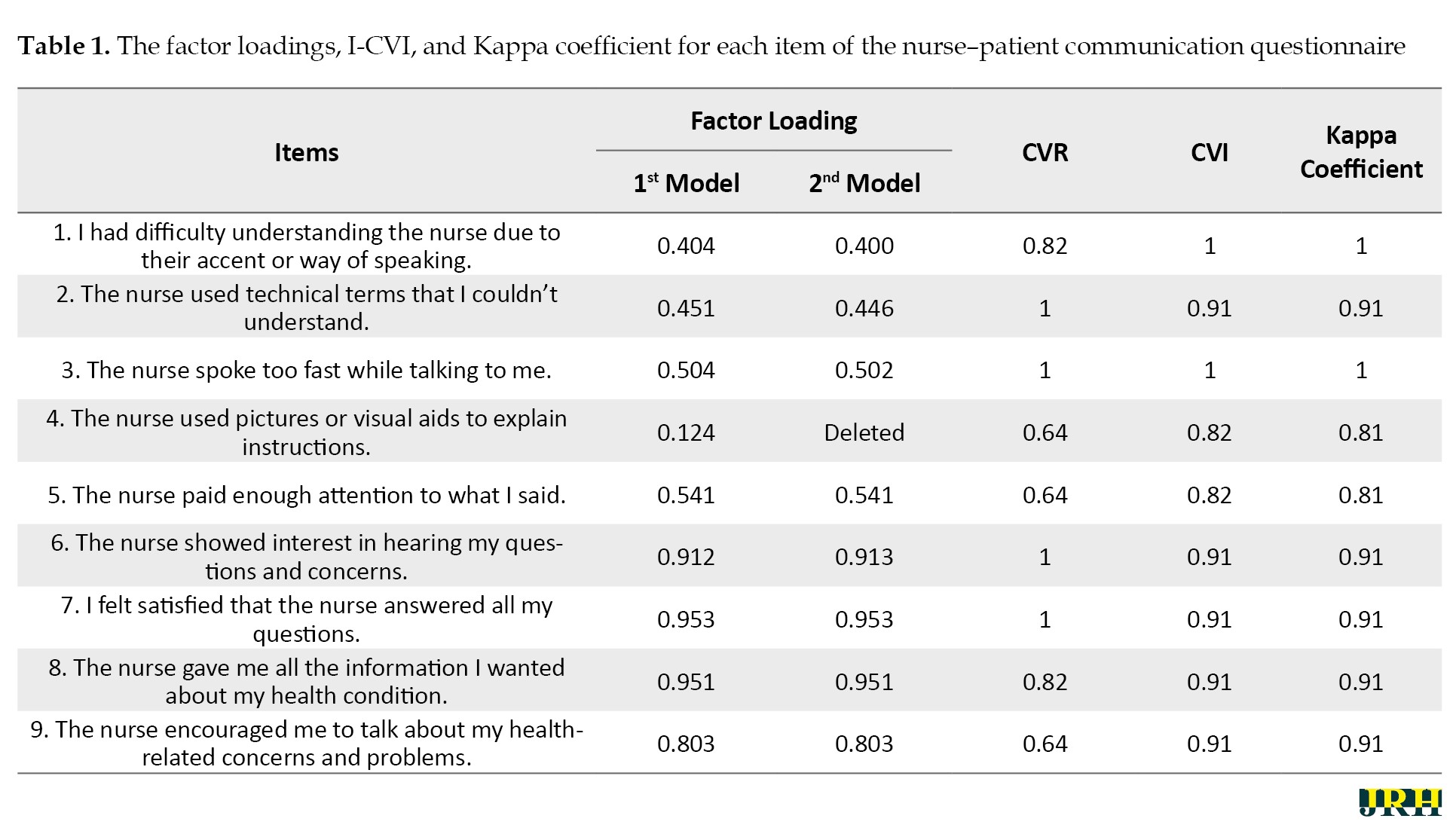
No questions were removed during the face and content validity. The CVR for all items ranged from 0.64 to 1, and the overall CVR for the questionnaire was 0.910. Also, the CVI values for all items ranged between 0.82 and 1.00, and the scale-CVI/Average for all items was calculated as 0.921. Based on the results presented in Table 1, Cohen’s kappa coefficient for all items was between 0.81 and 1 and was acceptable for all items.
CFA
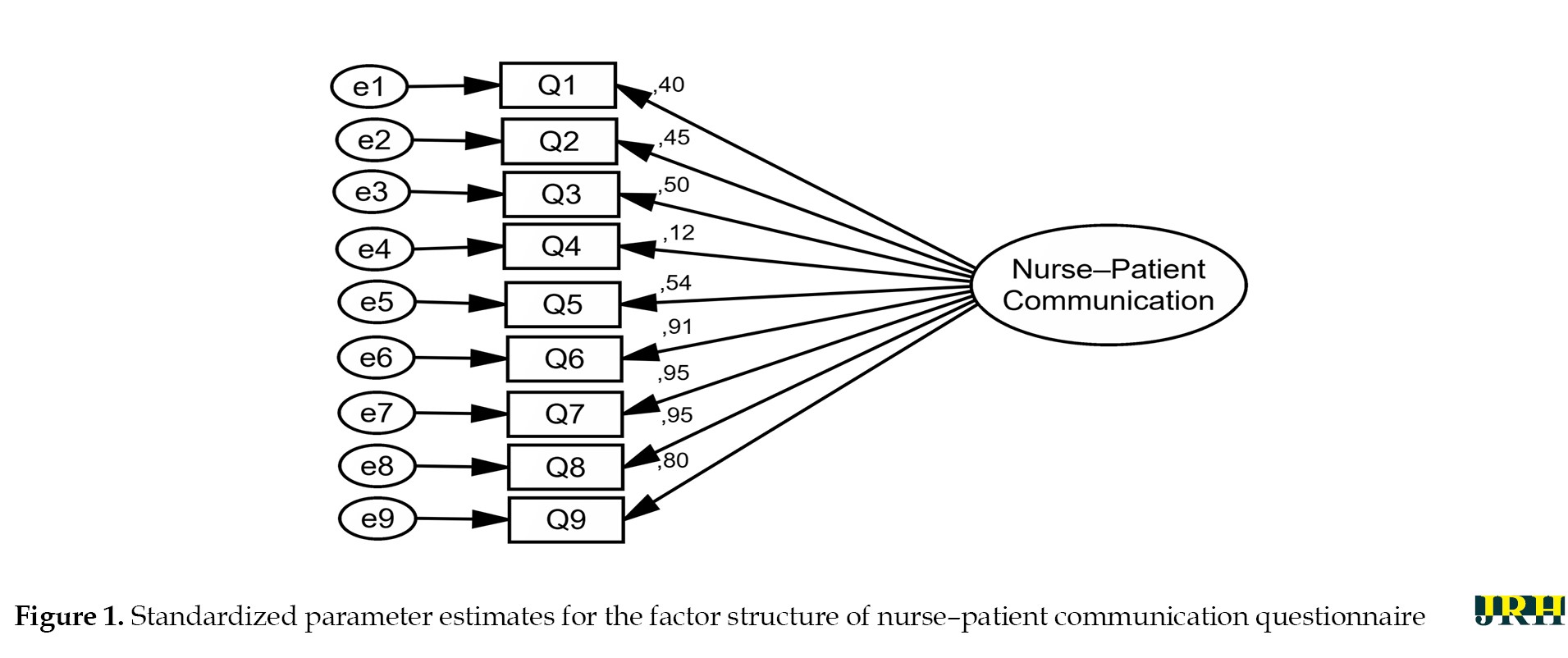
In the first model, only one item had a factor loading less than 0.4; some of the goodness-of-fit indices were not acceptable (Table 1, Figure 1).
The World Health Organization (WHO) defines health literacy (HL) “as a set of cognitive and social skills that determine an individual’s motivation and ability to access, comprehend, and utilize health-related information in ways that promote and maintain their well-being” [1]. Across both developed and developing nations, health and social policies are being formulated that emphasize HL as a crucial factor influencing a person’s capacity to effectively manage their own health and a healthcare system’s ability to provide equitable access to and use of health services. In other words, HL is a critical factor in understanding health-related messages and participating effectively in healthcare decision-making [2]. HL is defined as an individual’s ability to access, comprehend, and use health information to make informed and effective decisions regarding their health. HL includes not only reading and understanding health-related materials but also interacting with health systems and managing daily health needs [2, 3].
Despite HL’s long history, this concept is a new focus area for nurses, even though the idea has been around for a while. HL, a key part of Health Promotion [4], is the main goal of all nursing sciences. This means nurses work to keep individuals, groups, and communities healthy [2]. The American Nurses Association [5, 6] requires nurses to actively protect and improve everyone’s health. Therefore, nurses must be fully trained to support, advance, and maximize the health and abilities of all people [7]. A study conducted in Iran (Isfahan Province) showed that nurses’ HL is low, and they do not perform well in implementing health strategies [1, 2].
As frontline caregivers, nurses spend the most time interacting with patients and play a key role in establishing professional and effective communication. Such communication must be based on an understanding of the patient’s HL level, empathy, mutual respect, and clear information exchange [8]. Nurses must understand HL as a concept that influences individuals’ health attitudes and behaviors [9]. To reduce health information gaps for patients [10]. Limited HL can lead to health inequalities and poor-quality care [11]. In this respect, HL has become a concern for policymakers due to its important role in influencing people’s decision-making in health-related matters, as one of the fundamental tools for improving community health status and the quality of health care services [12]. Multiple studies have investigated the relationship between patient-provider communication and healthcare providers and various health outcomes [10]. However, only a limited number have explored whether HL influences this communication and, consequently, affects the resulting health outcomes [13].
A systematic review of 13 relevant articles found that the landscape of HL assessment tools is disproportionately biased toward practice-oriented domains, including clinical, community, and educational settings. This analysis reveals a significant methodological gap: The direct interpersonal dynamics between nurses and patients remain understudied, and existing tools have largely failed to capture the nuances of HL in this essential relationship [1].
Several tools have been developed to assess HL, and their use is rapidly expanding. Among the most common HL assessment tools are the Test of Functional HL in Adults [14], the rapid assessment of adult literacy in Medicine [15], and the NVS [16]. Most HL instruments represent a set of conceptual dimensions, with limitations in data management and missing information. Therefore, researchers should develop new measures to consider the full range of conceptual dimensions of HL and conduct validation studies to generate evidence-based HL measures [10].
The modern healthcare delivery landscape places significant emphasis on patient-centered care, shared decision-making, and achieving desired health outcomes [1, 5]. A patient’s ability to understand, process, and act on health information is broadly defined as HL. In clinical settings, particularly in the critical nurse-patient relationship, accurate measurement of a patient’s HL level is not merely a procedural formality but an essential prerequisite for ensuring patient safety and equity. Therefore, the need for rigorous validation of HL assessment instruments in these settings is of paramount importance.
In light of this, developing valid and reliable tools to assess the quality of nurse–patient communication based on HL strategies is essential for nursing education, research, and quality improvement in care. Although various instruments exist to assess general healthcare provider–patient communication, few tools specifically address components of HL strategies [17, 18]. Evaluating nurses' communication with patients by asking the patients themselves offers a practical approach to determining how effectively nurses implement HL strategies in real-world interactions [8]. Given the significance of this issue, the present study was conducted to design and psychometrically evaluate a questionnaire for assessing. The modern healthcare delivery landscape places significant emphasis on patient-centered care, shared decision-making, and achieving desired health outcomes [1, 5]. The patient's ability to understand, process, and act on health information is a skill broadly defined as HL. In clinical settings, particularly in the critical domain of the nurse-patient relationship, accurate measurement of a patient's HL level is not merely a procedural formality but an essential prerequisite for ensuring patient safety and equity. Therefore, the need for rigorous validation of HL assessment instruments in these settings is of paramount importance.
In light of this, developing valid and reliable tools to assess the quality of nurse–patient communication based on HL strategies is an essential requirement in nursing education, research, and care quality improvement. Although various instruments exist to assess general healthcare provider–patient communication, few tools specifically address the components related to HL strategies [17, 18]. Given the significance of this issue, the present study was conducted to design and psychometrically evaluate a questionnaire for assessing nurse–patient communication based on HL principles.
Methods
This cross-sectional study was performed in Mashhad City, Iran, in 2023 to assess the psychometric properties of the HL nurse–patient communication questionnaire among 310 patients admitted to a teaching hospital affiliated with Mashhad University of Medical Sciences. The target population comprised hospitalized patients in the university’s teaching hospitals. Within the hospital, 26 wards were randomly selected, including the obstetrics and postpartum units. The questionnaires were completed by inpatients from these two wards.
The questionnaire was developed by the research team based on the University of Michigan’s “HL Strategies in Practice” and a review of existing HL questionnaires. It consists of 10 items scored on a 4-point Likert scale. The total score ranges from 10 to 40, with higher scores indicating better nurse–patient communications.
Inclusion and exclusion criteria
The inclusion criteria were hospitalization in one of the selected wards and informed consent to participate in the study. The exclusion criterion was incomplete questionnaire responses, defined as more than 20 % missing data.
Face validity, content validity, and cohen’s kappa
Both experts and participants assessed the instrument’s qualitative face validity. For quantitative content validity, the content validity index (CVI) and content validity ratio (CVR) were calculated. To assess the face validity and content validity of the questionnaire, a panel of 11 specialists in HL and related fields, including public health (n=3), health education and promotion (n=5), and nursing (n=3) assessed the questionnaire, rating each item for its relevance and necessity. Based on the Lawshe report for 11 experts, the minimum acceptable CVR score was set at 0.59 [19]. Accordingly, a CVI threshold of 0.78 was applied, as recommended by the literature [20]. Cohen’s kappa statistic was used to assess inter-rater agreement. According to Landis and Koch [21], a kappa value above 0.74 indicates excellent agreement, between 0.60 and 0.74 good agreement, and between 0.40 and 0.59 fair agreement.
Sampling size
For factor analysis, a sample size larger than 300 is considered acceptable [22]. Therefore, in this study, a confirmatory factor analysis (CFA) was performed, and the sample size was considered to be 310.
CFA
The analysis involved several steps. First, data from 310 people were loaded into Amos software, version 24. We then checked the data’s normality (skewness and kurtosis) and screened for outliers using the Mahalanobis test. Next, we used Maximum Likelihood CFA to test how well the data fit the model. The fit indices used in this stage were: Goodness-of-fit index (GFI), root mean square error of approximation (RMSEA), adjusted goodness of fit index (AGFI), comparative fit index (CFI), incremental fit index (IFI), root mean square residual (RMR), tucker lewis index (TLI), normed fit index (NFI), relative fit index (RFI), parsimony goodness of fit index (PGFI), chi-square (χ2), Parsimonious Normed Fit Index (PNFI), and Degree of freedom (df). Model fit was judged using the following indices, with their acceptable values: χ2/df (<5), GFI, IFI, AGFI, RFI, TLI, NFI, CFI (all>0.9), RMSEA (<0.08), RMR (<0.05), and PNFI and PGFI (both>0.5) [23-26].
Reliability
The reliability of the nurse–patient communication questionnaire was assessed using the internal consistency method. The internal consistency of the nurse–patient communication questionnaire was evaluated using two metrics. McDonald’s Omega was calculated with JASP software, version 0.11.1, and Cronbach’s α was computed using SPSS software, version 24. Based on the literature, the acceptable range for internal consistency reliability is between 0.70 and 0.95 [27, 28].
Results
All participants in this study were women. The Mean±SD age of the participants was 31.06±14.26 years. The nationality of 92.6% (n=287) of participants was Iranian, and 7.4% (n=23) were not Iranian. The education levels of 62.3% (n=193), 28.1% (n=87), 2.9% (n=9), 6.1% (n=19), and 0.6% (n=2) of the participants were below diploma, diploma, associate degree, bachelor’s degree, and master’s degree, respectively.
Face validity, content validity, and cohen’s kappa
No questions were removed during the face and content validity. The CVR for all items ranged from 0.64 to 1, and the overall CVR for the questionnaire was 0.910. Also, the CVI values for all items ranged between 0.82 and 1.00, and the scale-CVI/Average for all items was calculated as 0.921. Based on the results presented in Table 1, Cohen’s kappa coefficient for all items was between 0.81 and 1 and was acceptable for all items.
CFA
In the first model, only one item had a factor loading less than 0.4; some of the goodness-of-fit indices were not acceptable (Table 1, Figure 1).
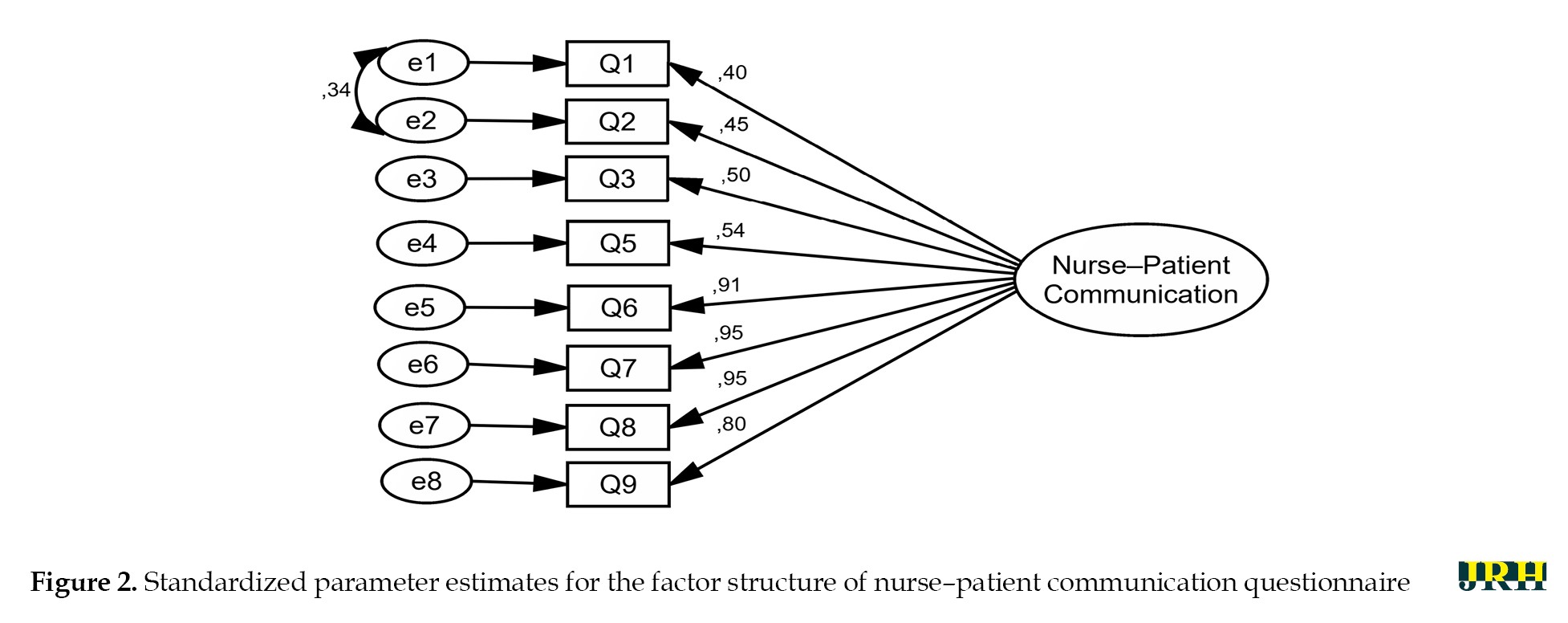
Therefore, in the second model, Item 4 (The nurse used pictures or visual aids to explain instructions) was removed, and a modification was applied to account for the measurement error between e1 and e2 (Table 1 and Figure 2).
Table 1 presents the factor loadings of all items in the first and second models. Table 2 presents the results of all goodness-of-fit indices for the first and second models.
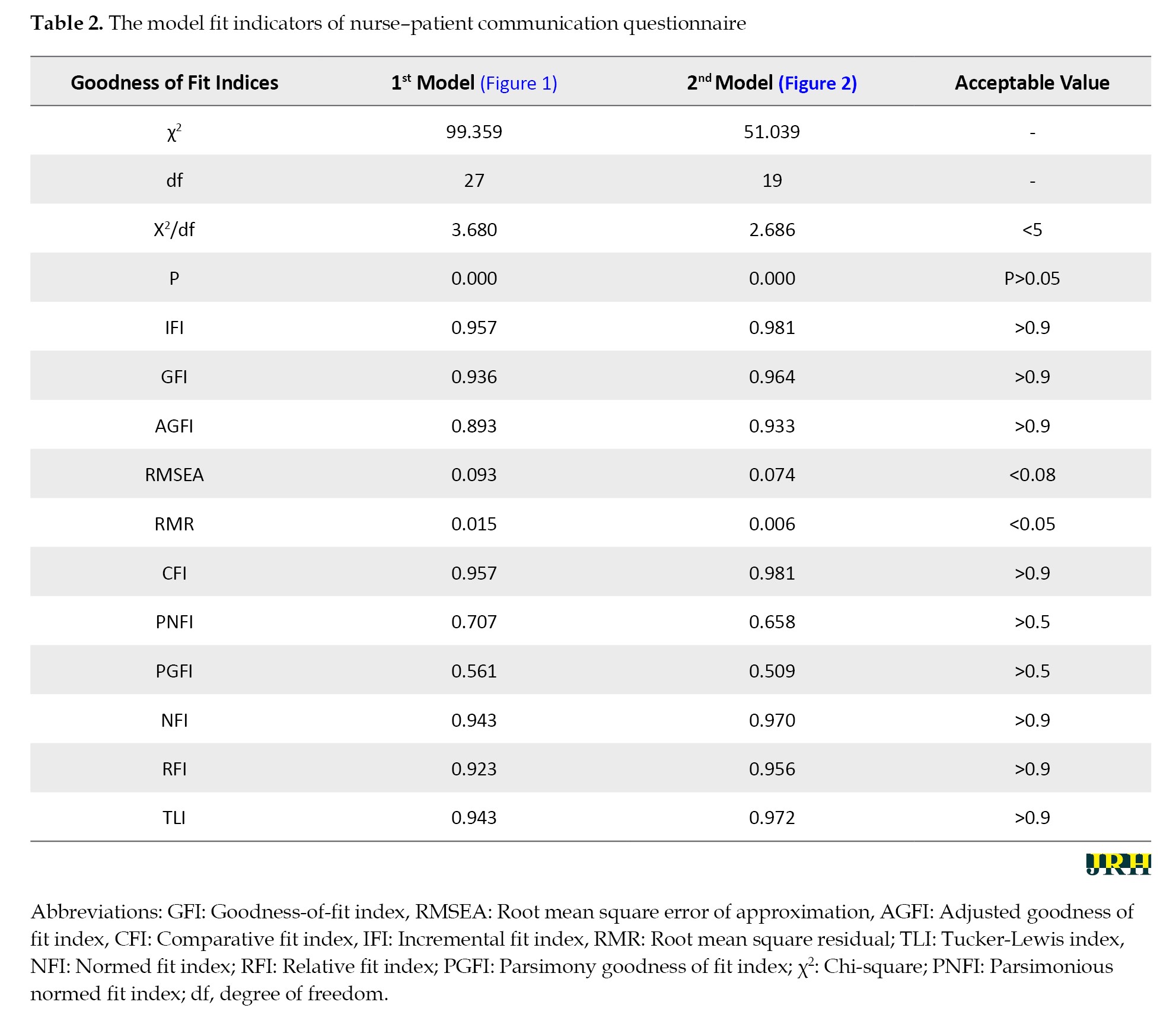
Based on the results of factor loadings and goodness-of-fit indices of the second model, the HL nurse–patient communication questionnaire was confirmed (Table 2, Figure 2).
Reliability
Reliability analysis showed excellent internal consistency for the nurse–patient communication questionnaire, with Cronbach’s α of 0.858 and McDonald’s Omega of 0.893.
Discussion
The results of the present study showed that this questionnaire can serve as a valid, concise, and practical tool for assessing the quality of nurse-patient communication in the Iranian healthcare system. The Cronbach’s α of 0.858 for the final version indicated acceptable internal consistency. Although values above 0.7 are generally considered satisfactory, slightly lower values may be acceptable in exploratory research and early-stage tool development [29]. The internal consistency analysis of the questionnaire items revealed that all questions contributed approximately equally to the total score. Furthermore, the removal of any single item did not significantly increase Cronbach’s α coefficient. Consequently, it can be concluded that all questionnaire items possess acceptable reliability, and there is no need for modification or deletion of any items.
These findings are consistent with the results of Najafi et al. and Askari et al. who studied nurses working in hospitals affiliated with Tehran and Esfahan University of Medical Sciences [30, 31]. In their study, professional values were measured using the Weiss professional values scale and the nurses professional values scale-revised, developed by Shank and Weiss.
The kappa coefficient and content validity indices also indicated strong agreement among raters, reinforcing the tool’s content validity. The model fit indices, such as CFI=0.981, GFI=0.964, and TLI=0.972, were within an acceptable range. Although the RMSEA (0.074) was slightly higher than ideal, this may be due to a limited sample size. The indices supported the model’s good fit and the tool’s applicability for future research. Overall, this finding indicates that almost all items in this instrument meet the criteria for face validity in terms of readability. These findings are consistent with the research in Malaysia [32].
The factor analysis indicated that in the initial model, only one item exhibited a factor loading below 0.4. Consequently, in the second model, item 4 (the nurse used pictures or teaching aids to explain instructions) was eliminated. Based on the factor loading results and the goodness-of-fit indices of the second model, the nurse-patient communication questionnaire was validated. In the present study, certain items, such as the use of visual aids to explain instructions, had low factor loadings and were, consequently, excluded from the final version. This observation suggests that nurses infrequently apply these communication strategies in clinical settings. International literature similarly reports that healthcare providers, including nurses, often lack adequate training to implement HL strategies [33, 34]. Furthermore, many providers do not consistently employ or receive training in HL-based communication skills [18, 33].
This developed tool, tailored to indigenous Iranian culture, based on the HL framework, and consisting of 8 simple items, successfully captured communication dimensions often overlooked in previous tools. While many existing instruments focus primarily on verbal skills or general aspects of physician-patient interaction, this questionnaire explicitly includes simple language, assessment of comprehension, use of examples and illustrations, and patient participation in decision-making. White et al. demonstrated that nurse education based on HL strategies, such as the teach-back method, improved patient understanding and reduced hospital readmissions among patients with heart failure [34]. Our study similarly aimed to provide a validated means of evaluating such communication behaviors. A few domestic studies have also aligned with this trend. Seyyedolshohadai and Haghani [35] validated the health care communication questionnaire (HCCQ), originally developed by Gremigni et al. [36], to assess nurses’ communication skills from the perspective of patients’ family members. However, the HCCQ does not incorporate HL strategies into its structure and does not assess communication from the patient’s perspective. In contrast, our tool is grounded in HL strategies and evaluates communication from the patient’s own viewpoint.
Due to its brevity (eighth item) and simple language, the instrument is well-suited for use in time-constrained clinical environments. This advantage has also been emphasized in multiple studies, including Arozullah et al. [30], who advocated for assessment tools that are both scientific. Verbal health communication strategies are particularly important. A study of patients’ perceptions of communication with healthcare providers found that most patients agreed that there was room for improvement in how they shared verbal information [37]. To enhance patient-provider communication, the US Centers for Disease Control and Prevention recommended in 2011 that patients use simple language and limit medical jargon; explain technical terms when necessary; break information into meaningful chunks; and use feedback to ensure patient understanding [2].
Given nurses’ critical role in patient education and health promotion, assessing their use of HL strategies in professional communication is a key step toward improving communication performance and patient health outcomes [8]. Regarding this matter, the tool developed in this study may serve as a screening instrument for training needs assessment and intervention planning for nurses. A major strength of this study lies in the tool’s development, which considered the Persian language, culturally specific communication styles, and the Iranian patients’ characteristics. The limitations of this study include the use of convenience sampling and recruitment from only one hospital, which may limit generalizability. The focus on two hospital wards (women’s and postpartum) may have also reduced respondent diversity. Future research should test this tool across more diverse populations and settings. Moreover, correlating questionnaire scores with actual health outcomes (e.g. treatment adherence, patient satisfaction, and hospital readmissions) could enhance its scientific value.
Conclusion
The findings of this study have both scientific and practical significance. This tool can be used in future research to assess therapeutic communication within an HL framework and in training programs to improve nurses’ communication skills and evaluate service quality. As modern healthcare systems move toward patient-centered and participatory care, such tools are foundational for facilitating this transition. Ultimately, the development of this instrument marks a step toward human-centered, collaborative, and HL–oriented communication in Iran’s healthcare system, as emphasized in national healthcare policies aimed at enhancing service quality.
Ethical Considerations
Compliance with ethical guidelines
This study was approved by the Ethics Committee of Mashhad University of Medical Sciences, Mashhad, Iran (Code: IR.MUMS.FHMPM.REC.1402.223). This study was conducted in accordance with the Declaration of Helsinki during all phases. Data confidentiality was ensured, and written informed consent was obtained from all participants.
Funding
This study was financially supported by Mashhad University of Medical Sciences, Mashhad, Iran (Grant No.: 4022182).
Authors' contributions
Conceptualization and supervision: Elham Charoghchian Khorasani and Nooshin Peyman; Methodology: Alireza Jafari; Data collection: Elham Charoghchian Khorasani; Data analysis: Alireza Jafari; Investigation and writing: Elham Charoghchian Khorasani, Maryam Nasrabadi.
Conflict of interest
The authors declared no conflicts of interest.
Acknowledgments
The authors thank the patients who helped them conduct this research project.
Based on the results of factor loadings and goodness-of-fit indices of the second model, the HL nurse–patient communication questionnaire was confirmed (Table 2, Figure 2).
Reliability
Reliability analysis showed excellent internal consistency for the nurse–patient communication questionnaire, with Cronbach’s α of 0.858 and McDonald’s Omega of 0.893.
Discussion
The results of the present study showed that this questionnaire can serve as a valid, concise, and practical tool for assessing the quality of nurse-patient communication in the Iranian healthcare system. The Cronbach’s α of 0.858 for the final version indicated acceptable internal consistency. Although values above 0.7 are generally considered satisfactory, slightly lower values may be acceptable in exploratory research and early-stage tool development [29]. The internal consistency analysis of the questionnaire items revealed that all questions contributed approximately equally to the total score. Furthermore, the removal of any single item did not significantly increase Cronbach’s α coefficient. Consequently, it can be concluded that all questionnaire items possess acceptable reliability, and there is no need for modification or deletion of any items.
These findings are consistent with the results of Najafi et al. and Askari et al. who studied nurses working in hospitals affiliated with Tehran and Esfahan University of Medical Sciences [30, 31]. In their study, professional values were measured using the Weiss professional values scale and the nurses professional values scale-revised, developed by Shank and Weiss.
The kappa coefficient and content validity indices also indicated strong agreement among raters, reinforcing the tool’s content validity. The model fit indices, such as CFI=0.981, GFI=0.964, and TLI=0.972, were within an acceptable range. Although the RMSEA (0.074) was slightly higher than ideal, this may be due to a limited sample size. The indices supported the model’s good fit and the tool’s applicability for future research. Overall, this finding indicates that almost all items in this instrument meet the criteria for face validity in terms of readability. These findings are consistent with the research in Malaysia [32].
The factor analysis indicated that in the initial model, only one item exhibited a factor loading below 0.4. Consequently, in the second model, item 4 (the nurse used pictures or teaching aids to explain instructions) was eliminated. Based on the factor loading results and the goodness-of-fit indices of the second model, the nurse-patient communication questionnaire was validated. In the present study, certain items, such as the use of visual aids to explain instructions, had low factor loadings and were, consequently, excluded from the final version. This observation suggests that nurses infrequently apply these communication strategies in clinical settings. International literature similarly reports that healthcare providers, including nurses, often lack adequate training to implement HL strategies [33, 34]. Furthermore, many providers do not consistently employ or receive training in HL-based communication skills [18, 33].
This developed tool, tailored to indigenous Iranian culture, based on the HL framework, and consisting of 8 simple items, successfully captured communication dimensions often overlooked in previous tools. While many existing instruments focus primarily on verbal skills or general aspects of physician-patient interaction, this questionnaire explicitly includes simple language, assessment of comprehension, use of examples and illustrations, and patient participation in decision-making. White et al. demonstrated that nurse education based on HL strategies, such as the teach-back method, improved patient understanding and reduced hospital readmissions among patients with heart failure [34]. Our study similarly aimed to provide a validated means of evaluating such communication behaviors. A few domestic studies have also aligned with this trend. Seyyedolshohadai and Haghani [35] validated the health care communication questionnaire (HCCQ), originally developed by Gremigni et al. [36], to assess nurses’ communication skills from the perspective of patients’ family members. However, the HCCQ does not incorporate HL strategies into its structure and does not assess communication from the patient’s perspective. In contrast, our tool is grounded in HL strategies and evaluates communication from the patient’s own viewpoint.
Due to its brevity (eighth item) and simple language, the instrument is well-suited for use in time-constrained clinical environments. This advantage has also been emphasized in multiple studies, including Arozullah et al. [30], who advocated for assessment tools that are both scientific. Verbal health communication strategies are particularly important. A study of patients’ perceptions of communication with healthcare providers found that most patients agreed that there was room for improvement in how they shared verbal information [37]. To enhance patient-provider communication, the US Centers for Disease Control and Prevention recommended in 2011 that patients use simple language and limit medical jargon; explain technical terms when necessary; break information into meaningful chunks; and use feedback to ensure patient understanding [2].
Given nurses’ critical role in patient education and health promotion, assessing their use of HL strategies in professional communication is a key step toward improving communication performance and patient health outcomes [8]. Regarding this matter, the tool developed in this study may serve as a screening instrument for training needs assessment and intervention planning for nurses. A major strength of this study lies in the tool’s development, which considered the Persian language, culturally specific communication styles, and the Iranian patients’ characteristics. The limitations of this study include the use of convenience sampling and recruitment from only one hospital, which may limit generalizability. The focus on two hospital wards (women’s and postpartum) may have also reduced respondent diversity. Future research should test this tool across more diverse populations and settings. Moreover, correlating questionnaire scores with actual health outcomes (e.g. treatment adherence, patient satisfaction, and hospital readmissions) could enhance its scientific value.
Conclusion
The findings of this study have both scientific and practical significance. This tool can be used in future research to assess therapeutic communication within an HL framework and in training programs to improve nurses’ communication skills and evaluate service quality. As modern healthcare systems move toward patient-centered and participatory care, such tools are foundational for facilitating this transition. Ultimately, the development of this instrument marks a step toward human-centered, collaborative, and HL–oriented communication in Iran’s healthcare system, as emphasized in national healthcare policies aimed at enhancing service quality.
Ethical Considerations
Compliance with ethical guidelines
This study was approved by the Ethics Committee of Mashhad University of Medical Sciences, Mashhad, Iran (Code: IR.MUMS.FHMPM.REC.1402.223). This study was conducted in accordance with the Declaration of Helsinki during all phases. Data confidentiality was ensured, and written informed consent was obtained from all participants.
Funding
This study was financially supported by Mashhad University of Medical Sciences, Mashhad, Iran (Grant No.: 4022182).
Authors' contributions
Conceptualization and supervision: Elham Charoghchian Khorasani and Nooshin Peyman; Methodology: Alireza Jafari; Data collection: Elham Charoghchian Khorasani; Data analysis: Alireza Jafari; Investigation and writing: Elham Charoghchian Khorasani, Maryam Nasrabadi.
Conflict of interest
The authors declared no conflicts of interest.
Acknowledgments
The authors thank the patients who helped them conduct this research project.
References
- Alkorashy HAE, Villagracia HN. Nursing perspectives on health literacy challenges and strategies: A systematic review. Middle-East Journal of Scientific Research. 2015; 23(11):2645-56. [Link]
- Charoghchian Khorasani E, Tavakoly Sany SB, Mahdizadeh M, Doosti H, Tehrani H, Moghzi M, et al. Attributes of organizational health literacy in health care centers in Iran: a qualitative content analysis study. International Journal of Environmental Research and Public Health. 2022; 19(4):2310. [DOI:10.3390/ijerph19042310] [PMID] [PMCID]
- Sørensen K, Van den Broucke S, Fullam J, Doyle G, Pelikan J, Slonska Z, et al. Health literacy and public health: A systematic review and integration of definitions and models. BMC Public Health. 2012; 12:80. [DOI:10.1186/1471-2458-12-80] [PMID] [PMCID]
- Kim HS. The essence of nursing practice: Philosophy and perspective. New York: Springer Publishing Company; 2015. [DOI:10.1891/9780826194299]
- American Nurses Association. Nursing: Scope and standards of practice. 2th ed. Ann Arbor: Nursesbooks.org; 2004. [Link]
- Nasrabadi M, Jafari A, Peyman N, Mozaffarian F, Babaei M, Moravejjifar M, et al. The effect of health literacy strategies training for nurses on their application in practice: A quasi-experimental study. Navid No. 2025; 28(94): 23-37. [DOI10.22038/nnj.2025.89031.1496]
- Charoghchian Khorasani E, Jafari A, Mahdizadeh Taraghdari M, Tehrani H, Moghzi M, Peyman N. Designing a model of health literacy organization in health care centers in Iran. Journal of Health Literacy. 2023; 7(4):44-59. [Link]
- Dickens C, Lambert BL, Cromwell T, Piano MR. Nurse overestimation of patients' health literacy. Journal of Health Communication. 2013; 18(S 1):62-9. [DOI:10.1080/10810730.2013.825670] [PMID] [PMCID]
- Silva MJ, Santos P. The impact of health literacy on knowledge and attitudes towards preventive strategies against COVID-19: A cross-sectional study. International Journal of Environmental Research and Public Health. 2021; 18(10):5421. [DOI:10.3390/ijerph18105421] [PMID] [PMCID]
- Sharma S, Oli N, Thapa B. Electronic health-literacy skills among nursing students. Advances in Medical Education and Practice. 2019; 10:527-32. [DOI:10.2147/AMEP.S207353] [PMID] [PMCID]
- Magnani JW, Mujahid MS, Aronow HD, Cené CW, Dickson VV, Havranek E, et al. Health literacy and cardiovascular disease: fundamental relevance to primary and secondary prevention: A scientific statement from the American Heart Association. Circulation. 2018; 138(2):e48-74. [DOI:10.1161/CIR.0000000000000579] [PMID] [PMCID]
- Almachavan SA. The role of health literacy in enhancing preventive healthcare: A comprehensive review of challenges, interventions, and future directions. Journal of Research in Clinical Medicine. 2024; 12:36. [DOI:10.34172/jrcm.35126]
- Al Sayah F, Majumdar SR, Williams B, Robertson S, Johnson JA. Health literacy and health outcomes in diabetes: a systematic review. Journal of General internal medicine. 2013; 28(3):444-52. [DOI:10.1007/s11606-012-2241-z] [PMID] [PMCID]
- Parker RM, Baker DW, Williams MV, Nurss JR. The test of functional health literacy in adults: a new instrument for measuring patients’ literacy skills. Journal of General internal medicine. 1995; 10(10):537-41. [DOI:10.1007/BF02640361]
- Panahi R, Ramezankhani A, Tavousi M, Haeri Mehrizi A, Niknami S. The psychometric properties of health literacy for Iranian adults (HELIA) in medical sciences students. Journal of Research and Health. 2020; 10(1):53-8. [DOI:10.32598/JRH.10.1.53]
- Jessup RL, Beauchamp A, Osborne RH, Hawkins M, Buchbinder R. Health literacy measurement: A comparison of four widely used health literacy instruments (TOFHLA, NVS, HLS-EU and HLQ) and implications for practice. Australian Journal of Primary Health. 2024; 30:PY22280. [DOI:10.1071/py22280]
- Castro CM, Wilson C, Wang F, Schillinger D. Babel babble: physicians' use of unclarified medical jargon with patients. American Journal of Health Behavior. 2007; 31(S 1):S85-95. [Link]
- Rudd RE. The evolving concept of health literacy: New directions for health literacy studies. Journal of Communication in Healthcare. 2015; 8(1):7-9. [DOI:10.1179/1753806815Z.000000000105]
- Lawshe CH. A quantitative approach to content validity. Personnel psychology. 1975; 28(4):563-75. [DOI:10.1111/j.1744-6570.1975.tb01393.x]
- Polit DF, Beck CT, Owen SV. Is the CVI an acceptable indicator of content validity? Appraisal and recommendations. Research in Nursing & Health. 2007; 30(4):459-67. [DOI:10.1002/nur.20199] [PMID]
- Landis JR, Koch GG. The measurement of observer agreement for categorical data. Biometrics. 1977; 33(1):159-74. [PMID]
- Williams B, Onsman A, Brown T. Exploratory factor analysis: A five-step guide for novices. Journal of Emergency Primary Health Care. 2010; 8(3):1-13. [DOI:10.33151/ajp.8.3.93]
- Meyers LS, Gamst G, Guarino AJ. Applied multivariate research: Design and interpretation. 3th ed. Thousand Oaks: SAGE Publications, Inc; 2017. [Link]
- Lomax RG. A beginner’s guide to structural equation modeling. 2th ed. New York: psychology press; 2004. [doi:10.4324/9781410610904]
- Schreiber JB, Nora A, Stage FK, Barlow EA, King J. Reporting structural equation modeling and confirmatory factor analysis results: A review. The Journal of Educational Research. 2006; 99(6):323-38. [DOI:10.3200/JOER.99.6.323-338]
- Hooper D, Coughlan J, Mullen MR. Structural equation modeling: Guidelines for determining model fit. Electronic Journal of Business Research Methods. 2008; 6(1):53-60. [Link]
- Nunnally JC. Psychometric theory 3E: McGraw-Hill series in psychology. Columbus: Tata McGraw-Hill education; 1994. [Link]
- Bland JM, Altman DG. Statistics notes: Cronbach’s alpha. Bmj. 1997; 314(7080):572. [DOI:10.1136/bmj.314.7080.572] [PMID] [PMCID]
- Arozullah AM, Yarnold PR, Bennett CL, Soltysik RC, Wolf MS, Ferreira RM, et al. Development and validation of a short-form, rapid estimate of adult literacy in medicine. Medical care. 2007; 45(11):1026-33. [DOI:10.1097/mlr.0b013e3180616c1b] [PMID]
- Askari A, Oreyzi HR, Nouri A. [The relationship between personal (instrumental and terminal) and professional values among nurses in hospitals affiliated to isfahan university of medical sciences, iran (Persian)]. Health Information Management. 2012; 8(8):1039-50. [Link]
- Najafi M, Kohan N, Najafi M, Mohammadzadeh Esmaily H, Shirazi M. [Assessment of validity and reliability of attitudes to health professionals questionnaire (AHPQ) in Iran (Persian)]. Research in Medical Education. 2015; 7(2):21-8. [DOI:10.18869/acadpub.rme.7.2.21]
- Ibrahim SNA, Matore MEEM. The validity of the Malaysian teachers’ global competency level instrument using Cohen Kappa, content validity ratio and content validity index analyses. Journal of Applied Science, Engineering, Technology, and Education. 2025; 7(1):82-93. [DOI:10.35877/454ri.asci3848]
- Macabasco-O'Connell A, Fry-Bowers EK. Knowledge and perceptions of health literacy among nursing professionals. Journal of Health Communication. 2011; 16(S 3):295-307. [DOI:10.1080/10810730.2011.604389] [PMID]
- White M, Garbez R, Carroll M, Brinker E, Howie-Esquivel J. Is "teach-back" associated with knowledge retention and hospital readmission in hospitalized heart failure patients? Journal of Cardiovascular Nursing. 2013; 28(2):137-46. [DOI:10.1097/jcn.0b013e31824987bd] [PMID]
- Seyedoshohadaee M, Ahmadi M, Haghani H. [The correlation between the anxiety of the family members of the patients referring to the emergency department and their views on the communication skills of nurses (Persian)]. Iran Journal of Nursing. 2019; 32(119):80-90. [DOI:10.29252/ijn.32.119.80]
- Gremigni P, Sommaruga M, Peltenburg M. Validation of the Health Care Communication Questionnaire (HCCQ) to measure outpatients' experience of communication with hospital staff. Patient Education and Counseling. 2008; 71(1):57-64. [DOI:10.1016/j.pec.2007.12.008] [PMID]
- Hu LT, Bentler PM. Cutoff criteria for fit indexes in covariance structure analysis: Conventional criteria versus new alternatives. Structural Equation Modeling: A Multidisciplinary Journal. 1999; 6(1):1-55. [DOI:10.1080/10705519909540118]
Type of Study: Orginal Article |
Subject:
● Health Education
Received: 2025/07/31 | Accepted: 2025/11/22 | Published: 2026/07/1
Received: 2025/07/31 | Accepted: 2025/11/22 | Published: 2026/07/1
| Rights and permissions | |
 |
This work is licensed under a Creative Commons Attribution-NonCommercial 4.0 International License. |


This is an open access article distributed under the terms of the Creative Commons Attribution License (CC-By-NC), which permits use, distribution, and reproduction in any medium, provided the original work is properly cited and is not used for commercial purposes.
Contact Information
