

Volume 16, Issue 5 (Sep & Oct 2026)
J Research Health 2026, 16(5): 453-466 |
Back to browse issues page



Ethics code: NA


Download citation:
BibTeX | RIS | EndNote | Medlars | ProCite | Reference Manager | RefWorks
Send citation to:


BibTeX | RIS | EndNote | Medlars | ProCite | Reference Manager | RefWorks
Send citation to:
Singh A, Tiwari G K. Understanding the Construal of Depression Among Indian Subsyndromal Depressive Adults: A Thematic Analysis. J Research Health 2026; 16 (5) :453-466
URL: http://jrh.gmu.ac.ir/article-1-2667-en.html
URL: http://jrh.gmu.ac.ir/article-1-2667-en.html


1- Department of Psychology, School of Humanities and Social Sciences, Doctor Harisingh Gour Vishwavidyalaya, Sagar, India.
2- Department of Psychology, School of Human and Environmental Sciences, Manipur University, Imphal, India. ,gktiwari@manipuruniv.ac.in
2- Department of Psychology, School of Human and Environmental Sciences, Manipur University, Imphal, India. ,
Keywords: Depression, Subsyndromal depression, Qualitative research, Phenomenological approach, Indian adults
Full-Text [PDF 851 kb]
(33 Downloads)
| Abstract (HTML) (899 Views)
Full-Text: (42 Views)
Introduction
Subsyndromal, subclinical, or subthreshold depression is a prevalent concern that impairs emotional, cognitive, and social functioning despite falling below the diagnostic threshold for major depressive disorder (MDD) [1–3]. Symptoms-including sadness, anhedonia, and sleep disturbances-are less intense than MDD but significantly diminish quality of life [4]. In India, limited research examines how young adults (aged 18–24) experience these symptoms during a developmental period defined by high academic and social pressures [2, 3]. If untreated, these symptoms increase suicide risk, all-cause mortality, and cardiovascular morbidity [5, 6]. Furthermore, they accelerate cognitive decline and productivity losses, fostering neurobiological changes that increase the likelihood of chronic illness and global economic burden [7].
Although subsyndromal depression is clinically significant, qualitative research into how individuals interpret these symptoms remains scarce. Conventional studies typically conceptualize the condition as a dimensional continuum, prioritizing symptom burden and functional impairment over lived meaning [8]. However, recent phenomenological data suggest that sufferers often frame their experiences as situational stress or existential exhaustion rather than formal illness- a process deeply rooted in sociocultural contexts. Interpretative phenomenological analysis is ideal for investigating these ambiguous, embodied experiences, as it explores how individuals narratively organize subclinical depressive states regarding identity and agency [8, 9]. By adopting a constructivist lens to examine the co-construction of meaning, qualitative inquiry addresses a critical knowledge gap. Understanding how people normalize episodes below the diagnostic threshold is essential for advancing both psychological theory and clinical practice [10].
Understanding subsyndromal depression is essential; it occupies a pivotal position on the depression continuum, allowing researchers to identify drivers of symptom persistence and functional impairment [5]. Because these subthreshold symptoms significantly increase the risk of progressing to MDD, early interventions, such as cognitive behaviour therapy (CBT) or mindfulness, are critical [6]. Beyond clinical risks, subclinical depression impairs daily functioning, social relationships, and workplace productivity, while escalating healthcare utilization costs [6, 7]. Ongoing research aims to better distinguish these symptoms from transient distress, thereby refining diagnostic precision and informing targeted treatments [6].
Studies indicate that cognitive mechanisms-including rumination and negative cognitive biases-drive both subclinical and clinical depression [11]. Neurobiological findings also reveal disruptions in brain regions linked to emotion regulation and stress response in subsyndromal cases, highlighting their role in developmental pathways [12]. Psychotherapeutic interventions, such as self-affirmation [1, 13, 14], CBT, and mindfulness, effectively reduce subthreshold symptoms [15], though cultural differences in symptom expression are vital to maintaining validity and applicability [3].
Despite these insights, a significant gap remains regarding how individuals with subsyndromal depression construe and interpret their symptoms-a dimension essential for early detection and culturally informed intervention. Understanding subjective construal is vital for transitional-age young adults, who often underrecognize symptoms and delay help-seeking [2, 3, 16]. Early identification in this cohort facilitates preventive mental health planning across campus and policy contexts [2, 3, 17].
The current study
While research on subsyndromal depression is expanding, understanding how individuals interpret their experiences remains critical. These symptoms impair emotional, cognitive, and social functioning, often preceding MDD [17, 18]. Young Indian adults (18–24) face unique psychosocial demands and heightened epidemiological risk, making their subjective construal essential for study [2, 3, 16]. By exploring meaning-making-rather than just epidemiological or functional impacts-this study illuminates how interpretations shape coping, help-seeking, and risk trajectories [19]. Investigating perceived causes, coping strategies, emotional experiences, and microsystem influences on subsyndromal depression, it may provide nuanced insights into resilience, recovery, and meaning-making processes. Using thematic analysis, we investigated the construal of depressive experiences, perceived causes, coping mechanisms, and recovery processes among Indian adults with subsyndromal depression to provide nuanced insights into resilience and microsystem influences within this population.
Methods
Research design
Using a qualitative research design, this study explored the construal of subsyndromal depression experiences among university students in Sagar, Madhya Pradesh, India, between September and December 2024. This methodology was selected to capture the nuanced, subjective emotional and cognitive processes inherent in participants with subsyndromal depression symptoms.
Participants and their recruitment
From an initial pool of 500, screening was conducted to identify individuals with elevated subclinical depressive symptoms. Participants scoring above the 75th percentile were shortlisted. Of the 52 individuals meeting this criterion, 18 were selected (from the various academic department of Doctor Harisingh Gour Vishwavidyalaya, Sagar, Madhya Pradesh, India) based on language proficiency, availability, willingness to participate in in-depth interviews, and absence of comorbid conditions. The sample comprised nine men (Mean±SD, 20.89±2.09 years) and nine women (Mean±SD, 20.78±2.22 years), aged 18-24. This multi-step process ensured the sample represented subclinical symptoms rather than clinical depression or normal mood variation. Participants were primarily middle-class residents of various parts of India, mostly from Sagar City and nearby areas. To mitigate bias and enhance reflexivity, the research team maintained journals throughout data collection and analysis, documenting presumptions and interpretive choices.
To align the sample to explore the construal of depression among subclinical young adults, purposive sampling was used to recruit individuals with elevated-but not clinically diagnostic-depressive symptoms. Consistent with earlier research, the 75th percentile cut-off was applied as a justified threshold to capture significant symptomatology while remaining below clinical diagnostic criteria.
Participants met the following criteria: Scoring above the 75th percentile on the depression scale [20], indicating increased risk without a clinical diagnosis; being single; and being fluent in Hindi and English. They were required to be enrolled in university academic programs and free from pre-existing physical or mental ill-health conditions. Excluding physical illness was necessary to prevent confounding effects, ensuring that mood and functioning reflected psychological distress rather than illness-related factors. Focusing on single participants further enhanced internal validity by minimizing variability related to marital obligations and relational dynamics. Consequently, individuals scoring below the 75th percentile on the depression measure [20], those who were married, or those with health conditions were excluded. These criteria necessarily narrowed the participant pool. The Institutional Ethics Committee (IEC) of Doctor Harisingh Gour Vishwavidyalaya, Sagar, Madhya Pradesh, India, approved the study. The team recruited participants via social media, contacting interested individuals through personal messages regarding study objectives. All participants provided written informed consent.
Data collection
A pilot study with two participants refined the interview protocol and methodological suitability. Based on these results, minor changes improved clarity and minimized interviewer influence: Questions were reworded to be more experiential, probes were added, and leading questions were removed. Additionally, interviewers standardized the opening script to ensure consistency. Data were collected via semi-structured face-to-face or telephone interviews. The protocol used theoretical models and diagnostic classifications from the diagnostic and statistical manual of mental disorders, fifth edition (DSM-5), the international classification of diseases, tenth revision (ICD-10), the National Institute of Mental Health, and the World Health Organization (WHO).
Guided by a phenomenological approach, the interview focused on participants’ subjective sense-making and lived experiences. To capture data unconstrained by diagnostic categories, open-ended questions incorporated concepts like intentionality, lifeworld, and temporality. While the DSM-5 and International ICD-10 criteria provided sensitizing concepts for clinical relevance, they functioned as broad prompts rather than checklists. This non-pathologizing approach addressed affective, cognitive, and behavioural features while maintaining phenomenological openness. The guide’s sequencing and depth were refined through literature reviews and expert consultation in clinical and qualitative psychology. Final modifications followed pilot interviews, where feedback enhanced clarity and experiential richness, ensuring the tool remained aligned with participants’ meaning-making processes.
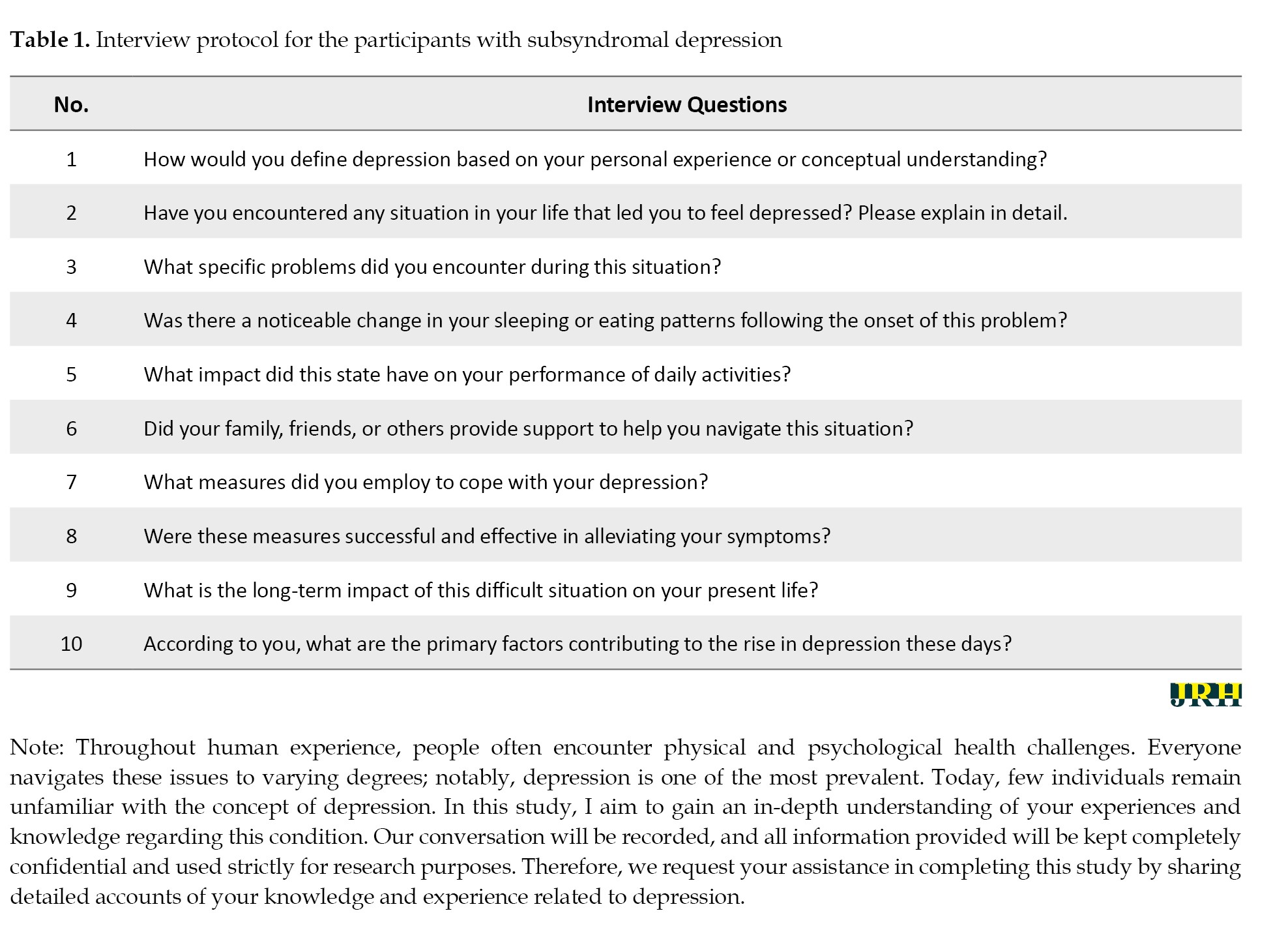
Interviews were audiotaped and transcribed verbatim. After providing written informed consent, participants were briefed using a clear, supportive introductory script emphasizing confidentiality and voluntary participation. The protocol (Table 1) utilized theoretically grounded and experience-focused questions refined for depth.
Data analysis
Themati analysis method was used to identify, analyze, and report recurring patterns in the data [21, 22]. This involved Braun and Clarke’s [21] six-step process: data familiarization, initial coding, theme searching, reviewing, defining, and final reporting. Transcripts were read repeatedly to uncover underlying meanings and themes. Using an iterative approach, codes were continuously refined and reviewed until the analysis was complete. To ensure rigor and coding quality, each interview underwent multiple coding cycles and was subsequently reviewed by experts [3].
To enhance credibility, dependability, and confirmability, the study used investigator triangulation, with two researchers resolving coding disagreements through consensus. Early-stage coder agreement was calculated to refine the codebook and clarify definitions, ensuring analytical consistency. To conduct participant validation (member checking), the study shared preliminary themes with five participants to verify their resonance and accuracy. Furthermore, transparency was maintained through a detailed audit trail that documented all analytical decisions, theme development, and reflexive notes. These rigorous procedures ensured that the final interpretations remained grounded in the data while minimizing researcher bias.
Results
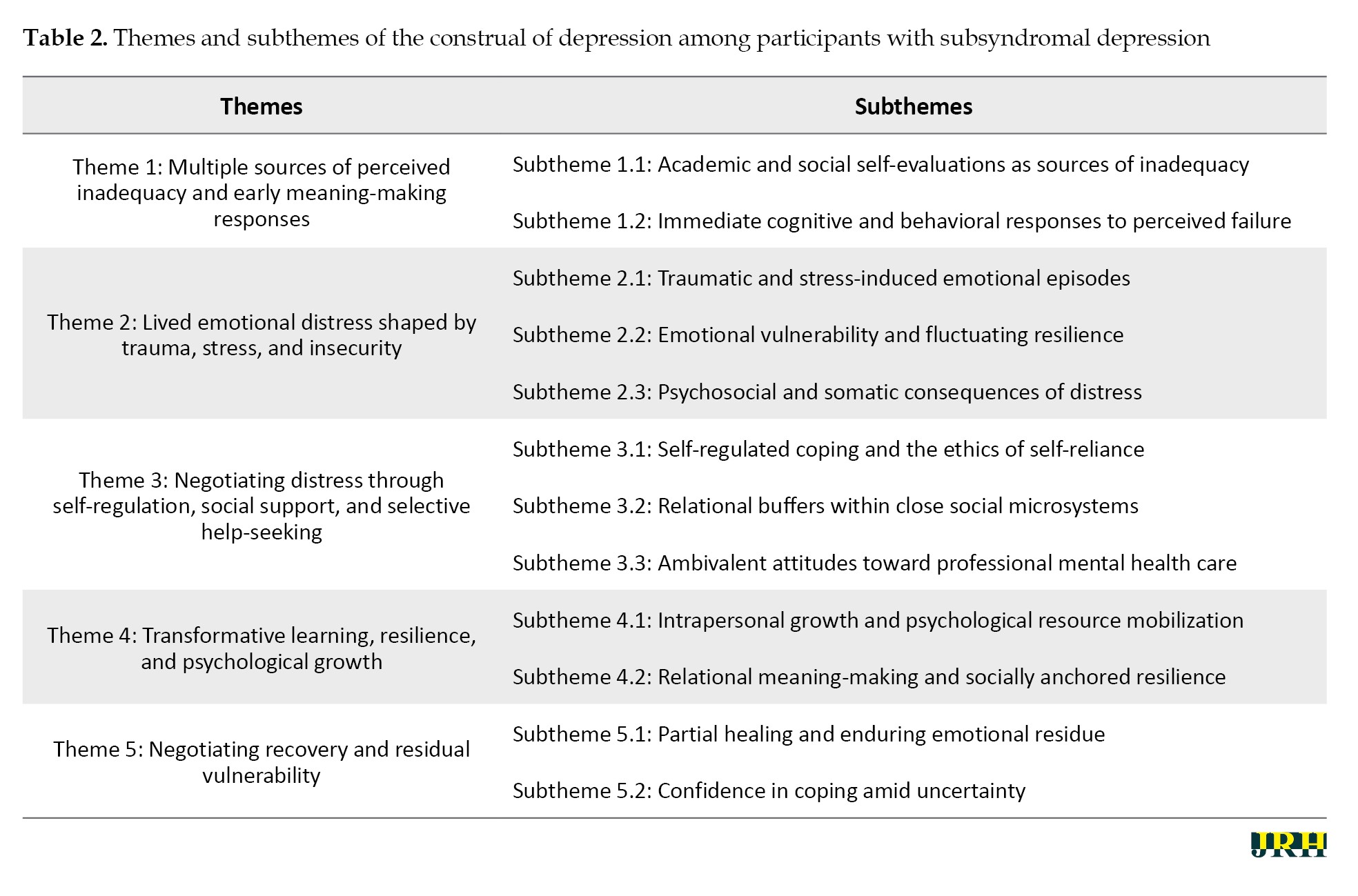
The thematic analysis led to the development of new insights into the construal of depression among participants with subsyndromal depression. Table 2 summarizes these findings.
The following are the details of the identified themes and subthemes:
Theme 1: Multiple sources of perceived inadequacy and early meaning-making responses
Several participants identified perceived academic underachievement, unmet expectations, and goal-effort discrepancies as primary sources of inadequacy. Some partially accepted these feelings, citing academic failures and peer incompatibility; for example, one participant noted anxiety over educational setbacks, while another felt alienated from successful peers. Initial coping mechanisms involved productive activities-such as writing and music-and a deliberate refusal to dwell on failures. Some participants also showed personality shifts, such as increased introversion. Others utilized framing strategies, viewing failure as a normative life experience and focusing on positive actions or emotional expression through writing to find comfort.
This theme shows how young adults with subsyndromal depression interpret the causes and prodromal signs of their distress. Participants attributed symptoms to perceived inadequacies-notably academic underperformance, unfulfilled expectations, and social comparison. To manage these emotions, they employed productivity, distraction, or withdrawal, alongside a burgeoning acceptance of their perceived flaws.
Subtheme 1.1: Academic and social self-evaluations as sources of inadequacy
Several participants frequently reported feelings of inadequacy stemming from academic and personal expectations. Many struggled to keep pace with peers or failed to meet self-imposed and familial aspirations. Most acknowledged partial responsibility for these shortcomings, noting a disconnection between their efforts and outcomes. These perceptions often triggered anxiety and self-doubt. One participant noted that academic setbacks evoked intense worry, while another viewed college rejection as a defining “failure,” illustrating how unmet expectations reinforced a pervasive sense of insufficiency.
Subtheme 1.2: Immediate cognitive and behavioral responses to perceived failure
Most participants used immediate strategies to manage inadequacy, often turning to creative or soothing activities for emotion regulation. Productive outlets, such as writing or music, served to alleviate distress and redirect focus from self-doubt. Conversely, some reported social withdrawal and increased introversion to buffer against perceived judgment. Several participants practiced cognitive reframing or suppression, viewing setbacks as temporary and manageable. As one participant noted, “Failures are just part of life… we should not feel bad about it.”
Theme 2: Lived emotional distress shaped by trauma, stress, and insecurity
Several participants reported intense emotional episodes, including hopelessness and worthlessness linked to early life trauma, such as being unwanted at birth. Fears of abandonment often exacerbated recurring themes of anxiety, tension, and loneliness. While suicidal ideation and self-blame were prevalent, some participants demonstrated resilience. Physical manifestations included headaches, gastrointestinal issues, and disrupted sleep or appetite. Socially, the impact of depression varied: some experienced increased confidence and social interaction, whereas others faced diminished work efficiency and strained family dynamics. Ultimately, most participants described how unresolved trauma, and insecurity-compounded by academic pressure and health concerns-fuelled their ongoing distress.
Subtheme 2.1: Traumatic and stress-induced emotional episodes
Several participants reported emotionally overwhelming episodes of stress, hopelessness, and worthlessness, frequently triggered by interpersonal pressures. Early traumas-specifically gender-based devaluation-left lasting imprints on self-perception and familial roles. For example, one participant’s recollection of being “unwanted” for not being male illustrates how early invalidation persists into adulthood, echoing the long-term impact of developmental trauma.
Interpersonal insecurity and possessiveness frequently intensified emotional distress. Several participants reported anxious preoccupation in relationships, reflecting underlying fears of abandonment or inadequacy. These experiences were compounded by academic pressure, chronic stress, and physical health concerns, reinforcing a sense of being a familial burden. Despite partial trauma recovery, persistent tension and worry illustrated how unresolved experiences and ongoing stressors interact to sustain subsyndromal depression.
Subtheme 2.2: Emotional vulnerability and fluctuating resilience
Most participants reported intense emotional clusters involving anxiety, persistent tension, overthinking, and profound loneliness. Some participants frequently felt overwhelmed by stress and mood fluctuations, often tied to self-blame, guilt, or fears of abandonment. Some disclosed severe distress, including suicidal ideation, underscoring the gravity of their internal struggles. For instance, one participant described being “literally stressed” by his problems (M_7), while another recalled seeking solitude and crying during bouts of ruminative overthinking (F_1). Despite these challenges, resilience was evident; several participants practiced self-soothing and redirected their focus toward personal goals to find temporary emotional relief.
Subtheme 2.3: Psychosocial and somatic consequences of distress
Several participants commonly reported low mood, loneliness, and diminished motivation, often triggered by academic pressure or past distress. Many noted cycles of social withdrawal followed by attempts to “return to normal,” reflecting fluctuating emotional states. Physical symptoms included fatigue, gastrointestinal discomfort, and disrupted sleep or appetite; notably, one participant (M_6) reported hypersomnia and overeating. Functional outcomes varied: While some reported increased confidence, many experienced strained family relationships and reduced work efficiency. These challenges were frequently intensified by interpersonal stressors, such as feeling misunderstood or unsupported by others.
Theme 3: Negotiating distress through self-regulation, social support, and selective help-seeking
Several participants identified various intervention strategies and the influence of microsystems. Personal approaches included physical activities (e.g. meditation) and self-awareness, often following an initial reluctance to seek help. A notable shift in family dynamics emerged, moving from detachment toward attachment and motivation, complemented by supportive peer networks. Regarding professional assistance, participants reported a spectrum ranging from no consultation to minimal counseling, often prioritizing self-motivation. Ultimately, their experience of discomfort was mediated by personal coping mechanisms, evolving familial support, and the selective utilization of professional help.
Subtheme 3.1: Self-regulated coping and the ethics of self-reliance
Several participants employed diverse strategies to manage subsyndromal depressive symptoms. Physical interventions-including meditation and exercise-were frequently used to regulate mood, with one participant noting these helped them “cope up with all these things.” Additionally, several utilized internal management strategies, initially preferring to process emotions privately or “sink into” feelings rather than seeking help. However, increasing self-awareness eventually led some to pursue brief counseling to prevent psychological decline. This transition from autonomous coping to professional help-seeking suggests a meaningful pattern: while participants valued self-reliance, they ultimately recognized that targeted professional guidance could effectively reinforce their recovery.
Subtheme 3.2: Relational buffers within close social microsystems
Several participants’ narratives highlighted shifting family dynamics and the centrality of supportive relationships in navigating subsyndromal depression. While some initially reported emotional distance due to physical separation, the pandemic often renewed closeness, strengthening familial bonds and security. Friends served as key motivators, encouraging self-doubt; for example, one participant shared that a friend’s reminders reinforced his commitment to his goal. Conversely, parents offered guidance and emotional assurance. Because external help-seeking was frequently unproductive, participants ultimately relied more deeply on family support systems to maintain their psychological well-being.
Subtheme 3.3: Ambivalent attitudes toward professional mental health care
Most participants primarily relied on self-motivation and emotional self-regulation, valuing personal willpower over formal counseling. Several conceptualized coping as an internal drive to “do something” despite psychological strain. Social support from loved ones bolstered resilience and was essential for sustaining efforts. While some accessed brief counseling, several remained uncertain of its efficacy, reporting minimal change. Furthermore, academic pressure and parental expectations exacerbated emotional instability and fostered feelings of inadequacy.
Theme 4: Transformative learning, resilience, and psychological growth
Participants reported greater awareness of available resources, leading to improved self-esteem, self-motivation, and emotion regulation. Some experienced a shift from pessimism to optimism, alongside increased preparedness for future challenges and reduced anticipatory anxiety through mindfulness. The findings highlighted the vital role of social support, with participants identifying close relationships as essential coping mechanisms during adversity.
This theme highlights how adults with subsyndromal depression interpret their experiences to foster post-traumatic growth. Participants reported increased resilience, self-awareness, and emotion regulation, illustrating how distress can facilitate psychological insight. Additionally, the relational dimension of meaning-making underscores social support as a pivotal coping strategy.
Subtheme 4.1: Intrapersonal growth and psychological resource mobilization
Several participants reported expanding awareness of psychological resources, notably increased self-esteem, self-motivation, and emotional regulation. This shift from pessimism to optimism fostered readiness for future challenges and improved management of anticipatory anxiety. Several adopted a present-focused mindset, managing life “one step at a time.” Participants identified close relationships as essential sources of stability, bolstering coping efforts. Finally, counseling functioned as a catalyst for courage, facilitating gradual-albeit subtle-behavioural and emotional change.
Subtheme 4.2: Relational meaning-making and socially anchored resilience
Most of the participants consistently identified social relationships, particularly family bonds, as central to navigating emotional distress. Encouragement from loved ones strengthened their persistence through stress, with one participant noting such support “keeps me going.” Many reported learning to regulate emotions and reframe distress as temporary rather than overwhelming. These supportive dynamics appeared to reduce rumination, improve emotional control, and sustain motivation. Ultimately, these narratives reflect the cultural value of interdependence in Indian contexts, where familial closeness provides psychological stability and a sense of continuity.
Theme 5: Negotiating recovery and residual vulnerability
Several participants expressed nuanced perspectives, reflecting a duality where they acknowledged overcoming trauma while struggling with its lingering impact. One noted, “I have overcome these traumatic experiences, but I cannot forget them; they are still with me.” Similarly, several reported fluctuating confidence in managing depression; one stated, “I am confident I can subdue it,” yet added, “but I am fine now.” Ultimately, these narratives underscore resilience alongside enduring emotional complexity. Despite increased resilience, residual trauma continues to shape current emotional experiences. These narratives reflect partial healing, where distress is managed rather than eradicated. Consequently, coping confidence frequently coexists with persistent doubts regarding long-term recovery.
Subtheme 5.1: Partial healing and enduring emotional residue
Most participants revealed a tension between progress and persistent emotional residue. Although some moved beyond peak distress, traumatic memories continued to surface, shaping their present emotional landscape. Consequently, several viewed recovery as an ongoing process rather than a definitive endpoint. Improvement rarely equated to resolution, as participants harboured doubts regarding “full” healing. One participant illustrated this ambivalence, stating they had overcome their challenges yet “cannot forget” them. Others reported feeling “fine now” while remaining uncertain about the permanence of their recovery.
Subtheme 5.2: Confidence in coping amid uncertainty
Several participants’ narratives revealed a nuanced tension between resilience and vulnerability. Many reported increased self-mastery and emotional competence; however, recurring traumatic memories signaled that recovery remained ongoing rather than absolute. While some claimed to be “fine”, they simultaneously acknowledged unresolved emotional undercurrents triggered by stress. This duality characterizes a dynamic recovery process where young adults balance optimism with uncertainty, navigating both significant personal progress and the persistent shadows of past distress.
Discussion
This study investigated the lived experiences of subsyndromal depression through in-depth interviews. These themes encompass multiple sources of perceived inadequacy and early meaning-making responses; lived emotional distress shaped by trauma, stress, and insecurity; negotiating distress through self-regulation, social support, and selective help-seeking; transformative learning, resilience, and psychological growth; and negotiating recovery and residual vulnerability.
Participants identified feelings of inadequacy originating from perceived academic underachievement, unmet expectations, and effort-goal discrepancies, aligning with research on academic stress and social comparison [23]. These inadequacies were partially accepted, often stemming from anxiety over educational failure and peer incompatibility. Initial coping strategies ranged from productive engagement (e.g. writing, music) to introversion to manage emotions. Theme 1 converges with qualitative data identifying academic failure and social comparison as meaning-making cues in subthreshold depression [24], and quantitative evidence linking perceived incompetence to depressive cognitions [25]. In contrast, while Western samples prioritize maladaptive rumination, these Indian youth used acceptance, productivity, and withdrawal to reflect collectivistic norms and high educational stakes [26].
The study revealed intense emotional episodes of hopelessness and worthlessness. Traumatic events, such as gender-based discrimination and early-life adversity, significantly impacted mental health, echoing literature on the enduring effects of childhood trauma [27]. Participants reported anxiety, stress, and mood fluctuations, alongside somatic symptoms like headaches and sleep disturbances. The findings related to theme 2 converge with research linking relational trauma to shame and emotional dysregulation [28], and evidence that cumulative stress predicts depression and suicidality [29]. Divergently, some reported enhanced confidence, challenging deficit-focused models. This likely reflects collectivistic resilience and meaning-making in Indian contexts, where adversity coexists with adaptive role renegotiation amidst academic and familial pressures.
Participants utilized diverse strategies to manage discomfort. Physical interventions, such as meditation and exercise, underscored the link between physical and mental health [15]. Internal strategies included self-awareness and delayed professional help-seeking. While some resisted formal counseling, favoring emotional regulation or social support, the role of supportive relationships was pivotal, highlighting microsystems in navigating subsyndromal depression. These findings of theme 3 align with evidence that self-regulation protects against subthreshold symptoms [30] and that autonomy norms delay help-seeking [31]. However, participants’ ambivalence toward professional care diverges from Western trends [32]. This likely reflects collectivistic family buffering, stigma, and moralized self-reliance in Indian contexts, where informal networks often substitute for formal services.
Participants gained awareness and resilience through subsyndromal depression, transitioning from pessimism to optimism while enhancing self-esteem and future-preparedness. Pivotal social support from family and friends served as a key protective factor [33]. Despite residual trauma, participants felt confident managing their condition. These findings on theme 4 align with qualitative post-adversity growth [34] and quantitative links between resilience and recovery [35]. Diverging from Western emphasis on intrapersonal agency [36], Indian participants prioritized relational resilience. Cultural interdependence, familism, and counseling as “scaffolding” likely drive this socially anchored growth and present-focused coping within the Indian context.
The study revealed a nuanced view of recovery. Participants acknowledged overcoming trauma while recognizing its enduring impact, embodying a dual sentiment of “overcoming but not forgetting” despite improvement. This aligns with research on long-term trauma consequences and recovery resilience [37]. Participants’ varying confidence in subduing symptoms reflects unpredictable mental health trajectories. Theme 5 converges with qualitative accounts of non-linear recovery, marked by resilience and residual vulnerability [38]. Similarly, quantitative studies on subclinical depression report symptom attenuation with persistent cognitive–emotional traces [39]. Culturally, Indian and collectivist contexts often normalize the coexistence of distress and functioning, amplifying “partial healing” narratives [40].
Indian societal factors-including academic pressure, gender expectations, and familial support-significantly shaped participants’ experiences. Reflecting collectivist norms, family and close relationships served as primary coping mechanisms. Conversely, individualistic cultures may prioritize professional services and personal autonomy over familial support. In such contexts, differing academic pressures and values likely result in distinct patterns of distress expression and recovery.
The findings align with established psychological frameworks. The stress-coping model [41] explains participants’ trauma responses and distress through appraisal and coping mechanisms, including problem-focused (e.g. meditation) and emotion-focused (e.g. social support) strategies. Furthermore, attachment theory [42] elucidates how internalized patterns and relational support influence resilience and regulation. Ultimately, these narratives illustrate the dynamic interplay between individual, relational, and contextual factors in shaping subsyndromal depressive experiences.
This study offers novel insight into the duality of recovery in subsyndromal depression, where individuals exhibit resilience alongside persistent emotional burdens—a state termed “overcoming but not forgetting.” By examining discrepancies between perceived progress and residual trauma, the findings illustrate that healing is inherently non-linear. The results identify gaps in culturally-specific coping, particularly the interplay between Indian microsystems and self-initiated strategies. Ultimately, the study challenges the dismissal of subclinical conditions, demonstrating how subthreshold experiences can catalyze psychological development, self-awareness, and adaptive coping.
A conceptual model on the construal of subsyndromal depression
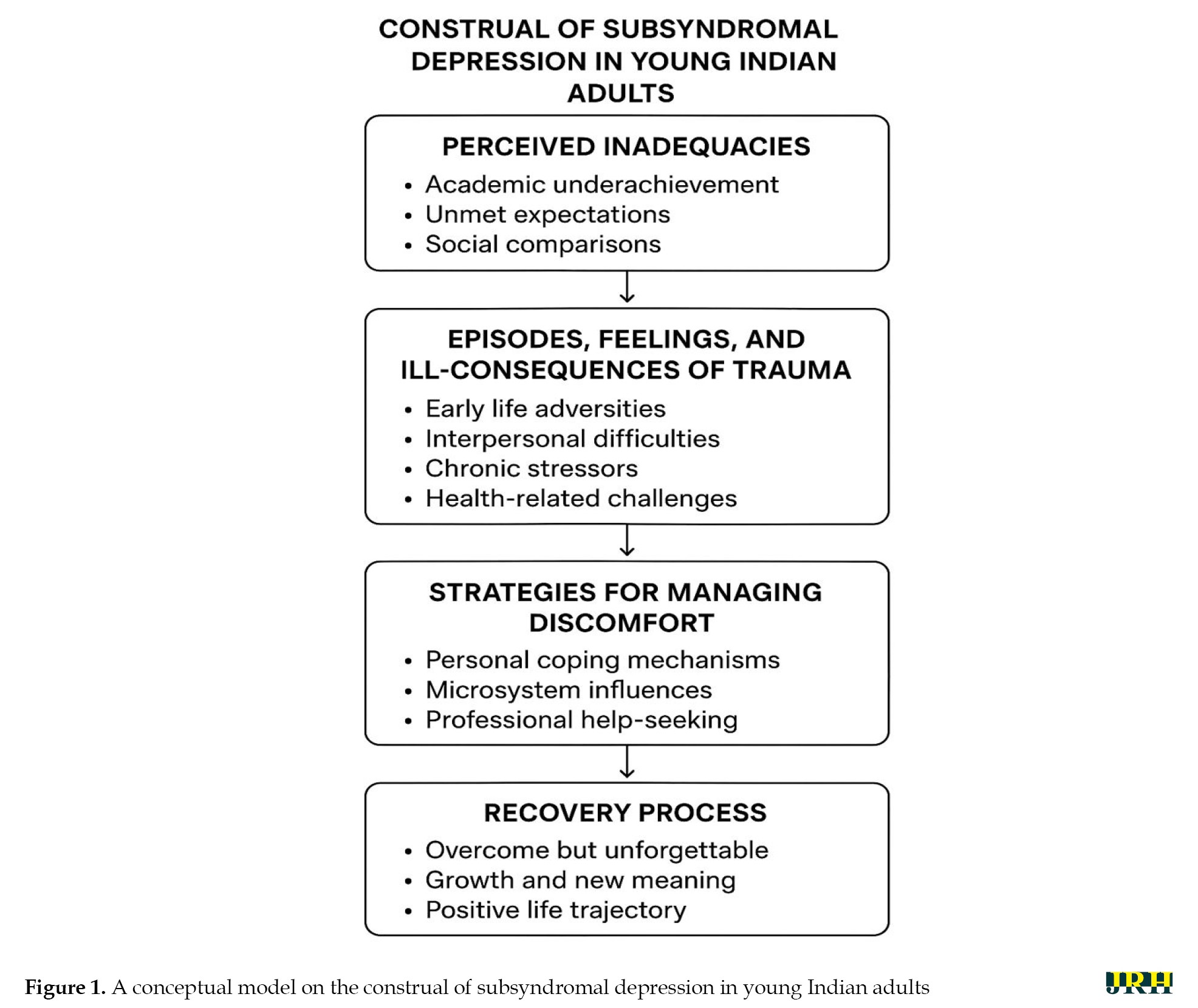
The conceptual model illustrates how young Indian adults with subsyndromal depression interpret and manage depressive episodes (Figure 1).
Subsyndromal, subclinical, or subthreshold depression is a prevalent concern that impairs emotional, cognitive, and social functioning despite falling below the diagnostic threshold for major depressive disorder (MDD) [1–3]. Symptoms-including sadness, anhedonia, and sleep disturbances-are less intense than MDD but significantly diminish quality of life [4]. In India, limited research examines how young adults (aged 18–24) experience these symptoms during a developmental period defined by high academic and social pressures [2, 3]. If untreated, these symptoms increase suicide risk, all-cause mortality, and cardiovascular morbidity [5, 6]. Furthermore, they accelerate cognitive decline and productivity losses, fostering neurobiological changes that increase the likelihood of chronic illness and global economic burden [7].
Although subsyndromal depression is clinically significant, qualitative research into how individuals interpret these symptoms remains scarce. Conventional studies typically conceptualize the condition as a dimensional continuum, prioritizing symptom burden and functional impairment over lived meaning [8]. However, recent phenomenological data suggest that sufferers often frame their experiences as situational stress or existential exhaustion rather than formal illness- a process deeply rooted in sociocultural contexts. Interpretative phenomenological analysis is ideal for investigating these ambiguous, embodied experiences, as it explores how individuals narratively organize subclinical depressive states regarding identity and agency [8, 9]. By adopting a constructivist lens to examine the co-construction of meaning, qualitative inquiry addresses a critical knowledge gap. Understanding how people normalize episodes below the diagnostic threshold is essential for advancing both psychological theory and clinical practice [10].
Understanding subsyndromal depression is essential; it occupies a pivotal position on the depression continuum, allowing researchers to identify drivers of symptom persistence and functional impairment [5]. Because these subthreshold symptoms significantly increase the risk of progressing to MDD, early interventions, such as cognitive behaviour therapy (CBT) or mindfulness, are critical [6]. Beyond clinical risks, subclinical depression impairs daily functioning, social relationships, and workplace productivity, while escalating healthcare utilization costs [6, 7]. Ongoing research aims to better distinguish these symptoms from transient distress, thereby refining diagnostic precision and informing targeted treatments [6].
Studies indicate that cognitive mechanisms-including rumination and negative cognitive biases-drive both subclinical and clinical depression [11]. Neurobiological findings also reveal disruptions in brain regions linked to emotion regulation and stress response in subsyndromal cases, highlighting their role in developmental pathways [12]. Psychotherapeutic interventions, such as self-affirmation [1, 13, 14], CBT, and mindfulness, effectively reduce subthreshold symptoms [15], though cultural differences in symptom expression are vital to maintaining validity and applicability [3].
Despite these insights, a significant gap remains regarding how individuals with subsyndromal depression construe and interpret their symptoms-a dimension essential for early detection and culturally informed intervention. Understanding subjective construal is vital for transitional-age young adults, who often underrecognize symptoms and delay help-seeking [2, 3, 16]. Early identification in this cohort facilitates preventive mental health planning across campus and policy contexts [2, 3, 17].
The current study
While research on subsyndromal depression is expanding, understanding how individuals interpret their experiences remains critical. These symptoms impair emotional, cognitive, and social functioning, often preceding MDD [17, 18]. Young Indian adults (18–24) face unique psychosocial demands and heightened epidemiological risk, making their subjective construal essential for study [2, 3, 16]. By exploring meaning-making-rather than just epidemiological or functional impacts-this study illuminates how interpretations shape coping, help-seeking, and risk trajectories [19]. Investigating perceived causes, coping strategies, emotional experiences, and microsystem influences on subsyndromal depression, it may provide nuanced insights into resilience, recovery, and meaning-making processes. Using thematic analysis, we investigated the construal of depressive experiences, perceived causes, coping mechanisms, and recovery processes among Indian adults with subsyndromal depression to provide nuanced insights into resilience and microsystem influences within this population.
Methods
Research design
Using a qualitative research design, this study explored the construal of subsyndromal depression experiences among university students in Sagar, Madhya Pradesh, India, between September and December 2024. This methodology was selected to capture the nuanced, subjective emotional and cognitive processes inherent in participants with subsyndromal depression symptoms.
Participants and their recruitment
From an initial pool of 500, screening was conducted to identify individuals with elevated subclinical depressive symptoms. Participants scoring above the 75th percentile were shortlisted. Of the 52 individuals meeting this criterion, 18 were selected (from the various academic department of Doctor Harisingh Gour Vishwavidyalaya, Sagar, Madhya Pradesh, India) based on language proficiency, availability, willingness to participate in in-depth interviews, and absence of comorbid conditions. The sample comprised nine men (Mean±SD, 20.89±2.09 years) and nine women (Mean±SD, 20.78±2.22 years), aged 18-24. This multi-step process ensured the sample represented subclinical symptoms rather than clinical depression or normal mood variation. Participants were primarily middle-class residents of various parts of India, mostly from Sagar City and nearby areas. To mitigate bias and enhance reflexivity, the research team maintained journals throughout data collection and analysis, documenting presumptions and interpretive choices.
To align the sample to explore the construal of depression among subclinical young adults, purposive sampling was used to recruit individuals with elevated-but not clinically diagnostic-depressive symptoms. Consistent with earlier research, the 75th percentile cut-off was applied as a justified threshold to capture significant symptomatology while remaining below clinical diagnostic criteria.
Participants met the following criteria: Scoring above the 75th percentile on the depression scale [20], indicating increased risk without a clinical diagnosis; being single; and being fluent in Hindi and English. They were required to be enrolled in university academic programs and free from pre-existing physical or mental ill-health conditions. Excluding physical illness was necessary to prevent confounding effects, ensuring that mood and functioning reflected psychological distress rather than illness-related factors. Focusing on single participants further enhanced internal validity by minimizing variability related to marital obligations and relational dynamics. Consequently, individuals scoring below the 75th percentile on the depression measure [20], those who were married, or those with health conditions were excluded. These criteria necessarily narrowed the participant pool. The Institutional Ethics Committee (IEC) of Doctor Harisingh Gour Vishwavidyalaya, Sagar, Madhya Pradesh, India, approved the study. The team recruited participants via social media, contacting interested individuals through personal messages regarding study objectives. All participants provided written informed consent.
Data collection
A pilot study with two participants refined the interview protocol and methodological suitability. Based on these results, minor changes improved clarity and minimized interviewer influence: Questions were reworded to be more experiential, probes were added, and leading questions were removed. Additionally, interviewers standardized the opening script to ensure consistency. Data were collected via semi-structured face-to-face or telephone interviews. The protocol used theoretical models and diagnostic classifications from the diagnostic and statistical manual of mental disorders, fifth edition (DSM-5), the international classification of diseases, tenth revision (ICD-10), the National Institute of Mental Health, and the World Health Organization (WHO).
Guided by a phenomenological approach, the interview focused on participants’ subjective sense-making and lived experiences. To capture data unconstrained by diagnostic categories, open-ended questions incorporated concepts like intentionality, lifeworld, and temporality. While the DSM-5 and International ICD-10 criteria provided sensitizing concepts for clinical relevance, they functioned as broad prompts rather than checklists. This non-pathologizing approach addressed affective, cognitive, and behavioural features while maintaining phenomenological openness. The guide’s sequencing and depth were refined through literature reviews and expert consultation in clinical and qualitative psychology. Final modifications followed pilot interviews, where feedback enhanced clarity and experiential richness, ensuring the tool remained aligned with participants’ meaning-making processes.
Interviews were audiotaped and transcribed verbatim. After providing written informed consent, participants were briefed using a clear, supportive introductory script emphasizing confidentiality and voluntary participation. The protocol (Table 1) utilized theoretically grounded and experience-focused questions refined for depth.
Data analysis
Themati analysis method was used to identify, analyze, and report recurring patterns in the data [21, 22]. This involved Braun and Clarke’s [21] six-step process: data familiarization, initial coding, theme searching, reviewing, defining, and final reporting. Transcripts were read repeatedly to uncover underlying meanings and themes. Using an iterative approach, codes were continuously refined and reviewed until the analysis was complete. To ensure rigor and coding quality, each interview underwent multiple coding cycles and was subsequently reviewed by experts [3].
To enhance credibility, dependability, and confirmability, the study used investigator triangulation, with two researchers resolving coding disagreements through consensus. Early-stage coder agreement was calculated to refine the codebook and clarify definitions, ensuring analytical consistency. To conduct participant validation (member checking), the study shared preliminary themes with five participants to verify their resonance and accuracy. Furthermore, transparency was maintained through a detailed audit trail that documented all analytical decisions, theme development, and reflexive notes. These rigorous procedures ensured that the final interpretations remained grounded in the data while minimizing researcher bias.
Results
The thematic analysis led to the development of new insights into the construal of depression among participants with subsyndromal depression. Table 2 summarizes these findings.
The following are the details of the identified themes and subthemes:
Theme 1: Multiple sources of perceived inadequacy and early meaning-making responses
Several participants identified perceived academic underachievement, unmet expectations, and goal-effort discrepancies as primary sources of inadequacy. Some partially accepted these feelings, citing academic failures and peer incompatibility; for example, one participant noted anxiety over educational setbacks, while another felt alienated from successful peers. Initial coping mechanisms involved productive activities-such as writing and music-and a deliberate refusal to dwell on failures. Some participants also showed personality shifts, such as increased introversion. Others utilized framing strategies, viewing failure as a normative life experience and focusing on positive actions or emotional expression through writing to find comfort.
This theme shows how young adults with subsyndromal depression interpret the causes and prodromal signs of their distress. Participants attributed symptoms to perceived inadequacies-notably academic underperformance, unfulfilled expectations, and social comparison. To manage these emotions, they employed productivity, distraction, or withdrawal, alongside a burgeoning acceptance of their perceived flaws.
Subtheme 1.1: Academic and social self-evaluations as sources of inadequacy
Several participants frequently reported feelings of inadequacy stemming from academic and personal expectations. Many struggled to keep pace with peers or failed to meet self-imposed and familial aspirations. Most acknowledged partial responsibility for these shortcomings, noting a disconnection between their efforts and outcomes. These perceptions often triggered anxiety and self-doubt. One participant noted that academic setbacks evoked intense worry, while another viewed college rejection as a defining “failure,” illustrating how unmet expectations reinforced a pervasive sense of insufficiency.
Subtheme 1.2: Immediate cognitive and behavioral responses to perceived failure
Most participants used immediate strategies to manage inadequacy, often turning to creative or soothing activities for emotion regulation. Productive outlets, such as writing or music, served to alleviate distress and redirect focus from self-doubt. Conversely, some reported social withdrawal and increased introversion to buffer against perceived judgment. Several participants practiced cognitive reframing or suppression, viewing setbacks as temporary and manageable. As one participant noted, “Failures are just part of life… we should not feel bad about it.”
Theme 2: Lived emotional distress shaped by trauma, stress, and insecurity
Several participants reported intense emotional episodes, including hopelessness and worthlessness linked to early life trauma, such as being unwanted at birth. Fears of abandonment often exacerbated recurring themes of anxiety, tension, and loneliness. While suicidal ideation and self-blame were prevalent, some participants demonstrated resilience. Physical manifestations included headaches, gastrointestinal issues, and disrupted sleep or appetite. Socially, the impact of depression varied: some experienced increased confidence and social interaction, whereas others faced diminished work efficiency and strained family dynamics. Ultimately, most participants described how unresolved trauma, and insecurity-compounded by academic pressure and health concerns-fuelled their ongoing distress.
Subtheme 2.1: Traumatic and stress-induced emotional episodes
Several participants reported emotionally overwhelming episodes of stress, hopelessness, and worthlessness, frequently triggered by interpersonal pressures. Early traumas-specifically gender-based devaluation-left lasting imprints on self-perception and familial roles. For example, one participant’s recollection of being “unwanted” for not being male illustrates how early invalidation persists into adulthood, echoing the long-term impact of developmental trauma.
Interpersonal insecurity and possessiveness frequently intensified emotional distress. Several participants reported anxious preoccupation in relationships, reflecting underlying fears of abandonment or inadequacy. These experiences were compounded by academic pressure, chronic stress, and physical health concerns, reinforcing a sense of being a familial burden. Despite partial trauma recovery, persistent tension and worry illustrated how unresolved experiences and ongoing stressors interact to sustain subsyndromal depression.
Subtheme 2.2: Emotional vulnerability and fluctuating resilience
Most participants reported intense emotional clusters involving anxiety, persistent tension, overthinking, and profound loneliness. Some participants frequently felt overwhelmed by stress and mood fluctuations, often tied to self-blame, guilt, or fears of abandonment. Some disclosed severe distress, including suicidal ideation, underscoring the gravity of their internal struggles. For instance, one participant described being “literally stressed” by his problems (M_7), while another recalled seeking solitude and crying during bouts of ruminative overthinking (F_1). Despite these challenges, resilience was evident; several participants practiced self-soothing and redirected their focus toward personal goals to find temporary emotional relief.
Subtheme 2.3: Psychosocial and somatic consequences of distress
Several participants commonly reported low mood, loneliness, and diminished motivation, often triggered by academic pressure or past distress. Many noted cycles of social withdrawal followed by attempts to “return to normal,” reflecting fluctuating emotional states. Physical symptoms included fatigue, gastrointestinal discomfort, and disrupted sleep or appetite; notably, one participant (M_6) reported hypersomnia and overeating. Functional outcomes varied: While some reported increased confidence, many experienced strained family relationships and reduced work efficiency. These challenges were frequently intensified by interpersonal stressors, such as feeling misunderstood or unsupported by others.
Theme 3: Negotiating distress through self-regulation, social support, and selective help-seeking
Several participants identified various intervention strategies and the influence of microsystems. Personal approaches included physical activities (e.g. meditation) and self-awareness, often following an initial reluctance to seek help. A notable shift in family dynamics emerged, moving from detachment toward attachment and motivation, complemented by supportive peer networks. Regarding professional assistance, participants reported a spectrum ranging from no consultation to minimal counseling, often prioritizing self-motivation. Ultimately, their experience of discomfort was mediated by personal coping mechanisms, evolving familial support, and the selective utilization of professional help.
Subtheme 3.1: Self-regulated coping and the ethics of self-reliance
Several participants employed diverse strategies to manage subsyndromal depressive symptoms. Physical interventions-including meditation and exercise-were frequently used to regulate mood, with one participant noting these helped them “cope up with all these things.” Additionally, several utilized internal management strategies, initially preferring to process emotions privately or “sink into” feelings rather than seeking help. However, increasing self-awareness eventually led some to pursue brief counseling to prevent psychological decline. This transition from autonomous coping to professional help-seeking suggests a meaningful pattern: while participants valued self-reliance, they ultimately recognized that targeted professional guidance could effectively reinforce their recovery.
Subtheme 3.2: Relational buffers within close social microsystems
Several participants’ narratives highlighted shifting family dynamics and the centrality of supportive relationships in navigating subsyndromal depression. While some initially reported emotional distance due to physical separation, the pandemic often renewed closeness, strengthening familial bonds and security. Friends served as key motivators, encouraging self-doubt; for example, one participant shared that a friend’s reminders reinforced his commitment to his goal. Conversely, parents offered guidance and emotional assurance. Because external help-seeking was frequently unproductive, participants ultimately relied more deeply on family support systems to maintain their psychological well-being.
Subtheme 3.3: Ambivalent attitudes toward professional mental health care
Most participants primarily relied on self-motivation and emotional self-regulation, valuing personal willpower over formal counseling. Several conceptualized coping as an internal drive to “do something” despite psychological strain. Social support from loved ones bolstered resilience and was essential for sustaining efforts. While some accessed brief counseling, several remained uncertain of its efficacy, reporting minimal change. Furthermore, academic pressure and parental expectations exacerbated emotional instability and fostered feelings of inadequacy.
Theme 4: Transformative learning, resilience, and psychological growth
Participants reported greater awareness of available resources, leading to improved self-esteem, self-motivation, and emotion regulation. Some experienced a shift from pessimism to optimism, alongside increased preparedness for future challenges and reduced anticipatory anxiety through mindfulness. The findings highlighted the vital role of social support, with participants identifying close relationships as essential coping mechanisms during adversity.
This theme highlights how adults with subsyndromal depression interpret their experiences to foster post-traumatic growth. Participants reported increased resilience, self-awareness, and emotion regulation, illustrating how distress can facilitate psychological insight. Additionally, the relational dimension of meaning-making underscores social support as a pivotal coping strategy.
Subtheme 4.1: Intrapersonal growth and psychological resource mobilization
Several participants reported expanding awareness of psychological resources, notably increased self-esteem, self-motivation, and emotional regulation. This shift from pessimism to optimism fostered readiness for future challenges and improved management of anticipatory anxiety. Several adopted a present-focused mindset, managing life “one step at a time.” Participants identified close relationships as essential sources of stability, bolstering coping efforts. Finally, counseling functioned as a catalyst for courage, facilitating gradual-albeit subtle-behavioural and emotional change.
Subtheme 4.2: Relational meaning-making and socially anchored resilience
Most of the participants consistently identified social relationships, particularly family bonds, as central to navigating emotional distress. Encouragement from loved ones strengthened their persistence through stress, with one participant noting such support “keeps me going.” Many reported learning to regulate emotions and reframe distress as temporary rather than overwhelming. These supportive dynamics appeared to reduce rumination, improve emotional control, and sustain motivation. Ultimately, these narratives reflect the cultural value of interdependence in Indian contexts, where familial closeness provides psychological stability and a sense of continuity.
Theme 5: Negotiating recovery and residual vulnerability
Several participants expressed nuanced perspectives, reflecting a duality where they acknowledged overcoming trauma while struggling with its lingering impact. One noted, “I have overcome these traumatic experiences, but I cannot forget them; they are still with me.” Similarly, several reported fluctuating confidence in managing depression; one stated, “I am confident I can subdue it,” yet added, “but I am fine now.” Ultimately, these narratives underscore resilience alongside enduring emotional complexity. Despite increased resilience, residual trauma continues to shape current emotional experiences. These narratives reflect partial healing, where distress is managed rather than eradicated. Consequently, coping confidence frequently coexists with persistent doubts regarding long-term recovery.
Subtheme 5.1: Partial healing and enduring emotional residue
Most participants revealed a tension between progress and persistent emotional residue. Although some moved beyond peak distress, traumatic memories continued to surface, shaping their present emotional landscape. Consequently, several viewed recovery as an ongoing process rather than a definitive endpoint. Improvement rarely equated to resolution, as participants harboured doubts regarding “full” healing. One participant illustrated this ambivalence, stating they had overcome their challenges yet “cannot forget” them. Others reported feeling “fine now” while remaining uncertain about the permanence of their recovery.
Subtheme 5.2: Confidence in coping amid uncertainty
Several participants’ narratives revealed a nuanced tension between resilience and vulnerability. Many reported increased self-mastery and emotional competence; however, recurring traumatic memories signaled that recovery remained ongoing rather than absolute. While some claimed to be “fine”, they simultaneously acknowledged unresolved emotional undercurrents triggered by stress. This duality characterizes a dynamic recovery process where young adults balance optimism with uncertainty, navigating both significant personal progress and the persistent shadows of past distress.
Discussion
This study investigated the lived experiences of subsyndromal depression through in-depth interviews. These themes encompass multiple sources of perceived inadequacy and early meaning-making responses; lived emotional distress shaped by trauma, stress, and insecurity; negotiating distress through self-regulation, social support, and selective help-seeking; transformative learning, resilience, and psychological growth; and negotiating recovery and residual vulnerability.
Participants identified feelings of inadequacy originating from perceived academic underachievement, unmet expectations, and effort-goal discrepancies, aligning with research on academic stress and social comparison [23]. These inadequacies were partially accepted, often stemming from anxiety over educational failure and peer incompatibility. Initial coping strategies ranged from productive engagement (e.g. writing, music) to introversion to manage emotions. Theme 1 converges with qualitative data identifying academic failure and social comparison as meaning-making cues in subthreshold depression [24], and quantitative evidence linking perceived incompetence to depressive cognitions [25]. In contrast, while Western samples prioritize maladaptive rumination, these Indian youth used acceptance, productivity, and withdrawal to reflect collectivistic norms and high educational stakes [26].
The study revealed intense emotional episodes of hopelessness and worthlessness. Traumatic events, such as gender-based discrimination and early-life adversity, significantly impacted mental health, echoing literature on the enduring effects of childhood trauma [27]. Participants reported anxiety, stress, and mood fluctuations, alongside somatic symptoms like headaches and sleep disturbances. The findings related to theme 2 converge with research linking relational trauma to shame and emotional dysregulation [28], and evidence that cumulative stress predicts depression and suicidality [29]. Divergently, some reported enhanced confidence, challenging deficit-focused models. This likely reflects collectivistic resilience and meaning-making in Indian contexts, where adversity coexists with adaptive role renegotiation amidst academic and familial pressures.
Participants utilized diverse strategies to manage discomfort. Physical interventions, such as meditation and exercise, underscored the link between physical and mental health [15]. Internal strategies included self-awareness and delayed professional help-seeking. While some resisted formal counseling, favoring emotional regulation or social support, the role of supportive relationships was pivotal, highlighting microsystems in navigating subsyndromal depression. These findings of theme 3 align with evidence that self-regulation protects against subthreshold symptoms [30] and that autonomy norms delay help-seeking [31]. However, participants’ ambivalence toward professional care diverges from Western trends [32]. This likely reflects collectivistic family buffering, stigma, and moralized self-reliance in Indian contexts, where informal networks often substitute for formal services.
Participants gained awareness and resilience through subsyndromal depression, transitioning from pessimism to optimism while enhancing self-esteem and future-preparedness. Pivotal social support from family and friends served as a key protective factor [33]. Despite residual trauma, participants felt confident managing their condition. These findings on theme 4 align with qualitative post-adversity growth [34] and quantitative links between resilience and recovery [35]. Diverging from Western emphasis on intrapersonal agency [36], Indian participants prioritized relational resilience. Cultural interdependence, familism, and counseling as “scaffolding” likely drive this socially anchored growth and present-focused coping within the Indian context.
The study revealed a nuanced view of recovery. Participants acknowledged overcoming trauma while recognizing its enduring impact, embodying a dual sentiment of “overcoming but not forgetting” despite improvement. This aligns with research on long-term trauma consequences and recovery resilience [37]. Participants’ varying confidence in subduing symptoms reflects unpredictable mental health trajectories. Theme 5 converges with qualitative accounts of non-linear recovery, marked by resilience and residual vulnerability [38]. Similarly, quantitative studies on subclinical depression report symptom attenuation with persistent cognitive–emotional traces [39]. Culturally, Indian and collectivist contexts often normalize the coexistence of distress and functioning, amplifying “partial healing” narratives [40].
Indian societal factors-including academic pressure, gender expectations, and familial support-significantly shaped participants’ experiences. Reflecting collectivist norms, family and close relationships served as primary coping mechanisms. Conversely, individualistic cultures may prioritize professional services and personal autonomy over familial support. In such contexts, differing academic pressures and values likely result in distinct patterns of distress expression and recovery.
The findings align with established psychological frameworks. The stress-coping model [41] explains participants’ trauma responses and distress through appraisal and coping mechanisms, including problem-focused (e.g. meditation) and emotion-focused (e.g. social support) strategies. Furthermore, attachment theory [42] elucidates how internalized patterns and relational support influence resilience and regulation. Ultimately, these narratives illustrate the dynamic interplay between individual, relational, and contextual factors in shaping subsyndromal depressive experiences.
This study offers novel insight into the duality of recovery in subsyndromal depression, where individuals exhibit resilience alongside persistent emotional burdens—a state termed “overcoming but not forgetting.” By examining discrepancies between perceived progress and residual trauma, the findings illustrate that healing is inherently non-linear. The results identify gaps in culturally-specific coping, particularly the interplay between Indian microsystems and self-initiated strategies. Ultimately, the study challenges the dismissal of subclinical conditions, demonstrating how subthreshold experiences can catalyze psychological development, self-awareness, and adaptive coping.
A conceptual model on the construal of subsyndromal depression
The conceptual model illustrates how young Indian adults with subsyndromal depression interpret and manage depressive episodes (Figure 1).
Cognitive and emotional triggers—specifically academic underachievement, unfulfilled expectations, and social comparisons—initiate distress. Participants counter these negative self-perceptions through early coping mechanisms, including productive activity, emotional reframing, and brief withdrawal.
The model’s subsequent layer details the interplay between trauma and psychological outcomes. Early life adversities, interpersonal conflict, and chronic stressors amplify anxiety, hopelessness, and self-blame. Ultimately, these multifaceted psychological, physical, and social impacts shape the subjective interpretation of subclinical depression within this demographic.
The third layer comprises discomfort management techniques, integrating microsystem influences (family, friends), personal coping (meditation, exercise, self-awareness), and selective professional help-seeking. This layer exemplifies culturally mediated coping through the interplay of internal regulation and external relational support. During the meaning-making stage, participants cultivate resilience, optimism, and psychological resources. Social support and interpersonal ties further bolster these adaptive strategies and emotional control.
Lastly, healing is characterized as a non-linear, iterative process balancing self-efficacy against lingering trauma. Participants’ “overcome but unforgettable” experiences reflect a duality of confidence and vulnerability. This dynamic model integrates emotional experience, relational-cultural influences, coping, and cognitive appraisal. To preempt clinical depression, the framework examines subsyndromal symptoms through socio-cultural lenses. Ultimately, it informs early, culturally sensitive interventions that synthesize psychological resources, relational support, and self-regulation techniques to address emotional residues and strengthen resilience.
Implications and directions for future research
Understanding subsyndromal depression is vital for clinical intervention. This study highlights how early identification and coping strategies foster resilience, while revealing diverse recovery trajectories and perceived inadequacies. These insights inform targeted treatment and deeper conceptual understanding. Future research should examine cultural variations regarding self-resources and their efficacy [43, 44].
Findings suggest phased, culturally sensitive interventions. To address inadequacy (theme 1), academic self-compassion and narrative reframing workshops are essential, trauma/insecurity (theme 2) necessitates trauma-informed, family-sensitive counseling for physiological stress, and for ambivalent help-seeking (theme 3), peer-family microsystems should utilize motivational interviewing and self-regulation. Theme 4 supports relational resilience programming, while theme 5 indicates longitudinal booster sessions. Future research should employ mixed-methods designs and culturally tailored randomized pilots via campus trials, targeting emerging adults in Indian contexts.
Future research should examine culturally specific coping and social support across diverse Indian contexts. Quantitative longitudinal studies are necessary to evaluate how early intervention, self-awareness, and microsystems influence resilience and recovery. Additionally, investigating variations across gender, education, and urban-rural divides would further address the gaps identified in this study.
Limitations
This study has several limitations. First, the small sample (n=18) from a limited geographical area and narrow age range (18–24) limit generalizability. Second, reliance on self-reported data may have introduced recall bias or social desirability effects, given the stigma surrounding depression. Finally, the absence of clinical diagnostic tools to confirm subsyndromal depression may have affected classification accuracy. Lastly, stringent exclusion criteria may introduce selection bias, limiting generalizability to broader populations—particularly married individuals or those with physical health concerns. Given this homogeneous sample, future research should utilize diverse participant groups to determine if these trends persist across varying marital statuses and health profiles.
Conclusion
Findings show that participants experience a complex interplay of emotional challenges and adaptive strategies during subsyndromal depression. They struggled with feelings of inadequacy stemming from academic and social pressures and often overcame them through initial coping mechanisms, such as creative activities or introspection. Emotional episodes triggered by traumatic experiences underscored the lasting influence of early life events on psychological well-being. However, participants also demonstrated resilience by using various coping strategies, including physical activity and seeking social support. Their journey to recovery included gaining self-awareness, increasing self-esteem, and managing ongoing emotional complexity with support from their social networks. These findings highlight the complexity of subsyndromal depression and the importance of personalized coping strategies and supportive relationships in promoting resilience and effective management of mental health problems.
Ethical Considerations
Compliance with ethical guidelines
This study was approved by the Ethics Committee of Doctor Harisingh Gour Vishwavidyalaya, Sagar, India (Code: DHSGV/IEC/2024/03).
Funding
This research did not receive any grant from funding agencies in the public, commercial, or non-profit sectors.
Authors' contributions
All authors contributed equally to the conception and design of the study, data collection and analysis, interpretation of the results, and drafting of the manuscript. Each author approved the final version of the manuscript for submission.
Conflict of interest
The authors declared no conflict of interest.
References
- Pandey R, Tiwari GK, Rai PK. Understanding the efficacy of self-affirmation intervention for subclinical depression among young adults. Practice in Clinical Psychology. 2023; 11(1):23-34. [DOI:10.32598/jpcp.11.1.847.1]
- Tiwari GK, Choudhary A, Singh A, Shukla A, Macorya AK, Pandey A, et al. Enhancing self‐esteem: Evaluating the effects of a self‐affirmation intervention among Indian adults with subclinical depression. Counselling and Psychotherapy Research. 2025; 25(1):e12892. [DOI:10.1002/capr.12892] [PMCID]
- Tiwari GK, Parihar P, Singh AK, Macorya AK, Shukla A, Singh A, et al. Understanding the nature and dynamics of self-affirmation in non-depressed and subclinically depressed Indian adults: A thematic analysis. BMC Psychiatry. 2025; 25(1):224. [DOI:10.1186/s12888-024-06364-0] [PMID]
- APA. Diagnostic and statistical manual of mental disorders. 5th ed. Washington, DC: American Psychiatric Association Publishing; 2022. [DOI:10.1176/appi.books.9780890425787]
- Chan JKN, Solmi M, Lo HKY, Chan MWY, Choo LLT, Lai ETH, et al. All‐cause and cause‐specific mortality in people with depression: a large‐scale systematic review and meta‐analysis of relative risk and aggravating or attenuating factors, including antidepressant treatment. World Psychiatry. 2025; 24(3):404-21. [DOI:10.1002/wps.21354] [PMID] [PMCID]
- Cui L, Li S, Wang S, Wu X, Liu Y, Yu W, et al. Major depressive disorder: Hypothesis, mechanism, prevention and treatment. Signal Transduction and Targeted Therapy. 2024; 9(1):30. [DOI:10.1038/s41392-024-01738-y] [PMID]
- Chodavadia P, Teo I, Poremski D, Fung DSS, Finkelstein EA. Prevalence and economic burden of depression and anxiety symptoms among Singaporean adults: results from a 2022 web panel. BMC Psychiatry. 2023; 23(1):104. [DOI:10.1186/s12888-023-04581-7] [PMID] [PMCID]
- Singh A, Tiwari GK. Lived experiences with subclinical depression: A qualitative inquiry into coping, emotional reactions, and growth. International Journal of Indian Psychology. 2025; 13(3):4164-79. [Link]
- Hao X, Jia Y, Chen J, Zou C, Jiang C. Subthreshold depression: A systematic review and network meta-analysis of non-pharmacological interventions. Neuropsychiatric Disease and Treatment. 2023; 19:2149-69. [DOI:10.2147/NDT.S425509] [PMID] [PMCID]
- Demetriou K, Widnall E, Warbrick L, Reed N, Marchant K, Geschwind N, et al. A qualitative study exploring depressed participants’ experiences of receiving augmented depression therapy (ADepT). BMJ Open. 2025; 15(2):e088726. [DOI:10.1136/bmjopen-2024-088726] [PMID] [PMCID]
- Ghosh S, Halder S. Cognitive and emotional apathy in adults with sub clinical depression and clinical depression: A comparative study. Odisha Journal of Psychiatry. 2025; 21(2):83-8. [DOI:10.4103/OJP.OJP_8_25]
- Zhang B, Yu Z, Yan F, Sun Y, Ye J, Liu X, et al. Altered salience‐default mode network dynamics in subclinical depression: A preclustering‐based co‐activation pattern analysis. CNS Neuroscience & Therapeutics. 2026; 32(2):e70736. [DOI:10.1002/cns.70736] [PMID] [PMCID]
- Pandey R, Tiwari GK, Rai PK. “Bouncing back” with self-affirmation intervention: A case of Indian adults with depressive tendencies. Madhya Bharti. 2020; 79(2):252-63. [Link]
- Pandey R, Tiwari GK, Rai PK. Restoring and preserving capacity of self-affirmation for well-being in Indian adults with non-clinical depressive tendencies. Current Issues in Personality Psychology. 2021; 9(2):135-47. [DOI:10.5114/cipp.2021.105260] [PMID] [PMCID]
- Mahindru A, Patil P, Agrawal V. Role of physical activity on mental health and well-being: A review. Cureus. 2023; 15(1):e33475. [DOI:10.7759/cureus.33475] [PMID] [PMCID]
- Zhang R, Peng X, Song X, Long J, Wang C, Zhang C, et al. The prevalence and risk of developing major depression among individuals with subthreshold depression in the general population. Psychological Medicine. 2023; 53(8):3611-20. [DOI:10.1017/S0033291722000241] [PMID]
- Volz HP, Stirnweiß J, Kasper S, Möller HJ, Seifritz E. Subthreshold depression - concept, operationalisation and epidemiological data. A scoping review. International Journal of Psychiatry in Clinical Practice. 2023; 27(1):92-106. [DOI:10.1080/13651501.2022.2087530] [PMID]
- Noyes BK, Munoz DP, Khalid-Khan S, Brietzke E, Booij L. Is subthreshold depression in adolescence clinically relevant? Journal of Affective Disorders. 2022; 309:123-30. [DOI:10.1016/j.jad.2022.04.067] [PMID]
- Song Y, Luo Y, Zhang R. The relationship between meaning-focused coping and depression: A chain mediation model involving meaning in life and psychological well-being. Acta Psychologica. 2025; 260:105661. [DOI:10.1016/j.actpsy.2025.105661] [PMID]
- Björgvinsson T, Kertz SJ, Bigda-Peyton JS, McCoy KL, Aderka IM. Psychometric properties of the CES-D-10 in a psychiatric sample. Assessment. 2013; 20(4):429-36. [DOI:10.1177/1073191113481998] [PMID]
- Braun V, Clarke V. Using thematic analysis in psychology. Qualitative Research in Psychology. 2006; 3(2):77-101. [DOI:10.1191/1478088706qp063oa]
- Braun V, Clarke V. Conceptual and design thinking for thematic analysis. Qualitative Psychology. 2022; 9(1):3-26. [DOI:10.1037/qup0000196]
- Billah M, Rutherford S, Akhter S, Tanjeela M. Exploring mental health challenges and coping strategies in university students during the COVID-19 pandemic: A case study in Dhaka city, Bangladesh. Frontiers in Public Health. 2023; 11:1152366. [DOI:10.3389/fpubh.2023.1152366] [PMID] [PMCID]
- Hamdani SU, Huma ZE, Chakrabarti B, Zafar SW, Gillani A, Bagrodia V, et al. Involving young people with lived experience in advancing mental health science: An exploratory qualitative study from Pakistan and India. BMC Psychiatry. 2025; 25(1):647. [DOI:10.1186/s12888-025-07062-1] [PMID] [PMCID]
- Giacolini T, Alcaro A, Conversi D, Tarsitani L. Depression in adolescence and young adulthood: The difficulty to integrate motivational/emotional systems. Frontiers in Psychology. 2025; 15:1391664. [DOI:10.3389/fpsyg.2024.1391664] [PMID] [PMCID]
- Sharma P, George LS, Rai S, Noronha JA. Factors affecting and the strategies to enhance emotional regulation among adolescents in South Asian countries: A systematic review. BMC Public Health. 2025; 25:3485. [DOI:10.1186/s12889-025-24793-8] [PMID] [PMCID]
- Adil Faizan Md, Govindappagari VJ, Challuri P, Vineela S, Nandhikonda SR, Deekshita KD, et al. The relationship between childhood trauma and mental health in Indian undergraduate students: A cross-sectional study. Indian Journal of Psychological Medicine. 2025:02537176251387608. [DOI:10.1177/02537176251387608] [PMID] [PMCID]
- Hosny N, Bovey M, Dutray F, Heim E. How is trauma-related distress experienced and expressed in populations from the Greater Middle East and North Africa? A systematic review of qualitative literature. SSM - Mental Health. 2023; 4:100258. [DOI:10.1016/j.ssmmh.2023.100258]
- Daneshmend AZB, Sherratt FE, Ethier-Gagnon MA, Jarkas DA, McQuaid RJ. Types and timing of childhood trauma and their relationship to symptoms of depression, suicidal ideation, and anxiety among Canadian university students. Journal of Interpersonal Violence. 2025; 08862605251372562. [DOI:10.1177/08862605251372562] [PMID]
- Huang X, Chen Z, Xu Z, Liu X, Lv Y, Yu L. The relationship between physical activity and depression in college students: a systematic review and meta-analysis. Brain Sciences. 2025; 15(8):875. [DOI:10.3390/brainsci15080875] [PMID] [PMCID]
- Solomon P, Lidiya A, Arulvendan H, Priyadarshini B, Sanjana G, Syed S, et al. Barriers to seeking mental health services among young persons with mental disorders in South India: A qualitative study. East Asian Archives of Psychiatry. 2025; 35(2):66-70. [DOI:10.12809/eaap2543] [PMID]
- Huff NR, Dunderdale L, Kellogg AJ, Isbell LM. Factors related to help-seeking and service utilization for professional mental healthcare among young people: An umbrella review. Clinical Psychology Review. 2024; 114:102504. [DOI:10.1016/j.cpr.2024.102504] [PMID]
- Wyder M, Bland R, Jonas R. Relational recovery journey: understanding the evolving roles of families supporting those in mental health distress. Advances in Mental Health. 2025:1-12. [DOI:10.1080/18387357.2025.2557483]
- Park CL. Meaning making following trauma. Frontiers in Psychology. 2022; 13:844891. [DOI:10.3389/fpsyg.2022.844891] [PMID] [PMCID]
- Öztürk S, Sevgican Ş, Demirgül SA, Dinç M. Longitudinal associations between resilience, emotion regulation and mental health in adolescents. Psychiatric Quarterly. 2026; 97(3):819-41. [DOI:10.1007/s11126-025-10182-2] [PMID]
- Srinivasan V, San Sebastián M, Rana S, Bhatt P, Armstrong G, Deshpande S, et al. Effectiveness of a resilience, gender equity and mental health group intervention for young people living in informal urban communities in North India: A cluster randomized controlled trial. Global Health Action. 2025; 18(1):2455236. [DOI:10.1080/16549716.2025.2455236] [PMID] [PMCID]
- Bany-Mohammed M, Asim S, Elalami M, Agrawal DK. Trauma, stress, and mental health outcomes. Journal of Psychiatry and Psychiatric Disorders. 2025; 9(5):276-88. [DOI:10.26502/jppd.2572-519X0260] [PMID] [PMCID]
- Yüksel R, Çekiç Y, Çolak B. 'My journey': A qualitative study of recovery from the perspective of individuals with chronic mental illness. International Journal of Mental Health Nursing. 2025; 34(1):e13433. [DOI:10.1111/inm.13433] [PMID] [PMCID]
- Shen G, Yang X, Zou Y, Zheng Y, Fang J, Huang J, et al. Dynamic changes in network structure of depressive symptoms: A two-year naturalistic follow-up study. BMC Psychiatry. 2025; 25(1):676. [DOI:10.1186/s12888-025-07124-4] [PMID] [PMCID]
- Graber R, Duara R, Goswami S, Hugh‐Jones S, Chowdhury D, Madill A. Young adult resilience for recovery from substance addiction in Assam, India: lived experience insights from a photo‐led interview study. Journal of Community & Applied Social Psychology. 2025; 35(1):e70022. [DOI:10.1002/casp.70022] [PMID] [PMCID]
- Lazarus RS, Folkman S. Stress, appraisal, and coping. New York: Springer Publishing Company; 1984. [Link]
- Bowlby J. Attachment and loss: Retrospect and prospect. American Journal of Orthopsychiatry. 1982; 52(4):664-78. [DOI:10.1111/j.1939-0025.1982.tb01456.x] [PMID]
- Tiwari GK, Kashyap AK, Rai PK, Tiwari RP, Pandey R. Collective affirmation in action: Understanding the success of lockdown in India during the first wave of the covid-19 pandemic. Journal of Research and Health. 2022; 12(3):137-50. [DOI:10.32598/JRH.12.3.1992.1]
- Tiwari GK, Shukla A, Macorya AK, Singh A, Choudhary A. The independent and interdependent self-affirmations in action: Understanding their dynamics in India during the early phase of the COVID-19 lockdown. Journal of Psychological Perspective. 2024; 6(1):21-38. [DOI:10.47679/jopp.616762024]
Type of Study: Orginal Article |
Subject:
● Psychosocial Health
Received: 2024/11/7 | Accepted: 2026/02/24 | Published: 2026/08/23
Received: 2024/11/7 | Accepted: 2026/02/24 | Published: 2026/08/23
| Rights and permissions | |
 |
This work is licensed under a Creative Commons Attribution-NonCommercial 4.0 International License. |


This is an open access article distributed under the terms of the Creative Commons Attribution License (CC-By-NC), which permits use, distribution, and reproduction in any medium, provided the original work is properly cited and is not used for commercial purposes.
Contact Information
