

Volume 16, Issue 5 (Sep & Oct 2026)
J Research Health 2026, 16(5): 423-432 |
Back to browse issues page



Ethics code: NA


Download citation:
BibTeX | RIS | EndNote | Medlars | ProCite | Reference Manager | RefWorks
Send citation to:


BibTeX | RIS | EndNote | Medlars | ProCite | Reference Manager | RefWorks
Send citation to:
Deepti V, Thomas S. Exploring the New Trends in Cinderella Complex: A Systematic Review. J Research Health 2026; 16 (5) :423-432
URL: http://jrh.gmu.ac.ir/article-1-2982-en.html
URL: http://jrh.gmu.ac.ir/article-1-2982-en.html


1- Department of Clinical Psychology, School of Allied and Healthcare Professions, Yenepoya University, Bangalore, India.
2- Rekhi Center of Excellence for the Science of Happiness, Indian Institute of Technology (IIT), Kharagpur, India. ,thomassannet@gmail.com
2- Rekhi Center of Excellence for the Science of Happiness, Indian Institute of Technology (IIT), Kharagpur, India. ,
Full-Text [PDF 685 kb]
(55 Downloads)
| Abstract (HTML) (937 Views)
Characteristics of included studies
Of the 10 studies, six were qualitative, and four were quantitative. Of these, three studies were based on the Cinderella complex psychological determinantes and Correlates, two studies were based on causal factors in the Cinderella complex, and five studies were based on new research findings in Cinderella complex studies.
The analyzed studies were conducted in different geographical areas, mainly in Asia and South Asia, with participant numbers ranging from small qualitative samples to large survey-based populations. Most research focused on adolescent or adult women, and Western or cross-national samples were underrepresented. This uneven geographic distribution can limit the generalizability of the results.
Cinderella complex psychological determinants and correlates.
The term “Cinderella Complex” is a psychological phenomenon in which women show a great desire to be protected and cared for, frequently depending on males for both practical and emotional support. This complex is impacted by several psychological correlates and variables, such as social standards, self-concept, and early experiences. Understanding these factors is crucial for addressing the implications of the Cinderella complex on women’s independence and personal growth.
Psychological determinants - The mental and emotional elements that affect a person’s behaviour, thoughts, and general well-being are referred to as psychological determinants. Despite the study’s participants’ low average scores on the adverse childhood experiences (ACE) and Cinderella complex scales, research suggests that ACEs can be linked to the development of the Cinderella complex [12]. Higher self-concept scores are correlated with lower Cinderella complex scores, indicating that self-perception is a key factor in this reliance. Self-concept and the Cinderella complex are negatively associated [13].
Societal and cultural influences - The societal and cultural factors play a vital role in shaping human behaviour. A contributing factor to the Cinderella complex is child-rearing methods that uphold traditional gender norms. Women who grow up in circumstances that prioritize dependency may be more prone to develop this issue [14]. Societal views of women as weak or incapable of independence constrain women’s ambitions for autonomy, reinforcing the Cinderella complex [15].
The Cinderella complex highlights important social and psychological issues; however, it is also important to consider women’s potential for self-determination and personal development. Promoting resilience and self-awareness can lessen the consequences of this complex and help women build a more powerful identity.
Causal factors Cinderella complex
A woman’s need to be protected and cared for, known as the Cinderella complex, is caused by several things, such as parenting practices, one’s own self-perception, and cultural narratives that perpetuate gender stereotypes. Addressing this complexity requires understanding these elements.
Parenting styles - Each parent has a unique approach to interacting with and guiding their children, thereby shaping their morals, principles, and behaviour. A parent’s upbringing style can significantly influence a child’s behaviours and actions as they age. Researchers have categorized parenting styles into various groups; one among them is Permissive Parenting. According to research, permissive parenting has a considerable 86.8% influence on the development of a Cinderella Complex, which is strongly correlated with permissive parenting [8]. Impact on Independence: Parents who encourage dependency can further cement adolescent girls’ Cinderella Complex, which can impede their self-confidence and independence [16].
Self-concept -A person’s overall perception of their physical, emotional, social, spiritual, and other characteristics is known as their self-concept [26]. Carl Rogers, a humanist psychologist, explains that self-concept is an essential component of personality development. A study found that a higher self-concept is associated with a lower likelihood of developing a Cinderella Complex, suggesting that self-esteem plays a critical role in mitigating this syndrome [13]. While ACEs were examined, they did not show a significant effect on the Cinderella Complex, indicating that self-concept may be a more pivotal factor [12].
Societal narratives- Our perception of the world is shaped by societal narratives, unwritten stories that affect our attitudes, values, and actions. These frameworks are strong and influence how we think about diversity and inclusion, among other social issues. Analysis of literature and film reveals that narratives often depict women as dependent on men, perpetuating the Cinderella complex through cultural storytelling [10].
Conversely, some argue that the Cinderella complex may not solely stem from negative influences but could also reflect a societal preference for traditional gender roles, which can be seen as a form of empowerment for some women. This perspective highlights the issue’s complexity, suggesting that the desire for care and protection can coexist with aspirations for independence.
Discussion
Integrated interpretation of recent findings
Several points of convergence across studies emerged from examining and discussing different aspects of the Cinderella complex. Most research has emphasized parenting styles, gender, role socialization, and relational expectations as major factors in formulating dependent (or Cinderella) beliefs. On the other hand, studies that have identified negative childhood experiences as a factor have presented a different picture, with some showing dependency to have a very weak or even non-existent association with childhood traumas. Hence, these studies suggest that the present relational and sociocultural factors more firmly hold dependency than early trauma alone. In sum, these patterns signify that early experiences set the stage, but current attachment relationships and external social reinforcement become the leading forces in maintaining the complex.
Evidence-based interpretive propositions
This paper uses the Cinderella complex as an example to discuss the advice of psychoeducational interventions to change dependency beliefs, especially dependencies related to insecure or fearful attachment. In attachment theory, a secure psychological representation should be more stable, less dependent on external circumstances, and more autonomous; therefore, psychological or psychoeducational effects are mediated through that mechanism.
Targeted future research directions
Future research could include longitudinal studies tackling the evolution of dependency beliefs across developmental stages; intervention studies evaluating the effectiveness of programs focused on attachment and autonomy; and cross-cultural comparative studies in non-Western settings.
Conclusion
This review shows that the Cinderella complex is influenced by a combination of psychological, relational, and sociocultural factors. Clinically, individual and educational interventions that promote self-concept, attachment security, and autonomy can potentially diminish dependency-oriented beliefs, which the literature links to low-self-esteem and negative relational patterns. In addition, at the societal level, education and gender-sensitizing policy programs can help eliminate the cultural narrative of women as dependent.
Researchers should move beyond the mental health field’s tendency to focus only on psychological functioning models and incorporate interdisciplinary perspectives, including psychological assessments over time, sociocultural analyses, and neuroscience techniques. These diverse research paradigms could help explain how dependency and related beliefs endure and mutate across cultural settings.
Ethical Considerations
Compliance with ethical guidelines
There were no ethical considerations to be considered in this research.
Funding
This research did not receive any grants from public, commercial, or non-profit funding agencies.
Authors' contributions
All authors contributed equally to the conception and design of the study, data collection and analysis, interception of the results and drafting of the manuscript. Each author approved the final version of the manuscript for submission.
Conflict of interest
The authors declared no conflict of interest.
Acknowledgments
The authors express their sincere gratitude to all researchers and authors whose published studies on the Cinderella complex contributed to this systematic review.
Full-Text: (39 Views)
Introduction
Apsychological condition known as the “Cinderella Complex” occurs when women show signs of relying on men, in particular, for emotional support and safety. At a very young age, women were taught to do only what made them feel safe and comfortable and to avoid anything that made them feel afraid. In actuality, women were taught to be dependent rather than independent [1].
Developmental and gender socialization studies have provided research-based support for the idea that gendered dependency tendencies originate in early childhood due to differential socialization practices. Longitudinal studies have revealed that girls are more often guided to prioritize safety, obedience, and harmony in relationships first, while boys are brought up to be independent, take risks, and be assertive; thus, over time, they have shaped two different sets of self-concepts [2-4]. The practice of parental overprotection, sticking to the reinforcement of traditional gender roles, and watching gender, stereotyped media narratives have all been found to correlate with girls possessing low self-efficacy and being more dependent on getting approval from others [5, 6]. These early developmental factors lay the psychological groundwork that may later show up as dependency and related constructs, such as the Cinderella Complex.
The fairy-tale princess Cinderella inspired the term “Cinderella Complex,” as she waits for her prince charming to save her from her cruel stepmother and stepsisters. For example, Cinderella shows how the heroine of the tale needs to be “rescued” by a royal man and assisted by external factors to gain respect and recognition. Being polite and good-natured, Cinderella has no resentment against her captors, the stepmother and stepsisters. Through this storyline, women are taught that to endure such oppression, they must be good and patient and wait for the day when a man rewards their perseverance. In this way, young women are taught to be dependent [1].
Colette Dowling (1981), an American therapist, defined the “Cinderella Complex” as women’s fear of independence and an unconscious desire to be taken care of by others [7].
In 1981, she introduced the idea of “The Cinderella Complex” or “Cinderella Syndrome” in her widely read book “The Cinderella Complex: Women’s hidden fear of independence.”
In it, she outlines her belief that any attractive prince or man will appear to save her from peril or adversity. Women who suffer from this syndrome or complex confess that they are “damsels in distress” who are waiting for a male suitor to take charge of their lives and provide them happiness and success in the future [7].
‘Cinderella complex’ is affected by various factors, such as cultural narratives, parenting philosophies, and self-perception. Studies on sociocultural and psychological factors have revealed a strong link between female students’ propensity to adopt sophisticated and permissive parenting styles, a positive self-concept, and the Cinderella complex [8]. By depicting women as submissive and reliant on male saviors, cultural narratives, such as fairy tales and the media, contribute significantly to perpetuating the complex [9, 10].
Women are often stereotyped in literature and other cultural narratives through the use of such psychological constructs as the Cinderella Complex. These portray women as beautiful but passive, docile, and dependent on men’s intervention [4, 6]. In particular, fairy tales portray desirable feminine virtues as those of suffering, obedience, and being saved. For example, a Cinderella-type story contributes to the characterization of women as dependent, whereas Kumlu (2020) shows that stories can be used either way: To support or to challenge these stereotypes [11]. These studies reveal how story structure contributes to the development of female teenagers’ attitudes of dependence and independence.
Several empirical studies have found that Cinderella Complex-related, dependency-oriented beliefs stay dominant in women across both age groups and different cultures. For example, surveys of adolescent and university students have shown that about 40-60% still hold traditional gender role attitudes such as expecting a man to be the protector, being emotionally dependent, and needing outside approval for one’s achievements [12, 13]. Moreover, quantitative research has revealed a strong positive association between the Cinderella complex and characteristics, such as low self-efficacy, few career aspirations, and a strong fear of being single [14]. A cross-cultural study indicates that these beliefs are supported by sociocultural norms, media representations, and family upbringing that focus more on protecting girls than on making them independent [15, 16]. Although these studies provide evidence of such issues, they are mostly separate, context-specific, and use different methodologies. Hence, a systematic review is needed to synthesize the evidence, identify the current trends, and highlight gaps in the Cinderella complex literature.
Despite increasing discourse on women’s empowerment and autonomy, research on the Cinderella complex remains fragmented, with limited synthesis of recent empirical findings on how dependency-oriented beliefs are sustained and reconfigured in contemporary contexts. Current studies vary widely in focus, methodology, and cultural scope, resulting in an incomplete understanding of the complex’s psychological determinants, sociocultural drivers, and evolving manifestations. To address these gaps, the present systematic review aims to consolidate post-2021 research on the Cinderella Complex, identify dominant and emerging thematic patterns, and clarify areas requiring further empirical and cross-cultural investigation. By doing so, this review provides a structured foundation for advancing research on gender dependency and women’s autonomy.
Methods
Study design
Using a qualitative systematic review framework and a meta-synthesis approach, this study consolidated empirical findings on the Cinderella complex from diverse studies. A thematic synthesis identified common motifs in both qualitative and quantitative research, without statistical aggregation. This review followed the preferred reporting items for systematic reviews and meta-analyses standards and was adapted for qualitative evidence synthesis.
Literature search
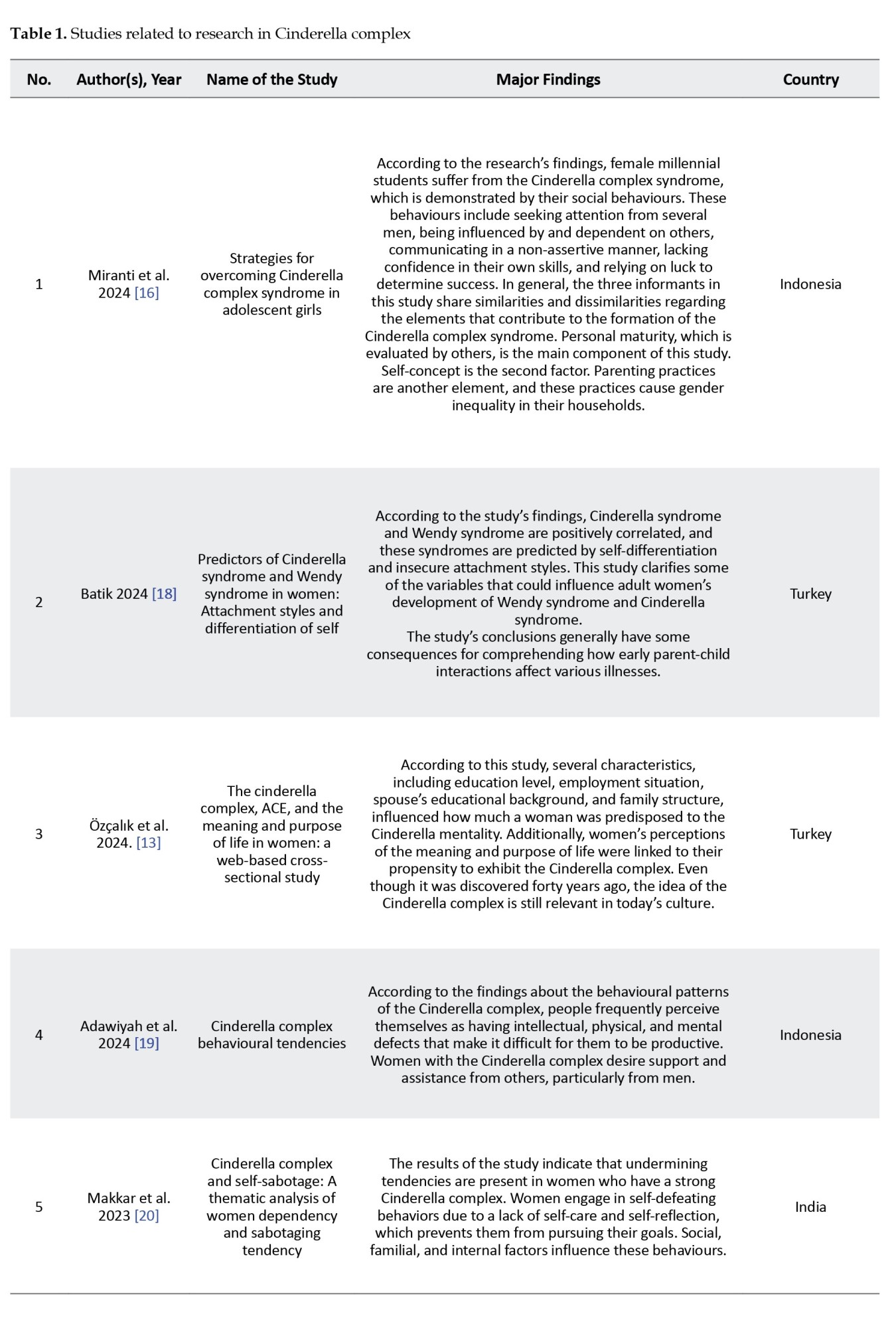
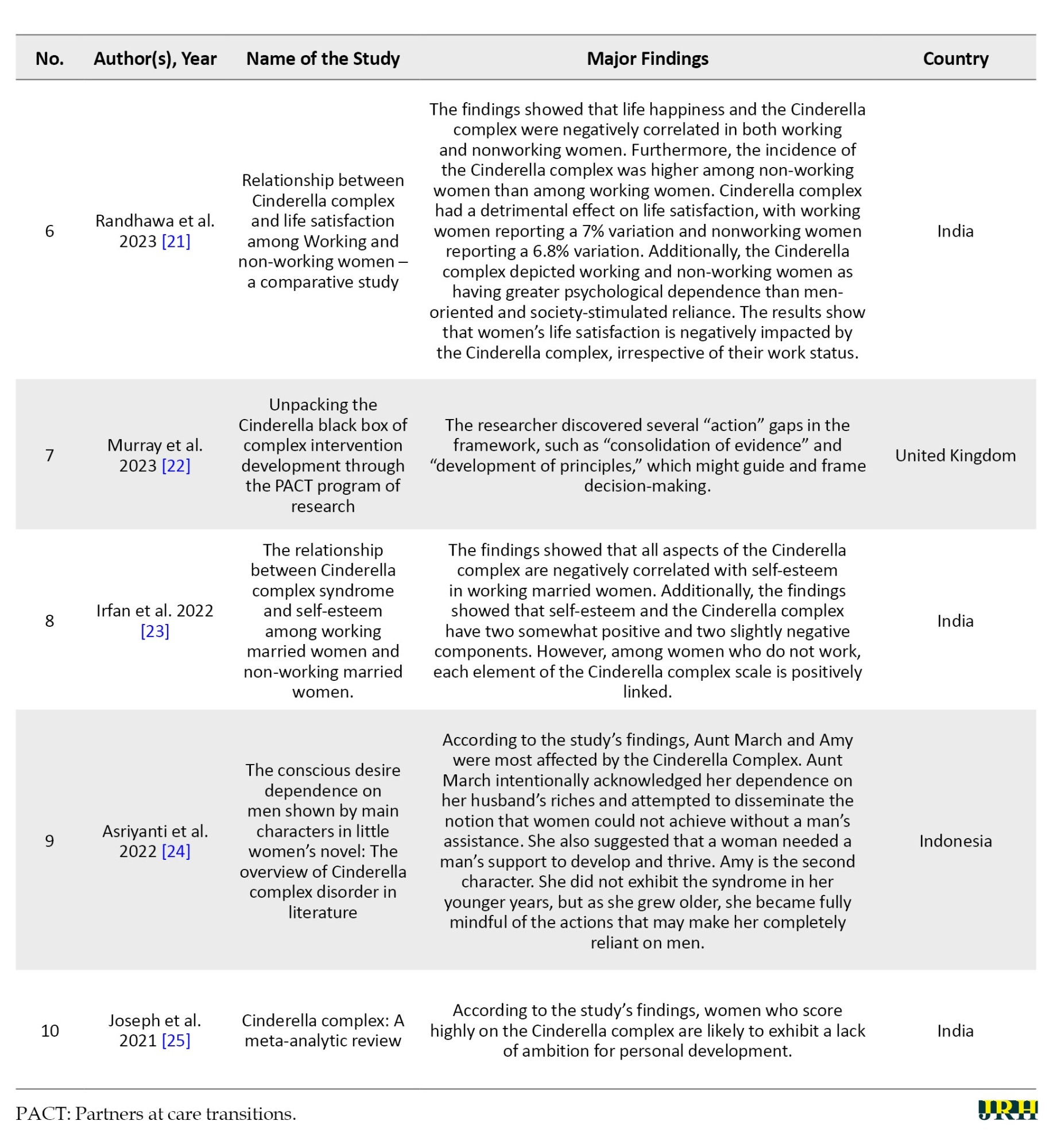
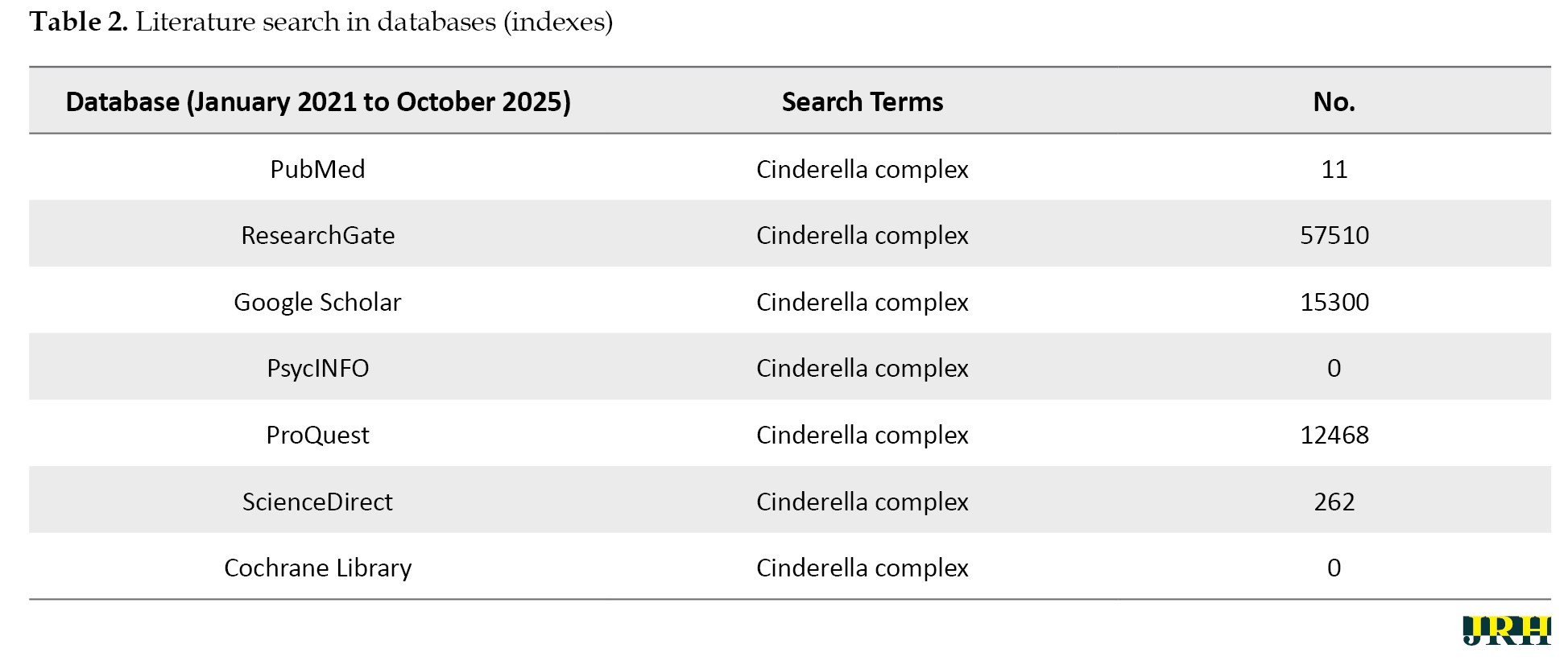
Electronic databases searched included PsycINFO, ProQuest, ResearchGate, PubMed, Google Scholar, ScienceDirect, and Cochrane Library from January 2021 to October 2025 (Tables 1 and 2).
 .
No restriction was placed on study design; however, studies were limited to those on Cinderella complex worldwide. The search strategy of Lee and Cummings (2008) [17] was adapted after consultation with an academic librarian, as MeSH terms and available databases had changed since the original search was conducted. All team members searched the database to include a more diverse body of literature.
Inclusion criteria and exclusion criteria
Studies were included if they met the following criteria:
1) Peer-reviewed empirical articles published between January 2021 and October 2025; 2) Studies explicitly examining the Cinderella complex or closely related dependency constructs/contents in women; 3) Qualitative, quantitative, or mixed-methods designs.
Studies were excluded if they:
1) Were theoretical commentaries, editorials, or dissertations; 2) lacked empirical data; 3) focused on unrelated psychological syndromes without conceptual linkage to the Cinderella Complex.
Screening
Two reviewers (Sannet Thomas and Vinaya Deepti) initially screened the title and abstract of each record to identify relevant papers and subsequently screened the full text of those papers. Reviewers had consensus meetings to discuss discrepancies, and a third reviewer decided whether to include or exclude an article. Reviewers resolved disagreements through discussion or by consulting an adjudicator (Mahendra Kumar). From each study, data were extracted on the author’s name, year, title of the study, and major findings (Table 1). Quality of the included studies was assessed independently by three researchers (Sannet Thomas) using the critical appraisal checklist developed by JBI (JBICAT) (Table 3).
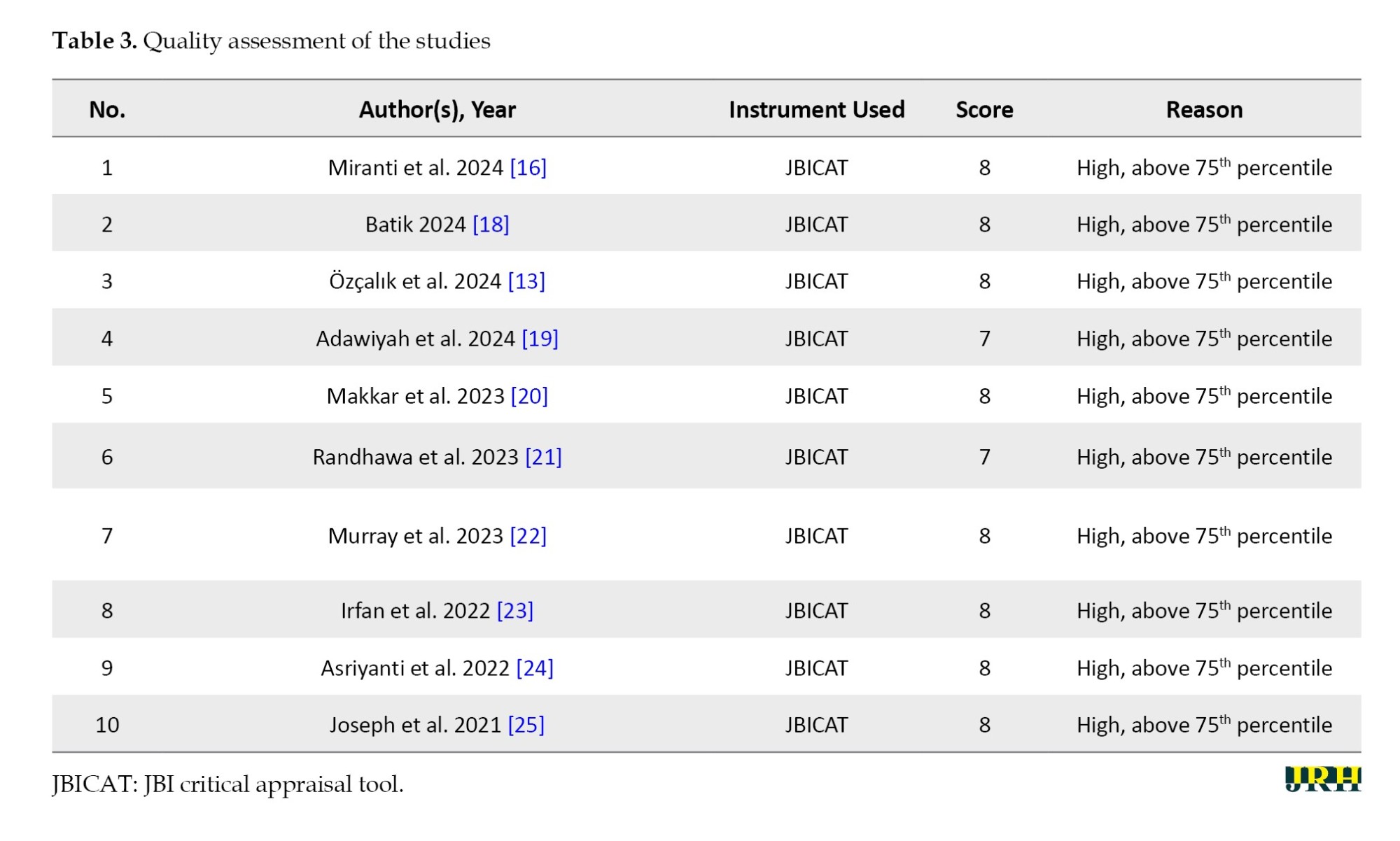
After the qualitative assessment, all quantitative assessment, all quantitative data were generated and tabulated. Table 1 presents a narrative description of the studies using broad categories.
Data extraction and data synthesis
Reviewers extracted data independently using a standardized form capturing the author name and year, study title, and major findings. Data synthesis followed an inductive qualitative content analysis approach, in which reviewers coded, compared, and grouped extracted findings into categories based on conceptual similarity. Through iterative review and consensus discussions, these categories were refined into overarching themes representing dominant and emerging research trends, ensuring transparency in transforming raw findings into thematic constructs.
Results
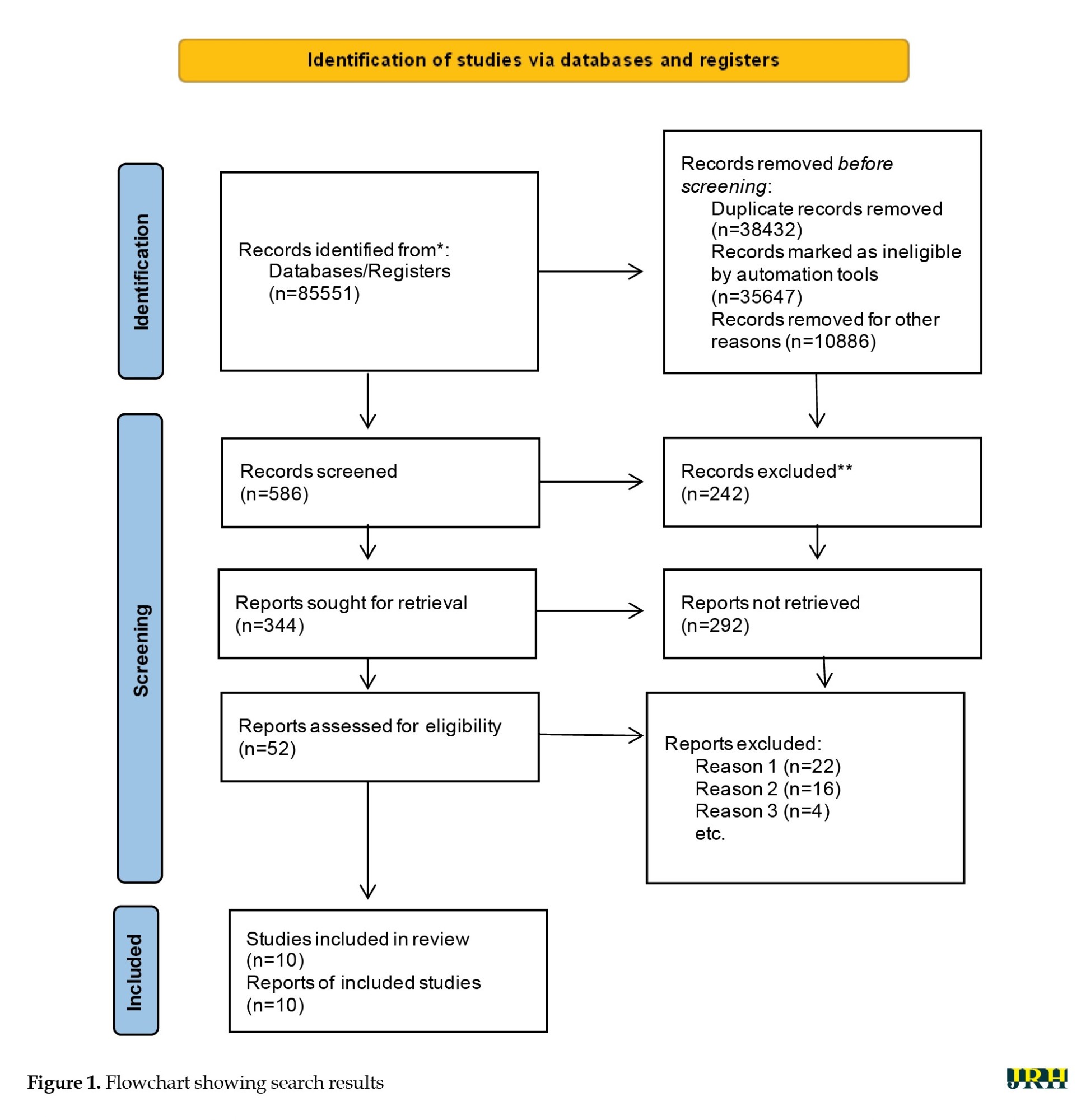
Online searches yielded 85551 results on this topic. Of these, 586 studies were selected for full-text screening. After screening, 10 studies were included in this review (Figure 1).
Apsychological condition known as the “Cinderella Complex” occurs when women show signs of relying on men, in particular, for emotional support and safety. At a very young age, women were taught to do only what made them feel safe and comfortable and to avoid anything that made them feel afraid. In actuality, women were taught to be dependent rather than independent [1].
Developmental and gender socialization studies have provided research-based support for the idea that gendered dependency tendencies originate in early childhood due to differential socialization practices. Longitudinal studies have revealed that girls are more often guided to prioritize safety, obedience, and harmony in relationships first, while boys are brought up to be independent, take risks, and be assertive; thus, over time, they have shaped two different sets of self-concepts [2-4]. The practice of parental overprotection, sticking to the reinforcement of traditional gender roles, and watching gender, stereotyped media narratives have all been found to correlate with girls possessing low self-efficacy and being more dependent on getting approval from others [5, 6]. These early developmental factors lay the psychological groundwork that may later show up as dependency and related constructs, such as the Cinderella Complex.
The fairy-tale princess Cinderella inspired the term “Cinderella Complex,” as she waits for her prince charming to save her from her cruel stepmother and stepsisters. For example, Cinderella shows how the heroine of the tale needs to be “rescued” by a royal man and assisted by external factors to gain respect and recognition. Being polite and good-natured, Cinderella has no resentment against her captors, the stepmother and stepsisters. Through this storyline, women are taught that to endure such oppression, they must be good and patient and wait for the day when a man rewards their perseverance. In this way, young women are taught to be dependent [1].
Colette Dowling (1981), an American therapist, defined the “Cinderella Complex” as women’s fear of independence and an unconscious desire to be taken care of by others [7].
In 1981, she introduced the idea of “The Cinderella Complex” or “Cinderella Syndrome” in her widely read book “The Cinderella Complex: Women’s hidden fear of independence.”
In it, she outlines her belief that any attractive prince or man will appear to save her from peril or adversity. Women who suffer from this syndrome or complex confess that they are “damsels in distress” who are waiting for a male suitor to take charge of their lives and provide them happiness and success in the future [7].
‘Cinderella complex’ is affected by various factors, such as cultural narratives, parenting philosophies, and self-perception. Studies on sociocultural and psychological factors have revealed a strong link between female students’ propensity to adopt sophisticated and permissive parenting styles, a positive self-concept, and the Cinderella complex [8]. By depicting women as submissive and reliant on male saviors, cultural narratives, such as fairy tales and the media, contribute significantly to perpetuating the complex [9, 10].
Women are often stereotyped in literature and other cultural narratives through the use of such psychological constructs as the Cinderella Complex. These portray women as beautiful but passive, docile, and dependent on men’s intervention [4, 6]. In particular, fairy tales portray desirable feminine virtues as those of suffering, obedience, and being saved. For example, a Cinderella-type story contributes to the characterization of women as dependent, whereas Kumlu (2020) shows that stories can be used either way: To support or to challenge these stereotypes [11]. These studies reveal how story structure contributes to the development of female teenagers’ attitudes of dependence and independence.
Several empirical studies have found that Cinderella Complex-related, dependency-oriented beliefs stay dominant in women across both age groups and different cultures. For example, surveys of adolescent and university students have shown that about 40-60% still hold traditional gender role attitudes such as expecting a man to be the protector, being emotionally dependent, and needing outside approval for one’s achievements [12, 13]. Moreover, quantitative research has revealed a strong positive association between the Cinderella complex and characteristics, such as low self-efficacy, few career aspirations, and a strong fear of being single [14]. A cross-cultural study indicates that these beliefs are supported by sociocultural norms, media representations, and family upbringing that focus more on protecting girls than on making them independent [15, 16]. Although these studies provide evidence of such issues, they are mostly separate, context-specific, and use different methodologies. Hence, a systematic review is needed to synthesize the evidence, identify the current trends, and highlight gaps in the Cinderella complex literature.
Despite increasing discourse on women’s empowerment and autonomy, research on the Cinderella complex remains fragmented, with limited synthesis of recent empirical findings on how dependency-oriented beliefs are sustained and reconfigured in contemporary contexts. Current studies vary widely in focus, methodology, and cultural scope, resulting in an incomplete understanding of the complex’s psychological determinants, sociocultural drivers, and evolving manifestations. To address these gaps, the present systematic review aims to consolidate post-2021 research on the Cinderella Complex, identify dominant and emerging thematic patterns, and clarify areas requiring further empirical and cross-cultural investigation. By doing so, this review provides a structured foundation for advancing research on gender dependency and women’s autonomy.
Methods
Study design
Using a qualitative systematic review framework and a meta-synthesis approach, this study consolidated empirical findings on the Cinderella complex from diverse studies. A thematic synthesis identified common motifs in both qualitative and quantitative research, without statistical aggregation. This review followed the preferred reporting items for systematic reviews and meta-analyses standards and was adapted for qualitative evidence synthesis.
Literature search
Electronic databases searched included PsycINFO, ProQuest, ResearchGate, PubMed, Google Scholar, ScienceDirect, and Cochrane Library from January 2021 to October 2025 (Tables 1 and 2).
.No restriction was placed on study design; however, studies were limited to those on Cinderella complex worldwide. The search strategy of Lee and Cummings (2008) [17] was adapted after consultation with an academic librarian, as MeSH terms and available databases had changed since the original search was conducted. All team members searched the database to include a more diverse body of literature.
Inclusion criteria and exclusion criteria
Studies were included if they met the following criteria:
1) Peer-reviewed empirical articles published between January 2021 and October 2025; 2) Studies explicitly examining the Cinderella complex or closely related dependency constructs/contents in women; 3) Qualitative, quantitative, or mixed-methods designs.
Studies were excluded if they:
1) Were theoretical commentaries, editorials, or dissertations; 2) lacked empirical data; 3) focused on unrelated psychological syndromes without conceptual linkage to the Cinderella Complex.
Screening
Two reviewers (Sannet Thomas and Vinaya Deepti) initially screened the title and abstract of each record to identify relevant papers and subsequently screened the full text of those papers. Reviewers had consensus meetings to discuss discrepancies, and a third reviewer decided whether to include or exclude an article. Reviewers resolved disagreements through discussion or by consulting an adjudicator (Mahendra Kumar). From each study, data were extracted on the author’s name, year, title of the study, and major findings (Table 1). Quality of the included studies was assessed independently by three researchers (Sannet Thomas) using the critical appraisal checklist developed by JBI (JBICAT) (Table 3).
After the qualitative assessment, all quantitative assessment, all quantitative data were generated and tabulated. Table 1 presents a narrative description of the studies using broad categories.
Data extraction and data synthesis
Reviewers extracted data independently using a standardized form capturing the author name and year, study title, and major findings. Data synthesis followed an inductive qualitative content analysis approach, in which reviewers coded, compared, and grouped extracted findings into categories based on conceptual similarity. Through iterative review and consensus discussions, these categories were refined into overarching themes representing dominant and emerging research trends, ensuring transparency in transforming raw findings into thematic constructs.
Results
Online searches yielded 85551 results on this topic. Of these, 586 studies were selected for full-text screening. After screening, 10 studies were included in this review (Figure 1).
Characteristics of included studies
Of the 10 studies, six were qualitative, and four were quantitative. Of these, three studies were based on the Cinderella complex psychological determinantes and Correlates, two studies were based on causal factors in the Cinderella complex, and five studies were based on new research findings in Cinderella complex studies.
The analyzed studies were conducted in different geographical areas, mainly in Asia and South Asia, with participant numbers ranging from small qualitative samples to large survey-based populations. Most research focused on adolescent or adult women, and Western or cross-national samples were underrepresented. This uneven geographic distribution can limit the generalizability of the results.
Cinderella complex psychological determinants and correlates.
The term “Cinderella Complex” is a psychological phenomenon in which women show a great desire to be protected and cared for, frequently depending on males for both practical and emotional support. This complex is impacted by several psychological correlates and variables, such as social standards, self-concept, and early experiences. Understanding these factors is crucial for addressing the implications of the Cinderella complex on women’s independence and personal growth.
Psychological determinants - The mental and emotional elements that affect a person’s behaviour, thoughts, and general well-being are referred to as psychological determinants. Despite the study’s participants’ low average scores on the adverse childhood experiences (ACE) and Cinderella complex scales, research suggests that ACEs can be linked to the development of the Cinderella complex [12]. Higher self-concept scores are correlated with lower Cinderella complex scores, indicating that self-perception is a key factor in this reliance. Self-concept and the Cinderella complex are negatively associated [13].
Societal and cultural influences - The societal and cultural factors play a vital role in shaping human behaviour. A contributing factor to the Cinderella complex is child-rearing methods that uphold traditional gender norms. Women who grow up in circumstances that prioritize dependency may be more prone to develop this issue [14]. Societal views of women as weak or incapable of independence constrain women’s ambitions for autonomy, reinforcing the Cinderella complex [15].
The Cinderella complex highlights important social and psychological issues; however, it is also important to consider women’s potential for self-determination and personal development. Promoting resilience and self-awareness can lessen the consequences of this complex and help women build a more powerful identity.
Causal factors Cinderella complex
A woman’s need to be protected and cared for, known as the Cinderella complex, is caused by several things, such as parenting practices, one’s own self-perception, and cultural narratives that perpetuate gender stereotypes. Addressing this complexity requires understanding these elements.
Parenting styles - Each parent has a unique approach to interacting with and guiding their children, thereby shaping their morals, principles, and behaviour. A parent’s upbringing style can significantly influence a child’s behaviours and actions as they age. Researchers have categorized parenting styles into various groups; one among them is Permissive Parenting. According to research, permissive parenting has a considerable 86.8% influence on the development of a Cinderella Complex, which is strongly correlated with permissive parenting [8]. Impact on Independence: Parents who encourage dependency can further cement adolescent girls’ Cinderella Complex, which can impede their self-confidence and independence [16].
Self-concept -A person’s overall perception of their physical, emotional, social, spiritual, and other characteristics is known as their self-concept [26]. Carl Rogers, a humanist psychologist, explains that self-concept is an essential component of personality development. A study found that a higher self-concept is associated with a lower likelihood of developing a Cinderella Complex, suggesting that self-esteem plays a critical role in mitigating this syndrome [13]. While ACEs were examined, they did not show a significant effect on the Cinderella Complex, indicating that self-concept may be a more pivotal factor [12].
Societal narratives- Our perception of the world is shaped by societal narratives, unwritten stories that affect our attitudes, values, and actions. These frameworks are strong and influence how we think about diversity and inclusion, among other social issues. Analysis of literature and film reveals that narratives often depict women as dependent on men, perpetuating the Cinderella complex through cultural storytelling [10].
Conversely, some argue that the Cinderella complex may not solely stem from negative influences but could also reflect a societal preference for traditional gender roles, which can be seen as a form of empowerment for some women. This perspective highlights the issue’s complexity, suggesting that the desire for care and protection can coexist with aspirations for independence.
Discussion
Integrated interpretation of recent findings
Several points of convergence across studies emerged from examining and discussing different aspects of the Cinderella complex. Most research has emphasized parenting styles, gender, role socialization, and relational expectations as major factors in formulating dependent (or Cinderella) beliefs. On the other hand, studies that have identified negative childhood experiences as a factor have presented a different picture, with some showing dependency to have a very weak or even non-existent association with childhood traumas. Hence, these studies suggest that the present relational and sociocultural factors more firmly hold dependency than early trauma alone. In sum, these patterns signify that early experiences set the stage, but current attachment relationships and external social reinforcement become the leading forces in maintaining the complex.
Evidence-based interpretive propositions
This paper uses the Cinderella complex as an example to discuss the advice of psychoeducational interventions to change dependency beliefs, especially dependencies related to insecure or fearful attachment. In attachment theory, a secure psychological representation should be more stable, less dependent on external circumstances, and more autonomous; therefore, psychological or psychoeducational effects are mediated through that mechanism.
Targeted future research directions
Future research could include longitudinal studies tackling the evolution of dependency beliefs across developmental stages; intervention studies evaluating the effectiveness of programs focused on attachment and autonomy; and cross-cultural comparative studies in non-Western settings.
Conclusion
This review shows that the Cinderella complex is influenced by a combination of psychological, relational, and sociocultural factors. Clinically, individual and educational interventions that promote self-concept, attachment security, and autonomy can potentially diminish dependency-oriented beliefs, which the literature links to low-self-esteem and negative relational patterns. In addition, at the societal level, education and gender-sensitizing policy programs can help eliminate the cultural narrative of women as dependent.
Researchers should move beyond the mental health field’s tendency to focus only on psychological functioning models and incorporate interdisciplinary perspectives, including psychological assessments over time, sociocultural analyses, and neuroscience techniques. These diverse research paradigms could help explain how dependency and related beliefs endure and mutate across cultural settings.
Ethical Considerations
Compliance with ethical guidelines
There were no ethical considerations to be considered in this research.
Funding
This research did not receive any grants from public, commercial, or non-profit funding agencies.
Authors' contributions
All authors contributed equally to the conception and design of the study, data collection and analysis, interception of the results and drafting of the manuscript. Each author approved the final version of the manuscript for submission.
Conflict of interest
The authors declared no conflict of interest.
Acknowledgments
The authors express their sincere gratitude to all researchers and authors whose published studies on the Cinderella complex contributed to this systematic review.
References
- Saha S, Safri TS. Cinderella complex: Theoretical roots to psychological dependency syndrome in women. International Journal of Indian Psychology. 2016; 3(3):118-22. [DOI:10.25215/0303.148]
- Bussey K, Bandura A. Social cognitive theory of gender development and differentiation. Psychological Review. 1999;106(4):676-713. [DOI:10.1037/0033-295X.106.4.676] [PMID]
- Eccles JS, Jacobs JE, Harold RD. Gender role stereotypes, expectancy effects, and parents' socialization of gender differences. Journal of Social Issues. 1990; 46(2):183-201.[DOI:10.1111/j.1540-4560.1990.tb01929.x]
- Endendijk JJ, Groeneveld MG, Bakermans-Kranenburg MJ, Mesman J. Gender-differentiated parenting revisited: Meta-analysis reveals very few differences in parental control of boys and girls. Plos One. 2016; 11(7):e0159193. [DOI:10.1371/journal.pone.0159193]
- McLeod JD, Shanahan MJ. Trajectories of poverty and children’s mental health.Journal of Health and Social Behavior. 1996;37(3):207-20. [PMID]
- Coyne SM, Linder JR, Rasmussen EE, Nelson DA, Birkbeck V. Pretty as a princess: Longitudinal effects of engagement with Disney princesses on gender stereotypes. Child Development. 2016; 87(6):1909-25. [DOI:10.1111/cdev.12569] [PMID]
- Dowling C. The Cinderella Complex: Women’s Hidden Fear of Independence. New York: Simon & Schuster; 1981. [Link]
- Setiawan NA, Aisyah N. [Tendency towards the Cinderella complex: A correlational analysis of parenting styles and self-concept among female Islamic boarding school students (Indonesian)]. Al Huwiya. 2024; 4(1):33-43. [DOI:10.24042/jwcs.v4i1.21002]
- Nusbaumer ER. The Cinderella stereotype: A comparative study of love in a fallen city and Cinderella. Comparative Literature: East & West. 2024; 8(2):221-33. [DOI:10.1080/25723618.2024.2441001]
- Xu H, Zhang Z, Wu L, Wang CJ. The Cinderella Complex: Word embeddings reveal gender stereotypes in movies and books. Plos One. 2019; 14(11):e0225385. [DOI:10.1371/JOURNAL.PONE.0225385] [PMID] [PMCID]
- Kumlu E. Unveiling the implicit political agenda: A comparative analysis of the construction of gender roles in Grimm’s ashputtel and giuseppe pitré’s the magical little date tree. Litera: Journal of Language, Literature and Culture Studies. 2020; 30(1):155-75. [DOI:10.26650/LITERA2020-0006]
- Özçalık HB, Ataş AN, Yılmaz SD. The Cinderella complex, adverse childhood experiences, and the meaning and purpose of life in women: A web-based cross-sectional study. International Journal of Child Youth and Family Studies. 2024; 15(4):26-40. [DOI:10.18357/ijcyfs154202422217]
- Ridaningsari A, Fahmawati ZN. The relationship between self-concept and Cinderella complex in grade 11 students in vocational high school. Psikologia: Jurnal Psikologi. 2022; 7(1):1-10. [DOI:10.21070/psikologia.v7i0.1692]
- Wijaya S, Noviekayati IGAA, Ananta A. [The Cinderella complex in women: What role does the permissive-indulgent parenting style play? (Malay)] INNER Journal of Psychological Research. 2023; 2(4):578-87. [Link]
- Syarif Zain T. [The Cinderella complex from the perspective of socio-emotional developmental psychology (Indonesian)]. Indigenous: Jurnal Ilmiah Psikologi. 2016; 1(1):92-8. [DOI:10.23917/INDIGENOUS.V1I1.2222]
- Miranti M, Karmiyati D. Strategies for overcoming Cinderella complex syndrome in adolescent girls. Vitamin: Jurnal ilmu Kesehatan Umum. 2024; 2(3):266-76. [DOI:10.61132/vitamin.v2i3.528]
- Lee H, Cummings GG. Factors influencing job satisfaction of front line nurse managers: A systematic review. Journal of Nursing Management. 2008; 16(7):768–83. [DOI:10.1111/j.1365-2834.2008.00879.x]
- Batik MV. Predictors of Cinderella syndrome and Wendy syndrome in women: Attachment styles and differentiation of self. Acta Psychologica. 2024; 249(1):1-10. [DOI:10.1016/j.actpsy.2024.104475] [PMID]
- Adawiyah R, Rodiyah I, Nurhamida Y. Cinderella complex behavioral tendencies. International Journal of Educatio Elementaria and Psychologia. 2024; 1(4):196-203. [DOI:10.70177/ijeep.v1i4.1151]
- Makkar M, Saha S. Cinderella complex & self sabotage: A thematic analysis of women dependency and sabotaging tendency. Indian Journal of Mental Health. 2023; 10(2):107-111. [Link]
- Randhawa N, Dutt S. Relationship between Cinderella complex and life satisfaction among working and non-working women - a comparative study. Education and Society. 2023; 46(3):890-908. [Link]
- Murray J, Baxter R, Lawton R, Hardicre N, Shannon R, Langley J, et al. Unpacking the Cinderella black box of complex intervention development through the partners at care transitions (PACT) programme of research. Health Expectations. 2023; 26(4):1478-90. [DOI:10.1111/hex.13682] [PMID] [PMCID]
- Irfan M, Farooqi R. The relationship between Cinderella complex syndrome and self-esteem among working married women and non-working married women. International Journal of Food and Nutritional Sciences. 2022; 11(Special):3252-7. [Link]
- Asriyanti S, Arafah B, Abbas H. The conscious desire dependon man shown by main characters in little women’s novel: The overview of Cinderella complex disorder in literature. International Journal of Innovative Science and Research Technology. 2022; 7(1):119-24. [DOI:10.5281/zenodo.5883384]
- Joseph JB, Jayesh S, Thomas S. Cinderella complex: A meta-analytic review. EPRA International Journal of Multidisciplinary Research. 2021; 7(5):324-9. [DOI:10.36713/epra6596]
- Marsh HW, Shavelson R. Self-concept: Its multifaceted, hierarchical structure. Educational Psychologist. 1985; 20(3):107-23. [DOI:10.1207/s15326985ep2003_1]
Type of Study: Review Article |
Subject:
● Psychosocial Health
Received: 2025/11/17 | Accepted: 2026/02/15 | Published: 2026/08/23
Received: 2025/11/17 | Accepted: 2026/02/15 | Published: 2026/08/23
| Rights and permissions | |
 |
This work is licensed under a Creative Commons Attribution-NonCommercial 4.0 International License. |


This is an open access article distributed under the terms of the Creative Commons Attribution License (CC-By-NC), which permits use, distribution, and reproduction in any medium, provided the original work is properly cited and is not used for commercial purposes.
Contact Information
