

Volume 16, Issue 5 (Sep & Oct 2026)
J Research Health 2026, 16(5): 487-498 |
Back to browse issues page


Ethics code: IR.MUMS.REC.1397.065


Download citation:
BibTeX | RIS | EndNote | Medlars | ProCite | Reference Manager | RefWorks
Send citation to:


BibTeX | RIS | EndNote | Medlars | ProCite | Reference Manager | RefWorks
Send citation to:
Heshmati Nabavi F, Heidarian Miri H, Ilkhani M, Nekouei Marvi Langari M, Baloochi Beydokhti T. Information Needs and Priorities Among Women With Breast Cancer during Different Treatment Stages: A Cross-sectional Study. , J Research Health. 2026; 16 (5) :487-498
URL: http://jrh.gmu.ac.ir/article-1-2844-en.html
URL: http://jrh.gmu.ac.ir/article-1-2844-en.html
Fatemeh Heshmati Nabavi1 

 , Hamid Heidarian Miri2 , Mahnaz Ilkhani3 , Maliheh Nekouei Marvi Langari4 , Tahereh Baloochi Beydokhti *5
1- Nursing and Midwifery Care Research Center, Mashhad University of Medical Sciences, Mashhad, Iran.
2- University College Cork, Cork, Ireland.
3- Department of Head of Medical-Surgical Nursing, School of Nursing and Midwifery, Shahid Beheshti University of Medical Sciences, Tehran, Iran.
4- Department of Nursing Science, University of Eastern Finland, Kuopio, Finland.
5- Department of Medical-Surgical Nursing, School of Nursing, Nursing Research Center, Gonabad University of Medical Sciences, Gonabad, Iran. ,tbaloochi@gmail.com
2- University College Cork, Cork, Ireland.
3- Department of Head of Medical-Surgical Nursing, School of Nursing and Midwifery, Shahid Beheshti University of Medical Sciences, Tehran, Iran.
4- Department of Nursing Science, University of Eastern Finland, Kuopio, Finland.
5- Department of Medical-Surgical Nursing, School of Nursing, Nursing Research Center, Gonabad University of Medical Sciences, Gonabad, Iran. ,
Full-Text [PDF 642 kb]
(42 Downloads)
| Abstract (HTML) (684 Views)
Full-Text: (40 Views)
Introduction
Breast cancer is the most common cancer worldwide, with an incidence of 11.7% (2.3 million), and is also the fifth cause of mortality, with a rate of 6.9% among all cancers [1]. In Iran, its incidence has been reported to be 11.9-23.5% [2]. In recent decades, more attention has been paid to patients with cancer who actively participate in their care processes [3]. These patients face different problems at each stage of their disease; therefore, their focus shifts from one stage different from other stages to another [4]. Providing appropriate information to these patients has been recognized as one of the most important dimensions of effective supportive care [4]. Otherwise, unmet information needs can cause anxiety and increase the chance of depression by preventing the patient from participating in self-care [5].
Information needs are a crucial category of supportive care needs in cancer patients [6, 7]. Some information needs include knowing the diagnosis and stage of the disease, available treatments, complications, information on disease spread, chances of treatment, disease management, nutritional choices, and the risk of infection in family members [7-9]. However, what remains important is that these patients’ information needs can change at different stages of the disease [10].
Changes in the quantity of information needs may also alter their nature [11]. Regardless of disease stage, all treatment-related information is important for patients with breast cancer [12], and providing stage-specific information across the disease continuum is an important aspect of their care [13]. Several treatment methods are available for patients with breast cancer, including surgery, radiotherapy, and systemic therapy (chemotherapy and hormone therapy), which can be used depending on the degree and severity of the disease [14].
Although Sheehy et al. (2018) reported no statistically significant difference among different treatment groups in terms of information needs [15], others believe that chemotherapy causes general concerns and anxiety more than other cancer treatments [16], and women ask more questions at the chemotherapy stage [17, 18]. Moreover, Halbach et al. (2016) reported high information needs in the first 10 weeks after surgery [19]. Therefore, the patient’s information needs during treatments have been shown by various studies, but there is a paucity of research on the content of information needs. Information priorities and comparisons of the information needs at different stages of treatment among women with breast cancer.
Latifi et al. (2018) indicated the most important information needs of women with breast cancer in the post-surgical period as information needs related to mental health, physical health, disease, and daily and social activities [20]. In the study by Findik (2017), these priorities included medications, treatments, complications, quality of life (QoL), activities of living, and skin care, respectively [21]. Furthermore, the most important information needs of patients with breast cancer at the radiotherapy stage have been addressed as fatigue, skin care, and skin problems [22], while during the chemotherapy period, they were mainly about disease management [18].
In addition to needs that change across different stages, women in different cultures have different needs. The differences in the information need priorities of supportive care of women with breast cancer in Asian and Eastern countries were affected by culture and some factors in the health system [18]. Iran, a country in Asia, differs greatly from developed nations in many ways. For example, Iranian women were diagnosed with breast cancer nearly 10 years earlier than their counterparts in developed countries [2]. The culture of confronting cancer in Iran is also different from Western countries. Most people in Iranian society are likely to have a fatalistic viewpoint regarding any new situation in their lives due to their religious beliefs.
The breast is considered a symbol of femininity and feminine beauty; loss of it can lead to hopelessness, low self-confidence, and body image disorder. Given the lower age of breast cancer incidence in Iran, these problems can have wider dimensions among Iranian women [23]. The present study aimed to determine the information needs and priorities of patients with breast cancer at different stages of surgery, chemotherapy, and radiotherapy treatment and their predicting factors.
Methods
Study design
A cross-sectional survey was conducted from September 2018 to February 2019. To ensure that all essential aspects of study design and reporting were addressed, the methods and results of this study were prepared following the STROBE checklist.
Study setting
This study was conducted at specialized cancer centers in Mashhad City, northeast Iran, including Qaem, Emam Reza, Omid Hospitals, and Reza Radiotherapy and Oncology Center. In addition to managing local patients, these centers provide diagnostic and therapeutic services to cancer patients from Iran’s eastern provinces.
Participants
The participants were women diagnosed with breast cancer who were informed about their disease and referred to a radiotherapy oncology center, surgery ward, and oncology outpatient clinics at the hospitals. The inclusion criteria were as follows: Being treated at one of the chemotherapy, surgery, or radiotherapy stages, and achieving a minimum score of 70 on the Karnofsky performance scale (KPS). In oncology, a key determinant of the patients’ ability to undergo therapy is their performance status (PS). The (KPS) scale is commonly used to assess the PS of patients with cancer [24]. Clients who were unable to participate in the study, those with any mental problem, those who spoke a foreign language, and men with breast cancer were not included in the study. The exclusion criteria included incomplete completion of the questionnaires.
Researchers in the outpatient clinics identified eligible patients who were then provided with information about the study. After providing written informed consent, participants completed the questionnaire.
Study sample
The study included 282 women with breast cancer. The sample size was calculated using STATA software version 12, based on the difference in means from a pilot study with 20 patients in each of the chemotherapy, surgery, and radiotherapy groups, with 90% power and a 95% confidence interval. In the chemotherapy group (107 patients), radiotherapy (77 patients), and surgery (81 patients), 265 patients were estimated.
Study instruments
The instruments used in this study included the demographic characteristics and disease-related information checklist and the patient learning needs scale (PLNS). The demographic characteristics and disease-related information checklist included variables, such as age, marital status, education level, occupation, residence, disease history, and family history.
The PLNS included 50 questions on a five-point Likert scale: 1 (not important), 2 (slightly important), 3 (moderately important), 4 (very important), and 5 (extremely important). A higher score indicates a greater need for learning. Bubela et al. (1990) developed this tool in Canada through patient interviews and the clinical experiences of nurse experts. The original PLNS had content and face validity based on findings in the literature and an expert review panel. Factor analysis established construct validity by demonstrating seven factors in a 50-item scale. The PLNS subscales include the following dimensions: 1) Medications (7 items), 2) activities of living (9 items), 3) community and follow-up (5 items), 4) feelings related to conditions (5 items), 5) treatment and complications (9 items), 6) enhancing QoL (8 items), and 7) skin care (5 items) [25]. In the present study, validity and reliability were assessed. The content validity index for the entire instrument was 0.99, and internal consistency reliability with Cronbach’s α for the total scale was 0.95, and for the seven subscales ranged from 0.73 to 0.84.
Data collection
After receiving permission and presenting the study to the heads of the centers under study, introducing the research and its objectives, and obtaining permission from the authorities, the researcher visited the relevant departments. After entering the research environment, the research sample was selected based on the inclusion criteria at each stage from among women with breast cancer who were undergoing surgery, chemotherapy, and radiotherapy, using an accessible method, and entered the study. The researcher introduced herself and the purpose of the research and obtained the patients’ written informed consent to participate. Since the designed self-care program must be applicable to low-literate and illiterate patients, literacy was not included as an entry criterion. Therefore, data were collected using a questionnaire and interview method. The researcher read the question to the patient and, without explanation, asked the patient to choose an answer from the available options; each patient’s answer was recorded in the questionnaire.
For patients in the surgical group, the researcher visited the breast surgery centers located in Omid, Pasteur, and Sina hospitals every morning after calling them by phone and receiving statistics on patients who had undergone surgery to remove a malignant breast mass or mastectomy and were in the postoperative period. After selecting samples based on the inclusion criteria and obtaining written consent, the questionnaire was completed using an interview.
Omid, Imam Reza, and Qaem Teaching Hospitals, and Reza Radiotherapy and Oncology Center were selected for sampling in the chemotherapy phase. Imam Reza Hospital, Omid, and Reza Radiotherapy and Oncology Center were also selected to collect data in the radiotherapy phase.
Completing the questionnaire took approximately 15 minutes. Sampling continued until the desired sample size was reached. Sampling took about 5 months.
Statistical analysis
For quantitative variables, the Mean±SD were used, and their distribution was checked for normality using the Kolmogorov-Smirnov normality test. One-way analysis of variance (ANOVA) was used to compare the information needs of patients across the three study groups, and post-hoc Tukey tests were used to compare the differences between groups two-by-two. Moreover, multiple linear regression was used to investigate the simultaneous effect of predictor variables on the outcome variable, patient information needs. To do this, first, the relationship between each predictor variable and the outcome variable (total PLNS score and subscales) was tested. Then, any variables with P<0.25 were entered into the final model. Predictor variables included treatment group, age, marital age, time elapsed since diagnosis, family history, education level, occupation, marital status, place of residence, economic status, number of pregnancies, number of children, and associated disease. In the univariate analysis, t-test was used for two-state qualitative variables, ANOVA was used for qualitative variables with more than two states, and linear regression was used for quantitative variables. P<0.05 was used to define statistical significance.
Results
Demographic profile
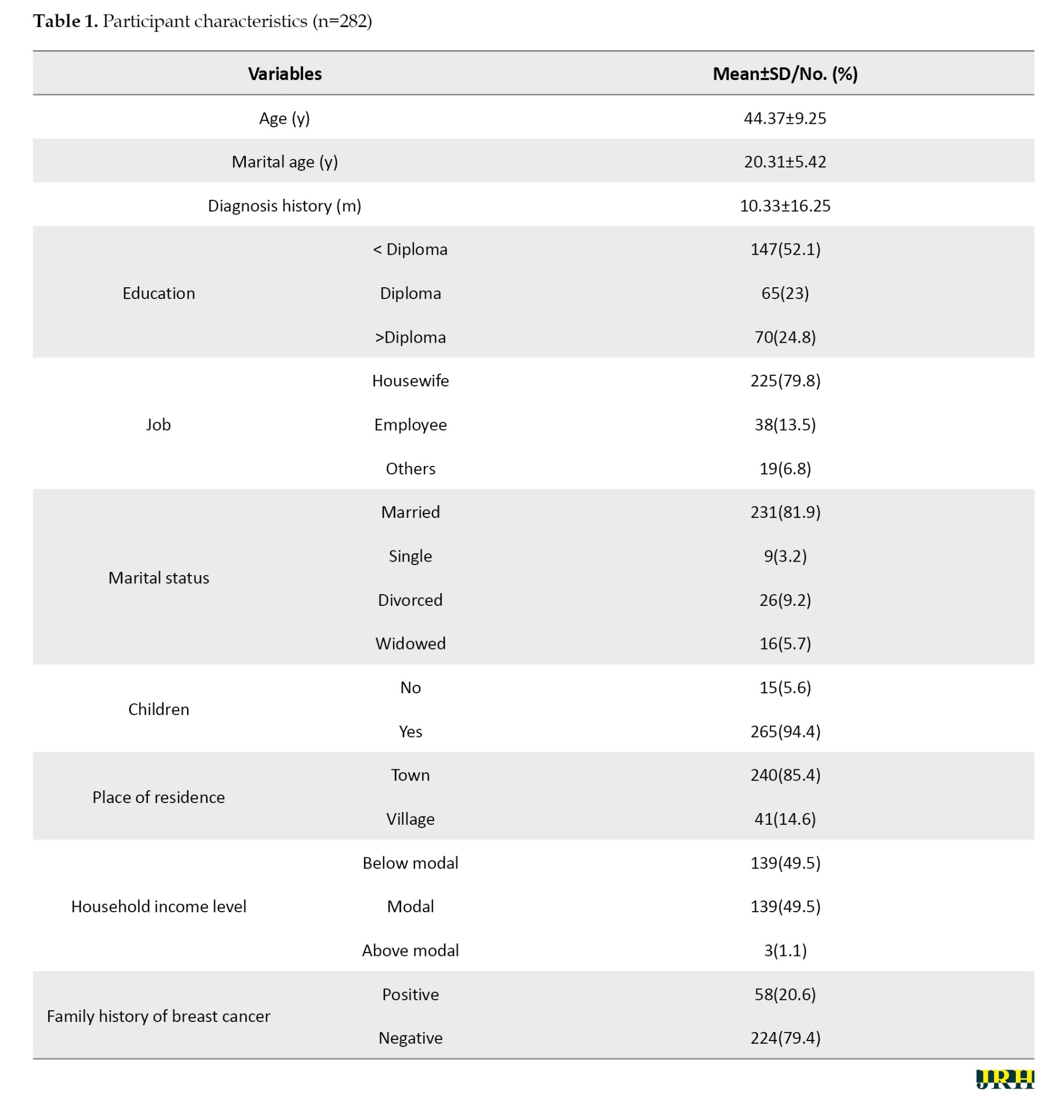
A total of 282 women with breast cancer participated in our study in different groups: 120(42.6%) chemotherapy, 79(28 %) radiotherapy, and 83(29.4%) surgery. Table 1 presents demographic characteristics and disease-related information.
Patient learning needs scale scores
The results showed that the mean information-needs score for women with breast cancer was high during treatment (Mean±SD, 4.31±0.55).
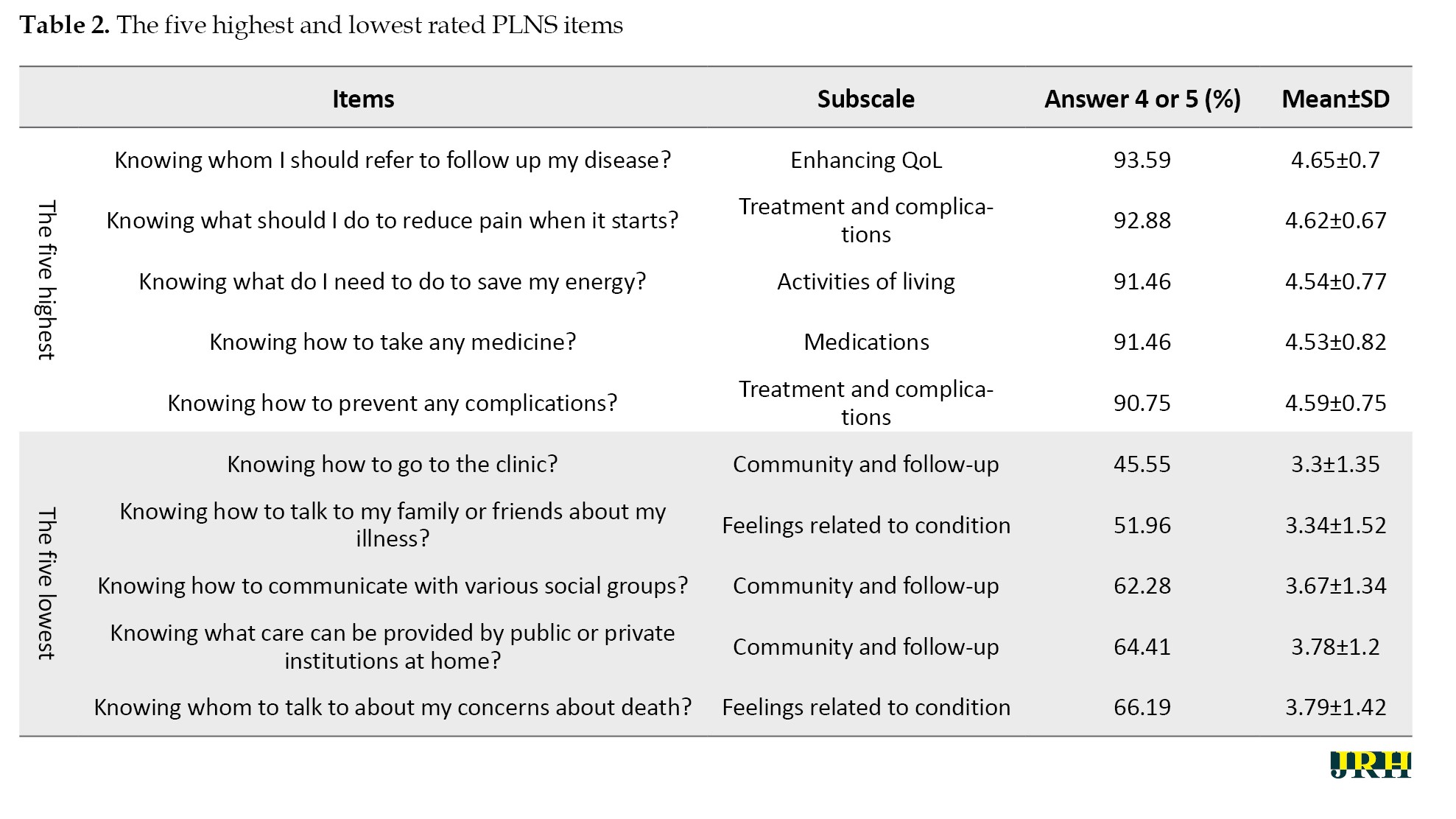
The five highest-rated PLNS items in all patients belonged to the two most popular subscales as follows: enhancing the QoL (Mean±SD, 4.65±0.7) and treatment and complications (Mean±SD, 4.62±0.67). In contrast, the five lowest-rated items were related to the least popular subscales as follows: Community and follow-up (Mean±SD, 3.3±1.35) and feeling (Mean±SD, 3.34±1.52) (Table 2).
Predictive factors
ANOVA was used to examine the difference between the subscales and total score of PLNS in three treatment groups: surgery, chemotherapy, and radiotherapy. On the subscale ‘medication’, where F=5.27, the result was significant at P=0.006 for a two-tailed hypothesis. A similar result was found when comparing treatment groups for the subscales’ ‘enhancing QoL’ and ‘skin care’, where F=7.04 and 10.53; the results were significant at P=0.001 and P<0.001 for a two-tailed test (Table 3).
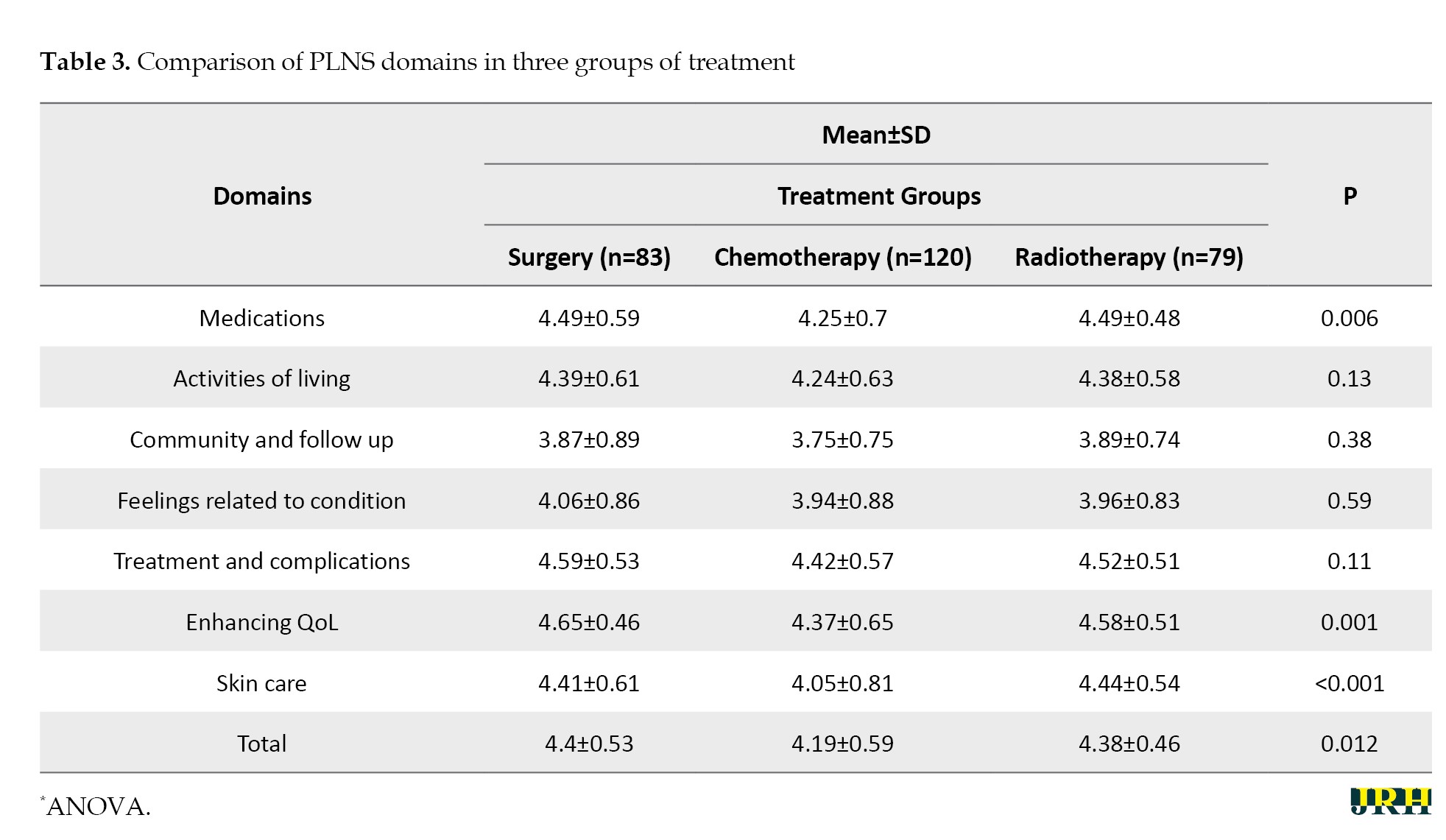
ANOVA comparing the three treatment groups for total PLNS scores showed a significant difference among the groups (P=0.012). The post-hoc Tukey test results showed that the difference between the chemotherapy group and the two other groups, surgery and radiotherapy, was significant (P=0.024, P=0.047). Based on mean scores, patients in the chemotherapy group had a lower information needs score (mean=4.19) than those in the surgery group (mean=4.4) and the radiotherapy group (mean=4.38).
Based on the mean scores for the information-needs dimensions across the patients in the three treatment groups, the most important dimensions were enhancing QoL, treatments, complications, and medications; only the prioritization order of these needs from first to third differed across the three groups.
Multiple regression analysis
Multiple regression was performed to investigate the predictive factors. Univariate regression showed that the chemotherapy group’s information needs differed significantly from those of the surgery and radiotherapy groups. However, using multivariate analysis and after adjusting for other variables, no statistically significant difference among treatment groups was found (P=0.08). Moreover, after adjusting for other background variables and examining the total score, it was revealed that one of the factors affecting information needs is family history of breast cancer, and the results show that patients with a positive family history have lower information needs.
As shown in Table 4, when separately examining the dimensions of the questionnaire and after adjusting for other variables in the multivariate section, the three treatment groups had significant differences in the dimensions of skin care, enhancing the QoL, and medication.
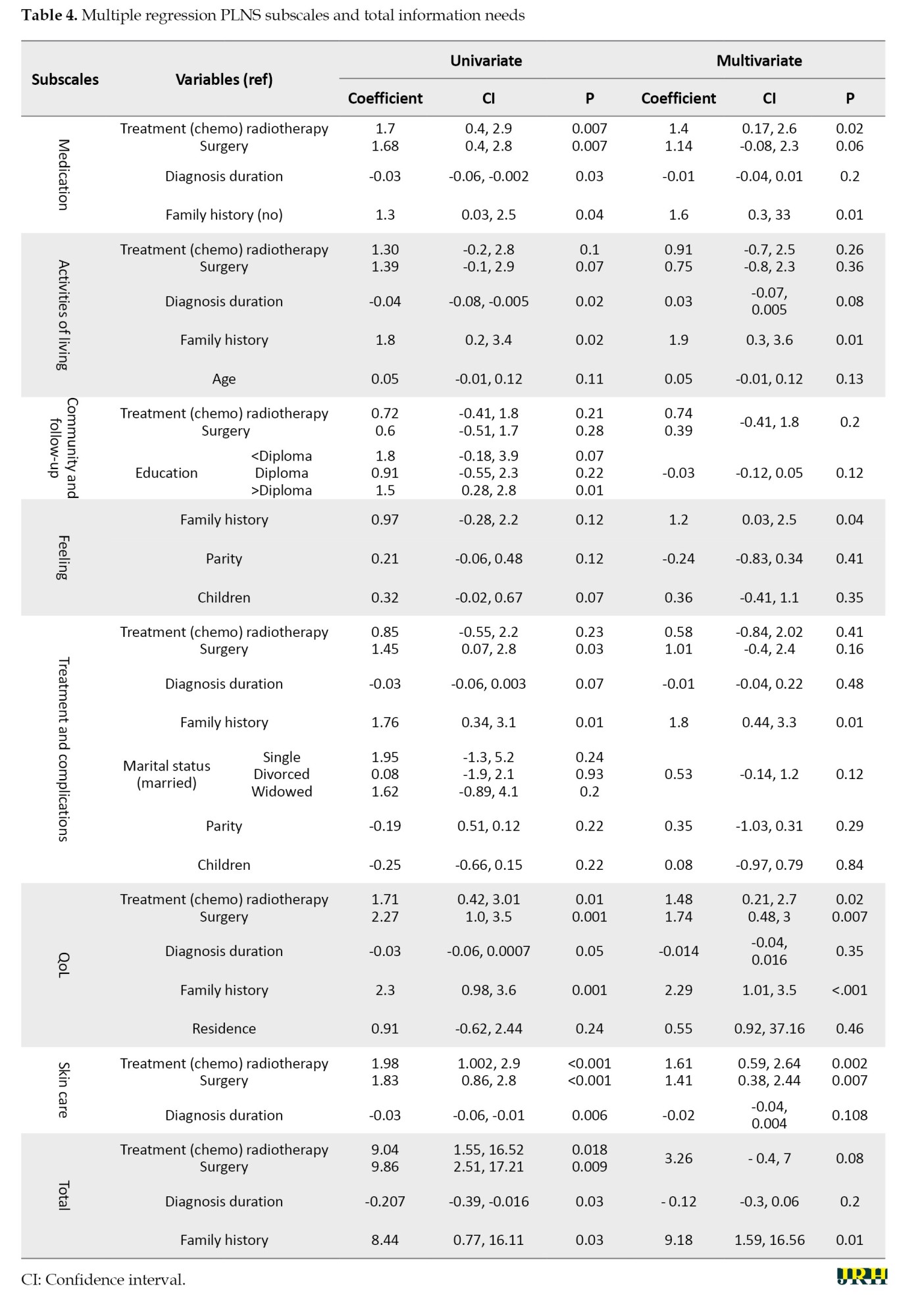
Family history is also an effective factor in patients’ information needs across the dimensions of medication, feelings, treatments and complications, QoL, and activities of living. In this study, age, marital status, economic status, habitat, education level, occupation, number of pregnancies, number of children, information needs score, and questionnaire dimension scores showed no significant relationship (P>0.05).
Discussion
This study examined the information needs of women with breast cancer across three treatment modalities—surgery, chemotherapy, and radiotherapy. The results revealed that patients had high information needs at all stages of treatment [26-28].
The leading dimensions of information needs among participants included enhancing QoL, treatment and complication management, and medication-related issues. This confirms the findings of prior research highlighting that breast cancer patients consistently seek extensive information related to disease management, treatment, and psychosocial well-being [26, 28-31]. Also, these findings align with previous studies in Asia and the Middle East, which identified these same categories as dominant domains of informational demand. For instance, Kimiafar et al. (2016) in Iran reported that most patients’ needs centered on disease management and dietary guidance during treatment, consistent with the present findings [8].
Differences in total PLNS and subscale scores across treatment groups were statistically significant, particularly between chemotherapy and the other two groups. Similar to the present study, Sheehy et al. (2018) found no consistent relationship between treatment phase and overall informational needs, indicating that the intensity of needs may fluctuate but remains persistently high throughout the cancer care continuum [15]. However, in the study by Tilahun et al. (2023), there was a relationship between treatment type and information needs among patients with breast cancer, and patients in the surgical treatment phase had lower information needs scores, which is not consistent with the present study [31]. The lower score of the information needs of women in the chemotherapy treatment stage compared to surgical and radiotherapy treatments may be due to patients’ relative adaptation and prolonged exposure during chemotherapy.
Cultural and familial values play a critical role in shaping Iranian women’s information priorities. The present study found that women emphasized continuing treatment, conserving energy, and follow-up care, which may reflect an underlying motivation to preserve family and maternal roles—values deeply rooted in Iranian culture. Previous qualitative research in Iran showed that maintaining family structure and fulfilling maternal responsibilities are central to women’s emotional well-being and self-identity during cancer treatment. The need to sustain family dynamics may therefore explain the high priority placed on learning strategies to manage treatment and maintain physical energy [32].
In our study, the information priorities of women with breast cancer were continuing and following up on treatment, managing their illness, and conserving energy. Although most of our participants were married and had at least one child, our findings were consistent with a previous study in Iran, which suggested that changes in women’s appearance caused by cancer treatments, as evidenced by hair loss, breast removal, and changes in female posture, increased women’s concerns about maintaining their parental and spousal roles and maintaining their family [33]. Another study also found that Iranian women with breast cancer focused more on their maternal roles, were more emotionally involved with their children, and coped more effectively with their maternal roles [34]. Maintaining family life seems to be a cultural and religious value among Iranian women, and they try to maintain it by playing the role of spouse and parent. Because of concerns about their roles in the family after the onset of the disease, their information needs for following up on treatment, managing their illness, and conserving energy could be priorities.
Regarding the predictor factors of information needs in women with breast cancer, this study’s results showed that age, marital status, education level, occupation, place of residence, and economic status were not related to patients’ information needs. Different studies have reported different results on the relationship between demographic factors and the information needs of cancer patients. Kuruppu et al. (2018) reported a significant relationship among marital status, education level, and employment status, and the information needs of cancer patients [35], while Kuruppu et al. (2020), Legese et al. (2021), Rattanakanlaya et al. (2024) and Tilahun et al. (2023) reported a significant relationship between patients’ information needs and education level [26, 28, 29, 32], which is not consistent with the present study. Ankem stated that no relationship exists between patients’ education level and their information needs [36]. In the present study, family history of breast cancer emerged as a significant predictor, with affected patients reporting fewer information needs. This may reflect increased awareness or prior exposure within affected families. However, sociodemographic and reproductive variables did not significantly impact overall information needs or individual questionnaire dimensions, indicating that informational support must be broadly accessible regardless of background.
Finally, the present study showed that patients’ top priorities at the surgery and radiotherapy stages were enhancing QoL, treatments, and complications, respectively. However, at the chemotherapy stage, these priorities included treatments and complications, enhancing the QoL, and medications. The three dimensions of enhancing the QoL, treatments and complications, and medications are the most important information dimensions of breast cancer patients during the surgery, chemotherapy, and radiotherapy treatment stages. The prioritization order of these needs changes across treatment stages, but these needs remain constant throughout treatment.
Limitations
One limitation of this study was convenience sampling, which did not allow random sampling because we lacked access to the sampling frame. Also, this study is limited because it is cross-sectional and provides insight only into women’s information needs during a specific time period. Therefore, we cannot determine how these needs may change at different times in the disease process. Also, the study was conducted in Iran, which limits generalizability to other countries due to cultural differences. Another limitation is that patients completed the instrument to determine their information needs in a self-report format.
Conclusion
This study highlighted that Iranian patients with breast cancer have many information needs in all domains of PLNS, especially in enhancing the QoL, treatment and complications, and medications. These needs remain constant throughout surgery, chemotherapy, and radiotherapy; however, their priorities differ. Therefore, performing a good, well-organized plan to provide breast cancer patients with information as one of their undeniable rights is recommended.
It is recommended to design an educational program for these patients by providing the necessary training to address their physical problems and help them fulfill family roles. In addition, data collection in this study was done in the acute stage of the disease; therefore, it is recommended that the information needs of patients with breast cancer be studied in the follow-up phase.
Ethical Considerations
Compliance with ethical guidelines
This study was approved by the Ethics Committee of Mashhad University of Medical Sciences, Mashhad, Iran (Code: IR.MUMS.REC.1397.065), and informed consent was obtained from participants.
Funding
This study was financially supported by Mashhad University of Medical Sciences, Mashhad, Iran (Grant No.: 961683).
Authors' contributions
Conceptualization and writing the original draft: Fatemeh Heshmati Nabavi, Tahereh Baloochi Beydokhti and Mahnaz Ilkhani; Methodology: Fatemeh Heshmati Nabavi and Tahereh Baloochi Beydokhti, and Mahnaz Ilkhani; Investigation, formal analysis and data collection: Hamid Heidarian Miri and Maliheh Nekouiee; Data interpretation, review, editing, and final approval: All authors.
Conflict of interest
The authors declared no conflict of interest.
Acknowledgments
The authors appreciate the support of Research Vice-Chancellery of Mashhad University of Medical Sciences. Also, they sincerely thank all patients who participated in this research.
Breast cancer is the most common cancer worldwide, with an incidence of 11.7% (2.3 million), and is also the fifth cause of mortality, with a rate of 6.9% among all cancers [1]. In Iran, its incidence has been reported to be 11.9-23.5% [2]. In recent decades, more attention has been paid to patients with cancer who actively participate in their care processes [3]. These patients face different problems at each stage of their disease; therefore, their focus shifts from one stage different from other stages to another [4]. Providing appropriate information to these patients has been recognized as one of the most important dimensions of effective supportive care [4]. Otherwise, unmet information needs can cause anxiety and increase the chance of depression by preventing the patient from participating in self-care [5].
Information needs are a crucial category of supportive care needs in cancer patients [6, 7]. Some information needs include knowing the diagnosis and stage of the disease, available treatments, complications, information on disease spread, chances of treatment, disease management, nutritional choices, and the risk of infection in family members [7-9]. However, what remains important is that these patients’ information needs can change at different stages of the disease [10].
Changes in the quantity of information needs may also alter their nature [11]. Regardless of disease stage, all treatment-related information is important for patients with breast cancer [12], and providing stage-specific information across the disease continuum is an important aspect of their care [13]. Several treatment methods are available for patients with breast cancer, including surgery, radiotherapy, and systemic therapy (chemotherapy and hormone therapy), which can be used depending on the degree and severity of the disease [14].
Although Sheehy et al. (2018) reported no statistically significant difference among different treatment groups in terms of information needs [15], others believe that chemotherapy causes general concerns and anxiety more than other cancer treatments [16], and women ask more questions at the chemotherapy stage [17, 18]. Moreover, Halbach et al. (2016) reported high information needs in the first 10 weeks after surgery [19]. Therefore, the patient’s information needs during treatments have been shown by various studies, but there is a paucity of research on the content of information needs. Information priorities and comparisons of the information needs at different stages of treatment among women with breast cancer.
Latifi et al. (2018) indicated the most important information needs of women with breast cancer in the post-surgical period as information needs related to mental health, physical health, disease, and daily and social activities [20]. In the study by Findik (2017), these priorities included medications, treatments, complications, quality of life (QoL), activities of living, and skin care, respectively [21]. Furthermore, the most important information needs of patients with breast cancer at the radiotherapy stage have been addressed as fatigue, skin care, and skin problems [22], while during the chemotherapy period, they were mainly about disease management [18].
In addition to needs that change across different stages, women in different cultures have different needs. The differences in the information need priorities of supportive care of women with breast cancer in Asian and Eastern countries were affected by culture and some factors in the health system [18]. Iran, a country in Asia, differs greatly from developed nations in many ways. For example, Iranian women were diagnosed with breast cancer nearly 10 years earlier than their counterparts in developed countries [2]. The culture of confronting cancer in Iran is also different from Western countries. Most people in Iranian society are likely to have a fatalistic viewpoint regarding any new situation in their lives due to their religious beliefs.
The breast is considered a symbol of femininity and feminine beauty; loss of it can lead to hopelessness, low self-confidence, and body image disorder. Given the lower age of breast cancer incidence in Iran, these problems can have wider dimensions among Iranian women [23]. The present study aimed to determine the information needs and priorities of patients with breast cancer at different stages of surgery, chemotherapy, and radiotherapy treatment and their predicting factors.
Methods
Study design
A cross-sectional survey was conducted from September 2018 to February 2019. To ensure that all essential aspects of study design and reporting were addressed, the methods and results of this study were prepared following the STROBE checklist.
Study setting
This study was conducted at specialized cancer centers in Mashhad City, northeast Iran, including Qaem, Emam Reza, Omid Hospitals, and Reza Radiotherapy and Oncology Center. In addition to managing local patients, these centers provide diagnostic and therapeutic services to cancer patients from Iran’s eastern provinces.
Participants
The participants were women diagnosed with breast cancer who were informed about their disease and referred to a radiotherapy oncology center, surgery ward, and oncology outpatient clinics at the hospitals. The inclusion criteria were as follows: Being treated at one of the chemotherapy, surgery, or radiotherapy stages, and achieving a minimum score of 70 on the Karnofsky performance scale (KPS). In oncology, a key determinant of the patients’ ability to undergo therapy is their performance status (PS). The (KPS) scale is commonly used to assess the PS of patients with cancer [24]. Clients who were unable to participate in the study, those with any mental problem, those who spoke a foreign language, and men with breast cancer were not included in the study. The exclusion criteria included incomplete completion of the questionnaires.
Researchers in the outpatient clinics identified eligible patients who were then provided with information about the study. After providing written informed consent, participants completed the questionnaire.
Study sample
The study included 282 women with breast cancer. The sample size was calculated using STATA software version 12, based on the difference in means from a pilot study with 20 patients in each of the chemotherapy, surgery, and radiotherapy groups, with 90% power and a 95% confidence interval. In the chemotherapy group (107 patients), radiotherapy (77 patients), and surgery (81 patients), 265 patients were estimated.
Study instruments
The instruments used in this study included the demographic characteristics and disease-related information checklist and the patient learning needs scale (PLNS). The demographic characteristics and disease-related information checklist included variables, such as age, marital status, education level, occupation, residence, disease history, and family history.
The PLNS included 50 questions on a five-point Likert scale: 1 (not important), 2 (slightly important), 3 (moderately important), 4 (very important), and 5 (extremely important). A higher score indicates a greater need for learning. Bubela et al. (1990) developed this tool in Canada through patient interviews and the clinical experiences of nurse experts. The original PLNS had content and face validity based on findings in the literature and an expert review panel. Factor analysis established construct validity by demonstrating seven factors in a 50-item scale. The PLNS subscales include the following dimensions: 1) Medications (7 items), 2) activities of living (9 items), 3) community and follow-up (5 items), 4) feelings related to conditions (5 items), 5) treatment and complications (9 items), 6) enhancing QoL (8 items), and 7) skin care (5 items) [25]. In the present study, validity and reliability were assessed. The content validity index for the entire instrument was 0.99, and internal consistency reliability with Cronbach’s α for the total scale was 0.95, and for the seven subscales ranged from 0.73 to 0.84.
Data collection
After receiving permission and presenting the study to the heads of the centers under study, introducing the research and its objectives, and obtaining permission from the authorities, the researcher visited the relevant departments. After entering the research environment, the research sample was selected based on the inclusion criteria at each stage from among women with breast cancer who were undergoing surgery, chemotherapy, and radiotherapy, using an accessible method, and entered the study. The researcher introduced herself and the purpose of the research and obtained the patients’ written informed consent to participate. Since the designed self-care program must be applicable to low-literate and illiterate patients, literacy was not included as an entry criterion. Therefore, data were collected using a questionnaire and interview method. The researcher read the question to the patient and, without explanation, asked the patient to choose an answer from the available options; each patient’s answer was recorded in the questionnaire.
For patients in the surgical group, the researcher visited the breast surgery centers located in Omid, Pasteur, and Sina hospitals every morning after calling them by phone and receiving statistics on patients who had undergone surgery to remove a malignant breast mass or mastectomy and were in the postoperative period. After selecting samples based on the inclusion criteria and obtaining written consent, the questionnaire was completed using an interview.
Omid, Imam Reza, and Qaem Teaching Hospitals, and Reza Radiotherapy and Oncology Center were selected for sampling in the chemotherapy phase. Imam Reza Hospital, Omid, and Reza Radiotherapy and Oncology Center were also selected to collect data in the radiotherapy phase.
Completing the questionnaire took approximately 15 minutes. Sampling continued until the desired sample size was reached. Sampling took about 5 months.
Statistical analysis
For quantitative variables, the Mean±SD were used, and their distribution was checked for normality using the Kolmogorov-Smirnov normality test. One-way analysis of variance (ANOVA) was used to compare the information needs of patients across the three study groups, and post-hoc Tukey tests were used to compare the differences between groups two-by-two. Moreover, multiple linear regression was used to investigate the simultaneous effect of predictor variables on the outcome variable, patient information needs. To do this, first, the relationship between each predictor variable and the outcome variable (total PLNS score and subscales) was tested. Then, any variables with P<0.25 were entered into the final model. Predictor variables included treatment group, age, marital age, time elapsed since diagnosis, family history, education level, occupation, marital status, place of residence, economic status, number of pregnancies, number of children, and associated disease. In the univariate analysis, t-test was used for two-state qualitative variables, ANOVA was used for qualitative variables with more than two states, and linear regression was used for quantitative variables. P<0.05 was used to define statistical significance.
Results
Demographic profile
A total of 282 women with breast cancer participated in our study in different groups: 120(42.6%) chemotherapy, 79(28 %) radiotherapy, and 83(29.4%) surgery. Table 1 presents demographic characteristics and disease-related information.
Patient learning needs scale scores
The results showed that the mean information-needs score for women with breast cancer was high during treatment (Mean±SD, 4.31±0.55).
The five highest-rated PLNS items in all patients belonged to the two most popular subscales as follows: enhancing the QoL (Mean±SD, 4.65±0.7) and treatment and complications (Mean±SD, 4.62±0.67). In contrast, the five lowest-rated items were related to the least popular subscales as follows: Community and follow-up (Mean±SD, 3.3±1.35) and feeling (Mean±SD, 3.34±1.52) (Table 2).
Predictive factors
ANOVA was used to examine the difference between the subscales and total score of PLNS in three treatment groups: surgery, chemotherapy, and radiotherapy. On the subscale ‘medication’, where F=5.27, the result was significant at P=0.006 for a two-tailed hypothesis. A similar result was found when comparing treatment groups for the subscales’ ‘enhancing QoL’ and ‘skin care’, where F=7.04 and 10.53; the results were significant at P=0.001 and P<0.001 for a two-tailed test (Table 3).
ANOVA comparing the three treatment groups for total PLNS scores showed a significant difference among the groups (P=0.012). The post-hoc Tukey test results showed that the difference between the chemotherapy group and the two other groups, surgery and radiotherapy, was significant (P=0.024, P=0.047). Based on mean scores, patients in the chemotherapy group had a lower information needs score (mean=4.19) than those in the surgery group (mean=4.4) and the radiotherapy group (mean=4.38).
Based on the mean scores for the information-needs dimensions across the patients in the three treatment groups, the most important dimensions were enhancing QoL, treatments, complications, and medications; only the prioritization order of these needs from first to third differed across the three groups.
Multiple regression analysis
Multiple regression was performed to investigate the predictive factors. Univariate regression showed that the chemotherapy group’s information needs differed significantly from those of the surgery and radiotherapy groups. However, using multivariate analysis and after adjusting for other variables, no statistically significant difference among treatment groups was found (P=0.08). Moreover, after adjusting for other background variables and examining the total score, it was revealed that one of the factors affecting information needs is family history of breast cancer, and the results show that patients with a positive family history have lower information needs.
As shown in Table 4, when separately examining the dimensions of the questionnaire and after adjusting for other variables in the multivariate section, the three treatment groups had significant differences in the dimensions of skin care, enhancing the QoL, and medication.
Family history is also an effective factor in patients’ information needs across the dimensions of medication, feelings, treatments and complications, QoL, and activities of living. In this study, age, marital status, economic status, habitat, education level, occupation, number of pregnancies, number of children, information needs score, and questionnaire dimension scores showed no significant relationship (P>0.05).
Discussion
This study examined the information needs of women with breast cancer across three treatment modalities—surgery, chemotherapy, and radiotherapy. The results revealed that patients had high information needs at all stages of treatment [26-28].
The leading dimensions of information needs among participants included enhancing QoL, treatment and complication management, and medication-related issues. This confirms the findings of prior research highlighting that breast cancer patients consistently seek extensive information related to disease management, treatment, and psychosocial well-being [26, 28-31]. Also, these findings align with previous studies in Asia and the Middle East, which identified these same categories as dominant domains of informational demand. For instance, Kimiafar et al. (2016) in Iran reported that most patients’ needs centered on disease management and dietary guidance during treatment, consistent with the present findings [8].
Differences in total PLNS and subscale scores across treatment groups were statistically significant, particularly between chemotherapy and the other two groups. Similar to the present study, Sheehy et al. (2018) found no consistent relationship between treatment phase and overall informational needs, indicating that the intensity of needs may fluctuate but remains persistently high throughout the cancer care continuum [15]. However, in the study by Tilahun et al. (2023), there was a relationship between treatment type and information needs among patients with breast cancer, and patients in the surgical treatment phase had lower information needs scores, which is not consistent with the present study [31]. The lower score of the information needs of women in the chemotherapy treatment stage compared to surgical and radiotherapy treatments may be due to patients’ relative adaptation and prolonged exposure during chemotherapy.
Cultural and familial values play a critical role in shaping Iranian women’s information priorities. The present study found that women emphasized continuing treatment, conserving energy, and follow-up care, which may reflect an underlying motivation to preserve family and maternal roles—values deeply rooted in Iranian culture. Previous qualitative research in Iran showed that maintaining family structure and fulfilling maternal responsibilities are central to women’s emotional well-being and self-identity during cancer treatment. The need to sustain family dynamics may therefore explain the high priority placed on learning strategies to manage treatment and maintain physical energy [32].
In our study, the information priorities of women with breast cancer were continuing and following up on treatment, managing their illness, and conserving energy. Although most of our participants were married and had at least one child, our findings were consistent with a previous study in Iran, which suggested that changes in women’s appearance caused by cancer treatments, as evidenced by hair loss, breast removal, and changes in female posture, increased women’s concerns about maintaining their parental and spousal roles and maintaining their family [33]. Another study also found that Iranian women with breast cancer focused more on their maternal roles, were more emotionally involved with their children, and coped more effectively with their maternal roles [34]. Maintaining family life seems to be a cultural and religious value among Iranian women, and they try to maintain it by playing the role of spouse and parent. Because of concerns about their roles in the family after the onset of the disease, their information needs for following up on treatment, managing their illness, and conserving energy could be priorities.
Regarding the predictor factors of information needs in women with breast cancer, this study’s results showed that age, marital status, education level, occupation, place of residence, and economic status were not related to patients’ information needs. Different studies have reported different results on the relationship between demographic factors and the information needs of cancer patients. Kuruppu et al. (2018) reported a significant relationship among marital status, education level, and employment status, and the information needs of cancer patients [35], while Kuruppu et al. (2020), Legese et al. (2021), Rattanakanlaya et al. (2024) and Tilahun et al. (2023) reported a significant relationship between patients’ information needs and education level [26, 28, 29, 32], which is not consistent with the present study. Ankem stated that no relationship exists between patients’ education level and their information needs [36]. In the present study, family history of breast cancer emerged as a significant predictor, with affected patients reporting fewer information needs. This may reflect increased awareness or prior exposure within affected families. However, sociodemographic and reproductive variables did not significantly impact overall information needs or individual questionnaire dimensions, indicating that informational support must be broadly accessible regardless of background.
Finally, the present study showed that patients’ top priorities at the surgery and radiotherapy stages were enhancing QoL, treatments, and complications, respectively. However, at the chemotherapy stage, these priorities included treatments and complications, enhancing the QoL, and medications. The three dimensions of enhancing the QoL, treatments and complications, and medications are the most important information dimensions of breast cancer patients during the surgery, chemotherapy, and radiotherapy treatment stages. The prioritization order of these needs changes across treatment stages, but these needs remain constant throughout treatment.
Limitations
One limitation of this study was convenience sampling, which did not allow random sampling because we lacked access to the sampling frame. Also, this study is limited because it is cross-sectional and provides insight only into women’s information needs during a specific time period. Therefore, we cannot determine how these needs may change at different times in the disease process. Also, the study was conducted in Iran, which limits generalizability to other countries due to cultural differences. Another limitation is that patients completed the instrument to determine their information needs in a self-report format.
Conclusion
This study highlighted that Iranian patients with breast cancer have many information needs in all domains of PLNS, especially in enhancing the QoL, treatment and complications, and medications. These needs remain constant throughout surgery, chemotherapy, and radiotherapy; however, their priorities differ. Therefore, performing a good, well-organized plan to provide breast cancer patients with information as one of their undeniable rights is recommended.
It is recommended to design an educational program for these patients by providing the necessary training to address their physical problems and help them fulfill family roles. In addition, data collection in this study was done in the acute stage of the disease; therefore, it is recommended that the information needs of patients with breast cancer be studied in the follow-up phase.
Ethical Considerations
Compliance with ethical guidelines
This study was approved by the Ethics Committee of Mashhad University of Medical Sciences, Mashhad, Iran (Code: IR.MUMS.REC.1397.065), and informed consent was obtained from participants.
Funding
This study was financially supported by Mashhad University of Medical Sciences, Mashhad, Iran (Grant No.: 961683).
Authors' contributions
Conceptualization and writing the original draft: Fatemeh Heshmati Nabavi, Tahereh Baloochi Beydokhti and Mahnaz Ilkhani; Methodology: Fatemeh Heshmati Nabavi and Tahereh Baloochi Beydokhti, and Mahnaz Ilkhani; Investigation, formal analysis and data collection: Hamid Heidarian Miri and Maliheh Nekouiee; Data interpretation, review, editing, and final approval: All authors.
Conflict of interest
The authors declared no conflict of interest.
Acknowledgments
The authors appreciate the support of Research Vice-Chancellery of Mashhad University of Medical Sciences. Also, they sincerely thank all patients who participated in this research.
References
- Sung H, Ferlay J, Siegel RL, Laversanne M, Soerjomataram I, Jemal A, et al. Global cancer statistics 2020: GLOBOCAN estimates of incidence and mortality worldwide for 36 cancers in 185 countries. CA: A Cancer Journal for Clinicians. 2021; 71(3):209-49. [DOI:10.3322/caac.21660] [PMID]
- Saedi S, Saedi A, Ghaemi MM, Milani FM. Epidemiological study of breast cancer in Iran: a micro review study. Eurasian Journal of Science and Technology. 2022; 2(3):227-35. [Link]
- Schellekens MP, Zwanenburg LC, van der Lee ML. Resilience in the face of cancer: On the importance of defining and studying resilience as a dynamic process of adaptation. Current Oncology. 2024; 31(7):4003-14. [DOI:10.3390/curroncol31070297] [PMID] [PMCID]
- Lyu XC, Jiang HJ, Lee LH, Yang CI, Sun XY. Oncology nurses’ experiences of providing emotional support for cancer patients: A qualitative study. BMC Nursing. 2024; 23(1):58. [DOI:10.1186/s12912-024-01718-1] [PMID] [PMCID]
- Chan FH, Lin X, Griva K, Subramaniam M, Ćelić I, Tudor Car L. Information needs and sources of information among people with depression and anxiety: A scoping review. BMC Psychiatry. 2022; 22(1):502. [DOI:10.1186/s12888-022-04146-0] [PMID] [PMCID]
- Evans Webb M, Murray E, Younger ZW, Goodfellow H, Ross J. The supportive care needs of cancer patients: A systematic review. Journal of Cancer Education. 2021; 36(5):899-908. [DOI:10.1007/s13187-020-01941-9] [PMID] [PMCID]
- de Heus E, van der Zwan JM, Husson O, Frissen AR, van Herpen CM, Merkx MA, et al. Unmet supportive care needs of patients with rare cancer: A systematic review. European Journal of Cancer Care. 2021; 30(6):e13502. [DOI:10.1111/ecc.13502] [PMID]
- Kimiafar K, Sarbaz M, Sales SS, Esmaeili M, Ghazvini ZJ. Breast cancer patients’ information needs and information-seeking behavior in a developing country. The Breast. 2016; 28:156-60. [DOI:10.1016/j.breast.2016.05.011] [PMID]
- Bei AW, Lai M, Choi K, Li PW, So WK. Factors in the prioritization of information needs among Hong Kong Chinese breast cancer patients. Asia-Pacific Journal of Oncology Nursing. 2015; 2(3):176-85. [DOI:10.4103/2347-5625.163620] [PMID] [PMCID]
- Lee PY, Chen YA, Tsai TH, Chen CY, Shieh SH. Unmet supportive care needs of lung cancer survival patients at different cancer stages and treatment phases. Journal of Multidisciplinary Healthcare. 2025; 18:435-44. [DOI:10.2147/JMDH.S482232] [PMID] [PMCID]
- Josfeld L, Keinki C, Pammer C, Zomorodbakhsch B, Hübner J. Cancer patients’ perspective on shared decision-making and decision aids in oncology. Journal of Cancer Research and Clinical Oncology. 2021; 147(6):1725-32. [DOI:10.1007/s00432-021-03579-6] [PMID] [PMCID]
- Türkben Polat H, Kaplan Serin E. Determining the symptoms during chemotherapy and learning needs among breast cancer patients: A descriptive study. Turkiye Klinikleri Journal of Health Sciences. 2022; 7(4):1105. [DOI:10.5336/healthsci.2021-87518]
- Germeni E, Bianchi M, Valcarenghi D, Schulz PJ. Longitudinal qualitative exploration of cancer information-seeking experiences across the disease trajectory: The INFO-SEEK protocol. BMJ Open. 2015; 5(10):e008933. [DOI:10.1136/bmjopen-2015-008933] [PMID] [PMCID]
- Trayes KP, Cokenakes SE. Breast cancer treatment. American Family Physician. 2021; 104(2):171-8. [PMID]
- Sheehy EM, Lehane E, Quinn E, Livingstone V, Redmond HP, Corrigan MA. Information needs of patients with breast cancer at years one, three, and five after diagnosis. Clinical Breast Cancer. 2018; 18(6):e1269-e75. [DOI:10.1016/j.clbc.2018.06.007] [PMID]
- Grusdat NP, Staeuber A, Tolkmitt M, Schnabel J, Schubotz B, Wright PR, et al. Routine cancer treatments and their impact on physical function, symptoms of cancer-related fatigue, anxiety, and depression. Supportive Care in Cancer. 2022; 30(5):3733-44. [DOI:10.1007/s00520-021-06787-5] [PMID] [PMCID]
- Chou YH, Hsieh VCR, Chen X, Huang TY, Shieh SH. Unmet supportive care needs of survival patients with breast cancer in different cancer stages and treatment phases. Taiwanese Journal of Obstetrics and Gynecology. 2020; 59(2):231-6. [DOI:10.1016/j.tjog.2020.01.010] [PMID]
- Goss C, Deledda G, Bottacini A, Chiodera F, Mazzi MA, Ballarin M, et al. Information needs of female Italian breast cancer patients during their first oncological consultation. European Journal of Oncology Nursing. 2015; 19(5):451-7. [DOI:10.1016/j.ejon.2015.02.003] [PMID]
- Halbach SM, Ernstmann N, Kowalski C, Pfaff H, Pfoertner TK, Wesselmann S, et al. Unmet information needs and limited health literacy in newly diagnosed breast cancer patients over the course of cancer treatment. Patient Education and Counseling. 2016; 99(9):1511-8. [DOI:10.1016/j.pec.2016.06.028] [PMID]
- Latifi M, Salimi S, Barahmand N, Fahimnia F, Farsani LA. Postmastectomy information needs and information-seeking motives for women with breast cancer. Advanced Biomedical Research. 2018; 7(1):75. [DOI:10.4103/abr.abr_187_17] [PMID] [PMCID]
- Findik UY. The information needs of women who have undergone breast cancer surgery in the west of Turkey. Journal of Cancer Education. 2017; 32(3):432-7. [DOI:10.1007/s13187-015-0965-2] [PMID]
- Murchison S, Soo J, Kassam A, Ingledew PA, Hamilton S. Breast cancer patients’ perceptions of adjuvant radiotherapy: An assessment of pre-treatment knowledge and informational needs. Journal of Cancer Education. 2020; 35(4):661-8. [DOI:10.1007/s13187-019-01507-4] [PMID]
- Hamzehgardeshi Z, Moosazadeh M, Elyasi F, Janbabai G, Rezaei M, Yeganeh Z, et al. Effect of midwifery-based counseling support program on body image of breast cancer women survivors. Asian Pacific Journal of Cancer Prevention. 2017; 18(5):1293. [DOI:10.22034/APJCP.2017.18.5.1293] [PMID]
- Mor V, Laliberte L, Morris JN, Wiemann M. The karnofsky performance status scale. An examination of its reliability and validity in a research setting. Cancer. 1984; 53(9):2002-7. [DOI:10.1002/1097-0142(19840501)53:93.0.CO;2-W] [PMID]
- Bubela N, Galloway S, McCay E, McKibbon A, Nagle L, Pringle D, et al. The patient learning needs scale: Reliability and validity. Journal of Advanced Nursing. 1990; 15(10):1181-7. [DOI:10.1111/j.1365-2648.1990.tb01711.x] [PMID]
- Kuruppu DC, Wijeyaratne CN, Gunawardane N, Amarasinghe I. Assessment of Information Needs of Patients with Breast Cancer: A hospital-based study in Sri Lanka. Asia Pac J Oncol Nurs. 2020; 7(4):375-81. [DOI:10.4103/apjon.apjon_23_20] [PMID] [PMCID]
- Lu H, Xie J, Gerido LH, Cheng Y, Chen Y, Sun L. Information needs of breast cancer patients: Theory-generating meta-synthesis. Journal of Medical Internet Research. 2020; 22(7):e17907. [DOI:10.2196/17907] [PMID] [PMCID]
- Legese B, Addissie A, Gizaw M, Tigneh W, Yilma T. Information needs of breast cancer patients attending care at Tikur Anbessa specialized hospital: A descriptive study. Cancer Management and Research. 2021; 13:277-86. [DOI:10.2147/CMAR.S264526] [PMID] [PMCID]
- Rattanakanlaya K, Anusasananun B, Chaisurin P, Chitapanarux I, Onchan W, Sajjaprakasit S, et al. Information needs among Thai women breast cancer patients during the initial treatment phase: A cross-sectional study. Journal of Clinical Nursing. 2025; 34(9):3826-36. [DOI:10.1111/jocn.17598] [PMID]
- Tariman JD, Doorenbos A, Schepp KG, Singhal S, Berry DL. Information needs priorities in patients diagnosed with cancer: A systematic review. Journal of Advanced Practitioner in Oncology. 2014; 2014(5):115-22. [DOI:10.6004/jadpro.2014.5.2.10]
- Tilahun SW, Kitaw LD, Yusuf NT. Predictors of information needs among women with breast cancer receiving adjuvant therapy at Tikur Anbessa specialized hospital, Addis Ababa Ethiopia: A cross-sectional study. BMC Womens Health. 2023; 23(1):659. [DOI:10.1186/s12905-023-02805-2] [PMID] [PMCID]
- Metsälä E, Schroderus-Salo T, Straume K, Strom B, Marmy L, Øynes M, et al. The factors for success and lack of success in the breast cancer patient care pathway: A qualitative study from the health care staff perspective. European Journal of Breast Health. 2022; 18(3):222. [DOI:10.4274/ejbh.galenos.2022.2022-3-1] [PMID] [PMCID]
- Mohammadi SZ, Khan SM, Vanaki KZ. Reconstruction of feminine identity: The strategies of women with breast cancer to cope with body image altered. International Journal of Women’s Health. 2018; 10:689-97. [DOI:10.2147/IJWH.S181557] [PMID] [PMCID]
- Vaziri S, Lotfi Kashani F, Akbari ME, Ghorbani Ashin Y. Comparing the motherhood and spouse role in women with breast cancer and healthy women. Iranian Journal of Breast Diseases. 2014; 7(2):76-83. [Link]
- Kuruppu D, Wijeyaratne C, Gunawardena N, Amarasinghe I. Perceived importance of information needs on breast cancer among adults: A population-based survey in the district of Colombo, Sri Lanka. Asian Pacific Journal of Cancer Prevention. 2018; 19(8):2247. [DOI:10.22034/APJCP.2018.19.8.2247] [PMID]
- Ankem K. Factors influencing information needs among cancer patients: A meta-analysis. Library & Information Science Research. 2006; 28(1):7-23. [DOI:10.1016/j.lisr.2005.11.003]
Type of Study: Orginal Article |
Subject:
● Health Education
Received: 2025/07/12 | Accepted: 2025/11/25 | Published: 2026/08/23
Received: 2025/07/12 | Accepted: 2025/11/25 | Published: 2026/08/23
| Rights and permissions | |
 |
This work is licensed under a Creative Commons Attribution-NonCommercial 4.0 International License. |


This is an open access article distributed under the terms of the Creative Commons Attribution License (CC-By-NC), which permits use, distribution, and reproduction in any medium, provided the original work is properly cited and is not used for commercial purposes.
Contact Information
