

Volume 16, Issue 4 (Jul & Aug 2026)
J Research Health 2026, 16(4): 333-342 |
Back to browse issues page



Ethics code: 2025-54


Download citation:
BibTeX | RIS | EndNote | Medlars | ProCite | Reference Manager | RefWorks
Send citation to:


BibTeX | RIS | EndNote | Medlars | ProCite | Reference Manager | RefWorks
Send citation to:
Üstündağ A, Erdem K, Bağiş A. The Relationship Between Digital Addiction and Social Anxiety in Turkish Adolescents: A Cross-sectional Study. J Research Health 2026; 16 (4) :333-342
URL: http://jrh.gmu.ac.ir/article-1-2994-en.html
URL: http://jrh.gmu.ac.ir/article-1-2994-en.html


1- Department of Child Development, Faculty of Gülhane Health Sciences, University of Health Sciences, Ankara, Turkey. , alev.ustundag@sbu.edu.tr
2- Department of Child Development, Faculty of Gülhane Health Sciences, University of Health Sciences (graduated), Ankara, Turkey.
2- Department of Child Development, Faculty of Gülhane Health Sciences, University of Health Sciences (graduated), Ankara, Turkey.
Full-Text [PDF 686 kb]
(105 Downloads)
| Abstract (HTML) (653 Views)
Full-Text: (5 Views)
Introduction
In recent years, the globalization of the Internet and technological advances have driven one of the biggest behavioural changes in society, particularly affecting children and adolescents [1]. Adolescents have become more involved in online activities, spending a significant amount of time on them [2]. In 2015, the World Health Organization (WHO) published a report highlighting the need to consider the public health impacts of excessive use of the Internet, computers, smartphones, and similar electronic devices [2].
Over the past decade, there has been a significant increase in the use of digital media, and research findings indicate that these evolving media forms have both beneficial and harmful effects on the health of children and young people [3]. Contrary to popular belief, digital technology not only connects individuals but also enables organizations to interact effectively with their desired audiences. In light of this information, social media has become an integral part of contemporary life for many people as its popularity has grown [4]. Digital technology also positively contributes to adolescents’ communication, social, and emotional development. In this regard, participating in social media platforms enhances adolescents’ interactions and relationships and promotes advanced communication skills and emotional well-being. By facilitating the exchange of ideas and cultural interests, it provides a supportive environment to discover diverse characteristics. Social media platforms also enable young people to perform various online tasks that mirror their offline lives, such as connecting with friends and family, meeting new people, and expressing opinions [4-6].
Digital addiction is a type of addiction resulting from problematic use of technological devices [7]. Manifesting itself in various online behaviours, such as online gaming, social networking, and online shopping, digital addiction is not only a behavioural addiction, but also involves impaired impulse control [8]. Adolescents may be at particular risk of digital addiction, as they are more likely than other age groups to engage in excessive Internet use [9]. This is because digital addiction is considered an umbrella term covering subtypes, such as Internet gaming and social media addiction [10]. Numerous recent studies have shown that digital addiction is more prevalent among adolescents [7, 11-13].
The ease with which many things can be done through smartphones and the Internet helps increase usage rates. Furthermore, the majority of adolescents describe themselves as ‘constantly connected’ to the Internet [12]. Üstündağ [14] found a relationship between smartphones, social media, and gaming addictions. Similarly, Xiao et al. [15] found that smartphone addiction among adolescents increased significantly. Furthermore, Karakaya [16] found that adolescents’ levels of technology addiction were significantly high. According to Arslan [17], frequent use of digital devices leads to digital addiction and avoidance of social environments.
Studies have shown that digital addiction negatively affects individuals’ health, disrupts their work, study, and social activities, and causes personal and family problems [18]. Karaer and Akdemir [19] found that adolescents with Internet addiction had lower perceptions of social support and experienced more difficulties with communication, emotional regulation, and self-identification. Soriano-Molina et al. [20] investigated the link between internet addiction and the mental health of adolescents. They discovered that Internet addiction was positively associated with aggression, depression, anxiety, and suicidal behaviour, while being negatively associated with psychological well-being and self-esteem. Therefore, it can be concluded that adolescents with internet addiction may exhibit higher levels of social anxiety. Ekinci et al. [21] found a strong positive correlation between Internet addiction and social anxiety, suggesting that ease of access to the Internet exacerbates anxiety levels. The fact that social anxiety most frequently occurs during adolescence plays a critical role in its evaluation, especially during this period [22].
Social anxiety is a chronic condition characterized by excessive fear of social situations and a focus on negative evaluation by others [23]. It usually begins in childhood or adolescence and persists into adulthood [24]. Those with social anxiety may find it difficult to interact or speak with others for fear of rejection. Social anxiety has a widespread impact, affecting functionality in various areas of life and lowering overall mood and well-being. Urbán et al. [25] found that social anxiety during adolescence negatively affects academic achievement and performance, as well as self-concept, self-esteem, self-efficacy, goals, attachment, adjustment, participation, rejection, absenteeism, anxiety, and learning strategies.
A lack of in-person social interaction and the need for social contact may lead adolescents to turn to digital platforms. They may feel safer in a virtual environment, where they can form more distant and superficial relationships with like-minded individuals. Although international studies have examined the relationship between digital addiction and social anxiety, gaps remain in our understanding of how digital addiction affects social anxiety. Studies conducted with adolescents mostly focus on topics, such as social anxiety and social media addiction, body mass index, nomophobia, and anger management [11, 26]. Yayan et al. [13] hypothesized that adolescents with social anxiety are Internet addicts and that adolescents use the internet more for entertainment than for socializing. This assumption needs to be verified using current data.
In conclusion, digital addiction and social anxiety significantly impact each other. The digital age in which we live, along with the high rates at which adolescents use digital tools, makes it important to investigate this issue. Therefore, this study aimed to examine the relationship between digital addiction and social anxiety in adolescents. The sub-objectives determined in line with this aim are as follows:
What are the digital addiction and social anxiety scores of adolescents?
Is there a relationship between digital addiction and social anxiety in adolescents?
To what extent does digital addiction predict social anxiety in adolescents?
Methods
Research model and participants
This study employed a correlational research design, a quantitative research method. Correlational research examines the relationship between two or more variables without intervention. The correlational research method was chosen as the most appropriate for achieving our research objective.
The study was conducted in four high schools in Ankara, Turkey, between January and May 2025. The target population comprised 3.255 students. Students from the schools who participated in the research were selected using simple random sampling. In this method, every possible combination of items in the population has an equal probability of being included in the sample. The sample size was determined using G*Power software, version 3.1.9.7, which is used when the population size is known. We concluded that the total sample size should be at least 469. The study’s participants consisted of 539 volunteer adolescents, aged 15–18, who were attending high school.
The inclusion criteria included residing in Ankara Province, Turkey, attending one of the four designated schools, being between the ages of 15 and 18, volunteering, completing the data forms appropriately, and having no communication barriers. The exclusion criteria included not residing in Ankara Province, not attending one of the four designated schools, not being between the ages of 15 and 18, not volunteering, not completing the data forms appropriately, and having any communication barriers.
Data collection tools
The study’s data collection tools were the demographic information form, digital addiction scale for teenagers (DAST), and social anxiety scale for adolescents (SAS-A).
Demographic Information Form: This form, prepared by the researchers, aims to collect the demographic information from the adolescents participating in the study.
DAST: The scale was translated into Turkish by Bağatarhan [27]. The 10-item, unidimensional scale was developed to measure the digital addiction levels of adolescents. It uses a 7-point Likert scale ranging from ‘Never’ (1) to ‘Very often’ (7). Scores between 10 and 70 can be obtained, with high scores indicating high digital addiction. The Cronbach’s α reliability coefficient for this study was 0.85.
SAS-A: The scale was adapted for use in a Turkish context by Aydın and Tekinsav Sütçü [28]. The scale consists of 18 items and three sub-dimensions: Fear of Negative Evaluation (FNE), Social Avoidance and Distress in General Situations (SAD-G), and Social Avoidance and Distress in New Situations (SAD-N). A high score in each sub-dimension indicates that the individual exhibits the characteristics evaluated by that sub-dimension. The scale is a five-point Likert-type scale ranging from 1 (never) to 5 (always). The lowest and highest possible scores were 18 and 90, respectively. High scores indicate an increase in social anxiety. In the Turkish validity and reliability study of the scale, the Cronbach’s α coefficient was 0.88. In this study, Cronbach’s α coefficient was 0.89.
Data collection
The data collection tools were administered face-to-face by the researchers to adolescents in the sample group during their free time at school. The scale form specifically stated that participation in the study was voluntary and confidential. Detailed explanations were provided prior to application, and adolescents who did not wish to participate were excluded from the study. It took approximately 10–15 minutes for the adolescents to complete the scales. The collected forms were checked, and those that were incomplete or incorrectly completed were excluded from the study. Consent forms were obtained from both parents and adolescents before data collection. Forms that were not completed appropriately were excluded from the analysis.
Data analysis
Data were analyzed using SPSS software, version 25. The prerequisites for parametric tests were examined by assessing at the skewness and kurtosis values to determine whether the data were normally distributed. Given the assumption of a normal distribution of the data, parametric tests were employed in the analysis. The demographic characteristics of adolescents were calculated using descriptive analyses. Pearson’s correlation analysis was performed to ascertain whether there was a relationship between digital addiction and social anxiety levels in adolescents. This test is used to determine the strength and direction of the relationship between two continuous variables. A regression analysis was conducted to ascertain the extent to which adolescents’ digital addiction could be explained by their social anxiety. The significance level was set at P<0.05 for the study. The cut-off points used in interpreting the correlation coefficients obtained were as follows: 0.00-0.19 very low, 0.20-0.39 low, 0.40-0.69 moderate, 0.70-0.89 high, and 0.90-1.00 very high correlation. There was no multicollinearity, as the variance inflation factors (VIFs) were below 10 (Table 1).
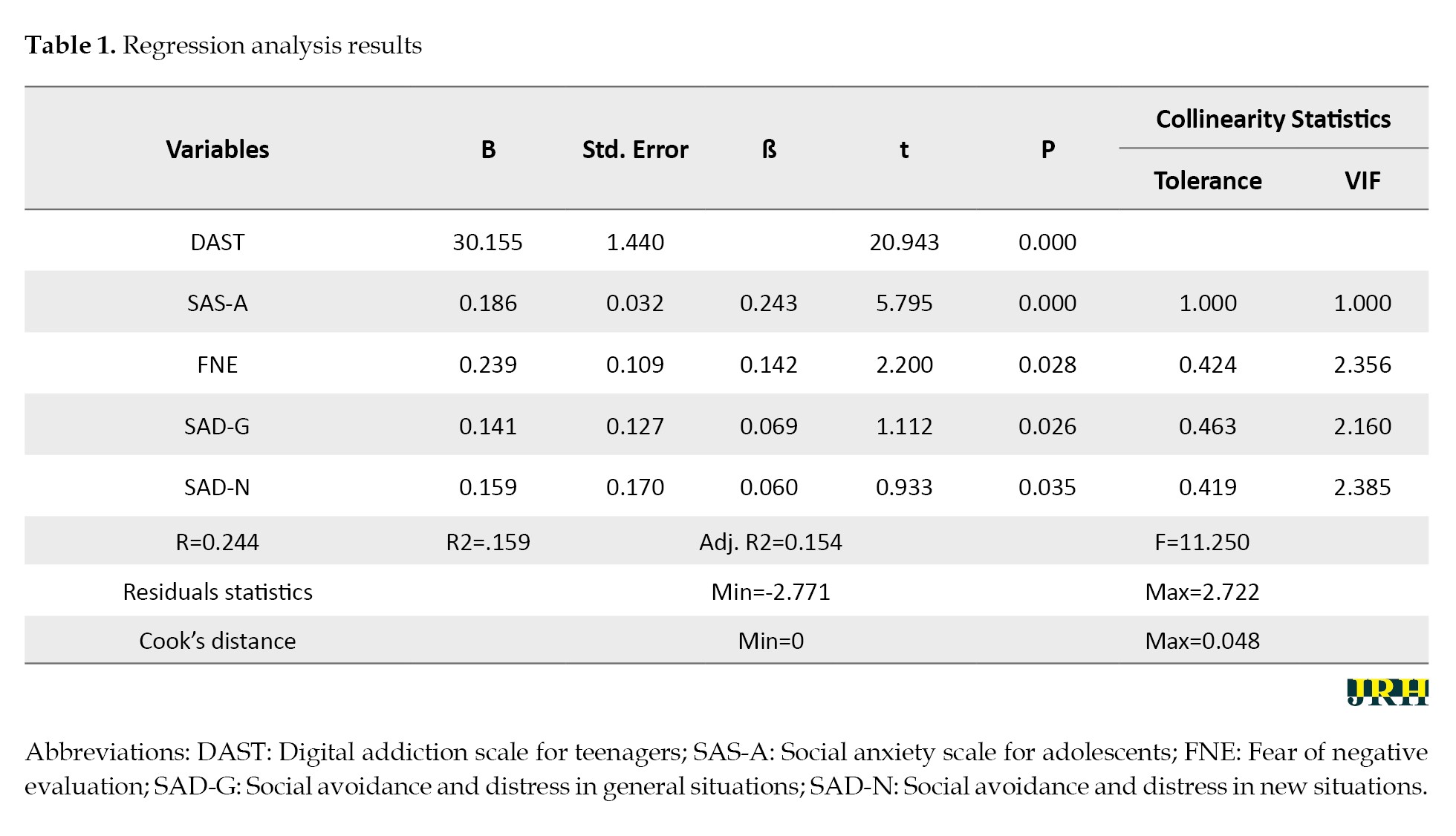
Furthermore, the standardized residual values ranged between ±3.29, and since the maximum Cook’s distance did not exceed 1.00, no outliers were detected (Table 1).
Results
Table 2 presents the demographic characteristics of the adolescents participating in the study.
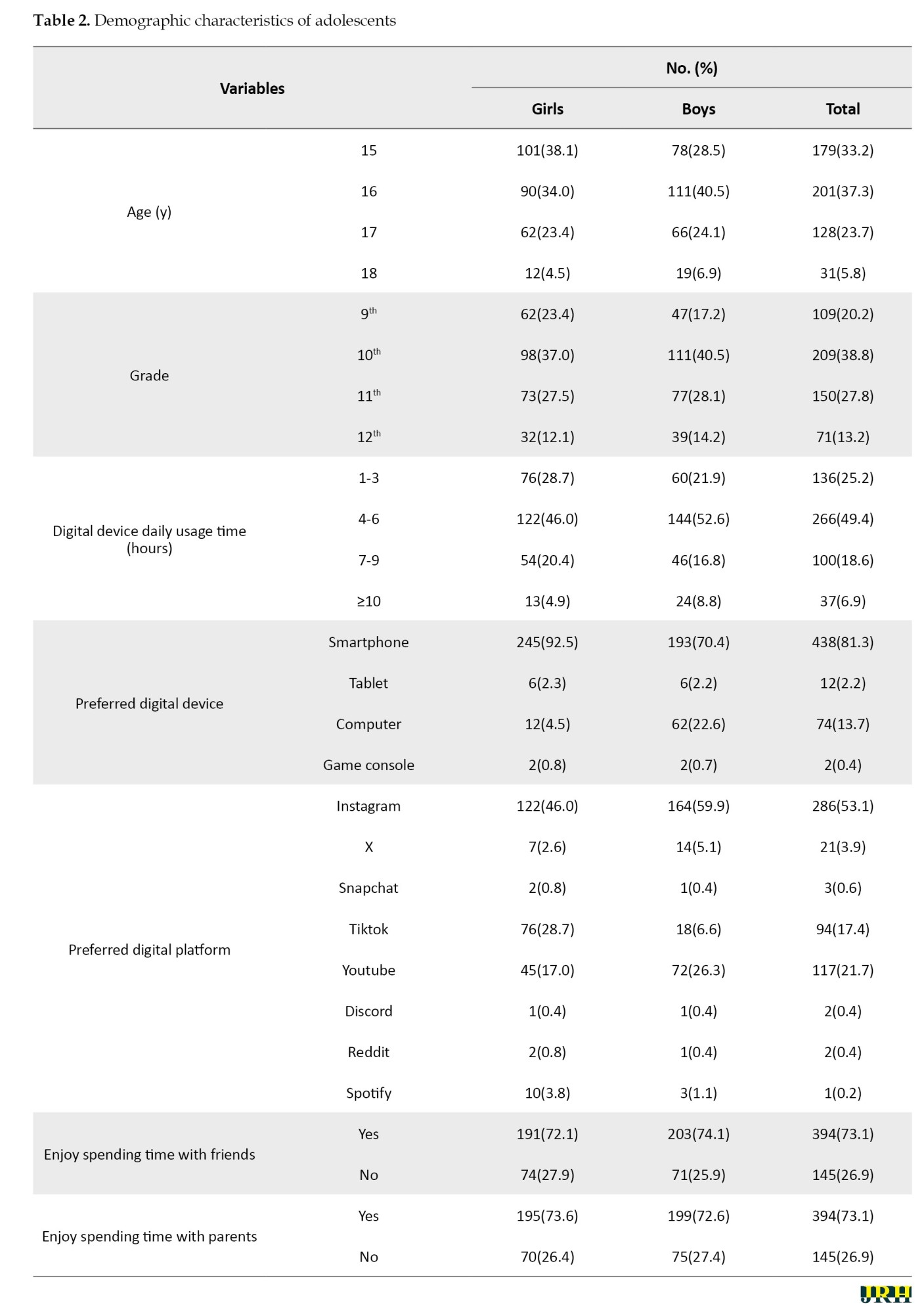
Of the 539 adolescents who participated in the study, 49.2% were girls (n=265) and 50.8% were boys (n=274). The adolescents’ ages ranged from 15 to 18 years, with the majority being 16 years old (37.3%, n=201). Of those attending high school, most were in 10th grade (38.8%, n=209). The most frequently used digital device among adolescents was a smartphone (81.3%, n=438), with an average daily usage time of 4–6 hours (49.4%, n =266). Instagram was the most frequently used digital platform (53.1%, n=286). Additionally, the majority of adolescents enjoyed spending time with friends and parents, as well as participating in social activities (73.1%, n=394), (Table 2).
According to Table 3, the mean digital addiction score of the adolescent participants in this study was 37.66, with a standard deviation of 11.58.
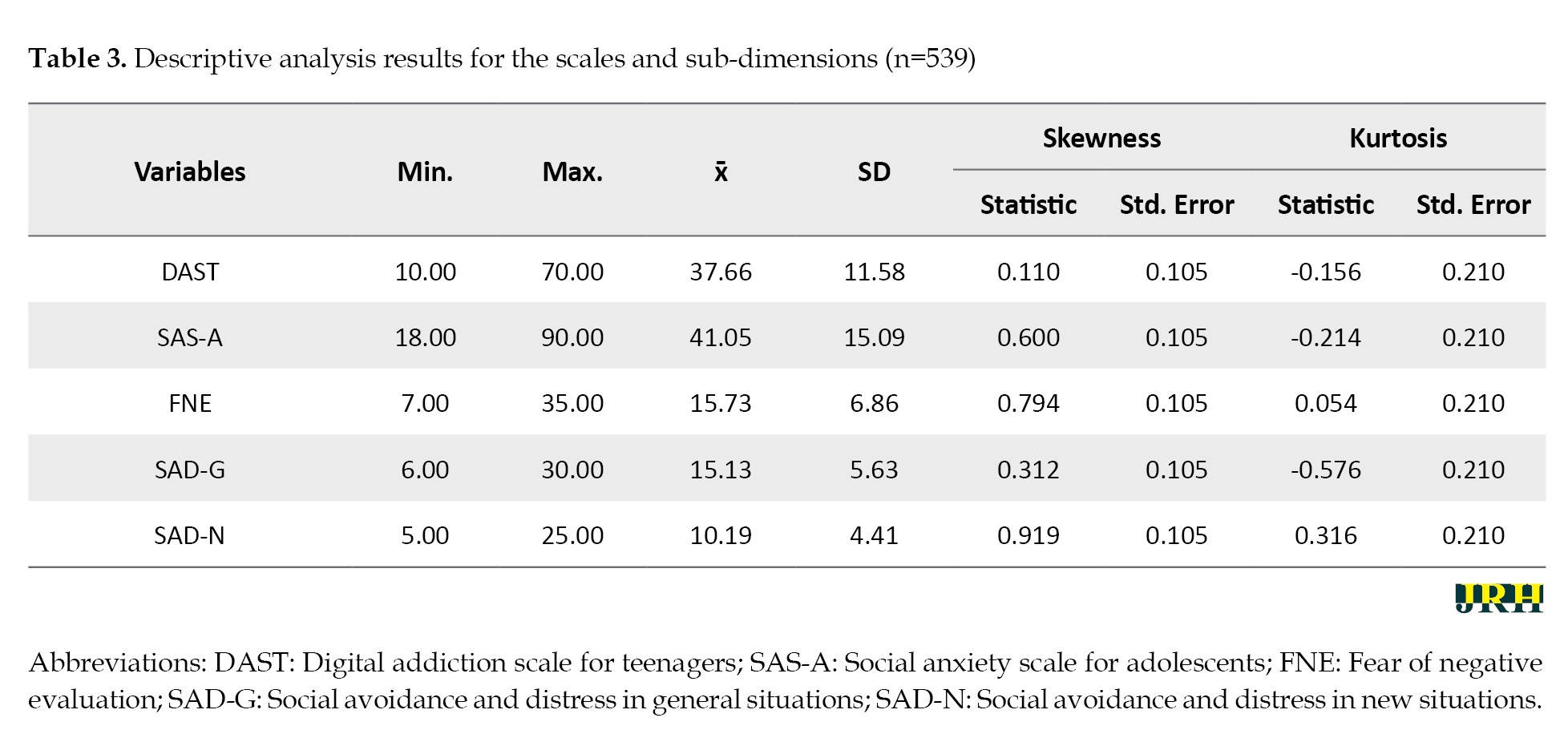
The scores ranged from 10 to 70 points. The mean social anxiety score of the adolescents was 41.05, with a standard deviation of 15.09. The lowest score was 18, and the highest was 90. Of the sub-dimensions, adolescents’ mean fear of negative evaluation score was 15.73, which was higher than the other sub-dimensions.
According to the results of the correlation analysis in Table 4, there was a strong positive correlation between adolescents’ digital addiction scores and their social anxiety (r=0.743).
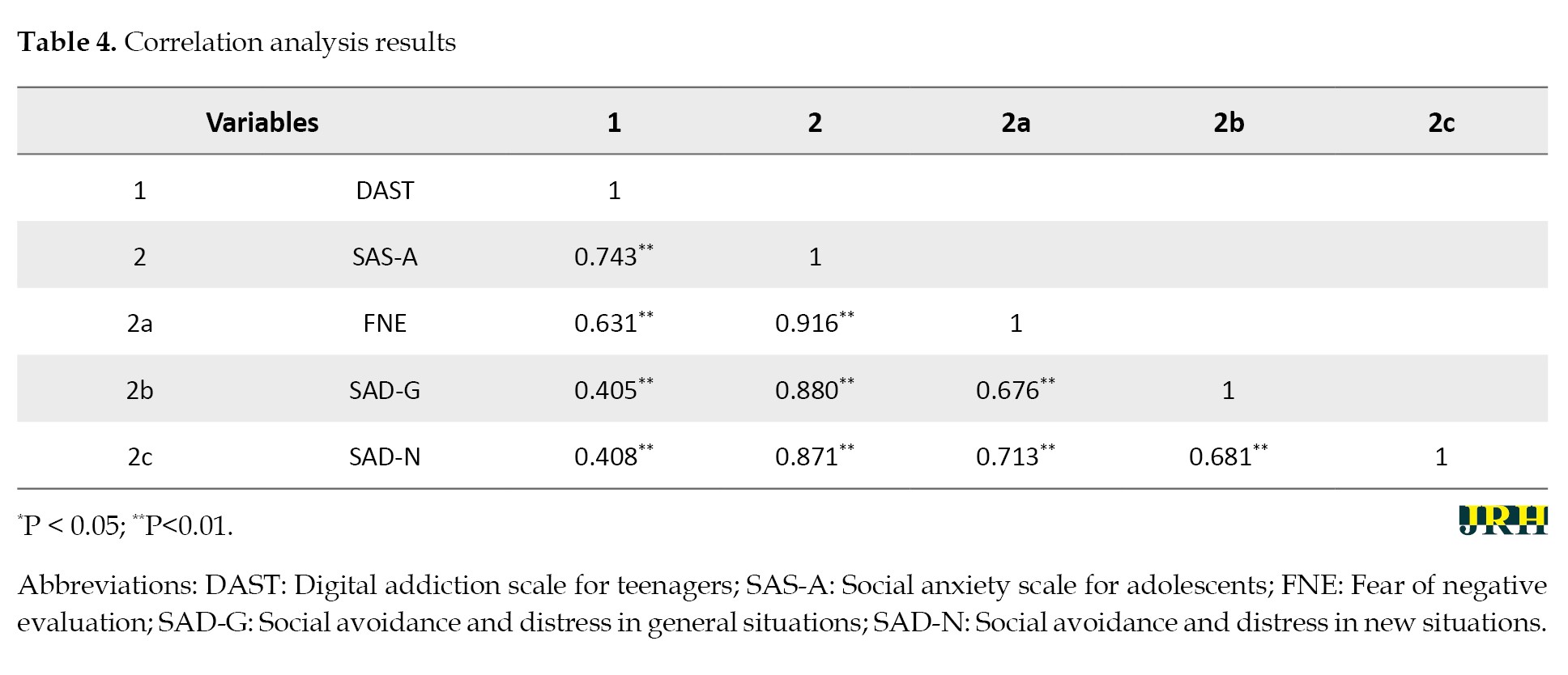
There was also a moderate positive correlation with fear of negative evaluation (r=0.631), as well as with social avoidance and distress in new (r=0.405) and in general situations (r=0.408). All correlations were significant (P<0.01).
First, we conducted a linear regression analysis to determine whether digital addiction significantly predicted social anxiety in adolescents. We then created a linear model to show the extent to which digital addiction predicted social anxiety. This model revealed that digital addiction accounted for 15.4% of the variance in social anxiety (R²=0.154).
Discussion
This study examined the relationship between digital addiction and social anxiety levels in adolescents and produced some important findings. First, the levels of digital addiction and social anxiety among adolescents were average. Similarly, Seema et al. [29] used the DAST to measure digital addiction in adolescents and obtained an average score of 34.8. According to Üstündağ [12], adolescents are a high-risk group for Internet addiction. Some research results suggest that adolescents’ Internet addiction is moderate [30, 31], while others suggest that it is low [7].
Many factors may affect digital addiction in adolescents. Examining studies on digital addiction in adolescents in the literature reveals that variables such as family relationships, peer relationships, gender, media exposure, lack of social skills, loneliness, shyness, and insufficient social support may be risk factors [7, 8, 32]. It is believed that the differences in the research results stem from these variables. Therefore, it is important to acknowledge that Turkish adolescents are at risk and to develop intervention programs accordingly.
It was determined that the level of social anxiety among adolescents was average, and that their mean fear of negative evaluation was higher than that of the other sub-dimensions. Concerns about being criticized, rejected, or embarrassed have long been recognized as a fundamental cognitive bias in social anxiety [33]. Studies show that adolescents with social anxiety fear all kinds of social evaluations. Karp et al. [34] demonstrated that adolescents with social anxiety tend to fear negative evaluations, such as ridicule. Fredrick and Luebbe [35] also stated that young people with social anxiety fear all kinds of social evaluations. Furthermore, other studies have demonstrated an association between fear of negative evaluation and social anxiety symptoms in adolescents [36, 37].
Another important finding was the strong correlation between digital addiction and social anxiety among adolescents. It was also determined that digital addiction predicts social anxiety. According to the results, a 24.3% increase in social anxiety levels is expected as digital addiction levels in adolescents increase, and this rate should be considered. This finding is consistent with the limited research on the relationship between digital addiction and social anxiety in adolescents. Studies have shown that adolescents with low social competence and introverted behaviours exhibit higher levels of digital addiction [38, 39]. Traş and Gökçen [40] found a positive correlation between internet addiction and social anxiety. Yurdagül et al. [41] have shown through their research that adolescents who experience higher levels of general loneliness and social anxiety tend to engage more in digital activities. Ime et al. [7] also showed that adolescents with high levels of digital addiction, loneliness, and shyness have high levels of social anxiety. Kavici and Ayaz-Alkaya [42] determined that adolescents with high social anxiety levels have a higher risk of Internet addiction, and that Internet addiction and social anxiety are predictive factors for each other. Similarly, Yayan et al. [13] showed that adolescents with social anxiety are Internet addicts.
Those who have difficulty forming social relationships may try to meet their social interaction needs through various channels. In this context, digital tools can play a mediating role and help adolescents to interact and feel more secure. Furthermore, digital environments can serve as a refuge for those with difficulties in social relationships. Research shows that social anxiety is common among adolescents and can increase during face-to-face communications. This leads adolescents to use digital platforms [43]. Bhagat et al. [44] showed that adolescents with social anxiety avoid social relationships and turn to digital devices. Thus, digital devices have become more attractive to those who experience loneliness due to social anxiety. Üstündağ et al. [45] also showed that social anxiety has a significant negative impact on adolescents’ communication skills.
Conclusion
Digital addiction is associated with social anxiety among Turkish adolescents, and higher digital addiction levels are linked to higher social anxiety levels. Therefore, it is important to educate adolescents on how to use digital technology tools without reinforcing addictive behaviours. This will make them more effective and conscious technology users. They should also be supported in reducing social anxiety, participating in social activities, and strengthening friendships. Therefore, teachers and guidance counselors should assess whether adolescents need professional support. When deemed necessary, adolescents can be referred to a healthcare facility in collaboration with pediatricians, child psychiatrists, and pediatric and child psychiatric nurses. Experts can assess adolescents’ digital addiction and social anxiety levels and provide professional intervention. Psychologists can also be referred to ensure they receive the necessary healthcare services. These guidelines are necessary to support the healthy development of adolescents. Another important finding that should be considered is that as adolescents’ digital addiction increases, their fear of negative evaluation may increase significantly. Therefore, strategies to support positive body image in adolescents are important.
Many factors contribute to both digital addiction and social anxiety. The findings of the current study suggest that digital addiction may be a critical risk factor for social anxiety in adolescents aged 15–18, rather than being the sole factor. This is because adolescents with social anxiety may prefer digital environments over social ones. It is therefore important to be aware of this high probability and recognize that adolescents are at high risk, to develop intervention programs accordingly. This study makes an important contribution to the literature on the mental health of Turkish adolescents. Furthermore, interventions aimed at reducing digital addiction and social anxiety in adolescents could be crucial for enhancing their overall biopsychosocial health.
This study had some limitations. First, the findings reflect the results of the adolescents who participated in the study; therefore, generalization may not be possible. Second, although digital addiction was found to predict social anxiety in adolescents, other risk factors may also have an effect. Third, because the study was cross-sectional, causal inferences cannot be drawn from the results. Fourth, the scales used in the study were self-assessment scales; therefore, the possibility of denial should be considered. The scales do not diagnose anyone, but only provide an opportunity to screen for the condition within a community.
Ethical Considerations
Compliance with ethical guidelines
This study was approved by the Ethics Committee of University of Health Sciences, Ankara, Turkey (Code: 07.01.2025 and numbered 2025-54).
Funding
This research did not receive any grant from funding agencies in the public, commercial, or non-profit sectors.
Authors' contributions
Conceptualization and methodology: Alev Üstündağ, Kader Erdem, and Ayşe Bağiş; Data collection: Kader Erdem, Ayşe Bağiş; Software, validation, formal analysis, investigation, resources, data curation, analysis, and writing: Alev Üstündağ; Final approval: All authors.
Conflict of interest
The authors declared no conflicts of interest.
Acknowledgments
The authors thank the high school students who voluntarily participated in this study.
In recent years, the globalization of the Internet and technological advances have driven one of the biggest behavioural changes in society, particularly affecting children and adolescents [1]. Adolescents have become more involved in online activities, spending a significant amount of time on them [2]. In 2015, the World Health Organization (WHO) published a report highlighting the need to consider the public health impacts of excessive use of the Internet, computers, smartphones, and similar electronic devices [2].
Over the past decade, there has been a significant increase in the use of digital media, and research findings indicate that these evolving media forms have both beneficial and harmful effects on the health of children and young people [3]. Contrary to popular belief, digital technology not only connects individuals but also enables organizations to interact effectively with their desired audiences. In light of this information, social media has become an integral part of contemporary life for many people as its popularity has grown [4]. Digital technology also positively contributes to adolescents’ communication, social, and emotional development. In this regard, participating in social media platforms enhances adolescents’ interactions and relationships and promotes advanced communication skills and emotional well-being. By facilitating the exchange of ideas and cultural interests, it provides a supportive environment to discover diverse characteristics. Social media platforms also enable young people to perform various online tasks that mirror their offline lives, such as connecting with friends and family, meeting new people, and expressing opinions [4-6].
Digital addiction is a type of addiction resulting from problematic use of technological devices [7]. Manifesting itself in various online behaviours, such as online gaming, social networking, and online shopping, digital addiction is not only a behavioural addiction, but also involves impaired impulse control [8]. Adolescents may be at particular risk of digital addiction, as they are more likely than other age groups to engage in excessive Internet use [9]. This is because digital addiction is considered an umbrella term covering subtypes, such as Internet gaming and social media addiction [10]. Numerous recent studies have shown that digital addiction is more prevalent among adolescents [7, 11-13].
The ease with which many things can be done through smartphones and the Internet helps increase usage rates. Furthermore, the majority of adolescents describe themselves as ‘constantly connected’ to the Internet [12]. Üstündağ [14] found a relationship between smartphones, social media, and gaming addictions. Similarly, Xiao et al. [15] found that smartphone addiction among adolescents increased significantly. Furthermore, Karakaya [16] found that adolescents’ levels of technology addiction were significantly high. According to Arslan [17], frequent use of digital devices leads to digital addiction and avoidance of social environments.
Studies have shown that digital addiction negatively affects individuals’ health, disrupts their work, study, and social activities, and causes personal and family problems [18]. Karaer and Akdemir [19] found that adolescents with Internet addiction had lower perceptions of social support and experienced more difficulties with communication, emotional regulation, and self-identification. Soriano-Molina et al. [20] investigated the link between internet addiction and the mental health of adolescents. They discovered that Internet addiction was positively associated with aggression, depression, anxiety, and suicidal behaviour, while being negatively associated with psychological well-being and self-esteem. Therefore, it can be concluded that adolescents with internet addiction may exhibit higher levels of social anxiety. Ekinci et al. [21] found a strong positive correlation between Internet addiction and social anxiety, suggesting that ease of access to the Internet exacerbates anxiety levels. The fact that social anxiety most frequently occurs during adolescence plays a critical role in its evaluation, especially during this period [22].
Social anxiety is a chronic condition characterized by excessive fear of social situations and a focus on negative evaluation by others [23]. It usually begins in childhood or adolescence and persists into adulthood [24]. Those with social anxiety may find it difficult to interact or speak with others for fear of rejection. Social anxiety has a widespread impact, affecting functionality in various areas of life and lowering overall mood and well-being. Urbán et al. [25] found that social anxiety during adolescence negatively affects academic achievement and performance, as well as self-concept, self-esteem, self-efficacy, goals, attachment, adjustment, participation, rejection, absenteeism, anxiety, and learning strategies.
A lack of in-person social interaction and the need for social contact may lead adolescents to turn to digital platforms. They may feel safer in a virtual environment, where they can form more distant and superficial relationships with like-minded individuals. Although international studies have examined the relationship between digital addiction and social anxiety, gaps remain in our understanding of how digital addiction affects social anxiety. Studies conducted with adolescents mostly focus on topics, such as social anxiety and social media addiction, body mass index, nomophobia, and anger management [11, 26]. Yayan et al. [13] hypothesized that adolescents with social anxiety are Internet addicts and that adolescents use the internet more for entertainment than for socializing. This assumption needs to be verified using current data.
In conclusion, digital addiction and social anxiety significantly impact each other. The digital age in which we live, along with the high rates at which adolescents use digital tools, makes it important to investigate this issue. Therefore, this study aimed to examine the relationship between digital addiction and social anxiety in adolescents. The sub-objectives determined in line with this aim are as follows:
What are the digital addiction and social anxiety scores of adolescents?
Is there a relationship between digital addiction and social anxiety in adolescents?
To what extent does digital addiction predict social anxiety in adolescents?
Methods
Research model and participants
This study employed a correlational research design, a quantitative research method. Correlational research examines the relationship between two or more variables without intervention. The correlational research method was chosen as the most appropriate for achieving our research objective.
The study was conducted in four high schools in Ankara, Turkey, between January and May 2025. The target population comprised 3.255 students. Students from the schools who participated in the research were selected using simple random sampling. In this method, every possible combination of items in the population has an equal probability of being included in the sample. The sample size was determined using G*Power software, version 3.1.9.7, which is used when the population size is known. We concluded that the total sample size should be at least 469. The study’s participants consisted of 539 volunteer adolescents, aged 15–18, who were attending high school.
The inclusion criteria included residing in Ankara Province, Turkey, attending one of the four designated schools, being between the ages of 15 and 18, volunteering, completing the data forms appropriately, and having no communication barriers. The exclusion criteria included not residing in Ankara Province, not attending one of the four designated schools, not being between the ages of 15 and 18, not volunteering, not completing the data forms appropriately, and having any communication barriers.
Data collection tools
The study’s data collection tools were the demographic information form, digital addiction scale for teenagers (DAST), and social anxiety scale for adolescents (SAS-A).
Demographic Information Form: This form, prepared by the researchers, aims to collect the demographic information from the adolescents participating in the study.
DAST: The scale was translated into Turkish by Bağatarhan [27]. The 10-item, unidimensional scale was developed to measure the digital addiction levels of adolescents. It uses a 7-point Likert scale ranging from ‘Never’ (1) to ‘Very often’ (7). Scores between 10 and 70 can be obtained, with high scores indicating high digital addiction. The Cronbach’s α reliability coefficient for this study was 0.85.
SAS-A: The scale was adapted for use in a Turkish context by Aydın and Tekinsav Sütçü [28]. The scale consists of 18 items and three sub-dimensions: Fear of Negative Evaluation (FNE), Social Avoidance and Distress in General Situations (SAD-G), and Social Avoidance and Distress in New Situations (SAD-N). A high score in each sub-dimension indicates that the individual exhibits the characteristics evaluated by that sub-dimension. The scale is a five-point Likert-type scale ranging from 1 (never) to 5 (always). The lowest and highest possible scores were 18 and 90, respectively. High scores indicate an increase in social anxiety. In the Turkish validity and reliability study of the scale, the Cronbach’s α coefficient was 0.88. In this study, Cronbach’s α coefficient was 0.89.
Data collection
The data collection tools were administered face-to-face by the researchers to adolescents in the sample group during their free time at school. The scale form specifically stated that participation in the study was voluntary and confidential. Detailed explanations were provided prior to application, and adolescents who did not wish to participate were excluded from the study. It took approximately 10–15 minutes for the adolescents to complete the scales. The collected forms were checked, and those that were incomplete or incorrectly completed were excluded from the study. Consent forms were obtained from both parents and adolescents before data collection. Forms that were not completed appropriately were excluded from the analysis.
Data analysis
Data were analyzed using SPSS software, version 25. The prerequisites for parametric tests were examined by assessing at the skewness and kurtosis values to determine whether the data were normally distributed. Given the assumption of a normal distribution of the data, parametric tests were employed in the analysis. The demographic characteristics of adolescents were calculated using descriptive analyses. Pearson’s correlation analysis was performed to ascertain whether there was a relationship between digital addiction and social anxiety levels in adolescents. This test is used to determine the strength and direction of the relationship between two continuous variables. A regression analysis was conducted to ascertain the extent to which adolescents’ digital addiction could be explained by their social anxiety. The significance level was set at P<0.05 for the study. The cut-off points used in interpreting the correlation coefficients obtained were as follows: 0.00-0.19 very low, 0.20-0.39 low, 0.40-0.69 moderate, 0.70-0.89 high, and 0.90-1.00 very high correlation. There was no multicollinearity, as the variance inflation factors (VIFs) were below 10 (Table 1).
Furthermore, the standardized residual values ranged between ±3.29, and since the maximum Cook’s distance did not exceed 1.00, no outliers were detected (Table 1).
Results
Table 2 presents the demographic characteristics of the adolescents participating in the study.
Of the 539 adolescents who participated in the study, 49.2% were girls (n=265) and 50.8% were boys (n=274). The adolescents’ ages ranged from 15 to 18 years, with the majority being 16 years old (37.3%, n=201). Of those attending high school, most were in 10th grade (38.8%, n=209). The most frequently used digital device among adolescents was a smartphone (81.3%, n=438), with an average daily usage time of 4–6 hours (49.4%, n =266). Instagram was the most frequently used digital platform (53.1%, n=286). Additionally, the majority of adolescents enjoyed spending time with friends and parents, as well as participating in social activities (73.1%, n=394), (Table 2).
According to Table 3, the mean digital addiction score of the adolescent participants in this study was 37.66, with a standard deviation of 11.58.
The scores ranged from 10 to 70 points. The mean social anxiety score of the adolescents was 41.05, with a standard deviation of 15.09. The lowest score was 18, and the highest was 90. Of the sub-dimensions, adolescents’ mean fear of negative evaluation score was 15.73, which was higher than the other sub-dimensions.
According to the results of the correlation analysis in Table 4, there was a strong positive correlation between adolescents’ digital addiction scores and their social anxiety (r=0.743).
There was also a moderate positive correlation with fear of negative evaluation (r=0.631), as well as with social avoidance and distress in new (r=0.405) and in general situations (r=0.408). All correlations were significant (P<0.01).
First, we conducted a linear regression analysis to determine whether digital addiction significantly predicted social anxiety in adolescents. We then created a linear model to show the extent to which digital addiction predicted social anxiety. This model revealed that digital addiction accounted for 15.4% of the variance in social anxiety (R²=0.154).
Discussion
This study examined the relationship between digital addiction and social anxiety levels in adolescents and produced some important findings. First, the levels of digital addiction and social anxiety among adolescents were average. Similarly, Seema et al. [29] used the DAST to measure digital addiction in adolescents and obtained an average score of 34.8. According to Üstündağ [12], adolescents are a high-risk group for Internet addiction. Some research results suggest that adolescents’ Internet addiction is moderate [30, 31], while others suggest that it is low [7].
Many factors may affect digital addiction in adolescents. Examining studies on digital addiction in adolescents in the literature reveals that variables such as family relationships, peer relationships, gender, media exposure, lack of social skills, loneliness, shyness, and insufficient social support may be risk factors [7, 8, 32]. It is believed that the differences in the research results stem from these variables. Therefore, it is important to acknowledge that Turkish adolescents are at risk and to develop intervention programs accordingly.
It was determined that the level of social anxiety among adolescents was average, and that their mean fear of negative evaluation was higher than that of the other sub-dimensions. Concerns about being criticized, rejected, or embarrassed have long been recognized as a fundamental cognitive bias in social anxiety [33]. Studies show that adolescents with social anxiety fear all kinds of social evaluations. Karp et al. [34] demonstrated that adolescents with social anxiety tend to fear negative evaluations, such as ridicule. Fredrick and Luebbe [35] also stated that young people with social anxiety fear all kinds of social evaluations. Furthermore, other studies have demonstrated an association between fear of negative evaluation and social anxiety symptoms in adolescents [36, 37].
Another important finding was the strong correlation between digital addiction and social anxiety among adolescents. It was also determined that digital addiction predicts social anxiety. According to the results, a 24.3% increase in social anxiety levels is expected as digital addiction levels in adolescents increase, and this rate should be considered. This finding is consistent with the limited research on the relationship between digital addiction and social anxiety in adolescents. Studies have shown that adolescents with low social competence and introverted behaviours exhibit higher levels of digital addiction [38, 39]. Traş and Gökçen [40] found a positive correlation between internet addiction and social anxiety. Yurdagül et al. [41] have shown through their research that adolescents who experience higher levels of general loneliness and social anxiety tend to engage more in digital activities. Ime et al. [7] also showed that adolescents with high levels of digital addiction, loneliness, and shyness have high levels of social anxiety. Kavici and Ayaz-Alkaya [42] determined that adolescents with high social anxiety levels have a higher risk of Internet addiction, and that Internet addiction and social anxiety are predictive factors for each other. Similarly, Yayan et al. [13] showed that adolescents with social anxiety are Internet addicts.
Those who have difficulty forming social relationships may try to meet their social interaction needs through various channels. In this context, digital tools can play a mediating role and help adolescents to interact and feel more secure. Furthermore, digital environments can serve as a refuge for those with difficulties in social relationships. Research shows that social anxiety is common among adolescents and can increase during face-to-face communications. This leads adolescents to use digital platforms [43]. Bhagat et al. [44] showed that adolescents with social anxiety avoid social relationships and turn to digital devices. Thus, digital devices have become more attractive to those who experience loneliness due to social anxiety. Üstündağ et al. [45] also showed that social anxiety has a significant negative impact on adolescents’ communication skills.
Conclusion
Digital addiction is associated with social anxiety among Turkish adolescents, and higher digital addiction levels are linked to higher social anxiety levels. Therefore, it is important to educate adolescents on how to use digital technology tools without reinforcing addictive behaviours. This will make them more effective and conscious technology users. They should also be supported in reducing social anxiety, participating in social activities, and strengthening friendships. Therefore, teachers and guidance counselors should assess whether adolescents need professional support. When deemed necessary, adolescents can be referred to a healthcare facility in collaboration with pediatricians, child psychiatrists, and pediatric and child psychiatric nurses. Experts can assess adolescents’ digital addiction and social anxiety levels and provide professional intervention. Psychologists can also be referred to ensure they receive the necessary healthcare services. These guidelines are necessary to support the healthy development of adolescents. Another important finding that should be considered is that as adolescents’ digital addiction increases, their fear of negative evaluation may increase significantly. Therefore, strategies to support positive body image in adolescents are important.
Many factors contribute to both digital addiction and social anxiety. The findings of the current study suggest that digital addiction may be a critical risk factor for social anxiety in adolescents aged 15–18, rather than being the sole factor. This is because adolescents with social anxiety may prefer digital environments over social ones. It is therefore important to be aware of this high probability and recognize that adolescents are at high risk, to develop intervention programs accordingly. This study makes an important contribution to the literature on the mental health of Turkish adolescents. Furthermore, interventions aimed at reducing digital addiction and social anxiety in adolescents could be crucial for enhancing their overall biopsychosocial health.
This study had some limitations. First, the findings reflect the results of the adolescents who participated in the study; therefore, generalization may not be possible. Second, although digital addiction was found to predict social anxiety in adolescents, other risk factors may also have an effect. Third, because the study was cross-sectional, causal inferences cannot be drawn from the results. Fourth, the scales used in the study were self-assessment scales; therefore, the possibility of denial should be considered. The scales do not diagnose anyone, but only provide an opportunity to screen for the condition within a community.
Ethical Considerations
Compliance with ethical guidelines
This study was approved by the Ethics Committee of University of Health Sciences, Ankara, Turkey (Code: 07.01.2025 and numbered 2025-54).
Funding
This research did not receive any grant from funding agencies in the public, commercial, or non-profit sectors.
Authors' contributions
Conceptualization and methodology: Alev Üstündağ, Kader Erdem, and Ayşe Bağiş; Data collection: Kader Erdem, Ayşe Bağiş; Software, validation, formal analysis, investigation, resources, data curation, analysis, and writing: Alev Üstündağ; Final approval: All authors.
Conflict of interest
The authors declared no conflicts of interest.
Acknowledgments
The authors thank the high school students who voluntarily participated in this study.
References
- Vigna-Taglianti F, Brambilla R, Priotto B, Angelino R, Cuomo G, Diecidue R. Problematic internet use among high school students: Prevalence, associated factors and gender differences. Psychiatry research. 2017; 257:163-71. [DOI:10.1016/j.psychres.2017.07.039] [PMID]
- WHO. ICD-11: International classification of diseases 11th revision. Geneva: World Health Organization; 2019. [Link]
- Reid Chassiakos Y, Radesky J, Christakis D, Moreno MA, Cross C. Council on communications and media. Pediatrics. 2016; 138(5):e20162593. [DOI:10.1542/peds.2016-2593] [PMID]
- Çapcıoğlu İ. [Youth, technology, and society in the 21st century: A global perspective on yesterday, today, and tomorrow (Turkish)]. In: Baş F, Karacan D, editors. [youth, technology and society: Religion, values and morality in the digital age (Turkish)]. İstanbul: Değerler Eğitimi Merkezi Yayınları; 2025. [Link]
- Arıcı HY. [Digitalization and perception of value: Alternative digital approaches for children and youth against the negative effects of digital applications (Turkish)]. Pamukkale University Journal of Divinity Faculty. 2025; 12(3):157-82. [DOI:10.17859/pauifd.1641542]
- Katırcı EK, Bulut S. [Effects of social media on children and adolescents: a literature review (Turkish)]. Journal of Ibn Haldun Studies. 2024; 9(2):125-44. [DOI:10.36657/ihcd.2024.122]
- Ime Y, Akyıl Y, Caglar A. The examination of the relationships among digital addiction, loneliness, shyness, and social anxiety in adolescents. Annals of Psychology. 2024; 40(2):236-41. [DOI:10.6018/analesps.579801]
- Li Q, Yu Y, Wang X, Wong SYS, Yang X. The relationship between parental affective disorders and digital addiction in children and adolescents: A systematic review and meta-analysis. Addictive Behaviors. 2025; 164:108282. [DOI:10.1016/j.addbeh.2025.108282] [PMID]
- Anderson EL, Steen E, Stavropoulos V. Internet use and problematic internet use: A systematic review of longitudinal research trends in adolescence and emergent adulthood. International Journal of Adolescence and Youth. 2017; 22(4):430-54. [DOI:10.1080/02673843.2016.1227716]
- Almourad MB, McAlaney J, Skinner T, Pleya M, Ali R. Defining digital addiction: Key features from the literature. Psihologija. 2020; 53(3):237-53. [DOI:10.2298/PSI191029017A]
- Uyaroğlu AK, Ünal E, Tosun AS. The relationship between digital addiction and social anxiety, trait anger and anger expression style in adolescents. Journal of Pediatric Nursing. 2025; 81:175-82. [DOI:10.1016/j.pedn.2024.11.024] [PMID]
- Üstündağ A. The predictive role of media literacy on internet addiction among Turkish adolescents. Journal of Research and Health. 2024; 14(1):19-30. [DOI:10.32598/JRH.14.1.2365.1]
- Yayan EH, Arikan D, Saban F, Gürarslan Baş N, Özel Özcan Ö. Examination of the correlation between Internet addiction and social phobia in adolescents. Western Journal of Nursing Research. 2017; 39(9):1240-54. [DOI:10.1177/0193945916665820] [PMID]
- Üstündağ A. [Analysis of the relationship between children’s social media, smartphone and game addiction (Turkish)]. Journal of Dependence. 2022; 23(3):316-26. [DOI:10.51982/bagimli.1004767]
- Xiao B, Zhao H, Hein-Salvi C, Parent N, Shapka JD. Examining self-regulation and problematic smartphone use in Canadian adolescents: A parallel latent growth modeling approach. Journal of Youth and Adolescence. 2025; 54(2):468-79. [DOI:10.1007/s10964-024-02071-x] [PMID]
- Seker R, Kartal T, Tasdemir A, Kızıltepe IS. Examining adolescents’ technology addiction levels before and after COVID-19 pandemic. J Educ Sci Environ Health. 2023; 9(4):330-47. [Link]
- Arslan A. [Determination of the digital addiction levels of students university according to variousvariables (Turkish)]. International e-Journal of Educational Studies. 2020; 4(7):27-41. [DOI:10.31458/iejes.600483]
- Dahl D, Bergmark KH. Persistence in problematic internet use a systematic review and meta-analysis. Frontiers in Sociology. 2020; 5:30. [DOI:10.3389/fsoc.2020.00030] [PMID] [PMCID]
- Karaer Y, Akdemir D. Parenting styles, perceived social support and emotion regulation in adolescents with internet addiction. Comprehensive Psychiatry. 2019; 92:22-7. [DOI:10.1016/j.compppsych.2019.03.003] [PMID]
- Soriano-Molina E, Limiñana-Gras RM, Patró-Hernández RM, Rubio-Aparicio M. The association between internet addiction and adolescents’ mental health: A meta-analytic review. Behavioral Sciences. 2025; 15(2):116. [DOI:10.3390/bs15020116] [PMID] [PMCID]
- Ekinci NA, Yazar MA, Mermer A, Korkmaz R. The effect of internet addiction on preoperative anxiety in adolescents. Osmangazi Journal of Med. 2025; 47(1):85-90. [DOI:10.20515/otd.1584127]
- Cannon CJ, Makol BA, Keeley LM, Qasmieh N, Okuno H, Racz SJ, et al. A paradigm for understanding adolescent social anxiety with unfamiliar peers: Conceptual foundations and directions for future research. Clinical Child and Family Psychology Review. 2020; 23(3):338-64. [DOI:10.1007/s10567-020-00314-4] [PMID]
- Jefferies P, Ungar M. Social anxiety in young people: A prevalence study in seven countries. PloS one. 2020; 15(9):e0239133. [DOI:10.1371/journal.pone.0239133] [PMID] [PMCID]
- Torabi F, Hashemi M, Zamanian M, Shayganfard M, Yousefichaijan P. The prevalence of social anxiety in children with chronic functional constipation. Journal of Comprehensive Pediatrics. 2023; 14(1):e132384. [DOI:10.5812/compreped-132384]
- Urbán DJ, La Greca AM, García-Fernández JM, Ingles CJ. A bibliometric analysis on adolescent social anxiety and psychoeducational variables in Web of Science 2002-2021. The Journal of General Psychology. 2024; 151(1):1-20. [DOI:10.1080/00221309.2022.2161982] [PMID]
- Ayaz-Alkaya S, Kulakçı-Altıntaş H. Social media addiction, nomophobia, and social anxiety among adolescents: A mediation analysis. Journal of Pediatric Nursing. 2025; 85:16-21. [DOI:10.1016/j.pedn.2025.07.008] [PMID]
- Bağatarhan T. [Digital Addiction Scale for Teenagers: Adaptation to Turkish, validity and reliability study (Turkish)]. Bolu Abant Izzet Baysal University Journal of Faculty of Education. 2023; 23(3):1376-97. [DOI:10.17240/aibuefd.2023..-1218692]
- Aydın A, Tekinsav Sütcü S. [Validity and reliability of Social Anxiety Scale for Adolescents (Turkish)]. Turkish Journal of Child and Adolescent Mental Health. 2007; 14(2):79-89. [Link]
- Seema R, Heidmets M, Konstabel K, Varik-Maasik E. Development and validation of the Digital Addiction Scale for Teenagers (DAST). Journal of Psychoeducational Assessment. 2022; 40(2):293-304. [DOI:10.1177/07342829211056394]
- Kaya A, Dalgiç AI. How does internet addiction affect adolescent lifestyles? Results from a school-based study in the Mediterranean region of Turkey. Journal of Pediatric Nursing. 2021; 59:e38-43. [DOI:10.1016/j.pedn.2021.01.021] [PMID]
- Mansuroğlu S, Tambağ H. The determination of internet addiction and violence tendency level among adolescents. Social Sciences Studies Journal. 2024; 5(51):6916-25. [DOI:10.26449/sssj.1944]
- Ge MW, Hu FH, Jia YJ, Tang W, Zhang WQ, Zhao DY, et al. The relationship between loneliness and internet or smartphone addiction among adolescents: A systematic review and meta-analysis. Psychological Reports. 2025; 128(3):1429-51. [DOI:10.1177/00332941231180119] [PMID]
- Weeks JW, Heimberg RG, Fresco DM, Hart TA, Turk CL, Schneier FR, Liebowitz MR. Empirical validation and psychometric evaluation of the brief fear of negative evaluation scale in patients with social anxiety disorder. Psychological Assessment. 2005; 17(2):179-90. [DOI:10.1037/1040-3590.17.2.179] [PMID]
- Karp JN, Makol BA, Keeley LM, Qasmieh N, Deros DE, Weeks JW, et al. Convergent, incremental, and criterion‐related validity of multi‐informant assessments of adolescents’ fears of negative and positive evaluation. Clinical Psychology & Psychotherapy. 2018; 25(2):217-30. [DOI:10.1002/cpp.2156] [PMID]
- Fredrick JW, Luebbe AM. Prospective associations between fears of negative evaluation, fears of positive evaluation, and social anxiety symptoms in adolescence. Child Psychiatry & Human Development. 2024; 55(1):195-205. [DOI:10.1007/s10578-022-01396-7] [PMID] [PMCID]
- Szollos S, Keeley LM, Makol BA, Weeks JW, Racz SJ, Lipton MF, et al. Multi-informant assessments of individual differences in adolescents’ socio-evaluative fears: Clinical correlates and links to arousal within social interactions. Journal of Child and Family Studies. 2019; 28:3360-73. [DOI:10.1007/s10826-019-01517-2]
- Vagos P, Salvador MC, Rijo D, Santos IM, Weeks JW, Heimberg RG. Measuring evaluation fears in adolescence. Measurement and Evaluation in Counseling and Development. 2017; 49:46-62. [DOI:10.1177/0748175615596781]
- Aslan H, Başcıllar M, Karataş K. Relationship between digital game addiction and social skills in adolescents. Journal of Dependence. 2022; 23(3):266-74. [DOI:10.51982/bagimli.1033761]
- Çelik OT, Konan N. The mediator role of interaction anxiety in the relationship between social support perception and smartphone addiction. Journal of Education and Future. 2019; 15(15):63-75. [DOI:10.30786/jef.397445]
- Traş Z, Gökçen G. Academic procrastination and social anxiety as predictive variables internet addiction of adolescents. International Education Studies. 2020; 13(9):23-35. [DOI:10.5539/ies.v13n9p23]
- Yurdagül C, Kircaburun K, Emirtekin E, Wang P, Griffiths MD. Psychopathological consequences related to problematic Instagram use among adolescents: The mediating role of body image dissatisfaction and moderating role of gender. International Journal of Mental Health and Addiction. 2021; 19(5):1385-97. [DOI:10.1007/s11469-019-00071-8]
- Kavici S, Ayaz-Alkaya S. Internet addiction, social anxiety and body mass index in adolescents: A predictive correlational design. Children and Youth Services Review. 2024; 160:107590. [DOI:10.1016/j.childyouth.2024.107590]
- Boursier V, Gioia F, Griffiths MD. Do selfie-expectancies and social appearance anxiety predict adolescents’ problematic social media use? Computers in Human Behavior. 2020; 110:106395. [DOI:10.1016/j.chb.2020.106395]
- Bhagat S, Jeong EJ, Kim DJ. The role of individuals’ need for online social interactions and interpersonal incompetence in digital game addiction. International Journal of Human-Computer Interaction. 2020; 36(5):449-63. [DOI:10.1080/10447318.2019.1654696]
- Üstündağ A, Haydaroğlu S, Sayan D, Güngör M. The relationship between social anxiety levels and effective communication skills of adolescents participating in sports. Scientific Reports. 2025; 15(1):15724. [DOI:10.1038/s41598-025-00800-1] [PMID] [PMCID]
Type of Study: Orginal Article |
Subject:
● Psychosocial Health
Received: 2025/11/26 | Accepted: 2026/02/25 | Published: 2026/07/1
Received: 2025/11/26 | Accepted: 2026/02/25 | Published: 2026/07/1
| Rights and permissions | |
 |
This work is licensed under a Creative Commons Attribution-NonCommercial 4.0 International License. |


This is an open access article distributed under the terms of the Creative Commons Attribution License (CC-By-NC), which permits use, distribution, and reproduction in any medium, provided the original work is properly cited and is not used for commercial purposes.
Contact Information
