

Volume 16, Issue 5 (Sep & Oct 2026)
J Research Health 2026, 16(5): 499-506 |
Back to browse issues page



Ethics code: February 21, 2024: 11/16


Download citation:
BibTeX | RIS | EndNote | Medlars | ProCite | Reference Manager | RefWorks
Send citation to:


BibTeX | RIS | EndNote | Medlars | ProCite | Reference Manager | RefWorks
Send citation to:
Göçer Ş, Polat T, Özdemir B. Determination of University Students’ Levels of Anxiety Related to Climate Change. J Research Health 2026; 16 (5) :499-506
URL: http://jrh.gmu.ac.ir/article-1-2968-en.html
URL: http://jrh.gmu.ac.ir/article-1-2968-en.html


1- Department of Public Health, Faculty of Medicine, Yozgat Bozok University, Yozgat, Türkiye. , semsinnurgocer@gmail.com
2- Department of Emergency and Disaster Management, Vocational School of Health Services, Erzincan Binali Yıldırım University of Erzincan, Erzincan, Türkiye.
3- Department of Physiotherapy and Rehabilitation, Sarıkaya School of Physiotherapy and Rehabilitation, Yozgat Bozok University, Yozgat, Türkiye.
Full-Text [PDF 727 kb]
(25 Downloads)
| Abstract (HTML) (659 Views)
Discussion
In our study, the average total score from the climate change anxiety scale was 26.8±0.2. The normative values reported by Özbay and Alcı in the Turkish adaptation of the climate change anxiety scale provide an important reference for interpreting the scores. The study indicated that the average score for the Turkish sample was approximately 24.5 and that the 25–30 point range represented a moderate level of concern [34]. Therefore, the anxiety scores of the students participating in our study were above the average. Research indicates that awareness of climate change is increasingly growing among young people [36]. However, some studies show that climate change awareness is low [37], while others indicate it is at a moderate level [38]. This variation may reflect the field of study, the presence or absence of environmental subjects in the curriculum, and the influence of students’ sociodemographic characteristics.
In the literature, it is stated that health sciences students have high awareness of climate change and environmental risks and that this awareness is related to anxiety. A systematic review found that health sciences students have significantly high levels of knowledge, attitudes, and anxiety regarding the effects of climate change on health [27, 28, 39].
In some studies of university students in our country, researchers found that students’ concerns about climate change are similar to those in our study [40]. Research involving social work students has also shown that climate change anxiety is above moderate levels [41] or even high in some studies [25]. Our results show that students have high levels of climate change anxiety. This is linked to the possibility that young people will be more exposed to the negative consequences of climate change in the future [42].
In our study, female students had higher mean total scores on the Climate Change Anxiety Scale than males, with a statistically significant difference (P<0.05). A study conducted with students in Türkiye found that women had higher levels of climate anxiety [41, 25]. The literature generally shows that women have higher anxiety levels than men [42]. Higher anxiety levels in women have been associated with gender and socially defined roles [41, 25].
A power analysis following the statistically significant gender difference in climate anxiety scores determined that the study had sufficient power to detect the observed effect size (1−β=0.83). This statistical significance suggests that the difference may be due to the influence of female gender on climate anxiety, rather than the fact that there are more female students than male students.
The direction of the findings is consistent with previous studies reporting higher levels of climate anxiety among women [41, 25]. This difference is addressed not only in terms of biological sex but also in the context of socially constructed gender roles. In this context, the concept of role overload, as emphasized by Crimmins et al. [43], provides an important explanatory framework. Women’s greater exposure to social expectations, such as caregiving responsibilities, emotional labor, and future-oriented protective roles, may lead them to develop greater psychological sensitivity to global and long-term threats, such as climate change. Therefore, the higher level of climate anxiety observed in female students may be shaped through social role expectations and perceived responsibility load rather than directly through gender differences.
In our study, students who reported their income as poor had higher mean total scores on the climate change anxiety scale, and a statistically significant difference was observed (P<0.05).
Some studies have shown no significant relationship between income level and anxiety. For example, studies in the field of social work have not found a significant relationship between income level and anxiety [41, 25]. However, other studies show that individuals with low income levels are more negatively affected by climate change and suggest a relationship between income level and climate anxiety, such as the study by Frumkin et al. [44].
In our study, the level of climate anxiety was significantly higher among students with a nuclear family type (P<0.05). In the literature, one study of students found no significant relationship between family type and climate anxiety. However, another study found a strong relationship between the number of siblings and climate awareness levels, with those with 1-2 siblings having higher average scores than those with more siblings [27].
The urban lifestyle, where the nuclear family structure is more prevalent, may cause students to encounter climate change-related risk narratives, media messages, and academic debates more intensely. Additionally, the higher levels of climate anxiety found among students from nuclear families may be related to a stronger sense of individual responsibility, increased environmental awareness, and relatively limited perceived social support networks. This finding shows that climate anxiety is shaped not only by environmental threats but also by family structure and social context.
In our study, climate anxiety was significantly higher among students living in dormitories (P<0.05). The literature review revealed that studies on this topic generally assess anxiety levels among residents of rural and urban areas [27, 29]. One study found high anxiety levels among students living in rural areas [29]. In our study, the dormitory where the students lived was located in a rural area; therefore, their anxiety levels may be higher due to experiencing the effects of climate change more directly and having a closer connection with nature.
In addition, the significantly higher level of concern about climate change among students living in dormitories can be explained by the increased social interaction and environmental awareness provided by shared living spaces. While university students in general show sensitivity to global environmental issues, such as climate change, students living in dormitories may experience higher levels of concern because they are more exposed to these interactions.
Because our results are self-reported and based on a single department, they may not generalize to other student populations. However, this study is important because it sheds light on future studies on climate change anxiety among university youth in our country.
Conclusion
This study found that climate change anxiety among university students is significantly associated with certain sociodemographic variables. The findings indicate that students living in dormitories and those from nuclear families exhibit higher levels of climate anxiety. This suggests that climate anxiety relates not only to individual awareness but also to contextual and psychosocial factors, such as perceived social support, environmental uncertainty, and sense of control. In particular, more limited social support networks in nuclear family structures and a more individualized sense of responsibility may increase anxiety about climate change, a global and uncontrollable threat. Similarly, constant environmental exposure and the uncertainty of collective living in dormitory settings may contribute to intensified climate anxiety. Based on these findings, universities and student dormitories should develop preventive and low-cost psychosocial interventions targeting climate anxiety. Longitudinal and mediational model studies that include perceived social support and control levels are needed to better explain the impact of family type and housing conditions on climate anxiety. Such research will contribute to evidence-based mental health policies for university youth.
Ethical Considerations
Compliance with ethical guidelines
This study was approved by the Ethics Committee of Yozgat Bozok University Social and Human Sciences, Yozgat, Türkiye (Code: 11/16; Date: February 21, 2024). Students who volunteered after providing informed consent were included in the study. The authors adhered to the principles of the “Helsinki Declaration” at every stage of the research.
Funding
This research was supported by the Scientific and Technological Research Council of Turkey (TÜBİTAK) under the 2209-A student project.
Authors' contributions
Investigation and data collection: Şemsinnur Göçer and Beyzanur Özdemir; Project administration: Beyzanur Özdemir and Tuncay Polat; Formal analysis, supervision and funding acquisition: Tuncay Polat; Conceptualization, methodology, writing and final approval: All authors.
Conflict of interest
The authors declared no conflict of interest.
Acknowledgments
The authors thank all the university students who voluntarily participated in this study and shared their time and experiences.
Full-Text: (26 Views)
Introduction
Climate change is recognized as one of the most significant global public health issues of the 21st century; it profoundly affects not only ecosystems and physical health but also individuals’ mental health [1, 2]. Climate-induced environmental changes, such as rising temperatures, extreme weather events, droughts, floods, and forest fires, threaten psychological well-being through direct and indirect means [3, 4]. The World Health Organization (WHO) emphasizes that the climate crisis is placing increasing pressure on human life, health systems, and social stability [2].
The effects of climate change on mental health are multidimensional. Direct effects include post-traumatic stress disorder, depression, anxiety, and sleep disorders associated with individuals’ exposure to extreme weather events; indirect effects arise through uncertainty, anxiety about the future, economic losses, forced migration, and the breakdown of social structures [5-7]. In this context, climate change is considered not only an environmental crisis but also a global source of psychosocial stress [8, 9].
To describe emotional responses to climate change, the literature uses the concepts of ecological stress, environmental distress, and particularly climate anxiety (climate anxiety/eco-anxiety) [10, 11]. Climate anxiety is defined as a psychological response encompassing chronic worry, helplessness, and feelings of loss of control regarding environmental destruction and future climate threats [13]. Current approaches emphasize that climate anxiety is not pathological; rather, it can be a reasonable and proportionate response to the magnitude of the climate crisis [14, 15]. Research shows that climate anxiety is particularly prevalent among young adults [16-18]. A multi-country study found that 59% of young people experience very high levels of anxiety about climate change, with more than half reporting fear, helplessness, and hopelessness [17]. Similarly, studies in different cultural contexts show higher levels of climate anxiety in countries, such as China, India, and Malaysia; this may relate to climate vulnerability and adaptation capacity [19, 20].
University students constitute a particularly vulnerable group to climate anxiety due to both their developmental characteristics and the intensity of life decisions they face regarding their future. During this period, when critical decisions, such as education, career planning, starting a family, and choosing a place to live are made, the psychological burden of climate-change uncertainty becomes more pronounced [21]. Students in environment-related fields, in particular, may experience more intense climate anxiety because they are more frequently exposed to climate data and crisis discourse [22, 23].
Climate change represents an increasing threat to human health and well-being, with more frequent and intense extreme weather events contributing to a range of physical and mental health risks. The IPCC identifies children and adolescents as particularly vulnerable to climate-related health impacts, including psychological distress associated with extreme weather events and concerns about climate change. These risks may be especially relevant for younger generations, who are expected to experience greater cumulative exposure to climate-related hazards throughout their lifetimes [24]. However, few studies have examined climate anxiety among university students alongside psychological variables, such as awareness and hope [25-29]. Current findings show that universities can play a critical role in raising climate awareness and supporting young people’s psychological adaptation [30, 31].
Managing the climate crisis and mitigating its effects should not be limited to scientific and technical solutions; it must become a broader social movement. Raising awareness and mobilizing young individuals is critical. As the future decision-makers and backbone of social movements, younger generations play a significant role in combating the environmental crisis [32].
In this context, it is important to determine and analyze levels of climate change awareness, concern, and hope among university students, who will implement the future. This study was conducted to determine the level of climate anxiety and related factors among university students.
Methods
Population and sample of the research
This cross-sectional descriptive study was conducted between March 2024 and September 2025. The population of this study consists of undergraduate students enrolled in the Department of Physical Therapy and Rehabilitation at Yozgat Bozok University during the 2024–2025 academic year. Due to the uncertainty in determining the exact population size and the voluntary nature of participation in the study, convenience sampling was used as a non-probability sampling method. By the end of the study, 357 students enrolled in the Department of Physical Therapy and Rehabilitation who voluntarily agreed to participate were reached.
Data collection tools
The researchers used a sociodemographic questionnaire and the climate change anxiety scale as data collection tools. Data were collected online using Google Forms.
Sociodemographic questionnaire form: The questionnaire form, prepared by researchers based on a literature review and considering variables thought to affect climate anxiety levels, consisted of eight questions determining students’ demographic characteristics, such as age, gender, family type, economic status, place of residence, and mode of transportation [25-29].
Climate change anxiety scale: The “climate change anxiety scale” developed by Stewart [33] was used to determine participants’ levels of climate anxiety. Özbay and Alcı [34] conducted a Turkish adaptation, validity, and reliability study of the scale [34].
The scale has a unidimensional structure and 10 items that assess individuals’ levels of anxiety about climate change. The items are answered using a 5-point Likert scale (1=never, 2=rarely, 3=sometimes, 4=often, 5=always). A higher total score indicates a higher level of climate change anxiety in the individual. The scale has no cutoff point. In the original development study, the reliability coefficient (Cronbach’s α) was reported as 0.91. In the Turkish adaptation study, the scale’s reliability coefficient was Cronbach’s α=0.98, and the scale was determined to be a valid and reliable measure of climate change anxiety among university students in Turkey. In our study, the reliability coefficient of the scale is Cronbach’s α=0,92.
Data analysis
In the study, the normality of the data was tested using the Kolmogorov-Smirnov test, and it was determined that the data followed a normal distribution [35]. For data analysis, the Independent Samples test was used to compare binary groups, and one-way analysis of variance (ANOVA) was used to compare variables with more than two groups. Data from 357 students were evaluated. A P<0.05 was considered statistically significant.
Ethical approval
For the research, ethical permission was obtained from the Yozgat Bozok University Social and Human Sciences Ethics Committee on February 21, 2024, under number 11/16. The study included students who volunteered after providing informed consent. The researchers adhered to the principles of the “Helsinki Declaration” at every stage of the research.
Results
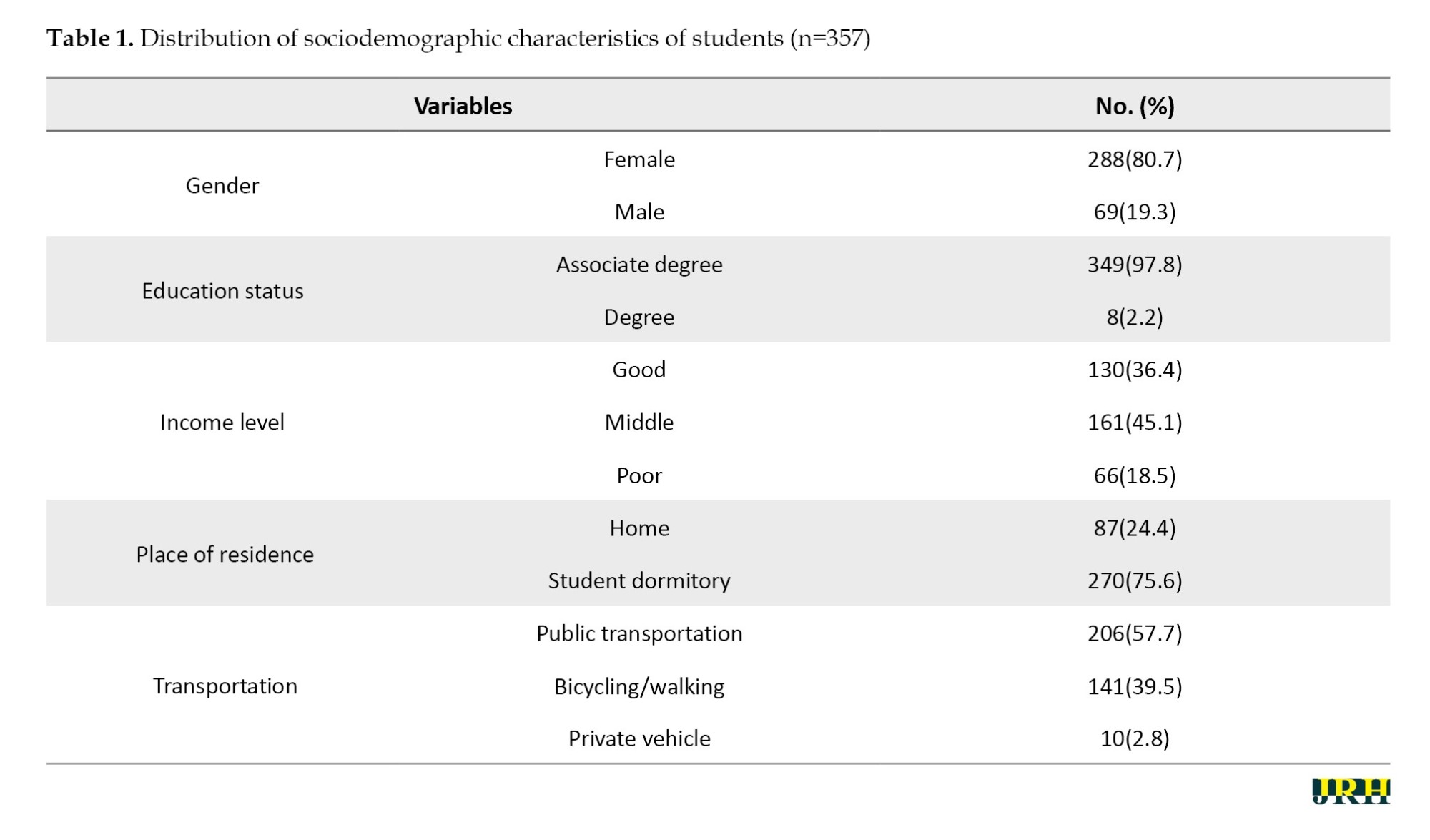
Students in the study were aged 17-21, with a mean age of 18.9±0.5. Of the students, 80.7% were female, 97.8% had graduated from an associate degree program, 75.6% lived in a dormitory, 36.4% reported their income status as good, and 57.7% used public transportation (Table 1).
Our study found that the lowest score among participating students on the climate anxiety scale was 10, the highest score was 49, and the average total score was 26±0.3.
Table 2 examines the relationship between mean total scores on the climate change anxiety scale and demographic variables.
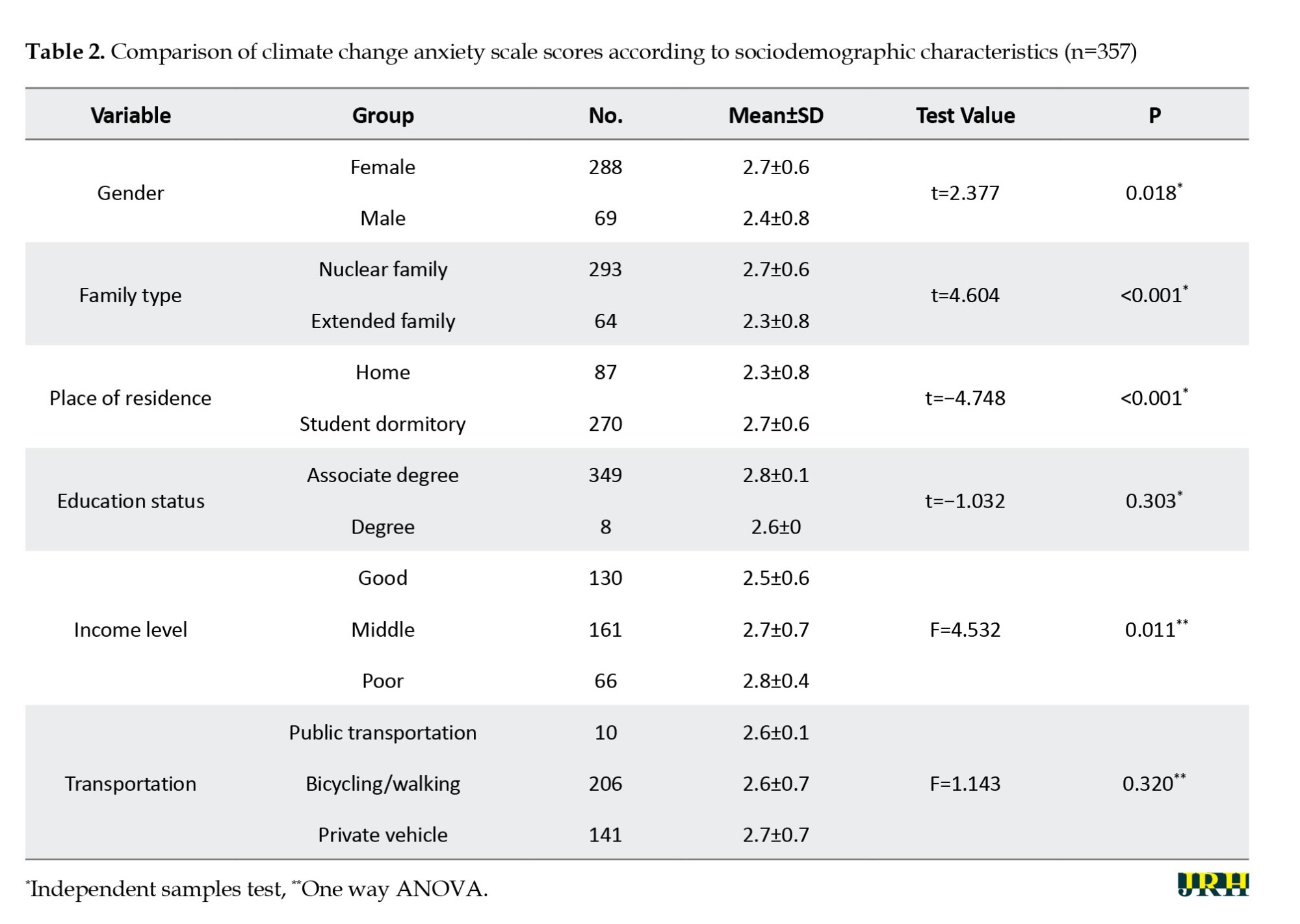
It reveals that female students have higher mean scores than male students, and a significant difference is observed between female and male students based on gender (P<0.05). In students with a nuclear family type who lived in dormitories, the level of climate anxiety was significantly higher (P<0.05). By place of residence, students living in dormitories had a significantly higher average score than students living at home (P<0.05). No significant difference was observed between educational status and climate anxiety (P>0.05).
Table 2 presents results related to the relationship between average total scores on the climate change anxiety scale and some demographic variables. Students who reported their income as poor had a higher mean total score on the climate change anxiety scale than other groups, and the difference was statistically significant (P<0.05). Students who used bicycles or walked as their mode of transportation had higher average total scores on the scale than other groups; however, no significant difference was observed (P>0.05).
Table 3 presents descriptive statistics for total scale scores by gender.
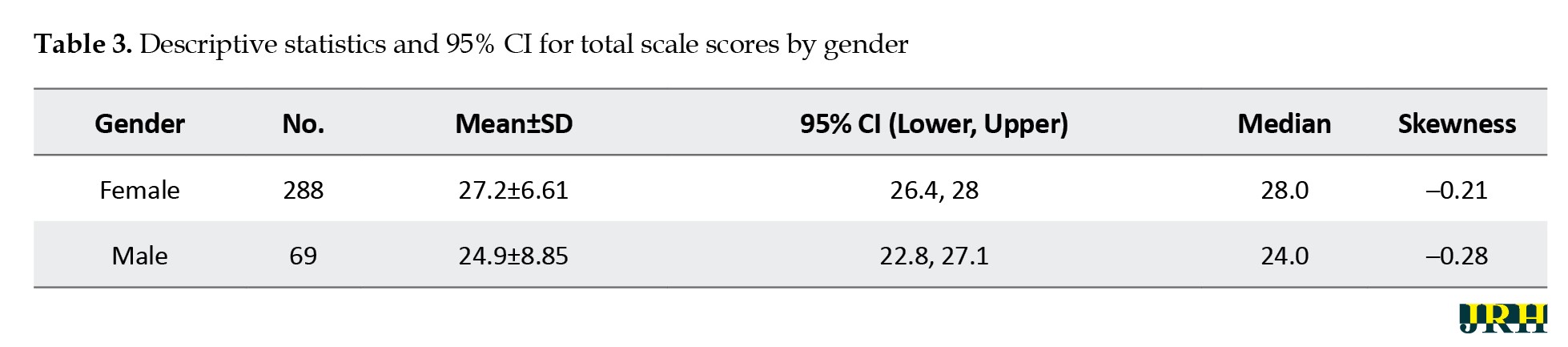
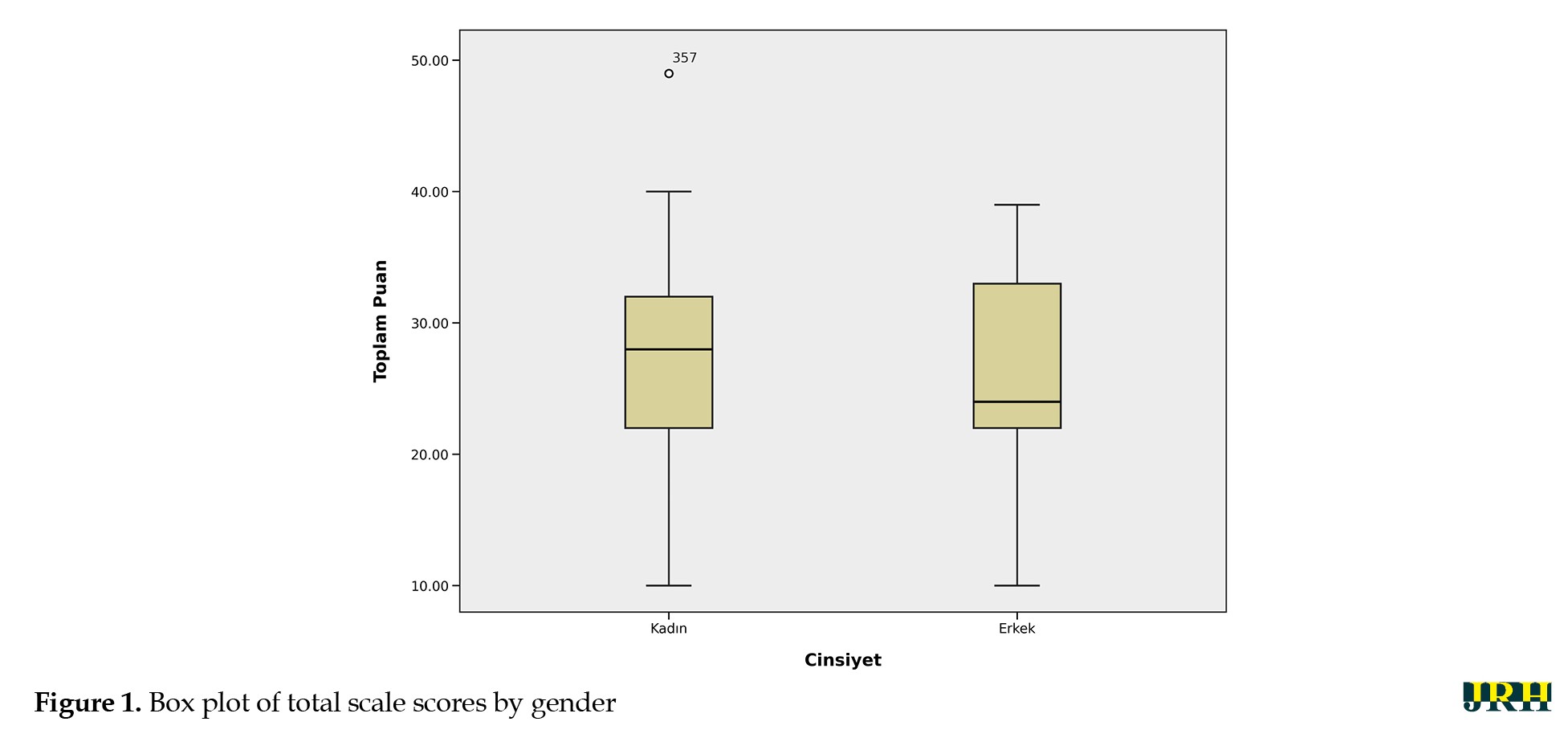
The average scale score for female participants (27.2) is higher than that for male participants (24.9). The higher median and negative skewness in the female group indicate that scores tend to cluster toward higher values. The box plot in Figure 1 also supports these characteristics: Scores are concentrated in the upper quartile for females, with a wider distribution in the male group.
Climate change is recognized as one of the most significant global public health issues of the 21st century; it profoundly affects not only ecosystems and physical health but also individuals’ mental health [1, 2]. Climate-induced environmental changes, such as rising temperatures, extreme weather events, droughts, floods, and forest fires, threaten psychological well-being through direct and indirect means [3, 4]. The World Health Organization (WHO) emphasizes that the climate crisis is placing increasing pressure on human life, health systems, and social stability [2].
The effects of climate change on mental health are multidimensional. Direct effects include post-traumatic stress disorder, depression, anxiety, and sleep disorders associated with individuals’ exposure to extreme weather events; indirect effects arise through uncertainty, anxiety about the future, economic losses, forced migration, and the breakdown of social structures [5-7]. In this context, climate change is considered not only an environmental crisis but also a global source of psychosocial stress [8, 9].
To describe emotional responses to climate change, the literature uses the concepts of ecological stress, environmental distress, and particularly climate anxiety (climate anxiety/eco-anxiety) [10, 11]. Climate anxiety is defined as a psychological response encompassing chronic worry, helplessness, and feelings of loss of control regarding environmental destruction and future climate threats [13]. Current approaches emphasize that climate anxiety is not pathological; rather, it can be a reasonable and proportionate response to the magnitude of the climate crisis [14, 15]. Research shows that climate anxiety is particularly prevalent among young adults [16-18]. A multi-country study found that 59% of young people experience very high levels of anxiety about climate change, with more than half reporting fear, helplessness, and hopelessness [17]. Similarly, studies in different cultural contexts show higher levels of climate anxiety in countries, such as China, India, and Malaysia; this may relate to climate vulnerability and adaptation capacity [19, 20].
University students constitute a particularly vulnerable group to climate anxiety due to both their developmental characteristics and the intensity of life decisions they face regarding their future. During this period, when critical decisions, such as education, career planning, starting a family, and choosing a place to live are made, the psychological burden of climate-change uncertainty becomes more pronounced [21]. Students in environment-related fields, in particular, may experience more intense climate anxiety because they are more frequently exposed to climate data and crisis discourse [22, 23].
Climate change represents an increasing threat to human health and well-being, with more frequent and intense extreme weather events contributing to a range of physical and mental health risks. The IPCC identifies children and adolescents as particularly vulnerable to climate-related health impacts, including psychological distress associated with extreme weather events and concerns about climate change. These risks may be especially relevant for younger generations, who are expected to experience greater cumulative exposure to climate-related hazards throughout their lifetimes [24]. However, few studies have examined climate anxiety among university students alongside psychological variables, such as awareness and hope [25-29]. Current findings show that universities can play a critical role in raising climate awareness and supporting young people’s psychological adaptation [30, 31].
Managing the climate crisis and mitigating its effects should not be limited to scientific and technical solutions; it must become a broader social movement. Raising awareness and mobilizing young individuals is critical. As the future decision-makers and backbone of social movements, younger generations play a significant role in combating the environmental crisis [32].
In this context, it is important to determine and analyze levels of climate change awareness, concern, and hope among university students, who will implement the future. This study was conducted to determine the level of climate anxiety and related factors among university students.
Methods
Population and sample of the research
This cross-sectional descriptive study was conducted between March 2024 and September 2025. The population of this study consists of undergraduate students enrolled in the Department of Physical Therapy and Rehabilitation at Yozgat Bozok University during the 2024–2025 academic year. Due to the uncertainty in determining the exact population size and the voluntary nature of participation in the study, convenience sampling was used as a non-probability sampling method. By the end of the study, 357 students enrolled in the Department of Physical Therapy and Rehabilitation who voluntarily agreed to participate were reached.
Data collection tools
The researchers used a sociodemographic questionnaire and the climate change anxiety scale as data collection tools. Data were collected online using Google Forms.
Sociodemographic questionnaire form: The questionnaire form, prepared by researchers based on a literature review and considering variables thought to affect climate anxiety levels, consisted of eight questions determining students’ demographic characteristics, such as age, gender, family type, economic status, place of residence, and mode of transportation [25-29].
Climate change anxiety scale: The “climate change anxiety scale” developed by Stewart [33] was used to determine participants’ levels of climate anxiety. Özbay and Alcı [34] conducted a Turkish adaptation, validity, and reliability study of the scale [34].
The scale has a unidimensional structure and 10 items that assess individuals’ levels of anxiety about climate change. The items are answered using a 5-point Likert scale (1=never, 2=rarely, 3=sometimes, 4=often, 5=always). A higher total score indicates a higher level of climate change anxiety in the individual. The scale has no cutoff point. In the original development study, the reliability coefficient (Cronbach’s α) was reported as 0.91. In the Turkish adaptation study, the scale’s reliability coefficient was Cronbach’s α=0.98, and the scale was determined to be a valid and reliable measure of climate change anxiety among university students in Turkey. In our study, the reliability coefficient of the scale is Cronbach’s α=0,92.
Data analysis
In the study, the normality of the data was tested using the Kolmogorov-Smirnov test, and it was determined that the data followed a normal distribution [35]. For data analysis, the Independent Samples test was used to compare binary groups, and one-way analysis of variance (ANOVA) was used to compare variables with more than two groups. Data from 357 students were evaluated. A P<0.05 was considered statistically significant.
Ethical approval
For the research, ethical permission was obtained from the Yozgat Bozok University Social and Human Sciences Ethics Committee on February 21, 2024, under number 11/16. The study included students who volunteered after providing informed consent. The researchers adhered to the principles of the “Helsinki Declaration” at every stage of the research.
Results
Students in the study were aged 17-21, with a mean age of 18.9±0.5. Of the students, 80.7% were female, 97.8% had graduated from an associate degree program, 75.6% lived in a dormitory, 36.4% reported their income status as good, and 57.7% used public transportation (Table 1).
Our study found that the lowest score among participating students on the climate anxiety scale was 10, the highest score was 49, and the average total score was 26±0.3.
Table 2 examines the relationship between mean total scores on the climate change anxiety scale and demographic variables.
It reveals that female students have higher mean scores than male students, and a significant difference is observed between female and male students based on gender (P<0.05). In students with a nuclear family type who lived in dormitories, the level of climate anxiety was significantly higher (P<0.05). By place of residence, students living in dormitories had a significantly higher average score than students living at home (P<0.05). No significant difference was observed between educational status and climate anxiety (P>0.05).
Table 2 presents results related to the relationship between average total scores on the climate change anxiety scale and some demographic variables. Students who reported their income as poor had a higher mean total score on the climate change anxiety scale than other groups, and the difference was statistically significant (P<0.05). Students who used bicycles or walked as their mode of transportation had higher average total scores on the scale than other groups; however, no significant difference was observed (P>0.05).
Table 3 presents descriptive statistics for total scale scores by gender.
The average scale score for female participants (27.2) is higher than that for male participants (24.9). The higher median and negative skewness in the female group indicate that scores tend to cluster toward higher values. The box plot in Figure 1 also supports these characteristics: Scores are concentrated in the upper quartile for females, with a wider distribution in the male group.
Discussion
In our study, the average total score from the climate change anxiety scale was 26.8±0.2. The normative values reported by Özbay and Alcı in the Turkish adaptation of the climate change anxiety scale provide an important reference for interpreting the scores. The study indicated that the average score for the Turkish sample was approximately 24.5 and that the 25–30 point range represented a moderate level of concern [34]. Therefore, the anxiety scores of the students participating in our study were above the average. Research indicates that awareness of climate change is increasingly growing among young people [36]. However, some studies show that climate change awareness is low [37], while others indicate it is at a moderate level [38]. This variation may reflect the field of study, the presence or absence of environmental subjects in the curriculum, and the influence of students’ sociodemographic characteristics.
In the literature, it is stated that health sciences students have high awareness of climate change and environmental risks and that this awareness is related to anxiety. A systematic review found that health sciences students have significantly high levels of knowledge, attitudes, and anxiety regarding the effects of climate change on health [27, 28, 39].
In some studies of university students in our country, researchers found that students’ concerns about climate change are similar to those in our study [40]. Research involving social work students has also shown that climate change anxiety is above moderate levels [41] or even high in some studies [25]. Our results show that students have high levels of climate change anxiety. This is linked to the possibility that young people will be more exposed to the negative consequences of climate change in the future [42].
In our study, female students had higher mean total scores on the Climate Change Anxiety Scale than males, with a statistically significant difference (P<0.05). A study conducted with students in Türkiye found that women had higher levels of climate anxiety [41, 25]. The literature generally shows that women have higher anxiety levels than men [42]. Higher anxiety levels in women have been associated with gender and socially defined roles [41, 25].
A power analysis following the statistically significant gender difference in climate anxiety scores determined that the study had sufficient power to detect the observed effect size (1−β=0.83). This statistical significance suggests that the difference may be due to the influence of female gender on climate anxiety, rather than the fact that there are more female students than male students.
The direction of the findings is consistent with previous studies reporting higher levels of climate anxiety among women [41, 25]. This difference is addressed not only in terms of biological sex but also in the context of socially constructed gender roles. In this context, the concept of role overload, as emphasized by Crimmins et al. [43], provides an important explanatory framework. Women’s greater exposure to social expectations, such as caregiving responsibilities, emotional labor, and future-oriented protective roles, may lead them to develop greater psychological sensitivity to global and long-term threats, such as climate change. Therefore, the higher level of climate anxiety observed in female students may be shaped through social role expectations and perceived responsibility load rather than directly through gender differences.
In our study, students who reported their income as poor had higher mean total scores on the climate change anxiety scale, and a statistically significant difference was observed (P<0.05).
Some studies have shown no significant relationship between income level and anxiety. For example, studies in the field of social work have not found a significant relationship between income level and anxiety [41, 25]. However, other studies show that individuals with low income levels are more negatively affected by climate change and suggest a relationship between income level and climate anxiety, such as the study by Frumkin et al. [44].
In our study, the level of climate anxiety was significantly higher among students with a nuclear family type (P<0.05). In the literature, one study of students found no significant relationship between family type and climate anxiety. However, another study found a strong relationship between the number of siblings and climate awareness levels, with those with 1-2 siblings having higher average scores than those with more siblings [27].
The urban lifestyle, where the nuclear family structure is more prevalent, may cause students to encounter climate change-related risk narratives, media messages, and academic debates more intensely. Additionally, the higher levels of climate anxiety found among students from nuclear families may be related to a stronger sense of individual responsibility, increased environmental awareness, and relatively limited perceived social support networks. This finding shows that climate anxiety is shaped not only by environmental threats but also by family structure and social context.
In our study, climate anxiety was significantly higher among students living in dormitories (P<0.05). The literature review revealed that studies on this topic generally assess anxiety levels among residents of rural and urban areas [27, 29]. One study found high anxiety levels among students living in rural areas [29]. In our study, the dormitory where the students lived was located in a rural area; therefore, their anxiety levels may be higher due to experiencing the effects of climate change more directly and having a closer connection with nature.
In addition, the significantly higher level of concern about climate change among students living in dormitories can be explained by the increased social interaction and environmental awareness provided by shared living spaces. While university students in general show sensitivity to global environmental issues, such as climate change, students living in dormitories may experience higher levels of concern because they are more exposed to these interactions.
Because our results are self-reported and based on a single department, they may not generalize to other student populations. However, this study is important because it sheds light on future studies on climate change anxiety among university youth in our country.
Conclusion
This study found that climate change anxiety among university students is significantly associated with certain sociodemographic variables. The findings indicate that students living in dormitories and those from nuclear families exhibit higher levels of climate anxiety. This suggests that climate anxiety relates not only to individual awareness but also to contextual and psychosocial factors, such as perceived social support, environmental uncertainty, and sense of control. In particular, more limited social support networks in nuclear family structures and a more individualized sense of responsibility may increase anxiety about climate change, a global and uncontrollable threat. Similarly, constant environmental exposure and the uncertainty of collective living in dormitory settings may contribute to intensified climate anxiety. Based on these findings, universities and student dormitories should develop preventive and low-cost psychosocial interventions targeting climate anxiety. Longitudinal and mediational model studies that include perceived social support and control levels are needed to better explain the impact of family type and housing conditions on climate anxiety. Such research will contribute to evidence-based mental health policies for university youth.
Ethical Considerations
Compliance with ethical guidelines
This study was approved by the Ethics Committee of Yozgat Bozok University Social and Human Sciences, Yozgat, Türkiye (Code: 11/16; Date: February 21, 2024). Students who volunteered after providing informed consent were included in the study. The authors adhered to the principles of the “Helsinki Declaration” at every stage of the research.
Funding
This research was supported by the Scientific and Technological Research Council of Turkey (TÜBİTAK) under the 2209-A student project.
Authors' contributions
Investigation and data collection: Şemsinnur Göçer and Beyzanur Özdemir; Project administration: Beyzanur Özdemir and Tuncay Polat; Formal analysis, supervision and funding acquisition: Tuncay Polat; Conceptualization, methodology, writing and final approval: All authors.
Conflict of interest
The authors declared no conflict of interest.
Acknowledgments
The authors thank all the university students who voluntarily participated in this study and shared their time and experiences.
References
- Ágoston C, Csaba B, Nagy B, Kőváry Z, Dúll A, Rácz J, Demetrovics Z. Identifying types of eco-anxiety, eco-guilt, eco-grief, and eco-coping in a climate-sensitive population: A qualitative study. International Journal of Environmental Research and Public Health. 2022; 19(4):2461. [DOI:10.3390/ijerph19042461]
- World Health Organization. Climate change and health, Geneva: World Health Organization; 2023. [Link]
- Cianconi P, Betrò S, Janiri L. The impact of climate change on mental health: A systematic descriptive review. Front Psychiatry. 2020; 11:74. [DOI:10.3389/fpsyt.2020.00074] [PMID] [PMCID]
- Charlson F, Ali S, Benmarhnia T, Pearl M, Massazza A, Augustinavicius J, et al. Climate change and mental health: A scoping review. International Journal of Environmental Research and Public Health. 2021; 18(9):4486. [DOI:10.3390/ijerph18094486] [PMID] [PMCID]
- Costello A, Abbas M, Allen A, Ball S, Bell S, Bellamy R, et al. Managing the health effects of climate change. Lancet. 2009; 373(9676):1693-733. [DOI:10.1016/S0140-6736(09)60935-1] [PMID] [PMCID]
- Hayes K, Blashki G, Wiseman J, Burke S, Reifels L. Climate change and mental health: Risks, impacts and priority actions. International Journal of Mental Health Systems. 2018; 12(1):28. [DOI:10.1186/s13033-018-0210-6] [PMID] [PMCID]
- Lawrance EL, Thompson R, Newberry Le Vay J, Page L, Jennings N. The impact of climate change on mental health and emotional wellbeing: A narrative review of current evidence, and its implications. International Review of Psychiatry. 2022; 34(5):443-98. [DOI:10.1080/09540261.2022.2128725]
- Clayton S. Climate anxiety: Psychological responses to climate change. Journal of Anxiety Disorders. 2020; 74:102263. [DOI:10.1016/j.janxdis.2020.102263] [PMID]
- Palinkas LA, Wong M. Global climate change and mental health. Curr Opin Psychol. 2020; 32:12-16. [DOI: 10.1016/j.copsyc.2019.06.023]
- Clayton S, Manning C, Krygsman K, Speiser M. Mental health and our changing climate: Impacts, implications, and guidance. Washington: American Psychological Association; 2017. [Link]
- Coffey Y, Bhullar N, Durkin J, Islam MS, Usher K. Understanding eco-anxiety: A systematic review of current literature. International Journal of Environmental Research and Public Health. 2021; 18(21):11200. [DOI:10.1016/j.joclim.2021.100047]
- Ojala M, Cunsolo A, Ogunbode CA, Middleton J. Anxiety, worry, and grief in a time of environmental and climate crisis: A narrative review. Annual Review of Environment and Resources. 2021; 46:35-58. [DOI:10.1146/annurev-environ-012220-022716]
- Clayton S, Karazsia BT. Development and validation of a measure of climate change anxiety. Journal of Environmental Psychology. 2020; 69:101434. [DOI:10.1016/j.jenvp.2020.101434]
- Hickman C. We need to (find a way to) talk about climate change anxiety. Journal of Social Work Practice. 2020; 34(4):411-24. [DOI:10.1080/02650533.2020.1844166]
- Pihkala P. Anxiety and the ecological crisis: An analysis of eco-anxiety and climate anxiety. Sustainability. 2020; 12(19):7836. [DOI:10.3390/su12197836]
- Ojala M. Hope and climate change: The importance of hope for environmental engagement among young people. Environmental Education Research. 2012; 18(5):625-42. [DOI:10.1080/13504622.2011.637157]
- Hickman C, Marks E, Pihkala P, Clayton S, Lewandowski RE, Mayall EE, et al. Climate anxiety in children and young people and their beliefs about government responses to climate change: A global survey. Lancet Planet Health. 2021; 5(12):e863-73. [DOI:10.1016/S2542-5196(21)00278-3] [PMID] [PMCID]
- Furman L, Vinko M, Perčič S, Kobal E, Ačko L. Climate anxiety in children and young people: A systematic review of prevalence and measurement methods. Journal of Climate Change and Health. 2026; 30:100705. [DOI:10.1016/j.joclim.2026.100705]
- Tam KP, Chan HW, Clayton S. Climate change anxiety in China, India, Japan, and the United States. Journal of Environmental Psychology. 2023; 87:101991. [DOI:10.1016/j.jenvp.2023.101991]
- Mohd Mahudin ND, Syed Lokhikmal Hakim SAF. Climate anxiety as a public health issue: An exploratory study of climate anxiety in Malaysian youth and their beliefs about government responses to climate change. Malaysian Journal of Public Health Medicine. 2023; 23(3):86-98. [DOI:10.37268/mjphm/vol.23/no.3/art.2044]
- Daeninck C, Kioupi V, Vercammen A. Climate anxiety, coping strategies and planning for the future in environmental degree students in the UK. Frontiers in Psychology. 2023; 14:1126031. [DOI:10.3389/fpsyg.2023.1126031] [PMID]
- Maran DA, Begotti T. Media exposure, climate anxiety, and mental health. Sustainability. 2021; 13(17):9358. [DOI:10.3390/ijerph18179358] [PMID] [PMCID]
- Leal Filho W, Sima M, Sharifi A, Luetz JM, Salvia AL, Mifsud M, et al. Handling climate change education at universities: an overview. Environmental Sciences Europe. 2021; 33(1):109. [DOI:10.1186/s12302-021-00552-5] [PMID]
- Intergovernmental Panel on Climate Change. Climate Change 2022: Impacts, adaptation and vulnerability: Contribution of working group II to the sixth assessment report of the intergovernmental panel on climate change. Cambridge University Press; 2022. [Link]
- Doğan H, Buz S. The effect of climate change anxiety on social work students in Turkey. International Social Work. 2023; 67(4):1045-57. [DOI:10.1177/00208728231208007]
- Duman D, Dal N, Aksakallı AT, Demir Kaya M. Climate change anxiety among university students: The predictive role of hope and psychological resilience. Journal of Psychometric Research. 2024; 2(2):31-39. [DOI:10.5281/zenodo.13865397]
- Ceylan H, Sevgili A, Aslan Ş. [Determining the climate change awareness and anxiety levels of social work students (Turkish)] Journal of University Research. 2024; 7(2):131-143. [DOI:10.32329/uad.1442686]
- Işık C, Güneş E. [The effect of climate change awareness levels of midwifery students on their anxiety regarding climate change (Turkish)]. Journal of Health and Life Sciences. 2025; 7(2):74-80. [DOI:10.33308/2687248X.202572373]
- Yildiz M. Examining the levels of awareness, anxiety, and hope regarding global climate change among university students. Frontiers in Psychology. 2025; 16:1655401. [DOI:10.3389/fpsyg.2025.1655401] [PMID] [PMCID]
- Lozano R, Merrill MY, Sammalisto K, Ceulemans K, Lozano FJ. Connecting competences and pedagogical approaches for sustainable development in higher education: A literature review and framework proposal. Sustainability. 2017; 9(10):1889. [DOI:10.3390/su9101889]
- Deniz M, İnel Y, Sezer A. Awareness scale of university students about global climate change. lnternational Journal of Geography and Geography Education. 2021; 43:252-64. [DOI:10.32003/igge.818561]
- Han H, Ahn SW. Youth mobilization to stop global climate change: Narratives and impact. Sustainability. 2020; 12(10):4127. [DOI:10.3390/su12104127]
- Stewart AE. Psychometric properties of the climate change worry scale. International Journal of Environmental Research and Public Health. 2021; 18(2):494. [DOI:10.3390/ijerph18020494] [PMID] [PMCID]
- Özbay S, Alcı B. [Climate change anxiety scale: Adaptation to Turkish, validity, and reliability study (Turkish)]. R&S Research Studies Anatolia Journal. 2021; 4(3):183-93. [DOI:10.33723/rs.958016]
- Tabachnick BG, Fidell LS. Using multivariate statistics. 3rd ed. New York: Harper Collins; 1996. [Link]
- Jürkenbeck K, Spiller A, Schulze M. Climate change awareness of the young generation and its impact on their diet. Cleaner and Responsible Consumption. 2021; 3:100041. [DOI:10.1016/j.clrc.2021.100041]
- Küçük Biçer B, Acar Vaizoğlu S. [Knowledge and awareness of nursing students regarding global warming and climate change (Turkish)]. Journal of Hacettepe University Faculty of Nursing. 2015; 2(2):30-43. [Link]
- Gülsoy E, Korkmaz M. [The effects of university students' socioeconomic characteristics on their perceptions of global warming and climate change (Turkish)]. Turkish Journal of Forestry. 2020; 21(4):428-37. [Link]
- Ccami-Bernal F, Barriga-Chambi F, Quispe-Vicuña C, Fernandez-Guzman D, Arredondo-Nontol R, Arredondo-Nontol M, et al. Health science students’ preparedness for climate change: a scoping review on knowledge, attitudes, and practices. BMC Medical Education. 2024; 24(1):648. [DOI:10.1186/s12909-024-05629-2] [PMID] [PMCID]
- Emecen Y, Erdem N. [An evaluation of awareness regarding climate change from the perspective of university students (Turkish)]. Meriç International Journal of Social and Strategic Studies. 2022; 6(16):206-224. [DOI:10.54707/meric.1118584]
- Sütçü S, Demirel AC. [Climate change anxiety levels of social work students (Turkish)]. Korkut Ata Journal of Turkic Studies. 2023; 12:1216-33. [DOI:10.51531/korkutataturkiyat.1324759]
- Clayton SD, Pihkala P, Wray B, Marks E. Psychological and emotional responses to climate change among young people worldwide. Sustainability. 2023; 15(4):3540. [DOI:10.3390/su15043540]
- Crimmins EM. Social hallmarks of aging: Suggestions for geroscience research. Ageing Research Reviews. 2021; 63:101136. [DOI:10.1016/j.arr.2020.101136] [PMID] [PMCID]
- Frumkin H, Hess J, Luber G, Malilay J, McGeehin M. Climate change: The public health response. American Journal of Public Health. 2008; 98(3):435-45. [DOI:10.2105/AJPH.2007.119362] [PMID] [PMCID]
Type of Study: Orginal Article |
Subject:
● Psychosocial Health
Received: 2025/11/6 | Accepted: 2026/02/15 | Published: 2026/08/23
Received: 2025/11/6 | Accepted: 2026/02/15 | Published: 2026/08/23
| Rights and permissions | |
 |
This work is licensed under a Creative Commons Attribution-NonCommercial 4.0 International License. |


This is an open access article distributed under the terms of the Creative Commons Attribution License (CC-By-NC), which permits use, distribution, and reproduction in any medium, provided the original work is properly cited and is not used for commercial purposes.
Contact Information
